
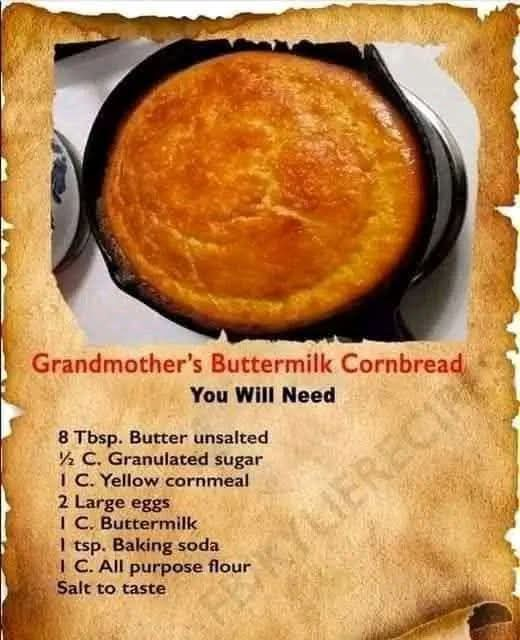
🥖 Grandmother’s Buttermilk Cornbread (Old-Fashioned Southern Style)
Nothing feels more comforting than a warm slice of homemade fresh from the oven. This recipe carries that “grandmother kitchen” feeling—simple ingredients, rustic texture, golden crust, and a soft, tender crumb inside. It’s the kind of bread that brings people to the table before you even call them.
🧾 Ingredients
Dry ingredients:
- 1 cup yellow cornmeal
- ¾ cup all-purpose flour
- 1 tablespoon sugar (optional, for slight sweetness)
- 1 ½ teaspoons baking powder
- ½ teaspoon baking soda
- ½ teaspoon salt
Wet ingredients:
- 1 cup buttermilk (room temperature)
- 1 large egg
- ¼ cup melted butter (or vegetable oil for softer texture)
Optional add-ins (grandmother-style touches):
- 2 tablespoons honey (for richness)
- ½ cup corn kernels (for texture)
- Extra butter for brushing on top
👩🍳 Instructions (Step-by-Step Method)
1. Prepare your oven
Preheat your oven to 400°F (200°C).
Grease a cast iron skillet or baking pan with butter or oil.
2. Mix dry ingredients
In a large bowl, whisk together: cornmeal, flour, sugar, baking powder, baking soda, and salt.
This ensures even rising and no clumps.
3. Mix wet ingredients
In another bowl, whisk: buttermilk, egg, and melted butter until smooth and slightly creamy.
4. Combine gently
Pour the wet mixture into the dry ingredients.
Stir just until combined—don’t overmix (this keeps the cornbread tender).
5. Rest the batter (grandmother secret 🤫)
Let the batter sit for 5–10 minutes.
This helps the cornmeal absorb moisture for a softer crumb.
6. Bake
Pour batter into the hot skillet or pan.
Bake for 20–25 minutes, or until:
- Golden brown on top
- Toothpick comes out clean
- Edges pull slightly from the pan
7. Finish with love
Brush the top with melted butter right after baking for that glossy, rich finish.
🔥 Cooking Method Summary
This is a quick bread method, meaning:
- No yeast required
- Leavening comes from baking powder + baking soda
- Acid (buttermilk) activates the rise
- High heat creates a crisp golden crust
The cast iron skillet method is traditional because it creates that signature crunchy edge that makes cornbread unforgettable.
📜 History of Buttermilk Cornbread
Cornbread traces its roots back to Native American cooking, where ground corn (maize) was a staple. Early settlers adopted it because corn grew easily and was versatile.
Buttermilk cornbread became especially popular in the American South, where:
- Buttermilk was a daily farm staple
- Cast iron skillets were used for nearly everything
- Cornmeal was more common than wheat flour
Over time, families passed down their own versions—some sweet, some savory, some crumbly, some cake-like. This is why it’s often called “grandmother’s recipe”—it’s not just food, it’s heritage.
🧬 Formation (Why It Works)
Each ingredient has a purpose:
- Cornmeal → structure & grainy texture
- Flour → softness and binding
- Buttermilk → tang + tenderness
- Baking soda/powder → lift and fluffiness
- Egg → richness and structure
- Butter → moisture + flavor
The reaction between buttermilk (acid) and baking soda creates bubbles that make the bread rise beautifully.
💛 Serving & “Lovers” Section (Who Loves It)
This cornbread is loved by:
- Families at Sunday dinners
- BBQ lovers (perfect with ribs, chili, or stew)
- Breakfast fans (with honey or jam)
- Comfort food seekers on cold days
Ways lovers enjoy it:
- Warm with butter melting inside
- Drizzled with honey or maple syrup
- Paired with chili or soups
- Crumbled into milk or stew (Southern style)
“Cornbread lovers’ ritual”:
Fresh out of the oven → slice → butter melts instantly → first bite while still warm. That’s the moment most people fall in love with it.
🍽️ Final Conclusion
Grandmother’s Buttermilk Cornbread is more than a side dish—it’s a memory baked into a skillet. Crisp on the outside, soft inside, and full of simple, honest flavor, it represents comfort, tradition, and home cooking at its best.
Once you make it, it rarely stays just “a recipe”—it becomes a repeat favorite.
If you want, I can also turn this into:
- or 😄