
Soft Homemade Cinnamon Bread
Introduction
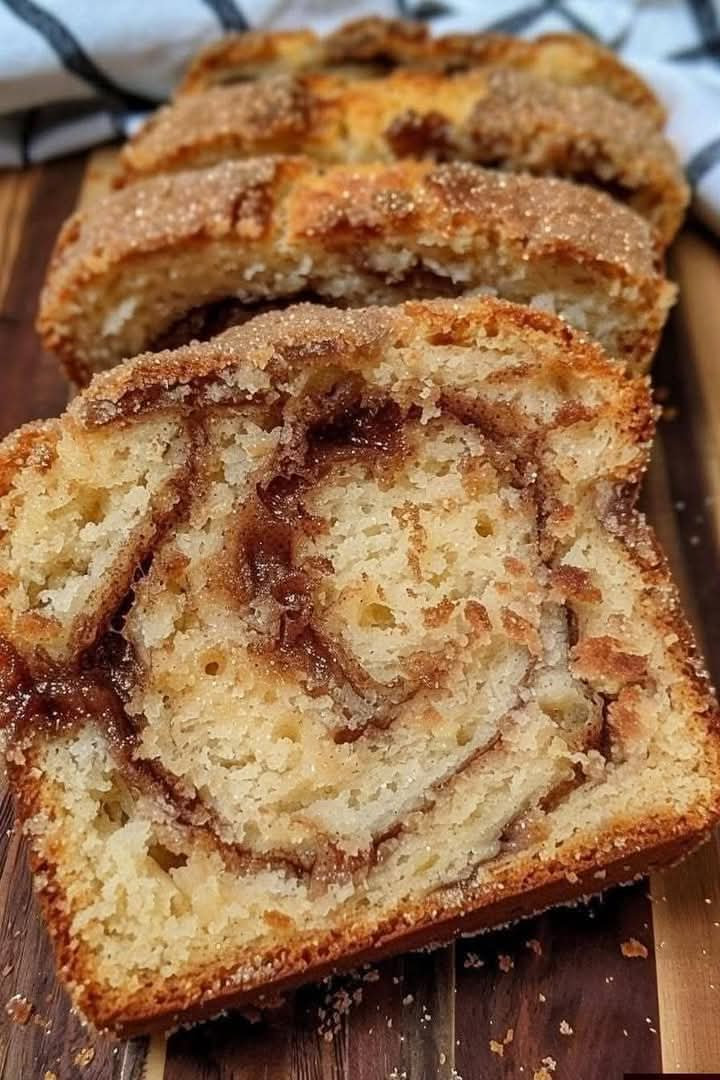
There are few things more comforting than the smell of freshly baked cinnamon bread filling the kitchen. This soft homemade cinnamon bread is sweet, tender, buttery, and generously layered with fragrant cinnamon sugar. The bread has a delicate crumb, a golden crust, and a rich cinnamon center that makes every slice feel like a special homemade treat.
It is wonderful for breakfast with a cup of coffee or tea, but it is also delicious as an afternoon snack or a simple dessert. Serve it warm with butter, drizzle it with a little icing, or enjoy it completely plain. The combination of soft bread, brown sugar, cinnamon, and butter makes this a recipe that is difficult to resist.
Unlike a quick bread, this version is made with yeast, allowing the dough to rise slowly and develop a light, fluffy texture. The result is a beautiful loaf that can be sliced and enjoyed for several days.
Ingredients
For the Bread Dough
- 3 cups all-purpose flour, plus a little extra if needed
- 2 1/4 teaspoons active dry yeast
- 1/4 cup granulated sugar
- 1/2 teaspoon salt
- 3/4 cup warm milk
- 1 large egg, at room temperature
- 1/4 cup unsalted butter, melted
- 1 teaspoon vanilla extract
For the Cinnamon Filling
- 1/2 cup packed brown sugar
- 2 tablespoons granulated sugar
- 2 tablespoons ground cinnamon
- 1/4 cup unsalted butter, softened
- 1 tablespoon all-purpose flour, optional, to help keep the filling in place
For the Top
- 1 tablespoon melted butter
- 1 tablespoon granulated sugar, optional
- A small pinch of cinnamon
Optional Simple Glaze
- 1 cup powdered sugar
- 1 to 2 tablespoons milk
- 1/2 teaspoon vanilla extract
Instructions
Step 1: Prepare the Yeast
Pour the warm milk into a large mixing bowl. The milk should be warm but not hot. Add the yeast and a teaspoon of the granulated sugar.
Stir gently and allow the mixture to stand for approximately 5 to 10 minutes. If the yeast is active, a light layer of foam should begin forming on the surface.
Add the remaining sugar and salt.
Step 2: Add the Wet Ingredients
Add the melted butter, egg, and vanilla extract to the milk mixture.
Whisk until everything is well combined.
Make sure the melted butter has cooled slightly before adding it so that it does not become too hot for the yeast or egg.
Step 3: Make the Dough
Add approximately 2 1/2 cups of the flour and mix with a wooden spoon or sturdy spatula.
Continue adding the remaining flour gradually until a soft dough forms.
The dough should be soft and slightly tacky, but it should not be extremely sticky. Avoid adding too much flour because excessive flour can make the finished bread dense instead of soft.
Step 4: Knead the Dough
Transfer the dough to a lightly floured work surface.
Knead for approximately 8 to 10 minutes by hand, or use a stand mixer fitted with a dough hook and knead for about 5 to 7 minutes.
The dough should become smooth, elastic, and soft.
Place it in a lightly greased bowl and turn it once so the surface is lightly coated with oil or butter.
Cover the bowl with a clean kitchen towel or plastic wrap.
Step 5: First Rise
Place the covered dough in a warm, draft-free location.
Allow it to rise for approximately 1 to 1 1/2 hours, or until it has roughly doubled in size.
The exact rising time depends on the temperature of your kitchen.
Step 6: Prepare the Cinnamon Filling
While the dough rises, prepare the filling.
In a small bowl, combine the brown sugar, granulated sugar, cinnamon, and optional tablespoon of flour.
Mix well.
Keep the softened butter separate so that it can be spread evenly over the dough.
Step 7: Roll Out the Dough
Once the dough has doubled in size, gently press it down to remove excess air.
Transfer it to a lightly floured surface.
Roll the dough into a rectangle approximately 12 by 18 inches.
Try to keep the thickness relatively even from one end to the other.
Step 8: Add the Cinnamon Filling
Spread the softened butter evenly across the surface of the dough, leaving a small border around the edges.
Sprinkle the cinnamon-sugar mixture evenly over the butter.
Press the filling very gently into the butter so it adheres to the dough.
Step 9: Shape the Loaf
Starting from one of the shorter sides, roll the dough tightly into a log.
Try to keep the roll firm without squeezing the filling out.
Pinch the seam closed once the dough has been completely rolled.
Place the loaf seam-side down into a greased 9-by-5-inch loaf pan.
Step 10: Second Rise
Cover the loaf loosely and let it rise again for approximately 30 to 45 minutes.
The dough should become noticeably puffy.
Do not allow it to rise excessively, because an over-proofed loaf can collapse during baking.
Step 11: Prepare for Baking
Preheat the oven to 350°F (175°C).
Brush the top of the risen loaf lightly with melted butter.
For an extra sweet crust, sprinkle a small amount of cinnamon sugar over the top.
Step 12: Bake
Place the loaf in the preheated oven.
Bake for approximately 35 to 45 minutes.
The top should become golden brown and the loaf should sound slightly hollow when gently tapped.
If the top begins browning too quickly, loosely cover it with aluminum foil during the final portion of baking.
Step 13: Cool
Remove the bread from the oven and allow it to rest in the pan for about 10 minutes.
Carefully transfer it to a wire rack.
Allow it to cool for at least 30 minutes before slicing.
Although it is tempting to cut into it immediately, allowing the bread to cool helps the crumb finish setting and makes slicing easier.
Method
The key to making excellent cinnamon bread is controlling the texture of the dough.
Begin with warm milk rather than hot milk. The yeast needs a comfortable temperature to activate properly. Once the yeast is combined with the milk and sugar, the remaining ingredients can be incorporated gradually.
The dough should remain soft. If it feels slightly sticky at first, resist the temptation to add a large amount of flour. Kneading develops gluten, which gives the loaf its characteristic structure and allows it to remain soft after baking.
The first rise gives the yeast time to produce gas and develop flavor. After the dough has doubled, gently deflate it and roll it into a rectangle.
The butter and cinnamon-sugar mixture create the characteristic sweet spiral throughout the bread. Rolling the dough firmly helps create attractive layers while preventing large gaps from forming.
The second rise is shorter than the first. This final proof allows the shaped loaf to become light and airy before it goes into the oven.
Bake until the loaf is deeply golden and cooked through. Allowing it to cool before slicing produces cleaner pieces and prevents the interior from becoming gummy.
History of Cinnamon Bread
Cinnamon has been used in cooking and baking for centuries. It was valued long before modern baking became common, particularly because of its distinctive fragrance and warm flavor.
As bread-making traditions developed in Europe and later in North America, cinnamon became a popular ingredient in sweet yeast breads, rolls, cakes, and pastries.
Cinnamon breads became especially associated with home baking because they could be prepared from basic pantry ingredients such as flour, yeast, sugar, butter, milk, and spices.
Over generations, families developed their own versions. Some recipes became braided loaves, while others were rolled into spirals or baked as individual cinnamon rolls.
Modern cinnamon bread combines elements of traditional yeast bread and cinnamon rolls. Instead of being divided into individual pastries, the cinnamon filling is rolled directly into one loaf, making it convenient to slice and serve.
Formation of the Bread
The formation of this bread happens in several important stages.
First, yeast is activated in warm liquid. It begins consuming available sugars and producing carbon dioxide.
Next, flour is incorporated and the dough is kneaded. Kneading develops gluten, creating an elastic network capable of holding the gases produced by the yeast.
During the first rise, the dough expands and becomes lighter.
The dough is then rolled flat and covered with butter and cinnamon sugar. When it is rolled into a log, the filling becomes layered throughout the loaf.
During the second rise, the shaped bread becomes puffy again.
Finally, heat from the oven causes the dough to expand further before the structure sets. The sugars caramelize slightly, the butter enriches the crumb, and the surface develops a golden crust.
Tips for Perfect Cinnamon Bread
Use fresh yeast. If your yeast does not become active when required by the recipe, the dough may not rise properly.
Do not use very hot milk. Excessive heat can damage the yeast.
Measure flour carefully. Adding too much flour is one of the easiest ways to make homemade bread heavy.
Knead until the dough becomes smooth and elastic.
Allow enough time for both rises. Yeast bread cannot be rushed if you want a light texture.
Spread the filling evenly. This ensures that every slice contains cinnamon and sugar.
Roll the dough firmly but gently.
Do not overbake. A loaf that stays in the oven too long can lose some of its softness.
Let the bread cool before slicing.
Optional Vanilla Glaze
For a sweeter cinnamon bread, combine powdered sugar, milk, and vanilla extract in a small bowl.
Whisk until smooth.
If the glaze is too thick, add a few drops of milk. If it is too thin, add a little more powdered sugar.
Drizzle the glaze over the cooled loaf.
For a more traditional breakfast bread, leave the glaze off and serve the slices with butter.
Serving Ideas
This cinnamon bread can be served in many ways.
Serve warm slices with butter for breakfast.
Toast thick slices and spread them with cream cheese.
Serve with fresh berries and yogurt.
Pair it with coffee, tea, or warm milk.
Use leftover slices to make French toast.
Serve it as part of a weekend brunch.
For dessert, warm a slice and serve it with vanilla ice cream.
Storage
Store the cooled bread in an airtight container or tightly wrapped at room temperature for up to 3 days.
For longer storage, wrap the loaf securely and freeze it for up to 2 to 3 months.
When ready to serve, allow the bread to thaw at room temperature. Individual slices can also be warmed briefly before serving.
Conclusion
Soft homemade cinnamon bread is one of those recipes that turns simple ingredients into something truly special. The tender yeast bread, buttery cinnamon filling, and sweet aroma create a loaf that feels both comforting and indulgent.
Whether prepared for a weekend breakfast, a family gathering, a holiday table, or simply because you want something delicious from the oven, this cinnamon bread is a wonderful homemade treat.
The best part is that the recipe can easily become a family favorite. Once you learn the basic method, you can experiment with raisins, chopped pecans, walnuts, apples, cream cheese, or a simple vanilla glaze.
For Cinnamon Bread Lovers
If you love cinnamon rolls but want something easier to slice and share, this loaf is an excellent choice.
Cinnamon bread lovers will appreciate the soft texture, buttery layers, warm spice, and sweet brown sugar filling. It is simple enough for an ordinary morning but special enough for a holiday breakfast.
There is something particularly satisfying about slicing into a freshly baked loaf and seeing the cinnamon spiral running through the center.
Serve it warm, share it with family and friends, and enjoy the comforting flavor of homemade cinnamon bread one slice at a time.