
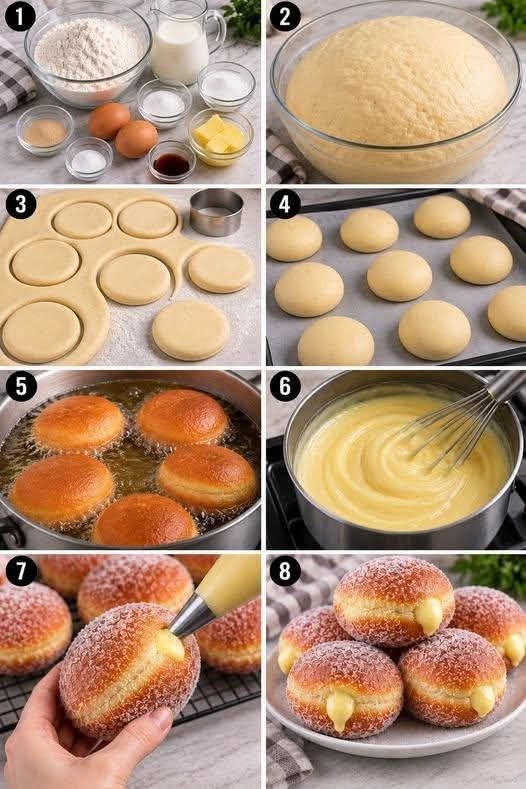
Classic Italian Bomboloni
Introduction
Bomboloni are soft, golden Italian doughnuts with a wonderfully light and tender center. Traditionally fried until beautifully golden, they are often filled with pastry cream, chocolate cream, jam, or other sweet fillings and finished with a generous coating of sugar.
These Italian treats are especially popular for breakfast, an afternoon snack, or a sweet accompaniment to coffee. The dough is enriched with eggs, butter, milk, and sugar, which gives the finished bomboloni their delicate texture and rich flavor.
The secret to excellent bomboloni is patience. The dough needs enough time to rise properly, and the oil must remain at the right temperature during frying. When prepared carefully, the result is a pillowy doughnut with a crisp golden exterior and a soft, airy interior.
Ingredients
For the Dough
- 500 g bread flour
- 250 ml whole milk, lukewarm
- 70 g granulated sugar
- 7 g active dry yeast
- 2 large eggs, at room temperature
- 75 g unsalted butter, softened
- 1 teaspoon vanilla extract
- 1 pinch of salt
For Frying
- Vegetable oil, sunflower oil, or another neutral frying oil, enough for deep frying
For Finishing
- Granulated sugar, for coating
Optional Fillings
Bomboloni can be enjoyed plain, but filling them makes them especially indulgent. Some excellent choices include:
- Vanilla pastry cream
- Chocolate pastry cream
- Apricot or strawberry jam
- Raspberry jam
- Lemon cream
- Hazelnut chocolate spread
- Pistachio cream
- Sweetened ricotta cream
Instructions
Step 1: Activate the Yeast
Place the lukewarm milk in a small bowl. The milk should feel warm but not hot. Add the active dry yeast and a small portion of the sugar.
Stir gently and allow the mixture to stand for approximately 5 to 10 minutes. The yeast should begin to dissolve and may develop a light foamy layer on the surface.
If the mixture does not show any activity, check that the yeast is fresh and that the milk was not too hot or too cold.
Step 2: Prepare the Dough
Place the bread flour in a large mixing bowl or the bowl of a stand mixer.
Add the remaining sugar and the pinch of salt. Mix briefly to distribute the dry ingredients.
Add the eggs, vanilla extract, and the milk-and-yeast mixture.
Begin mixing until the ingredients come together into a rough dough.
At this stage, the dough may look sticky and uneven. This is normal.
Step 3: Add the Butter
Add the softened butter gradually, incorporating a small amount at a time.
Continue kneading until the butter is completely absorbed before adding more.
Knead the dough for approximately 8 to 12 minutes by machine, or longer by hand, until it becomes smooth, elastic, and soft.
The dough should remain slightly tacky but should not be extremely wet.
A good test is to stretch a small piece of dough gently between your fingers. It should stretch thinly without immediately tearing. This indicates that the gluten has developed sufficiently.
Step 4: First Rise
Shape the dough into a loose ball and place it in a lightly greased bowl.
Cover the bowl with plastic wrap or a clean kitchen towel.
Leave the dough in a warm, draft-free place for approximately 1 to 2 hours, or until it has noticeably increased in size, ideally close to doubling.
The exact rising time depends on the temperature of the room and the activity of the yeast.
Step 5: Prepare the Work Surface
Once the dough has risen, gently transfer it to a lightly floured work surface.
Do not aggressively punch the dough down. Instead, gently press out some of the larger air bubbles while preserving as much of the dough’s structure as possible.
Roll the dough to approximately 1.5 to 2 cm thick.
Step 6: Cut the Bomboloni
Using a round cookie cutter or pastry cutter approximately 7 to 8 cm in diameter, cut circles from the dough.
Transfer each circle onto a small square of parchment paper or onto a lightly floured tray.
Leave enough space between the pieces so they do not stick together during the second rise.
Gather the remaining dough, gently reshape it, allow it to rest briefly, and roll it again to cut additional bomboloni.
Avoid repeatedly working the dough because excessive handling can make the finished doughnuts tougher.
Step 7: Second Rise
Cover the shaped bomboloni loosely with a clean towel or plastic wrap.
Allow them to rise for approximately 30 to 60 minutes.
They should become visibly puffy and light.
Do not rush this stage. Proper proofing is one of the most important steps for achieving a fluffy interior.
Step 8: Heat the Oil
Pour enough neutral oil into a deep, heavy saucepan or deep fryer to allow the bomboloni to float freely.
Heat the oil to approximately 170 to 175°C.
A kitchen thermometer is strongly recommended because the oil temperature has a major effect on the finished doughnuts.
If the oil is too cool, the bomboloni can absorb excessive oil and become greasy.
If the oil is too hot, the outside can brown quickly while the center remains undercooked.
Step 9: Fry the Bomboloni
Carefully place a few bomboloni into the hot oil. Do not overcrowd the pan.
Fry them for approximately 2 to 3 minutes per side, turning carefully when the first side becomes golden brown.
They should develop an even golden exterior and feel light and slightly firm when cooked.
Remove them with a slotted spoon and transfer them to a tray lined with paper towels to absorb excess oil.
Continue frying the remaining bomboloni in batches.
Allow the oil to return to the proper temperature between batches.
Step 10: Coat With Sugar
While the bomboloni are still warm, roll them generously in granulated sugar.
The warmth helps the sugar adhere to the surface.
For a more delicate finish, you can also dust them lightly with powdered sugar instead.
Filling the Bomboloni
Once the bomboloni have cooled enough to handle, use a small knife or piping nozzle to make a hole in the side of each doughnut.
Fill a piping bag with your preferred cream, custard, jam, or chocolate filling.
Insert the piping tip into the opening and gently squeeze until the bombolone feels pleasantly full.
Do not overfill, because excessive pressure can cause the filling to leak out.
Classic Vanilla Pastry Cream Filling
For a traditional-style bomboloni filling, vanilla pastry cream is an excellent choice.
Ingredients
- 500 ml whole milk
- 4 egg yolks
- 100 g sugar
- 40 g cornstarch
- 1 teaspoon vanilla extract
- 20 g unsalted butter, optional
Method
Warm the milk in a saucepan until steaming but not boiling.
In a separate bowl, whisk together the egg yolks, sugar, and cornstarch until smooth.
Gradually whisk the warm milk into the egg mixture.
Return everything to the saucepan and cook over medium heat, whisking constantly.
The mixture will gradually thicken. Continue cooking until it reaches a smooth, thick custard consistency.
Remove from the heat and stir in the vanilla and butter, if using.
Transfer the pastry cream to a clean bowl and cover the surface directly with plastic wrap.
Allow it to cool completely before piping into the bomboloni.
Important Methods for Perfect Bomboloni
Use Lukewarm Milk
Milk that is too hot can damage the yeast. Lukewarm milk is ideal for encouraging yeast activity.
Knead the Dough Properly
The dough needs enough kneading to develop gluten. This helps create the elastic structure necessary for a light, fluffy bombolone.
Do Not Add Too Much Flour
Because the dough is enriched with butter, eggs, and milk, it can feel somewhat soft and sticky.
Adding excessive flour may make the finished bomboloni dense instead of tender.
Give the Dough Enough Time to Rise
The first and second rises are both important. Proper fermentation contributes to the flavor and airy texture.
Maintain the Correct Oil Temperature
Keeping the oil around 170 to 175°C is one of the most useful ways to achieve evenly cooked bomboloni.
Avoid Overcrowding
Frying too many at once lowers the oil temperature and can lead to greasy doughnuts.
Fill After Frying
Allow the bomboloni to cool slightly before filling them. This prevents delicate creams from becoming excessively warm and helps maintain the structure of the doughnut.
History of Bomboloni
Bomboloni are associated particularly strongly with Italian pastry culture and are especially well known in Tuscany and central Italy. They belong to the broad family of fried, enriched dough pastries found throughout Europe and the Mediterranean.
Their name comes from the Italian word “bomba,” meaning “bomb,” a reference commonly associated with their round, plump appearance.
Bomboloni have become a familiar part of Italian café and pastry-shop culture. They are often enjoyed freshly fried, coated in sugar, and filled with pastry cream or other sweet fillings.
Although similar fried pastries exist in many countries, Italian bomboloni have their own distinctive identity. Their soft enriched dough, golden exterior, generous filling, and simple sugar coating make them particularly recognizable.
Formation and Texture
The formation of bomboloni is based on several important stages.
First, yeast ferments the dough and produces carbon dioxide. This creates air pockets within the developing gluten network.
Second, butter, eggs, milk, and sugar enrich the dough. These ingredients contribute tenderness, richness, color, and flavor.
Third, the shaped dough receives a second rise. This creates additional volume before frying.
Finally, frying rapidly cooks the exterior while the interior expands and becomes soft and airy.
When properly prepared, a good bombolone should have a lightly crisp exterior, a fluffy center, and enough structure to hold a generous filling.
Serving Suggestions
Bomboloni are wonderful served fresh and slightly warm.
They pair beautifully with:
- Espresso
- Cappuccino
- Latte
- Hot chocolate
- Black coffee
- Tea
- Fresh fruit
- A light dusting of powdered sugar
For breakfast, serve them alongside coffee and fresh fruit.
For dessert, fill them with pastry cream or chocolate cream and serve them immediately after filling.
They are also excellent for brunches, family gatherings, celebrations, and special weekend breakfasts.
Variations
Bomboloni With Jam
Fill the doughnuts with strawberry, raspberry, apricot, or peach jam and coat generously with sugar.
Chocolate Bomboloni
Fill them with chocolate pastry cream or a smooth hazelnut-chocolate filling.
Pistachio Bomboloni
Pistachio cream gives the doughnuts a rich nutty flavor and pairs beautifully with the buttery dough.
Lemon Bomboloni
A bright lemon pastry cream provides a refreshing contrast to the fried dough.
Ricotta Bomboloni
A sweetened ricotta filling creates a creamy Italian-inspired variation.
Storage
Bomboloni are best eaten on the day they are made.
Because they are fried and filled, their texture gradually changes during storage.
Unfilled bomboloni can be kept in an airtight container for a short period at room temperature.
Filled bomboloni containing pastry cream should be refrigerated and consumed promptly.
For the best texture, allow refrigerated bomboloni to sit briefly at room temperature before serving.
Troubleshooting
The Bomboloni Are Dense
This can happen when the dough has not been kneaded sufficiently, the yeast is inactive, or the dough has not been allowed to rise properly.
They Absorb Too Much Oil
The oil may be too cool, or the dough may be under-proofed.
The Outside Burns Too Quickly
The oil temperature is probably too high. Reduce the heat and allow the oil to stabilize before continuing.
They Collapse After Frying
Over-proofing can weaken the dough structure. The second rise should make the dough puffy but not excessively swollen.
The Dough Is Too Sticky
Resist adding large amounts of flour immediately. Continue kneading first. If necessary, lightly grease your hands or work surface rather than heavily flouring the dough.
Conclusion
Homemade Bomboloni are a beautiful example of how simple ingredients can become an extraordinary dessert through careful preparation. The combination of enriched yeast dough, gentle fermentation, hot oil, sugar, and creamy filling produces a treat that is soft, rich, fragrant, and incredibly satisfying.
The most important elements are patience, proper dough development, careful proofing, and controlled frying. Once these techniques become familiar, bomboloni are surprisingly approachable to make at home.
Freshly fried and rolled in sugar, then filled with silky vanilla pastry cream, they make a memorable breakfast, afternoon treat, or dessert.
For Bomboloni Lovers
If you love soft Italian pastries, bomboloni are a recipe worth mastering. Their versatility makes them especially enjoyable because the same basic dough can be transformed with different fillings and toppings.
For a traditional experience, choose vanilla pastry cream and granulated sugar. For something richer, try chocolate or pistachio cream. For a fruity version, use raspberry, strawberry, or apricot jam.
The best part is serving them fresh: warm, fluffy, golden, generously filled, and covered in a delicate layer of sugar.