
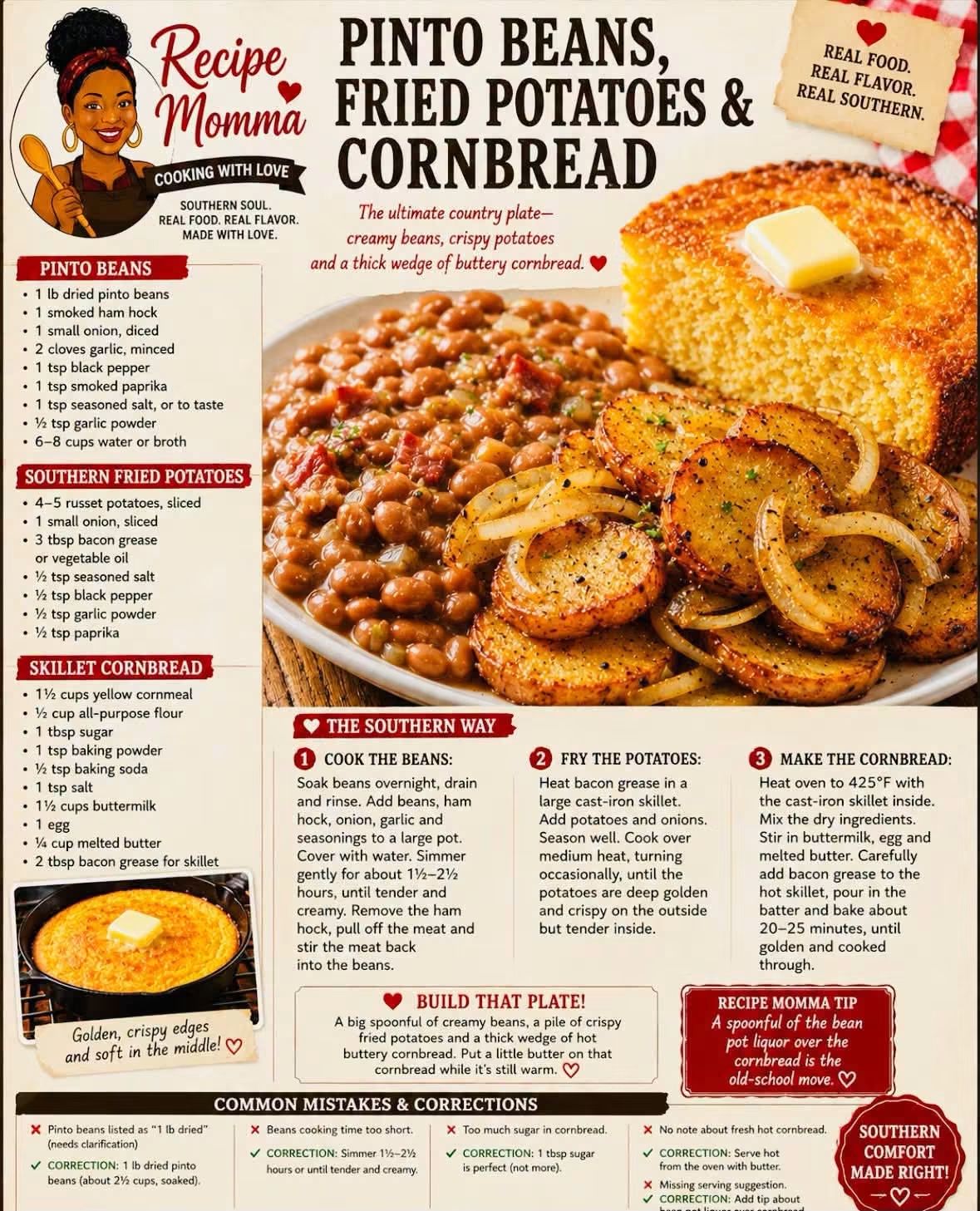
Pinto Beans, Fried Potatoes, and Cornbread
Introduction
Pinto beans, fried potatoes, and cornbread are the kind of meal that proves simple food can be deeply satisfying. Each part brings something special to the table: tender pinto beans cooked until creamy and flavorful, golden potatoes fried until crisp around the edges, and warm cornbread with a lightly crisp crust and soft, tender center.
This is a traditional comfort-food combination that works beautifully as a hearty family dinner, a weekend meal, or a generous country-style lunch. It is inexpensive, filling, easy to prepare, and made with ingredients that have long been staples in home kitchens.
The beauty of this meal is that it does not need complicated ingredients or elaborate techniques. The beans provide warmth and richness, the potatoes add texture and savory flavor, and the cornbread is perfect for soaking up the delicious bean broth.
Ingredients
For the Pinto Beans
- 1 pound dried pinto beans
- 8 cups water, plus more for soaking if needed
- 1 medium onion, finely chopped
- 3 cloves garlic, minced
- 1 smoked ham hock or 4 ounces smoked turkey, optional
- 1 teaspoon salt, plus more to taste
- 1/2 teaspoon black pepper
- 1 teaspoon smoked paprika
- 1/2 teaspoon chili powder, optional
- 1 bay leaf
- 1 tablespoon bacon grease or vegetable oil, optional
- 4 to 6 cups additional water or broth as needed
For the Fried Potatoes
- 5 to 6 medium russet or Yukon Gold potatoes
- 1 medium onion, sliced
- 3 tablespoons vegetable oil, bacon grease, or a combination
- 1 teaspoon salt
- 1/2 teaspoon black pepper
- 1/2 teaspoon paprika
- 1/2 teaspoon garlic powder
- 1/4 teaspoon onion powder
- Optional: a pinch of cayenne pepper
For the Cornbread
- 1 1/2 cups yellow cornmeal
- 1/2 cup all-purpose flour
- 1 tablespoon baking powder
- 1/2 teaspoon baking soda
- 1/2 teaspoon salt
- 1 large egg
- 1 1/4 cups buttermilk
- 1/4 cup melted butter
- 2 tablespoons vegetable oil or melted butter for the pan
- 1 tablespoon sugar, optional
Preparing the Pinto Beans
Begin by sorting through the dried beans and removing any small stones, damaged beans, or debris. Rinse the beans thoroughly under cool running water.
Place the beans in a large bowl and cover them with several inches of water. Allow them to soak for at least 6 hours or overnight. Drain and rinse before cooking.
If you prefer not to soak the beans overnight, you can use the quick-soak method. Place the beans in a large pot, cover them with water, bring them to a boil, and cook for 2 minutes. Remove the pot from the heat, cover it, and allow the beans to sit for about 1 hour. Drain and rinse.
Transfer the soaked beans to a large heavy-bottomed pot.
Add the chopped onion, garlic, bay leaf, black pepper, smoked paprika, and optional smoked meat. Pour in enough water or broth to cover the beans by about 1 to 2 inches.
Bring the mixture to a gentle boil, then reduce the heat to low. Cover partially and allow the beans to simmer slowly.
Cook for approximately 1 1/2 to 2 1/2 hours, depending on the age and size of the beans. Stir occasionally and add more water or broth whenever necessary to keep the beans covered.
When the beans become tender, add the salt and continue cooking for another 15 to 20 minutes.
For a thicker, creamier consistency, gently mash a small portion of the beans against the side of the pot and stir them back into the broth.
Taste and adjust the seasoning. Remove the bay leaf and smoked meat before serving if desired.
Preparing the Fried Potatoes
While the beans are cooking, prepare the potatoes.
Wash and peel the potatoes if desired. Leaving the skins on is also perfectly acceptable and gives the potatoes a rustic texture.
Cut the potatoes into small cubes or thin slices. Try to keep the pieces relatively similar in size so they cook evenly.
Place the potatoes in a bowl of cold water and let them sit for about 10 minutes. This helps remove some surface starch and can help them become crispier when fried.
Drain the potatoes and dry them thoroughly with a clean kitchen towel.
Heat the oil or bacon grease in a large heavy skillet over medium heat.
Add the potatoes in an even layer. Avoid overcrowding the pan; if necessary, cook them in batches.
Allow the potatoes to cook undisturbed for several minutes so the bottoms can develop a golden crust. Turn them occasionally and continue cooking until they are browned on the outside and tender inside.
Add the sliced onion and continue cooking until the onion becomes soft and lightly caramelized.
Season with salt, black pepper, paprika, garlic powder, onion powder, and optional cayenne pepper.
Continue frying for several more minutes until the potatoes are deeply golden and crisp in places.
Remove from the heat and serve hot.
Preparing the Cornbread
Preheat the oven to 425°F, or about 220°C.
Place a cast-iron skillet or baking pan in the oven while it preheats. Heating the pan helps create a beautifully crisp bottom and edge.
In a large bowl, combine the cornmeal, flour, baking powder, baking soda, salt, and optional sugar.
In another bowl, whisk together the egg, buttermilk, and melted butter.
Pour the wet ingredients into the dry ingredients and stir gently until just combined. Do not overmix. A few small lumps are perfectly fine.
Carefully remove the hot skillet from the oven. Add the vegetable oil or melted butter and swirl it around the bottom of the pan.
Pour the cornbread batter into the hot skillet. You should hear a gentle sizzle as the batter hits the pan.
Return the skillet to the oven and bake for approximately 18 to 25 minutes, or until the top is golden and a toothpick inserted into the center comes out mostly clean.
Allow the cornbread to rest for 5 to 10 minutes before slicing.
Method for Bringing Everything Together
For the best experience, serve the meal while every component is hot.
Spoon a generous serving of creamy pinto beans into a bowl. Add a portion of golden fried potatoes alongside the beans. Place a thick slice of warm cornbread on the plate or serve it directly with the beans.
Some people enjoy crumbling cornbread directly into the beans, allowing it to absorb the flavorful broth. Others prefer eating the cornbread separately, taking bites between spoonfuls of beans and potatoes.
A little hot sauce, chopped green onion, sliced jalapeño, or a spoonful of chopped fresh herbs can also be offered at the table.
History and Tradition
Pinto beans have been an important food throughout the American Southwest and South for generations. Their affordability, nutritional value, and ability to produce a satisfying meal from simple pantry ingredients made them especially useful in traditional home cooking.
Beans were often cooked slowly in large pots with onions, smoked meat, herbs, and seasonings. The long cooking process transformed inexpensive dried beans into a rich and comforting dish.
Potatoes became another dependable staple because they were inexpensive, versatile, and filling. Fried potatoes could be prepared in a cast-iron skillet with onions and a small amount of cooking fat, making them a natural companion to beans.
Cornbread has an even longer history in North American cooking, with corn-based breads developing from Indigenous food traditions and later becoming deeply established in Southern and regional American cuisine.
Together, beans, potatoes, and cornbread represent a style of cooking centered on practicality, nourishment, and making memorable food from everyday ingredients.
Formation of the Meal
The character of this meal comes from the contrast between its three main components.
The pinto beans are soft, creamy, and savory. Their broth becomes rich as the beans cook and release their natural starches.
The fried potatoes provide the opposite texture. Their edges become crisp and browned while the centers remain tender and fluffy. The onions add sweetness and depth.
The cornbread brings everything together. Its slightly crisp exterior and tender interior make it ideal for dipping into the bean broth.
The result is a meal that is humble in ingredients but generous in flavor and texture.
Helpful Cooking Tips
For creamier beans, cook them slowly rather than boiling them aggressively.
Do not add excessive salt at the beginning if you are using smoked meat, because the meat may already contain significant salt.
If your beans become too thick, add a little hot water or broth and stir gently.
For crispier potatoes, make sure they are completely dry before adding them to the hot skillet.
Avoid turning the potatoes constantly. Giving them time to remain in contact with the skillet helps develop their golden crust.
For tender cornbread, mix the batter only until the ingredients are combined.
A preheated cast-iron skillet gives the cornbread especially crisp edges.
Serving Suggestions
This meal can be served as a complete dinner on its own, but several simple additions work beautifully.
Consider serving it with:
- Sliced tomatoes
- Collard greens
- Fried or sautéed cabbage
- Pickled onions
- Fresh green onions
- Jalapeños
- Hot sauce
- Sliced cucumber
- A simple green salad
- Pickles
- Chopped fresh parsley
For a richer version, serve the beans with a little shredded cheese or additional smoked meat.
Make-Ahead Method
The pinto beans can be prepared a day ahead. In fact, many people find that beans taste even better after resting overnight because the flavors have more time to develop.
Allow the beans to cool and refrigerate them in a covered container.
When ready to serve, reheat them gently on the stovetop. Add a small amount of water or broth if they have become too thick.
The fried potatoes are best when freshly cooked, although leftovers can be reheated in a skillet to restore some of their crispness.
Cornbread can also be made ahead and reheated briefly in the oven.
Storage
Store leftover beans in an airtight container in the refrigerator for up to 4 days.
Store fried potatoes separately in the refrigerator and reheat them in a skillet or oven rather than the microwave if you want to maintain their texture.
Store cornbread in an airtight container at room temperature for a short period or refrigerate it for longer storage.
Leftover beans can also be frozen in appropriate freezer-safe containers. Thaw them in the refrigerator and reheat gently.
Why People Love This Meal
People love pinto beans, fried potatoes, and cornbread because the combination feels familiar and satisfying without being complicated.
It is the kind of food that can remind people of family kitchens, long Sunday meals, cast-iron skillets, and large pots simmering on the stove.
It also offers excellent flexibility. The beans can be made smoky, spicy, mild, or vegetarian. The potatoes can be sliced or cubed. The cornbread can be sweet or savory depending on personal preference.
Most importantly, the meal is filling and comforting while relying on simple ingredients.
Conclusion
Pinto beans, fried potatoes, and cornbread are a wonderful example of traditional comfort cooking. Each component is uncomplicated, but together they create a complete meal with creamy beans, crispy potatoes, tender onions, and warm homemade cornbread.
This is food meant to be shared generously. It is perfect for a family dinner, a weekend gathering, or any day when you want something hearty and homemade.
Serve it hot, place the cornbread within easy reach, and let everyone help themselves to a generous portion. Sometimes the simplest meals are the ones people remember the longest.