
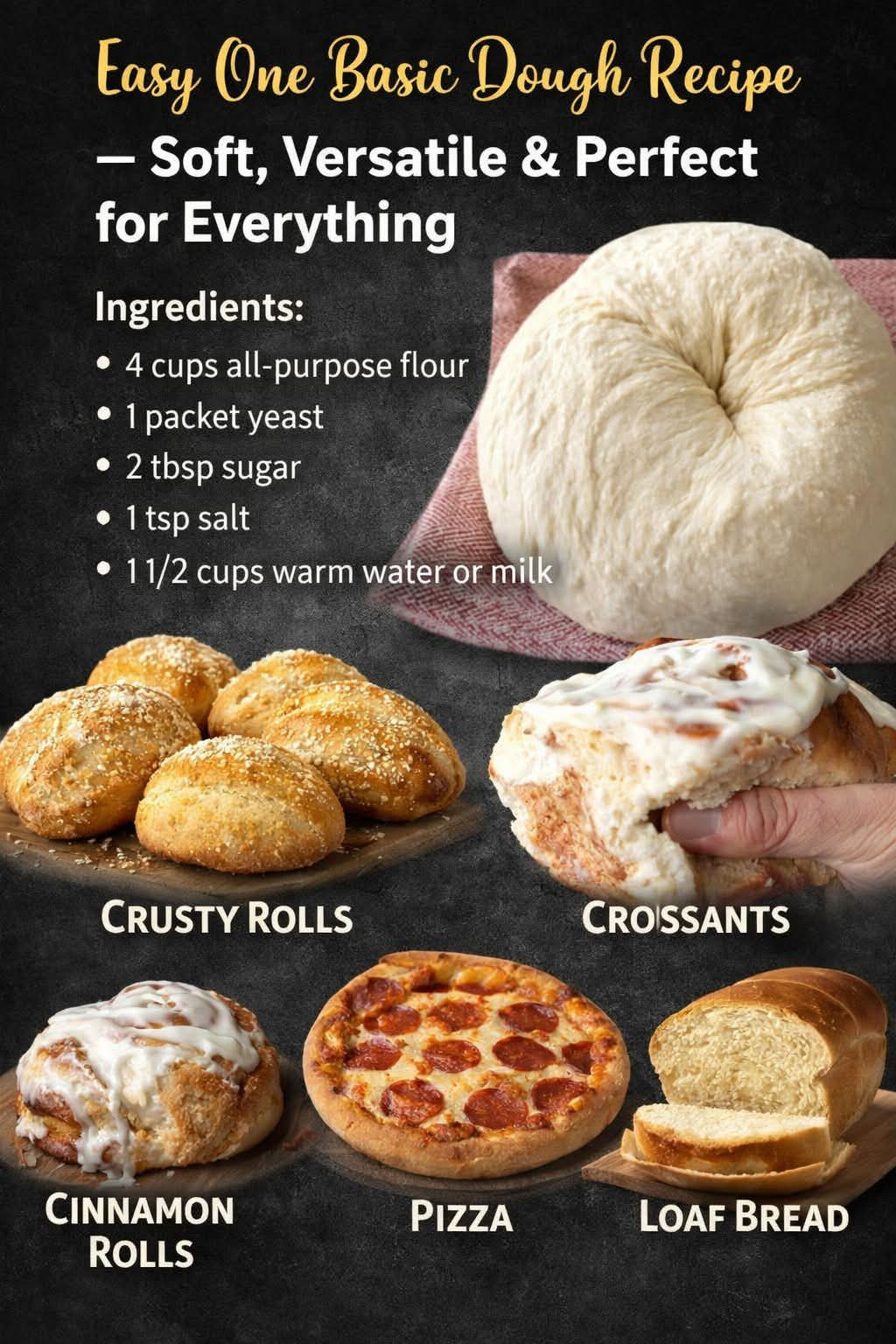
Easy One Basic Dough Recipe — Soft, Versatile and Perfect for Everything
Introduction
A reliable basic dough recipe is one of the most useful recipes to have in any kitchen. With just a handful of everyday ingredients, you can prepare a soft, yeast-based dough that can be transformed into homemade bread, pizza, dinner rolls, buns, garlic knots, stuffed breads, and many other delicious recipes.
This dough is simple enough for beginners but versatile enough to become a regular part of your cooking routine. The combination of flour, yeast, sugar, salt, and warm liquid creates a dough that is soft, elastic, and easy to shape.
The best part is that you do not need complicated equipment or special ingredients. Once you learn the basic method, you can adjust the dough according to what you are making.
Ingredients
For the Basic Dough
- 4 cups all-purpose flour
- 1 packet active dry yeast or instant yeast, approximately 2 1/4 teaspoons
- 2 tablespoons granulated sugar
- 1 teaspoon salt
- 1 1/2 cups warm water or warm milk
- 2 tablespoons vegetable oil or melted butter, optional but recommended for a softer dough
Optional Additions
Depending on how you plan to use the dough, you can add:
- 1 teaspoon garlic powder for savory breads
- 1 teaspoon dried Italian herbs for pizza or herb rolls
- 1 tablespoon honey instead of some or all of the sugar
- 1 tablespoon olive oil for a richer flavor
- Sesame seeds, poppy seeds, or herbs for topping
Instructions
Step 1: Prepare the Yeast
If using active dry yeast, place the warm water or milk in a large bowl. The liquid should feel comfortably warm, not hot. Add the sugar and yeast and stir gently.
Let the mixture stand for about 5 to 10 minutes. The yeast should become slightly foamy. This is a sign that the yeast is active.
If using instant yeast, you can mix it directly with the flour and other dry ingredients without proofing it first.
Step 2: Combine the Dry Ingredients
In a large mixing bowl, combine the flour and salt.
If you are using instant yeast, add it to the flour along with the sugar.
Mix everything together so the ingredients are evenly distributed.
Step 3: Make the Dough
Pour the warm liquid and the optional oil or melted butter into the flour mixture.
Stir with a wooden spoon or sturdy spatula until a rough dough begins to form.
The dough may initially look slightly sticky or uneven. This is normal.
Step 4: Knead the Dough
Transfer the dough to a lightly floured work surface.
Knead it for approximately 8 to 10 minutes by hand. Push the dough forward with the heel of your hand, fold it back toward you, rotate it, and repeat.
Continue kneading until the dough becomes smooth, soft, and elastic.
If the dough is extremely sticky, add flour one tablespoon at a time. Avoid adding too much flour because this can make the finished bread dense and dry.
If the dough feels too dry or difficult to bring together, add warm water one tablespoon at a time.
Step 5: First Rise
Place the kneaded dough in a lightly greased bowl.
Turn the dough once so that its surface is lightly coated with oil.
Cover the bowl with plastic wrap, a clean kitchen towel, or a reusable cover.
Place it somewhere warm and allow it to rise for approximately 1 to 1 1/2 hours, or until it has doubled in size.
The exact rising time will depend on the temperature of your kitchen.
Step 6: Release the Air
Once the dough has doubled, gently press it down with your fingertips to remove some of the trapped air.
Transfer it to a lightly floured surface.
At this stage, the dough is ready to be divided and shaped according to your recipe.
Methods
Method for Homemade Bread
Divide the dough into one or two portions depending on the size of loaf you want.
Shape each portion into a smooth loaf and place it in a greased loaf pan or on a baking sheet.
Cover and allow the shaped dough to rise again for approximately 30 to 45 minutes.
Bake at 375°F (190°C) until golden brown and cooked through, generally about 25 to 35 minutes depending on the size and shape.
Allow the bread to cool before slicing.
Method for Dinner Rolls
Divide the dough into 12 to 16 equal pieces.
Shape each piece into a smooth ball by pulling the edges underneath.
Arrange the dough balls in a lightly greased baking dish, leaving a little space between them.
Cover and let them rise for approximately 30 to 45 minutes.
Brush the tops with melted butter if desired.
Bake at 375°F (190°C) for approximately 15 to 20 minutes, or until golden.
Brush the hot rolls with additional melted butter for a soft, flavorful finish.
Method for Pizza
Divide the dough into two portions for medium pizzas.
Let the dough rest for about 10 to 15 minutes before stretching or rolling it.
Place the dough on a lightly floured surface and stretch it into your desired pizza shape.
Transfer it to a pizza pan or baking sheet.
Add pizza sauce, cheese, vegetables, meats, or your favorite toppings.
Bake at approximately 450°F (230°C) until the crust is golden and the cheese is bubbling, usually 12 to 18 minutes depending on thickness and oven temperature.
Method for Garlic Knots
Cut the dough into strips and roll each strip gently into a rope.
Tie each rope into a loose knot and place the knots on a greased baking sheet.
Allow them to rest for 20 to 30 minutes.
Bake at 375°F (190°C) until golden brown.
After baking, brush them generously with melted butter mixed with garlic and herbs.
Method for Stuffed Bread
Roll the dough into a rectangle.
Add your preferred filling, such as cheese, cooked vegetables, seasoned meat, spinach, or herbs.
Fold or roll the dough around the filling and seal the edges carefully.
Place it on a baking sheet and allow it to rise for approximately 30 minutes.
Bake at 375°F (190°C) until golden brown and completely cooked.
The History of Basic Yeast Dough
Yeast-based dough has been part of traditional bread-making for thousands of years. Ancient civilizations discovered that naturally occurring yeast could cause dough to ferment and expand, creating lighter and more flavorful breads.
Over generations, bread-making techniques became more refined. Different cultures developed their own versions of basic dough, using local grains, liquids, fats, and seasonings.
The basic principle remains remarkably simple: flour provides structure, liquid hydrates the flour, yeast creates fermentation and lift, salt adds flavor and controls fermentation, and sugar can provide sweetness while helping yeast activity.
Modern packaged yeast has made homemade bread much easier and more predictable, allowing home cooks to prepare traditional yeast dough without relying on naturally fermented starters.
Formation of the Dough
The formation of this dough begins when flour comes into contact with liquid. The flour absorbs the liquid, allowing gluten-forming proteins to develop.
Kneading strengthens the gluten network. This network gives the dough its elasticity and allows it to hold the carbon dioxide produced by the yeast.
During fermentation, yeast consumes available sugars and produces carbon dioxide and other fermentation compounds. The carbon dioxide becomes trapped inside the developing gluten structure, causing the dough to expand.
The first rise develops the dough’s texture and flavor. Shaping then redistributes the dough, and the second rise gives the shaped bread additional volume before baking.
During baking, the dough expands further from oven heat and the gases inside it. Eventually, the gluten structure sets and the crust develops its characteristic golden color.
Tips for Perfect Dough
Use warm rather than hot liquid. Very hot liquid can damage or kill yeast.
Do not add too much flour during kneading. A slightly soft dough generally produces a lighter finished bread.
Give the dough enough time to rise. Rising time depends on room temperature, yeast activity, and the temperature of the ingredients.
Knead until the dough becomes smooth and elastic. Proper kneading is important for developing the gluten structure.
Allow shaped dough to rest before baking. This second rise helps produce a lighter texture.
For a softer crust, brush freshly baked bread or rolls with melted butter.
For a crispier pizza crust, use a hotter oven and avoid adding excessive toppings.
Storage
Freshly baked bread is best enjoyed within the first few days.
Once completely cooled, store bread or rolls in an airtight container or sealed bag at room temperature.
For longer storage, wrap the baked bread securely and freeze it.
You can also freeze portions of the unbaked dough. After the first rise, divide the dough into portions, wrap them tightly, and freeze. Thaw the dough in the refrigerator before allowing it to come to room temperature and continue with shaping and baking.
Conclusion
This easy basic dough is one of those recipes that can become a dependable foundation for countless homemade meals. Once you become comfortable with the simple process of mixing, kneading, rising, shaping, and baking, you can use the same dough for everything from everyday bread and fluffy dinner rolls to homemade pizza and stuffed breads.
The recipe is simple, economical, and adaptable. You can make it richer with butter or oil, change the seasonings for savory recipes, or shape it differently depending on what you are craving.
Learning one good basic dough recipe gives you the freedom to create many different breads from the same simple ingredients.
For Bread Lovers
Bread lovers will appreciate how versatile this dough can be. It can be made into a soft loaf for sandwiches, fluffy rolls for dinner, a chewy pizza crust for family nights, or garlic knots for serving alongside pasta.
The dough can also become the foundation for creative homemade recipes. Add cheese, herbs, garlic, cooked vegetables, or other favorite fillings to create something completely different.
For anyone who enjoys homemade bread, this is a recipe worth keeping close. Once you master the technique, you may find yourself making it regularly because it is simple, flexible, and easy to adapt.
Final Method at a Glance
Mix the ingredients.
Knead until smooth and elastic.
Let the dough rise until doubled.
Gently deflate and divide.
Shape according to your recipe.
Allow the shaped dough to rise again.
Bake until golden and fully cooked.
Cool slightly and serve.
This simple process gives you a dependable homemade dough that can be transformed into bread, pizza, rolls, knots, buns, and many other delicious creations.