
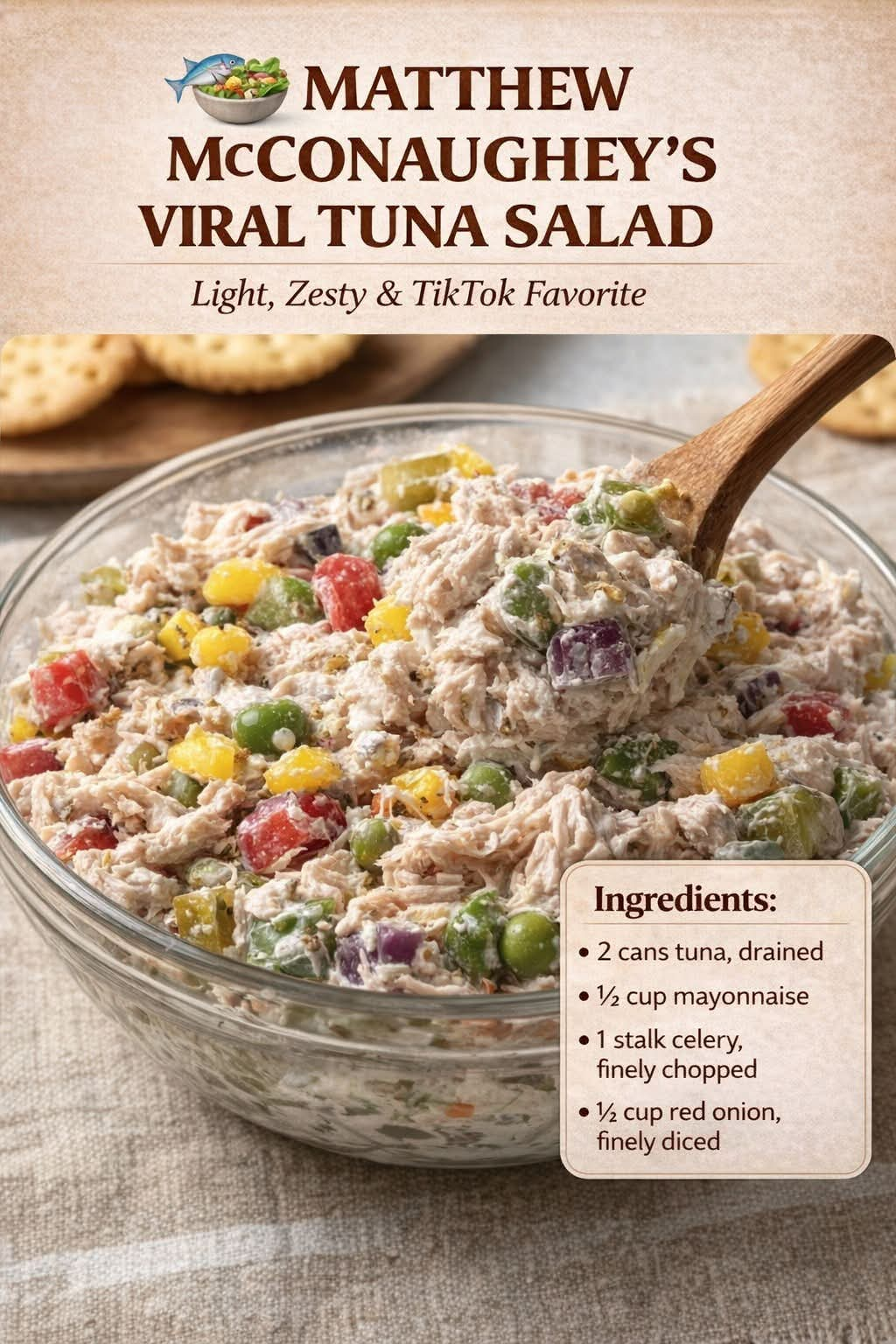
Matthew McConaughey’s Viral Tuna Salad
Introduction
Matthew McConaughey’s tuna salad has become a popular idea for anyone looking for a quick, fresh, satisfying lunch. It takes the familiar combination of canned tuna and mayonnaise and brightens it with crisp celery, red onion, and fresh lemon juice.
The result is creamy, crunchy, tangy, and flavorful without requiring complicated ingredients or a long cooking process. It can be prepared in just a few minutes and enjoyed on its own, served over lettuce, spooned into a sandwich, or paired with crackers and fresh vegetables.
This tuna salad is especially convenient for busy weekdays because most of the ingredients are pantry or refrigerator staples. It is also easy to prepare ahead of time, making it useful for lunches, picnics, simple dinners, or meal preparation.
Ingredients
- 2 cans tuna, drained
- 1/2 cup mayonnaise
- 1 stalk celery, finely chopped
- 1/4 cup red onion, finely diced
- 1 tablespoon fresh lemon juice
- Salt, to taste
- Black pepper, to taste
Optional Additions
For additional flavor or texture, you can add:
- 1 tablespoon chopped fresh parsley
- 1 tablespoon sweet pickle relish
- 1 teaspoon Dijon mustard
- 1 hard-boiled egg, chopped
- 1 tablespoon chopped dill pickles
- A small amount of finely chopped green onion
- A pinch of garlic powder
- A little extra lemon juice for a brighter flavor
These additions are optional and can be adjusted according to your preference.
Instructions
Step 1: Prepare the Tuna
Open the tuna cans and drain them thoroughly. Place the tuna in a medium mixing bowl.
Use a fork to gently break the tuna into smaller pieces. Avoid leaving large chunks unless you prefer a chunkier tuna salad.
Properly draining the tuna is important because excess liquid can make the finished salad watery and prevent the mayonnaise from coating the ingredients properly.
Step 2: Prepare the Vegetables
Wash and finely chop the celery. Dice the red onion into very small pieces.
Small pieces of celery and onion distribute more evenly throughout the salad, giving every bite a little crunch and flavor.
Step 3: Combine the Main Ingredients
Add the mayonnaise, chopped celery, diced red onion, and lemon juice to the tuna.
Using a spoon or spatula, gently mix everything together until the ingredients are evenly combined.
Step 4: Season
Add salt and freshly ground black pepper according to taste.
Taste the mixture before adding too much salt because canned tuna and mayonnaise can already contain some salt.
If you want a brighter flavor, add another small splash of lemon juice.
Step 5: Chill
For the best flavor, cover the bowl and refrigerate the tuna salad for approximately 20 to 30 minutes before serving.
Although it can be eaten immediately, chilling allows the flavors of the onion, celery, lemon, and mayonnaise to come together.
Method
The method is simple and requires no cooking.
Begin by draining and flaking the tuna. Prepare the celery and red onion, then combine them with the tuna in a bowl. Add mayonnaise and lemon juice and mix gently until creamy and well combined.
Season with salt and black pepper. Refrigerate briefly before serving.
The key to a good tuna salad is balance. The mayonnaise provides creaminess, celery supplies freshness and crunch, red onion adds a sharp savory flavor, and lemon juice cuts through the richness with acidity.
How to Serve It
There are many ways to enjoy this tuna salad.
Serve it traditionally between two slices of bread for a quick tuna salad sandwich. Add lettuce, tomato, cucumber, or avocado for extra freshness.
For a lighter meal, spoon the tuna salad over a bed of crisp lettuce and serve it as a salad bowl.
It can also be served with crackers, cucumber slices, carrot sticks, celery sticks, or toasted bread.
For a low-carbohydrate option, use lettuce leaves as wraps or serve the tuna salad alongside fresh vegetables.
You can also spoon it into halved avocados or tomatoes for an attractive lunch presentation.
Tips for the Best Tuna Salad
Choose tuna that you enjoy eating on its own because the flavor will be noticeable in the finished dish.
Drain the tuna thoroughly before mixing. Too much liquid can make the salad loose.
Finely chop the celery and red onion so their flavors are evenly distributed.
Use fresh lemon juice when possible. It provides a cleaner, brighter flavor than bottled lemon juice.
Start with the recommended amount of mayonnaise and add more only if you prefer a creamier consistency.
Allowing the finished salad to rest in the refrigerator for a short time can improve the overall flavor.
History and Background
Tuna salad is part of a long tradition of simple prepared salads made by combining a protein with a creamy dressing and flavorful vegetables.
Canned tuna became increasingly popular as a convenient pantry ingredient during the twentieth century. Its long shelf life and ease of preparation made it particularly useful for sandwiches, salads, casseroles, and quick family meals.
Tuna salad eventually became a familiar lunch staple in many households. Recipes vary widely from one family to another. Some versions contain pickles or relish, while others use mustard, eggs, herbs, onions, celery, or different dressings.
The appeal of this style of tuna salad is its simplicity. A few inexpensive ingredients can be transformed into a filling meal without extensive preparation.
Formation of the Recipe
The recipe is built around four important elements: tuna, creaminess, crunch, and acidity.
The tuna forms the protein-rich base. Mayonnaise gives the mixture a smooth and creamy texture. Celery adds crispness, while red onion contributes a stronger savory bite.
Lemon juice completes the combination by adding acidity. This helps balance the richness of the mayonnaise and gives the salad a fresher taste.
The ingredients work together without overpowering one another, which is why this type of tuna salad can be used in many different meals.
Make-Ahead Instructions
Tuna salad is convenient for preparing ahead of time.
Place the finished salad in a clean, covered container and refrigerate it promptly. When you are ready to eat, stir it before serving.
If the salad seems slightly dry after refrigeration, mix in a small amount of mayonnaise or lemon juice.
For food safety, keep the tuna salad properly refrigerated and avoid leaving it at room temperature for extended periods.
Storage
Store leftover tuna salad in a covered container in the refrigerator.
For the best quality, enjoy it within a few days and always use good food-safety practices. If the salad has been left unrefrigerated for an extended period, it is safer to discard it.
Variations
Greek Yogurt Tuna Salad
Replace some or all of the mayonnaise with plain Greek yogurt for a tangier variation.
Mustard Tuna Salad
Add a teaspoon of Dijon mustard for a sharper, more savory flavor.
Pickle Tuna Salad
Add chopped dill pickles or pickle relish for a sweet-and-tangy variation.
Herb Tuna Salad
Add chopped parsley, dill, or chives for a fresh herbal flavor.
Avocado Tuna Salad
Replace part of the mayonnaise with mashed avocado for a creamy variation with a different flavor profile.
Conclusion
Matthew McConaughey’s viral-style tuna salad is an easy recipe that turns a few everyday ingredients into a satisfying and flavorful meal.
The combination of creamy mayonnaise, tender tuna, crisp celery, sharp red onion, and bright lemon juice creates a balanced texture and flavor in every bite.
It is quick enough for a weekday lunch, simple enough for beginners, and versatile enough to serve in sandwiches, wraps, salads, lettuce cups, or alongside fresh vegetables.
When you need a fast meal without complicated preparation, this tuna salad is a practical recipe to keep in your collection.
For Tuna Salad Lovers
If you enjoy classic comfort food, quick lunches, and recipes that require minimal preparation, this tuna salad is an excellent addition to your recipe collection.
It is especially appealing to people who appreciate recipes that can be customized. You can make it creamier, crunchier, tangier, spicier, or lighter simply by adjusting the ingredients.
The best part is that you do not need special equipment or advanced cooking skills. A bowl, a fork, a few minutes, and a handful of simple ingredients are enough to create a flavorful meal that can be enjoyed in many different ways.