
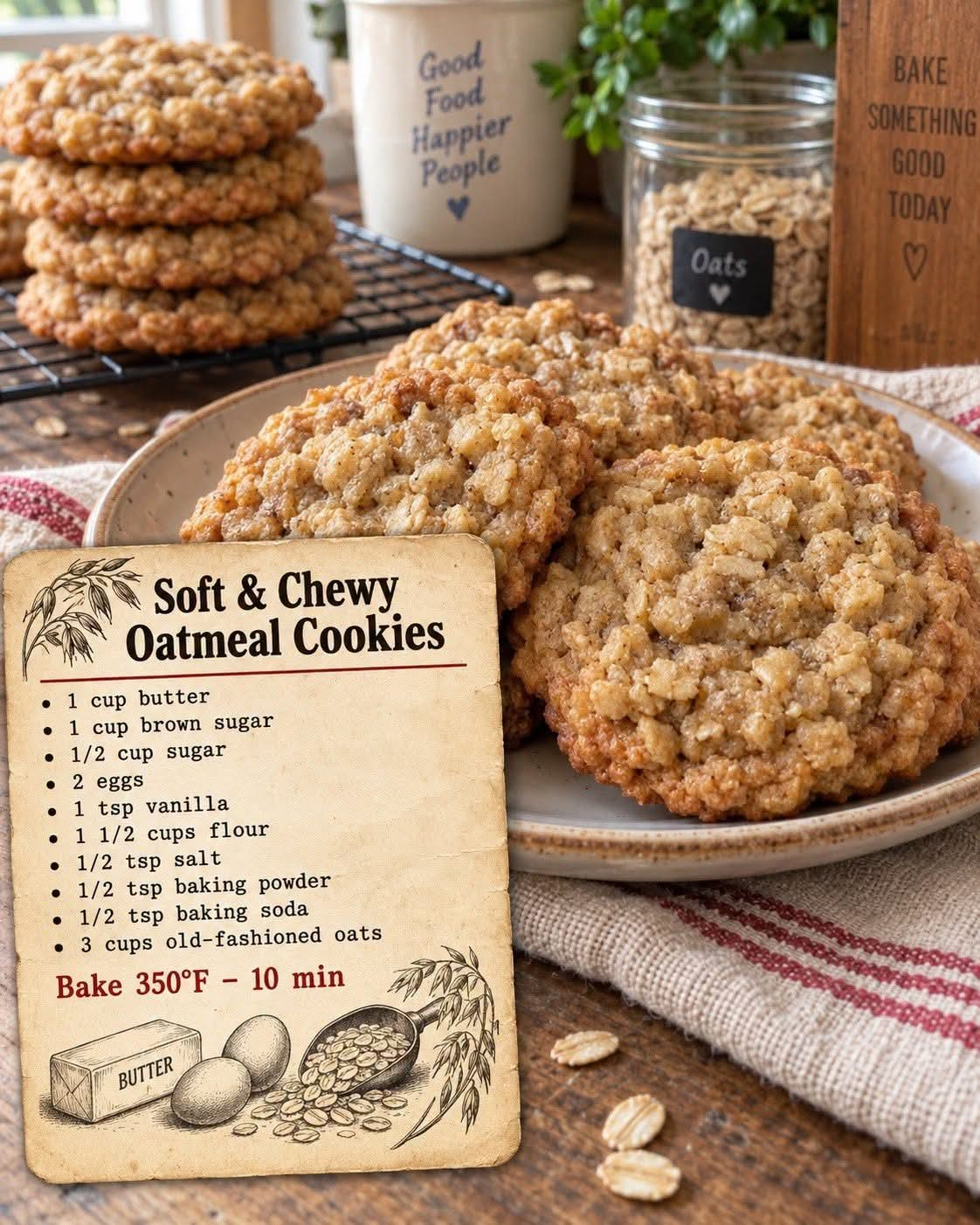
Soft and Chewy Oatmeal Cookies
Introduction
There is something wonderfully comforting about a freshly baked oatmeal cookie. The aroma of warm cinnamon filling the kitchen, the slightly crisp edges, and the soft, chewy center make these cookies feel like a classic homemade treat.
These Soft and Chewy Oatmeal Cookies are simple enough for an ordinary afternoon but delicious enough to serve at family gatherings, holidays, bake sales, or alongside a cup of coffee or tea. Rolled oats give the cookies their satisfying texture, while brown sugar helps create that soft, chewy consistency that makes it difficult to stop at just one.
The recipe is straightforward, uses familiar pantry ingredients, and can easily be adapted with raisins, chocolate chips, chopped nuts, or dried cranberries.
Ingredients
For the Cookies
- 1 cup unsalted butter, softened
- 1 cup packed brown sugar
- 1/2 cup granulated sugar
- 2 large eggs
- 2 teaspoons vanilla extract
- 1 1/2 cups all-purpose flour
- 1 teaspoon baking soda
- 1/2 teaspoon salt
- 1 1/2 teaspoons ground cinnamon
- 3 cups old-fashioned rolled oats
Optional Additions
- 1 cup raisins
- 1 cup chocolate chips
- 1/2 cup chopped walnuts or pecans
- 1/2 cup dried cranberries
- 1/4 teaspoon ground nutmeg
Instructions
1. Prepare the Oven
Preheat the oven to 350°F (175°C). Line two baking sheets with parchment paper or lightly grease them.
Preparing the baking sheets before making the dough makes the process easier because the cookies can be portioned and baked immediately once the dough is ready.
2. Cream the Butter and Sugars
Place the softened butter, brown sugar, and granulated sugar in a large mixing bowl.
Beat the mixture for several minutes until it becomes light, creamy, and smooth. This step is important because properly creamed butter helps give the cookies a tender texture.
3. Add the Eggs and Vanilla
Add the eggs one at a time, mixing well after each addition. Stir in the vanilla extract.
The mixture may look slightly creamy and fluffy at this stage. Make sure the ingredients are well incorporated before moving on.
4. Combine the Dry Ingredients
In a separate bowl, whisk together the flour, baking soda, salt, and cinnamon.
If you are using nutmeg, add it to the dry ingredients as well.
Combining the dry ingredients separately helps distribute the baking soda, salt, and spices evenly throughout the cookie dough.
5. Make the Dough
Gradually add the dry mixture to the butter mixture. Mix just until combined.
Do not overmix the dough once the flour has been incorporated. Overmixing can develop too much gluten and make the cookies less tender.
6. Add the Oats
Fold in the rolled oats until they are evenly distributed throughout the dough.
If desired, fold in raisins, chocolate chips, nuts, or dried cranberries at this stage.
The dough should be thick and soft.
7. Portion the Cookies
Using a cookie scoop or tablespoon, place portions of dough onto the prepared baking sheets.
Leave about 2 inches of space between each cookie because they will spread as they bake.
For thicker, softer cookies, keep the dough portions slightly larger and avoid pressing them too flat.
8. Bake
Place the baking sheets in the preheated oven and bake for approximately 9 to 12 minutes.
The edges should look lightly golden while the centers should still appear slightly soft. Do not wait for the centers to become completely firm in the oven.
The cookies will continue to set as they cool.
9. Cool
Allow the cookies to cool on the baking sheet for about 5 minutes.
Then carefully transfer them to a wire rack and allow them to cool completely.
This short resting period helps the cookies firm up while keeping the centers soft and chewy.
Method
The secret to excellent oatmeal cookies is controlling the texture from beginning to end.
Start with properly softened butter rather than melted butter. Creaming the butter with the sugars creates a smooth foundation for the dough. Adding the eggs gradually helps maintain the consistency of the mixture.
When incorporating the flour, mix only until the ingredients come together. The oats should then be folded in gently so the finished dough remains thick.
For especially soft cookies, slightly underbake them. The edges should be set and lightly golden, while the middle should still look a little underdone. Once removed from the oven, residual heat will finish cooking the centers.
Allowing the cookies to cool on the baking sheet before transferring them also helps preserve their chewy texture.
The History of Oatmeal Cookies
Oat-based baked goods have a long history, particularly in regions where oats were an inexpensive and readily available grain. Oats were traditionally used in porridges, breads, puddings, and other simple household foods.
The modern oatmeal cookie became especially popular as home baking developed and rolled oats became widely available. Oatmeal cookies eventually became a familiar American-style homemade cookie, valued for their hearty texture and simple ingredients.
Over the years, countless variations have appeared. Some recipes emphasize raisins and cinnamon, while others include chocolate chips, nuts, coconut, dried fruit, or spices.
Despite all these variations, the basic appeal remains the same: oats combined with butter, sugar, and warm spices create a comforting cookie that feels homemade.
Formation and Texture
The formation of these cookies begins with the creaming of butter and sugar. This creates a light base while helping distribute the sugar throughout the mixture.
The eggs contribute moisture and structure, while flour provides the framework needed to hold the cookies together. Baking soda encourages the cookies to spread and develop lightly browned edges.
Rolled oats are responsible for much of the characteristic chewiness and hearty texture. Brown sugar also contributes moisture, helping prevent the cookies from becoming dry.
The result should be a cookie with lightly crisp edges, a tender middle, and a satisfying oat-filled chew.
Tips for Soft and Chewy Cookies
Use softened butter rather than cold butter. It should be soft enough to mix easily but should not be melted.
Measure the flour carefully. Too much flour can produce thick, dry cookies.
Use old-fashioned rolled oats when possible for a more substantial texture.
Do not overbake the cookies. Removing them while the centers are still soft is one of the easiest ways to achieve a chewy middle.
Let the cookies rest on the baking sheet for several minutes after baking.
For thicker cookies, refrigerate the dough for 20 to 30 minutes before baking.
If using raisins, soaking them briefly in warm water and drying them thoroughly before adding them can make them softer and juicier.
Variations
Oatmeal Raisin Cookies
Add 1 cup of raisins for a traditional oatmeal cookie with natural sweetness and chewy pieces of dried fruit.
Chocolate Chip Oatmeal Cookies
Replace the raisins with 1 cup of chocolate chips. Semi-sweet chocolate works especially well with the cinnamon and brown sugar.
Oatmeal Walnut Cookies
Add 1/2 to 1 cup of chopped walnuts or pecans for extra crunch and a deeper nutty flavor.
Cranberry Oatmeal Cookies
Add dried cranberries for a sweet-tart variation that works especially well during the holiday season.
Cinnamon Oatmeal Cookies
For a stronger cinnamon flavor, increase the cinnamon slightly and add a small pinch of nutmeg.
How to Store Them
Once completely cooled, place the cookies in an airtight container.
They can generally be kept at room temperature for several days. For the softest texture, place a small piece of bread in the container. The cookies can absorb some of the moisture from the bread, helping them remain soft.
For longer storage, the baked cookies can be frozen in an airtight freezer-safe container. Separate layers with parchment paper to prevent them from sticking together.
The unbaked dough can also be portioned into individual balls and frozen. Bake the frozen dough portions when needed, adding a little extra baking time.
Serving Ideas
These cookies are wonderful served slightly warm with a glass of milk, a cup of coffee, tea, or hot chocolate.
They also make a simple homemade dessert for family dinners, lunchboxes, afternoon snacks, holiday cookie trays, and casual gatherings.
For an extra-special dessert, serve a warm oatmeal cookie with a scoop of vanilla ice cream.
Conclusion
Soft and Chewy Oatmeal Cookies are the kind of classic recipe that never really goes out of style. They are easy to prepare, made with familiar ingredients, and wonderfully adaptable.
The combination of buttery sweetness, brown sugar, cinnamon, and hearty oats creates a cookie that is both simple and satisfying. Whether you make them plain, add raisins, mix in chocolate chips, or include your favorite nuts and dried fruit, the result is a comforting homemade treat.
The most important thing to remember is not to overbake them. Take the cookies from the oven when the edges are lightly golden and the centers still look soft. After cooling, they will have that delicious combination of slightly crisp edges and chewy centers.
For Oatmeal Cookie Lovers
If you love old-fashioned homemade cookies, this recipe is an excellent one to keep in your collection. It is simple enough for everyday baking and versatile enough to become your own family favorite.
Once you have mastered the basic recipe, you can experiment with different combinations of dried fruit, chocolate, nuts, and spices.
These cookies are especially enjoyable when shared with family and friends. A warm batch straight from the oven has a way of turning an ordinary afternoon into something special.
There is no complicated technique required, no unusual ingredient list, and no need for elaborate decoration. Just a bowl, a few pantry staples, plenty of oats, and a little time in the oven are enough to create a classic homemade cookie that can be enjoyed again and again.