
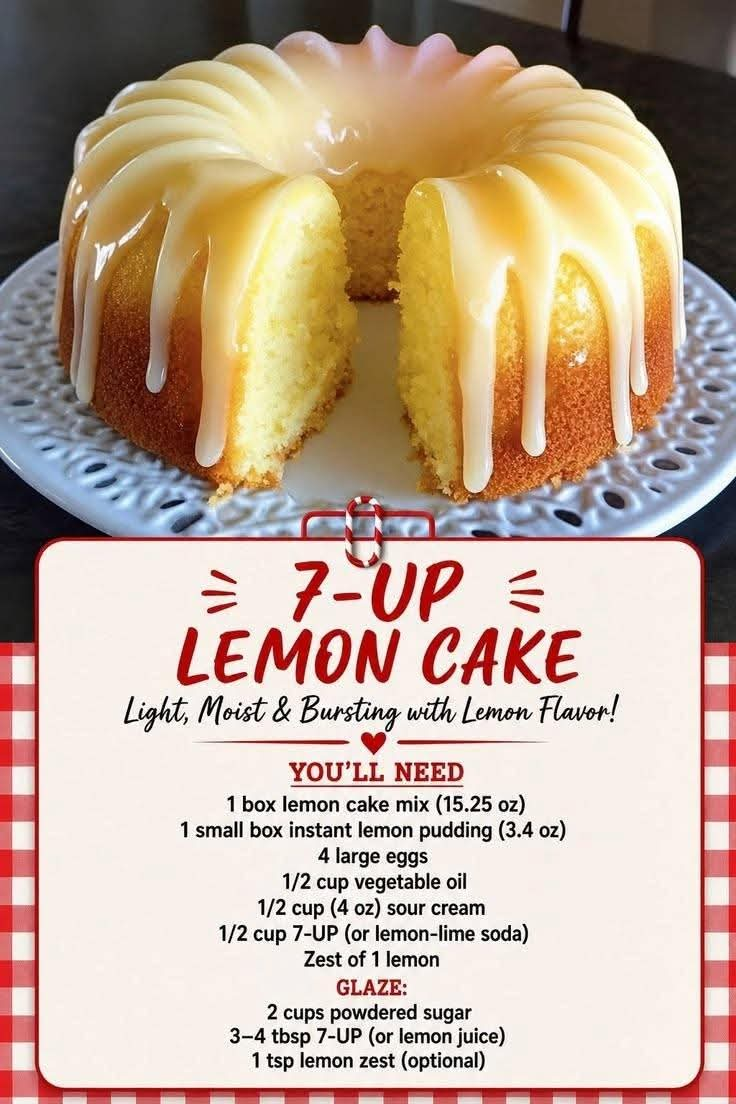
7-UP Lemon Cake
Introduction
7-UP Lemon Cake is a classic old-fashioned dessert known for its soft texture, bright lemon flavor, and simple preparation. The addition of 7-UP gives the cake a light citrus character and helps create a tender, moist crumb. After baking, a sweet lemon glaze is poured over the warm cake, allowing it to soak into the surface and settle into the tiny spaces throughout the cake.
This is the kind of dessert that looks simple but tastes remarkably special. It is suitable for family dinners, Sunday gatherings, afternoon coffee, holidays, potlucks, birthdays, and celebrations. The cake can be prepared in advance, and its flavor often becomes even more enjoyable after it has had time to rest.
The combination of buttery cake, lemon flavor, and a sweet citrus glaze makes every slice rich without being complicated. It is also an excellent choice for anyone who enjoys traditional Southern-style cakes and classic homemade desserts.
Ingredients
For the Cake
- 3 cups all-purpose flour
- 3 cups granulated sugar
- 1 cup unsalted butter, softened
- 5 large eggs
- 1 teaspoon vanilla extract
- 1 teaspoon lemon extract
- 3/4 cup 7-UP or another lemon-lime soda
- 1/2 teaspoon salt
- 1 tablespoon fresh lemon zest
- 2 tablespoons fresh lemon juice
For the Lemon Glaze
- 2 cups powdered sugar
- 1/4 cup unsalted butter, melted
- 2 to 3 tablespoons fresh lemon juice
- 2 tablespoons 7-UP
- 1 teaspoon finely grated lemon zest
- 1/2 teaspoon vanilla extract
Instructions
Step 1: Prepare the Pan
Preheat the oven to 325°F (165°C).
Grease and flour a large Bundt pan thoroughly, making sure to reach all the curves and corners. A well-prepared pan is especially important for Bundt cakes because the detailed shape can make the cake more difficult to release.
Set the prepared pan aside.
Step 2: Cream the Butter and Sugar
Place the softened butter in a large mixing bowl. Beat it until smooth and creamy.
Gradually add the granulated sugar and continue beating until the mixture becomes pale, fluffy, and well incorporated. This process introduces air into the batter and contributes to the cake’s final texture.
Take your time during this step rather than rushing it.
Step 3: Add the Eggs
Add the eggs one at a time, beating well after each addition.
Make sure each egg is incorporated before adding the next. Scrape down the sides of the bowl occasionally so that the mixture remains evenly combined.
Step 4: Add the Flavorings
Add the vanilla extract, lemon extract, fresh lemon zest, and lemon juice.
Mix gently until the ingredients are evenly distributed throughout the batter.
The combination of fresh lemon zest and lemon extract gives the cake a pronounced lemon aroma while the 7-UP contributes additional citrus character.
Step 5: Add the Flour and 7-UP
Gradually add the flour and salt to the batter.
Alternate the dry ingredients with the 7-UP, beginning and ending with the dry ingredients. Mix only until everything is incorporated.
Do not overmix the batter once the flour has been added. Overmixing can produce a heavier cake.
Step 6: Fill the Pan
Pour the finished batter into the prepared Bundt pan.
Smooth the top gently with a spatula and lightly tap the pan against the counter once or twice to remove large air pockets.
Step 7: Bake
Place the cake in the preheated oven and bake for approximately 70 to 80 minutes.
Begin checking toward the end of the baking time. Insert a wooden skewer or cake tester into the thickest part of the cake. It should come out clean or with only a few moist crumbs attached.
If the cake begins browning too quickly while the center still needs more time, loosely cover the top with aluminum foil.
Step 8: Cool the Cake
Remove the cake from the oven and allow it to cool in the pan for approximately 10 to 15 minutes.
Carefully loosen the edges if necessary, then invert the cake onto a serving plate.
Allow it to cool slightly while preparing the glaze.
Method for the Lemon Glaze
Place the powdered sugar in a bowl.
Add the melted butter, fresh lemon juice, 7-UP, lemon zest, and vanilla extract.
Whisk until smooth.
The glaze should be thick enough to coat the cake but fluid enough to drizzle and soak into the warm surface.
If it is too thick, add a small amount of lemon juice or 7-UP. If it is too thin, add a little more powdered sugar.
Applying the Glaze
For the best texture, spoon or drizzle the glaze over the cake while the cake is still slightly warm.
Allow the glaze to run naturally down the sides and into the grooves of the Bundt cake.
For an especially moist cake, gently poke a few small holes across the surface with a skewer before adding the glaze. This allows some of the lemon mixture to penetrate deeper into the cake.
Pour the glaze slowly rather than all at once so it has time to absorb.
Allow the cake to stand for at least 20 to 30 minutes before slicing.
The Formation of the Cake
The structure of this cake comes from several simple baking processes working together.
Creaming the butter and sugar incorporates air into the mixture. The eggs provide structure, richness, and moisture. Flour provides the framework that holds the cake together, while the baking process transforms the batter into a tender crumb.
The 7-UP adds liquid as well as a subtle lemon-lime flavor. The lemon zest and lemon juice provide a fresher citrus character, while the extracts strengthen the overall aroma.
The glaze creates the finishing layer. When poured over a warm cake, it can partially absorb into the crumb, giving the finished dessert a moist texture and a concentrated lemon sweetness.
History and Tradition
Lemon cakes have been popular in American home baking for generations, particularly because citrus flavors work beautifully in rich butter cakes.
Lemon-lime sodas also became popular additions to home baking during the twentieth century. Home cooks discovered that carbonated beverages could be incorporated into cakes, punches, cobblers, and other desserts as a convenient way to add liquid and flavor.
7-UP cakes became especially recognizable as a type of vintage American cake. Recipes varied from family to family, with some versions using lemon extract, others relying on fresh lemon, and many finished with a simple powdered-sugar glaze.
The appeal of the cake has always been its combination of simplicity and flavor. It uses familiar pantry ingredients while producing a dessert that looks impressive when presented as a Bundt cake.
Tips for the Best 7-UP Lemon Cake
Use room-temperature butter and eggs when possible. They combine more easily and help create a smoother batter.
Measure the flour carefully. Too much flour can make the cake unnecessarily dense.
Do not overmix after adding the flour.
Use fresh lemon zest for the brightest flavor.
Grease the Bundt pan thoroughly, especially around the center tube and decorative edges.
Let the cake rest in the pan for several minutes after baking before turning it out.
For the strongest glaze flavor, use fresh lemon juice rather than bottled lemon juice.
Pour the glaze over the cake gradually so that it can soak into the surface.
Serving Suggestions
Serve the cake at room temperature with coffee, tea, or a cold glass of milk.
For a more elegant presentation, add a little extra finely grated lemon zest over the glaze.
The cake can also be served with fresh berries, lightly sweetened whipped cream, or a spoonful of vanilla ice cream.
For gatherings, slice the cake into thin portions because its rich buttery texture makes each slice satisfying.
How to Store It
Keep the cake covered at room temperature for up to several days.
For longer storage, place the cake in an airtight container and refrigerate it. Allow refrigerated slices to come closer to room temperature before serving for the best texture.
The cake can also be frozen. Wrap individual slices or the whole unglazed cake tightly and place it in a freezer-safe container. Thaw completely before adding fresh glaze if you are freezing the cake without its topping.
Why Lovers of Classic Cakes Enjoy It
People who love traditional homemade cakes often appreciate this recipe because it combines familiar ingredients with a distinctive citrus flavor.
The cake has a tender interior, a buttery richness, and a bright lemon finish. The glaze provides an additional layer of sweetness without requiring complicated frosting techniques.
It is also a forgiving dessert for family baking because there is no need to decorate it with elaborate piping or multiple layers. Once the cake is turned out of the Bundt pan and covered with lemon glaze, it already has a beautiful presentation.
Conclusion
7-UP Lemon Cake is a wonderful example of classic home baking: simple ingredients, straightforward preparation, and a finished dessert that feels special enough for a celebration.
The buttery cake, lemon zest, lemon juice, and 7-UP create a bright citrus flavor, while the powdered-sugar glaze adds sweetness and moisture to every slice.
Whether served at a family gathering, Sunday dinner, afternoon coffee, or a holiday table, this cake is the kind of dessert that brings together the comforting flavors of traditional baking with the refreshing taste of lemon.
Once sliced, the soft golden crumb and glossy citrus glaze make it difficult to stop at just one piece. It is a timeless cake that deserves a place in any collection of classic homemade dessert recipes.