
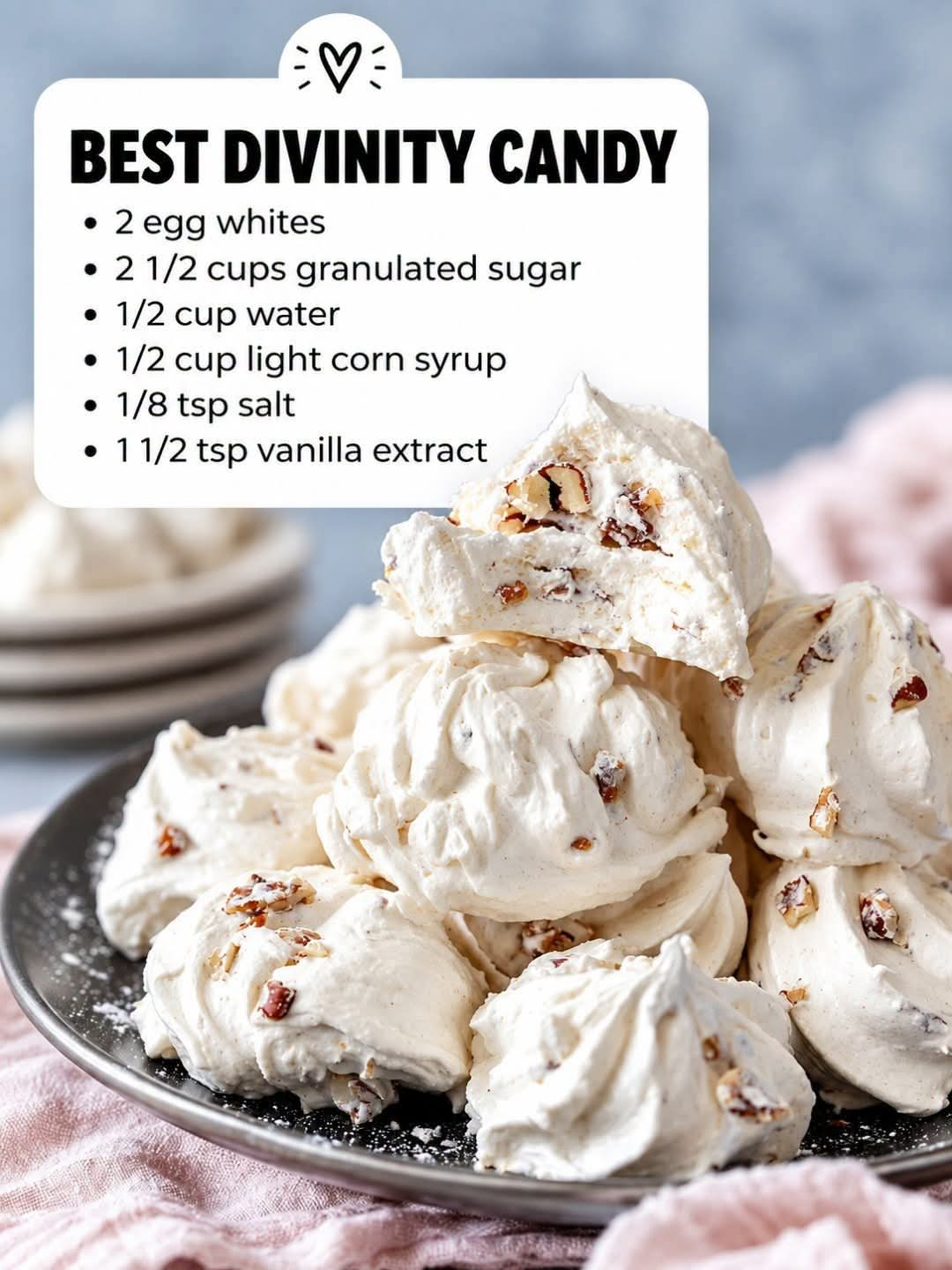
The Best Divinity Candy
Introduction
There is something wonderfully nostalgic about homemade Divinity Candy. Light, fluffy, sweet, and almost cloud-like, this old-fashioned candy has been a favorite on holiday dessert tables and in family kitchens for generations.
Divinity is different from ordinary candy because of its delicate texture. When prepared correctly, it becomes soft and airy on the inside while developing a slightly crisp surface. Each piece practically melts in your mouth, with a lovely vanilla flavor and a sweetness that makes it especially memorable.
This recipe uses simple pantry ingredients: egg whites, sugar, water, light corn syrup, salt, and vanilla. The secret is not complicated ingredients, but careful temperature control, steady beating, and patience.
Ingredients
- 2 large egg whites, preferably at room temperature
- 2 1/2 cups granulated sugar
- 1/2 cup water
- 1/2 cup light corn syrup
- 1/8 teaspoon salt
- 1 1/2 teaspoons vanilla extract
Optional additions:
- 1 cup finely chopped pecans or walnuts
- Parchment paper for lining the baking sheet
- A small amount of butter or nonstick spray for the spoon
Instructions
1. Prepare the Baking Sheet
Line a large baking sheet with parchment paper or lightly grease it. Set the prepared baking sheet aside.
Divinity needs to be dropped onto the prepared surface quickly once the candy reaches the proper consistency, so it is important to have everything ready before you begin.
2. Prepare the Egg Whites
Place the egg whites in a large, completely clean mixing bowl.
Using an electric mixer, beat the egg whites until they form stiff peaks. Do not overbeat them to the point that they become dry or grainy.
Set the beaten egg whites aside while you prepare the sugar syrup.
3. Make the Sugar Syrup
In a heavy saucepan, combine the granulated sugar, water, light corn syrup, and salt.
Place the saucepan over medium heat and stir gently until the sugar has dissolved.
Once the mixture begins boiling, stop stirring. Continue cooking until the syrup reaches approximately 260°F (127°C) on a reliable candy thermometer.
This temperature is extremely important. Divinity depends on the sugar syrup reaching the correct stage to create its characteristic texture.
4. Combine the Syrup and Egg Whites
When the syrup reaches the proper temperature, slowly drizzle it into the beaten egg whites while the mixer is running on medium speed.
Pour the syrup in a thin, steady stream. Avoid pouring it directly onto the beaters.
Continue beating as you gradually add the hot syrup. The mixture will become glossy, thick, and increasingly fluffy.
5. Add the Vanilla
Once all of the syrup has been incorporated, continue beating until the candy mixture becomes very thick.
Add the vanilla extract and beat until evenly combined.
If you are using chopped pecans or walnuts, gently fold them into the mixture at this stage.
6. Check the Consistency
The mixture should become thick enough that a spoonful holds its shape when dropped onto the parchment paper.
This can take several minutes, depending on the temperature and humidity in your kitchen.
If the candy spreads immediately, continue beating for a little longer.
7. Drop the Divinity
Using two lightly buttered teaspoons, quickly drop small spoonfuls of the candy mixture onto the prepared baking sheet.
Work fairly quickly because Divinity becomes difficult to shape as it cools and sets.
Allow the candies to sit at room temperature until completely firm.
8. Let Them Set
Leave the Divinity uncovered for several hours, or until the outside is dry and the candy can be easily lifted from the parchment.
Once completely set, transfer the pieces to an airtight container.
Method
The traditional method for making Divinity involves two important stages: creating a concentrated sugar syrup and incorporating that syrup into whipped egg whites.
The egg whites provide the light, airy structure, while the hot sugar syrup gives the candy its sweetness and helps it set.
The syrup must be cooked carefully. If it is undercooked, the finished candy may remain too soft. If it is overheated, the Divinity can become hard or dry.
Once the syrup reaches the correct temperature, it is gradually beaten into the egg whites. Continued beating introduces air into the mixture, producing the fluffy texture that makes Divinity so distinctive.
The History of Divinity Candy
Divinity is an old-fashioned American candy that became especially popular in the late 19th and early 20th centuries. Its exact origins are uncertain, but it became closely associated with Southern home cooking and holiday candy making.
The name “Divinity” is often attributed to the candy’s heavenly appearance and delicate texture. Over the years, countless families developed their own versions, adding ingredients such as pecans, walnuts, coconut, or different flavorings.
For many people, Divinity is strongly connected with Christmas, family gatherings, church suppers, and candy-making traditions passed from one generation to the next.
Formation and Texture
The formation of Divinity is what makes this candy so special.
The hot sugar syrup is gradually incorporated into whipped egg whites, and the mixture is beaten until it becomes thick and full of tiny air bubbles. As the candy cools, the sugar structure begins to set while the whipped egg whites maintain its lightness.
The result is a candy that is neither completely hard nor chewy like caramel. Instead, properly made Divinity has a soft, fluffy center with a delicate outer surface.
Tips for Perfect Divinity
Use a reliable candy thermometer. Temperature is one of the most important factors in successful Divinity.
Make sure the mixing bowl and beaters are completely clean and free from grease. Even a small amount of fat can interfere with whipping the egg whites properly.
Room-temperature egg whites generally whip more easily and create good volume.
Avoid making Divinity on a very humid or rainy day if possible. Excess moisture in the air can prevent the candy from setting properly.
Have your baking sheet prepared before you begin. Once the mixture reaches the correct consistency, you need to work relatively quickly.
If the candy becomes too thick to drop easily, do not add large amounts of liquid. Instead, work quickly and use lightly greased spoons to help shape it.
How to Store Divinity
Store completely cooled Divinity in an airtight container at room temperature.
Place parchment or wax paper between layers to prevent the pieces from sticking together.
When stored properly in a cool, dry place, Divinity can remain delicious for several days.
Avoid storing it in the refrigerator unless necessary, because humidity can affect its delicate texture.
Serving Ideas
Divinity is wonderful served on its own with coffee, tea, or hot chocolate. It also makes a beautiful addition to a Christmas candy tray alongside fudge, peanut brittle, caramel candies, and homemade cookies.
For a traditional variation, fold chopped pecans into the finished candy. The nuts add a pleasant crunch and pair beautifully with the sweet vanilla flavor.
Why People Love Divinity
People love Divinity because it tastes like something from another time.
It is sweet without being ordinary, delicate without being fragile, and fluffy in a way that few other candies can match. The vanilla aroma, soft texture, and old-fashioned appearance make it especially appealing during the holiday season.
For families who grew up making candy together, Divinity is more than a dessert. It can bring back memories of crowded kitchens, handwritten recipe cards, holiday music, and grandparents carefully watching a candy thermometer on the stove.
Conclusion
The Best Divinity Candy is a beautiful example of classic homemade candy making. With just a handful of ingredients, you can create something wonderfully light, fluffy, and nostalgic.
The most important parts of the recipe are reaching the correct syrup temperature, gradually combining the hot syrup with the whipped egg whites, and beating the mixture until it reaches the proper consistency.
Once you master those steps, homemade Divinity can become a treasured recipe for holidays, family celebrations, or simply whenever you want a taste of old-fashioned homemade sweetness.
For Divinity Lovers
If you love traditional homemade candies, this Divinity recipe is one worth keeping in your recipe collection. Add pecans for a classic Southern touch, or keep it simple with pure vanilla for a delicate candy that practically melts in your mouth.
It is the kind of recipe that deserves to be written on a recipe card and passed down through the family.