
Old-Fashioned Slow Cooker Christmas Fruitcake: A Simple Four-Ingredient Holiday Recipe

Introduction
There is something special about the smell of a homemade fruitcake filling the house during the Christmas season. It brings back memories of family gatherings, decorated trees, warm kitchens, and the wonderful anticipation of sharing something delicious with the people we love.
For many families, fruitcake is more than just a dessert. It is a holiday tradition passed down from one generation to another. Mothers and grandmothers made it every December, carefully mixing sweet fruit, rich cake batter, and warming spices to create a treat that everyone looked forward to.
This Old-Fashioned Slow Cooker Christmas Fruitcake brings that nostalgic feeling into your kitchen without the stress of traditional holiday baking. You do not need to preheat the oven, watch multiple baking trays, or spend the entire afternoon preparing an elaborate dessert. Your slow cooker does most of the work while you decorate, wrap presents, prepare dinner, or simply enjoy a peaceful holiday afternoon.
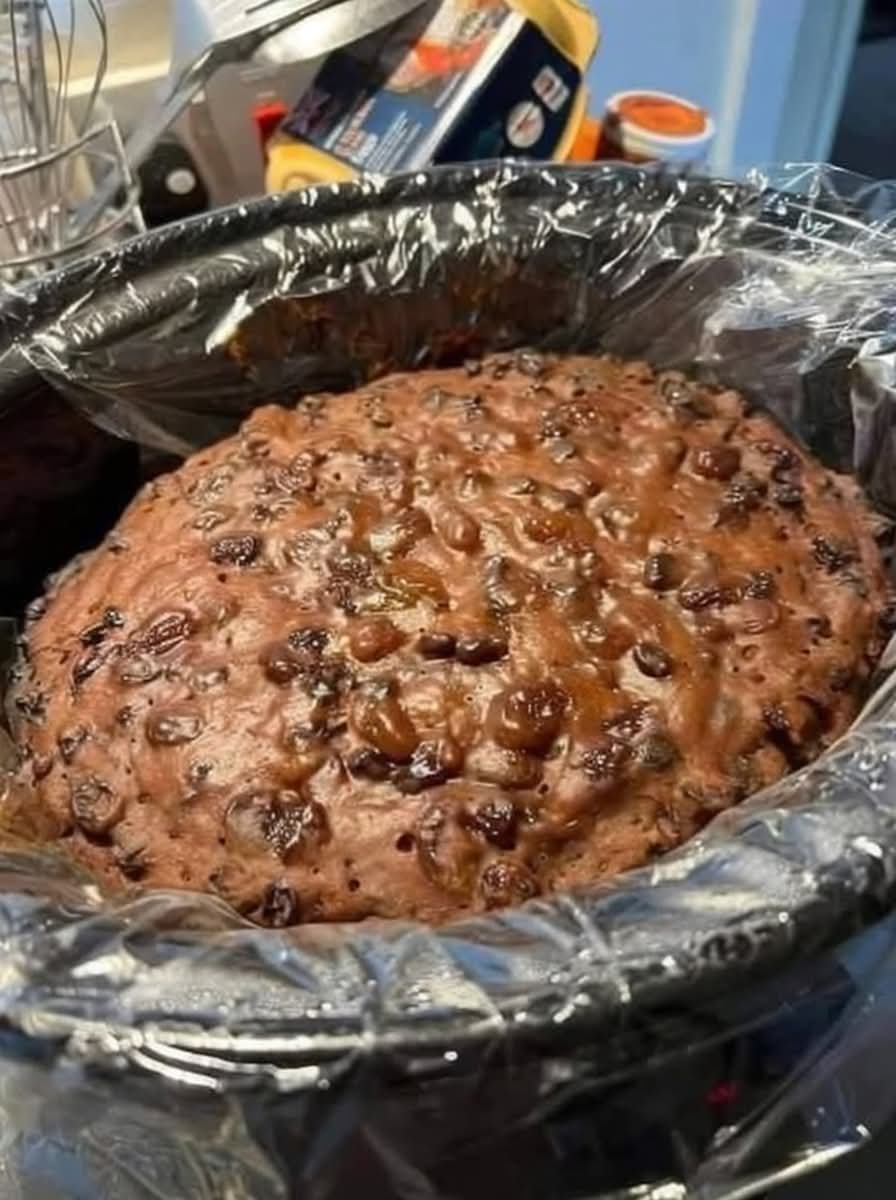
The cake is dense, moist, rich, and filled with colorful pieces of dried and candied fruit. As it slowly cooks, the fruit softens and releases its sweetness into the cake, creating a wonderful flavor and a beautiful golden-brown finish around the edges.
Best of all, this version uses just four main ingredients. It is simple enough for a beginner but delicious enough to serve at a Christmas dinner, holiday party, or family gathering.
If you love old-fashioned holiday desserts but want an easier way to prepare them, this slow cooker fruitcake deserves a place in your recipe collection.
Ingredients

This recipe uses four main ingredients to create a rich, fruit-filled cake. The quantities below are a practical version of the recipe, since the original post did not provide exact measurements.
Main ingredients
- 4 cups (about 600–700 g) mixed dried and candied fruit: Use raisins, currants, chopped dates, candied cherries, mixed peel, or dried cranberries.
- 2 cups (about 250 g) self-rising flour: This provides the structure and helps the cake rise.
- 2 large eggs: Eggs bind the ingredients and help the cake hold together when sliced.
- 1 can (about 395 g) sweetened condensed milk: This adds sweetness, moisture, and richness.
Optional additions
These are not part of the four-ingredient base, but you can add them if you prefer a more traditional holiday flavor.
- 1 teaspoon ground cinnamon
- ½ teaspoon ground nutmeg
- 1 teaspoon vanilla extract
- ¼ cup chopped walnuts or pecans
- 2–3 tablespoons orange juice or apple juice, if needed to soften very dry fruit
Important: Use self-rising flour rather than plain flour for this particular version. If you only have plain flour, you will need to adjust the raising agent. The exact cooking time will depend on the size and shape of your slow cooker.
Instructions
Step 1: Prepare the slow cooker
Line the bottom and sides of your slow cooker with baking parchment, using a suitable liner that is safe for the appliance. Alternatively, grease the insert thoroughly with butter and line the bottom with parchment.
If using foil, make sure it is suitable for your appliance and does not obstruct the lid or heating surfaces. A parchment liner is generally the easier choice for removing the finished cake.
Lightly grease the liner to prevent sticking.
Step 2: Prepare the fruit
Place the mixed dried and candied fruit in a large mixing bowl.
If your fruit is particularly dry or hard, soak it briefly in a little warm water or orange juice, then drain it thoroughly before mixing. This helps the fruit become softer and juicier during cooking.
If you are using large pieces of dried fruit, chop them into smaller, bite-sized pieces. This allows the fruit to distribute more evenly throughout the cake.
Step 3: Mix the wet ingredients
In a separate bowl, whisk the eggs until the yolks and whites are combined.
Add the sweetened condensed milk and stir until smooth.
If you are using optional vanilla extract, cinnamon, or nutmeg, mix them into the wet ingredients now.
The mixture should look creamy and slightly thick.
Step 4: Add the flour
Gradually add the self-rising flour to the wet mixture.
Stir gently until no large pockets of dry flour remain. Avoid overmixing, as excessive stirring can make the finished cake heavier than necessary.
Add the prepared fruit and fold it through the batter until it is evenly distributed.
The batter should be thick and packed with fruit rather than thin and pourable.
Step 5: Transfer the batter
Spoon the mixture into the prepared slow cooker.
Spread the batter evenly with a spatula, making sure the fruit is distributed across the surface.
Smooth the top gently. If you want a decorative finish, arrange a few extra pieces of candied fruit on top before cooking.
Do not fill the slow cooker beyond its recommended capacity. A smaller cooker may require you to divide the mixture into two batches.
Step 6: Cook on low
Cover the slow cooker with its lid and cook on the low setting.
Begin checking the cake after approximately 5–6 hours. Depending on your appliance, the cake may need around 6–8 hours or longer to cook completely.
Avoid lifting the lid frequently because doing so releases heat and extends the cooking time.
The cake is ready when the center is set and a skewer inserted into the middle comes out without wet batter. A few moist crumbs are fine.
If the edges are becoming too dark while the center remains undercooked, check that the slow cooker is operating correctly and continue cooking in short intervals.
Step 7: Let the cake rest
Once cooked, turn off the slow cooker and remove the lid carefully, keeping your hands away from the escaping steam.
Allow the cake to rest in the insert for about 20–30 minutes before attempting to remove it.
Lift it out carefully using the parchment liner or another safe method. Place it on a cooling rack and allow it to cool completely before slicing.
This resting period helps the cake firm up and makes it easier to cut into neat slices.
Step 8: Slice and serve
Cut the cooled cake with a sharp knife.
Serve it plain for a traditional experience, or add a little whipped cream, a spoonful of vanilla custard, or a light dusting of powdered sugar for a more festive presentation.
For a cozy holiday breakfast or afternoon treat, enjoy a slice alongside a cup of coffee or tea.
Methods: The Secret to a Moist Slow Cooker Fruitcake

The beauty of this recipe is its gentle cooking method. Unlike an oven, which heats the cake from the surrounding hot air, a slow cooker uses steady heat within a covered cooking chamber.
Here are the techniques that help produce the best result.
1. Choose the right fruit
A mixture of raisins, currants, dates, cherries, and candied peel creates different textures and flavors. Raisins add familiar sweetness, dates contribute a soft caramel-like taste, and candied cherries provide bright color.
For a classic fruitcake, use a balanced mixture rather than allowing one ingredient to dominate.
2. Keep the batter thick
Fruitcake should be rich and substantial. Too much liquid can make the center gummy, particularly when cooking in a slow cooker.
Measure the condensed milk and flour carefully, and avoid adding extra liquid unless the fruit is unusually dry.
3. Use gentle heat
The low setting allows the cake to cook gradually. This gives the fruit time to soften and helps the flavors blend.
However, every slow cooker is different. Some run hotter than others, so the suggested cooking time is a guide rather than a guarantee.
4. Resist opening the lid
Every time the lid is lifted, heat escapes. Keep it covered until you reach the first recommended checking time.
5. Cool before slicing
A warm fruitcake can crumble or appear too soft in the center. Cooling allows the structure to settle and the fruit to hold together within the cake.
6. Allow the flavors to develop
Fruitcake often tastes even better the following day because the fruit flavors have more time to mingle with the cake.
Once completely cool, store it in an airtight container. For food safety, refrigerate it and enjoy it within approximately 5–7 days. You can also freeze well-wrapped portions for longer storage.
History of Christmas Fruitcake

Fruitcake has a long history, with early versions of fruit-and-grain cakes appearing in ancient civilizations. Over centuries, preserved fruit, honey, nuts, and spices became important ingredients in richer celebratory cakes.
In medieval Europe, dried fruit and imported spices were valuable ingredients. As trade expanded and sugar became more accessible, cakes containing fruit became increasingly associated with special occasions.
By the nineteenth century, fruitcakes were firmly established in many British and European baking traditions. Different regions developed their own versions, using ingredients such as currants, raisins, candied citrus peel, almonds, and warming spices.
These traditions traveled with families to North America and other parts of the world. Over time, Christmas fruitcake became a familiar holiday dessert in many households.
For some families, the recipe was written in a cookbook. For others, it was remembered by watching a mother or grandmother prepare it every year.
Modern versions reflect busy lifestyles. Instead of spending hours monitoring an oven, home cooks can use slow cookers to prepare convenient versions of traditional desserts.
This slow cooker recipe captures the spirit of that tradition: simple ingredients, patient cooking, and a dessert meant to be shared.
Formation: How the Cake Develops Its Texture and Flavor
The word formation describes how the ingredients come together to create the finished fruitcake.
The structure
The flour provides the foundation of the cake. As it cooks, the flour absorbs moisture and forms the crumb that holds the fruit together.
The eggs help bind the ingredients, while the raising agents in the self-rising flour contribute to the cake’s structure.
The moisture
Sweetened condensed milk adds moisture and sugar. During cooking, the mixture thickens and helps create the rich texture associated with fruitcake.
The dried fruit also absorbs some of the surrounding moisture, becoming softer and more pleasant to eat.
The color
The sugars in the condensed milk and fruit contribute to the cake’s golden-brown color. The surface may remain lighter than a traditionally oven-baked fruitcake because a slow cooker does not brown food in quite the same way.
The flavor
Raisins, dates, cherries, and other fruits provide natural sweetness and a variety of flavors. Optional cinnamon, nutmeg, and vanilla add warmth and fragrance.
As the cake cooks, these flavors combine, giving each slice a rich, festive taste.
The final texture
A properly cooked fruitcake should be moist, dense, and easy to slice. It should not have wet batter in the middle.
The goal is a cake that holds its shape while remaining tender, with little pockets of fruit throughout every slice.
Helpful Tips for Perfect Results
- For extra fruit: Add a small amount of additional dried fruit, but keep the batter thick enough to hold it.
- For a nutty flavor: Fold in chopped walnuts or pecans.
- For a citrus note: Use candied orange peel or a little orange zest.
- For a traditional spice flavor: Add cinnamon and nutmeg.
- For a prettier finish: Decorate the top with a few candied cherries before cooking.
- For clean slices: Cool the cake completely and wipe your knife between cuts.
- For a smaller gathering: Divide the batter into smaller suitable slow-cooker batches instead of overfilling the insert.
- For a festive gift: Wrap a completely cooled portion securely and package it in a decorative food-safe box.
Remember that a slow cooker produces moist heat, so this cake may not develop the same dry, dark crust as an oven-baked fruitcake. The inside should remain moist, but it must be fully cooked.
Serving Suggestions

This fruitcake is versatile enough for many holiday occasions.
For Christmas morning: Serve a small slice with coffee, tea, or hot chocolate.
For an afternoon gathering: Arrange slices on a dessert platter with cookies, nuts, and fresh fruit.
For dessert after dinner: Pair a slice with vanilla custard or lightly sweetened whipped cream.
For a homemade gift: Package individual portions in food-safe wrapping and include a note explaining that the cake should be refrigerated.
For a family tradition: Prepare it the day before a celebration so you can spend less time in the kitchen when guests arrive.
Common Mistakes to Avoid
Using plain flour without adjustment: The cake may not rise as intended if the flour does not contain raising agents.
Adding too much liquid: Excess moisture can leave the center undercooked or gummy.
Overfilling the slow cooker: The cake needs enough space to cook evenly. Follow your appliance’s capacity guidance.
Cooking only by the clock: Slow cookers vary, so check the center for doneness rather than relying on eight hours alone.
Removing the cake too soon: A hot fruitcake is fragile. Let it rest before lifting it out.
Slicing while warm: This can cause the fruit and cake crumb to fall apart.
Conclusion
This Old-Fashioned Slow Cooker Christmas Fruitcake is a wonderful reminder that holiday baking does not need to be complicated to be meaningful.
With four main ingredients, a mixing bowl, and a slow cooker, you can create a rich, fruit-filled cake that brings warmth and nostalgia to your kitchen. It is a practical choice when the oven is occupied, when you are preparing several holiday dishes, or when you simply want a homemade dessert without a complicated process.
The most beautiful part of a recipe like this is the memory it can create. Perhaps your children will remember the smell of the fruit and spices. Perhaps a neighbor will stop by to ask what you are making. Or perhaps this will become the cake your family requests every December.
Whatever the occasion, serve it with a warm drink, share it with the people you love, and enjoy the simple pleasure of a homemade holiday treat.
For the Lovers of Old-Fashioned Holiday Baking
If you love traditional Christmas desserts, this recipe is an excellent starting point. You can keep it simple with raisins and candied cherries, or personalize it with dates, cranberries, citrus peel, and nuts.
The best family recipes are often the ones that leave room for personal touches. A little extra fruit, a favorite spice, or a treasured family serving plate can turn an easy cake into a meaningful tradition.
Make it your own, share it generously, and let the delicious aroma bring a little extra warmth to your holiday season.
Recipe question: Would you keep this fruitcake classic with raisins and candied cherries, or add extra dried cranberries, dates, and chopped nuts for an even richer holiday version?
Recipe note: The original description mentions four ingredients but does not provide the exact quantities. The measurements above are a proposed four-ingredient version, so cooking time and texture may need adjustment for your slow cooker.