
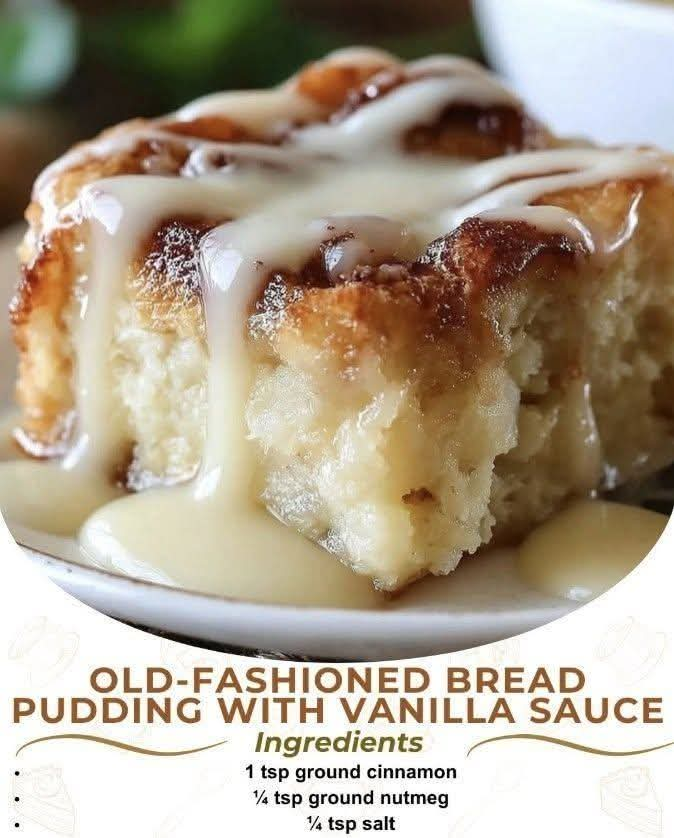
Old-Fashioned Bread Pudding with Homemade Vanilla Sauce
Introduction
Old-Fashioned Bread Pudding with Vanilla Sauce is a timeless homemade dessert that brings warmth, comfort, and sweet memories of Grandma’s kitchen. Made with cubes of French bread or soft brioche soaked in a rich custard of eggs, milk, cream, sugar, vanilla, and cinnamon, this classic dessert transforms simple pantry ingredients into something truly special.
As it bakes, the bread absorbs the creamy custard, creating a soft, tender center with a beautifully golden top. Every spoonful is filled with the comforting flavors of vanilla and cinnamon, while the homemade vanilla sauce adds a silky, sweet finish that makes this dessert even more irresistible.
One of the best things about traditional bread pudding is its simplicity. You do not need expensive ingredients or complicated baking techniques. It is an excellent way to use leftover bread, reduce food waste, and prepare a dessert that feels both humble and luxurious.
Serve it warm after a family dinner, enjoy it with an afternoon cup of coffee, or prepare it for a holiday gathering. Whether you grew up eating bread pudding or are discovering it for the first time, this old-fashioned recipe is sure to become a treasured favorite.
Ingredients
For the Bread Pudding
- 1 loaf French bread or brioche, cut into 1-inch cubes (about 8 cups)
- 4 large eggs
- 2 cups whole milk
- 1 cup heavy cream
- ¾ cup granulated sugar
- ¼ cup light brown sugar
- 2 teaspoons vanilla extract
- 1 teaspoon ground cinnamon
- ¼ teaspoon ground nutmeg, optional
- ¼ teaspoon salt
- 2 tablespoons unsalted butter, melted, plus extra for greasing the baking dish
- ½ cup raisins, optional
For the Homemade Vanilla Sauce
- 1 cup whole milk
- ½ cup heavy cream
- ½ cup granulated sugar
- 2 tablespoons unsalted butter
- 1 tablespoon cornstarch
- 2 tablespoons cold water
- 2 teaspoons vanilla extract
- A small pinch of salt
Optional Toppings
- A light dusting of ground cinnamon
- Chopped pecans or walnuts
- A few extra raisins
- A scoop of vanilla ice cream
- A small drizzle of caramel sauce
Instructions
Step 1: Prepare the Oven and Baking Dish
Preheat your oven to 350°F (175°C).
Lightly grease a 9-by-13-inch baking dish with butter. This helps prevent the bread pudding from sticking and adds a little extra richness to the edges.
Cut the French bread or brioche into approximately 1-inch cubes. If your bread is fresh and very soft, spread the cubes on a baking sheet and let them sit uncovered for several hours. Alternatively, bake them in the preheated oven for about 8–10 minutes, just until slightly dry.
The bread should be dry enough to absorb the custard without immediately falling apart.
Step 2: Arrange the Bread
Place the bread cubes evenly into the prepared baking dish.
If you are using raisins, scatter them between the bread cubes so that every serving contains a little sweetness.
Drizzle the melted butter over the bread and gently toss or turn the cubes to distribute it.
Do not press the bread down too firmly. Keeping some space between the pieces allows the custard to move through the pudding.
Step 3: Prepare the Custard Mixture
In a large mixing bowl, crack the four eggs and whisk until the yolks and whites are fully combined.
Add the whole milk, heavy cream, granulated sugar, brown sugar, vanilla extract, cinnamon, optional nutmeg, and salt.
Whisk everything together until the sugars begin to dissolve and the mixture looks smooth and creamy.
The combination of milk and heavy cream gives the pudding a rich texture, while the eggs help the custard set during baking. Vanilla adds a sweet aroma, and cinnamon provides that familiar old-fashioned flavor.
Step 4: Pour the Custard Over the Bread
Slowly pour the custard mixture over the bread cubes, distributing it evenly across the dish.
Use the back of a spoon to gently press down any large pieces of bread so they can absorb the liquid.
Allow the pudding to rest for 15–20 minutes before baking. This soaking time helps the bread become tender throughout and reduces the chance of dry patches.
For an even deeper flavor, you can cover the dish and refrigerate it for up to several hours before baking. If chilled overnight, allow a little extra baking time as needed.
Step 5: Bake Until Golden
Place the baking dish in the preheated oven and bake for approximately 40–50 minutes.
The top should become lightly golden, and the center should look set rather than liquid. A knife inserted near the center should come out without a coating of raw custard.
For food safety, the center should reach 160°F (71°C).
If the top begins browning too quickly, loosely cover the dish with aluminum foil for the remaining baking time.
Once baked, remove the pudding from the oven and let it rest for 10–15 minutes. This allows the custard to settle and makes serving easier.
Step 6: Prepare the Homemade Vanilla Sauce
While the pudding rests, prepare the vanilla sauce.
In a small saucepan, combine the milk, heavy cream, granulated sugar, butter, and salt.
Place the saucepan over medium-low heat, stirring gently until the sugar dissolves and the butter melts. Do not allow the mixture to boil vigorously.
In a separate small bowl, whisk the cornstarch with the cold water until completely smooth.
Slowly pour the cornstarch mixture into the warm milk mixture while whisking continuously.
Continue cooking over medium-low heat for approximately 2–4 minutes, stirring constantly, until the sauce thickens enough to coat the back of a spoon.
Remove the saucepan from the heat and stir in the vanilla extract.
If the sauce becomes thicker than you prefer, add a little warm milk until it reaches your desired consistency.
Step 7: Serve Warm
Cut the bread pudding into generous squares or spoon it directly into dessert bowls.
Pour the warm vanilla sauce over each serving, allowing it to seep into the soft bread and custard.
For an extra-special presentation, finish with a sprinkle of cinnamon, a few chopped pecans, or a scoop of vanilla ice cream.
Serve immediately while the pudding is warm and the sauce is smooth and creamy.
Methods of Preparation
Traditional Oven-Baking Method
The traditional oven method creates the classic texture most people associate with old-fashioned bread pudding. The top becomes lightly crisp and golden while the inside remains soft, moist, and custard-like.
For the best results, use slightly stale bread, allow enough soaking time, and avoid overbaking. Overbaking can make the pudding dry or rubbery instead of tender.
Overnight Preparation Method
This method is ideal when you want to prepare dessert ahead of time.
Arrange the bread in the baking dish, prepare the custard, and pour it over the bread. Cover the dish and refrigerate it overnight.
The bread gradually absorbs the custard, developing a rich texture and deeper flavor. The next day, bake until the center is fully set, adding extra time if the pudding is still cold from the refrigerator.
Keep the dish refrigerated during the soaking period rather than leaving an egg-and-milk mixture at room temperature for several hours.
Extra-Creamy Method
For a richer, softer pudding, use brioche instead of French bread. Brioche contains more butter and has a delicate texture that works beautifully with sweet custard.
You can also add a little extra cream, but avoid adding so much liquid that the pudding cannot set properly.
Rustic Homemade Method
For a more traditional, country-style dessert, combine different types of leftover bread, such as French bread, brioche, or plain white bread.
Cut the bread into uneven pieces, let them absorb the custard, and bake until the top is golden. The result is a comforting pudding with a mixture of textures and a homemade appearance.
The History of Old-Fashioned Bread Pudding
Bread pudding has a long history rooted in practical home cooking. For generations, families throughout Europe and other parts of the world have found creative ways to use leftover bread rather than throwing it away.
Early versions were often simple mixtures of stale bread, milk or another liquid, and available sweeteners. Over time, cooks began adding eggs, butter, spices, dried fruit, and other ingredients to create a richer dessert.
Bread pudding became particularly familiar in British and American home cooking. Recipes varied from family to family, depending on the ingredients available and local traditions.
In many American households, bread pudding became a beloved comfort food, especially in the Southern United States, where cooks often served it warm with a sweet sauce. Vanilla sauce, caramel sauce, whiskey sauce, and other variations developed into popular accompaniments.
The recipe was especially appealing because it was economical and adaptable. A loaf of leftover bread could become a satisfying dessert for the entire family.
Today, bread pudding appears in home kitchens, bakeries, restaurants, and holiday menus. Although modern versions may include chocolate, fruit, nuts, or elaborate toppings, the traditional combination of bread, eggs, milk, sugar, and spices remains a favorite.
Formation and Texture: What Makes This Bread Pudding Special?
The secret to excellent bread pudding lies in the relationship between the bread and the custard.
1. The Bread
Bread provides the structure of the dessert. Slightly stale bread is particularly useful because it absorbs the custard without becoming mushy too quickly.
French bread creates a pleasantly firm texture, while brioche produces a softer and richer result.
2. The Egg Custard
Eggs bind the ingredients together as they cook. When heated, the proteins in the eggs set, transforming the liquid mixture into a soft, sliceable pudding.
The key is to bake the mixture until the center is set without exposing it to excessive heat.
3. The Milk and Cream
Whole milk adds moisture, while heavy cream contributes richness and a smooth mouthfeel.
Together, they create a custard that feels creamy without being overly dense.
4. The Sugars
Granulated sugar provides sweetness, while brown sugar adds a subtle molasses flavor that complements the cinnamon and vanilla.
Some sugar also helps the top develop a beautiful golden color during baking.
5. The Spices and Vanilla
Cinnamon gives the pudding its familiar warm aroma. Nutmeg, if used, adds another layer of flavor.
Vanilla extract enhances the sweetness and brings all the ingredients together.
6. The Vanilla Sauce
The vanilla sauce provides a contrasting texture. Its smooth, creamy consistency coats the bread pudding and adds moisture to every bite.
The cornstarch thickens the sauce, while butter and cream make it taste rich and silky.
The final result is a dessert with a lightly golden exterior, a tender custard-filled center, and a sweet vanilla finish.
Helpful Tips for Perfect Bread Pudding
Choose the right bread. French bread, brioche, challah, or plain white bread can all work well. Avoid bread that is moldy or has an unpleasant smell.
Dry the bread if necessary. Very fresh bread may become overly soft. A brief period of air-drying or low-temperature baking helps improve the texture.
Let the bread soak. Fifteen to twenty minutes is a useful starting point. Larger or drier cubes may need more time.
Measure the liquid carefully. Too much custard can leave the center wet, while too little can result in a dry pudding.
Do not overbake. Begin checking around 40 minutes, as ovens and baking dishes vary.
Make the sauce gently. Keep the heat moderate and whisk continuously after adding the cornstarch slurry to prevent lumps.
Adjust the sweetness. If you prefer a less-sweet dessert, slightly reduce the sugar in the pudding or sauce.
Allow a short resting period. Letting the pudding rest before serving helps it hold its shape while remaining tender.
Delicious Variations
Cinnamon Raisin Bread Pudding
Add ½–1 cup of raisins and an extra pinch of cinnamon. This version has a traditional bakery-style flavor.
Apple Cinnamon Bread Pudding
Add 1 cup of peeled, diced apples tossed with a little cinnamon. Choose firm apples that hold their shape during baking.
Chocolate Chip Bread Pudding
Fold ½ cup of chocolate chips into the bread cubes before pouring over the custard. The chocolate melts into the warm pudding, creating little pockets of sweetness.
Pecan Bread Pudding
Add ½ cup of chopped pecans for a nutty flavor and a pleasant crunch. Sprinkle a few extra pecans over the top before baking.
Caramel Vanilla Bread Pudding
Drizzle a little caramel sauce over each serving before adding the vanilla sauce. The combination of caramel and vanilla creates a rich dessert suitable for special occasions.
Brioche Bread Pudding
Use brioche for a softer, buttery pudding. This variation is particularly good when served with warm vanilla sauce and fresh berries.
Serving Suggestions
Old-fashioned bread pudding is delicious on its own, but the right accompaniment can make it even more memorable.
- Serve warm with homemade vanilla sauce for a classic presentation.
- Add a scoop of vanilla ice cream for a warm-and-cold dessert.
- Pair it with freshly brewed coffee or tea for an afternoon treat.
- Add fresh strawberries, raspberries, or sliced bananas for a fruity contrast.
- Serve with chopped pecans and a light drizzle of caramel sauce for a more indulgent finish.
- Prepare it for Sunday dinner, Thanksgiving, Christmas gatherings, potlucks, or family celebrations.
For the most comforting experience, serve the pudding while it is still slightly warm and pour the sauce over it just before eating.
Storage and Reheating
Refrigerator Storage
Allow leftover bread pudding to cool slightly, then place it in a covered container and refrigerate within two hours of baking.
Store the pudding for up to 3–4 days in the refrigerator.
Keep the vanilla sauce in a separate covered container and refrigerate it as well.
Reheating
To reheat individual servings, place them in a microwave-safe dish and heat in short intervals until warmed through.
For larger portions, cover the baking dish with foil and warm in a 300°F (150°C) oven until heated through.
Reheat the vanilla sauce gently in a small saucepan, stirring frequently. Add a splash of milk if needed to restore its original consistency.
Freezing
The baked bread pudding can be frozen in individual portions in airtight, freezer-safe containers for approximately 2 months for best quality.
Thaw overnight in the refrigerator and reheat until hot throughout.
The vanilla sauce is best made fresh, as freezing can affect its smooth texture.
Frequently Asked Questions
Can I make bread pudding with fresh bread?
Yes. Fresh bread works, but drying the cubes briefly in the oven helps them absorb the custard more effectively.
Why is my bread pudding soggy?
It may contain too much liquid, the bread may not have absorbed the custard evenly, or the center may need more baking time. Use the recommended measurements and check that the center reaches 160°F (71°C).
Can I prepare the pudding the day before?
Yes. Assemble the bread pudding, cover it, and refrigerate it overnight. Bake the next day, allowing additional time if needed.
Can I make the vanilla sauce without cornstarch?
Yes. You can make a traditional egg-thickened vanilla custard sauce instead, using egg yolks and careful low-temperature cooking. The cornstarch version in this recipe is simpler and does not require tempering egg yolks.
Can I use only milk instead of heavy cream?
Yes, although the pudding will be less rich. For a closer texture, use whole milk and retain the heavy cream if possible.
Is bread pudding served hot or cold?
It can be served warm, at room temperature, or chilled. Warm bread pudding with freshly prepared vanilla sauce is the classic comforting choice.
Conclusion
Old-Fashioned Bread Pudding with Vanilla Sauce is proof that the simplest ingredients can create one of the most satisfying desserts. With humble bread, eggs, milk, cream, sugar, and a touch of cinnamon, you can make a beautiful homemade pudding that feels generous, nostalgic, and full of flavor.
The golden top, soft custard center, and silky vanilla sauce come together to create a dessert that is perfect for both ordinary family dinners and special celebrations.
What makes this recipe so special is not just its sweetness. It is the tradition behind it, the practical use of leftover bread, and the memories it can create when shared around the table.
Make it once, serve it warm, and you may find yourself returning to this comforting classic whenever you want a homemade dessert that tastes like it came straight from Grandma’s kitchen.
For the Lovers of Old-Fashioned Desserts
If you love traditional homemade desserts, this bread pudding deserves a place in your recipe collection. It is easy to prepare, adaptable to different ingredients, and delicious enough to serve to guests.
The best part is watching everyone enjoy a spoonful of warm pudding covered in creamy vanilla sauce. It is the kind of simple dessert that encourages people to slow down, gather around the table, and enjoy something made with care.
Whether you add raisins, apples, pecans, or chocolate chips, the traditional version remains wonderfully comforting.
Prepare a dish for your family, share it with friends, and keep the recipe close for the days when only an old-fashioned homemade dessert will do.