
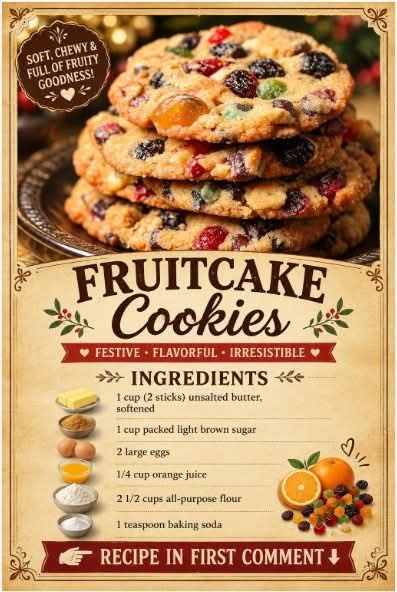
Fruitcake Cookies – A Classic Holiday Treat Filled with Warm Spices and Sweet Fruit
Introduction
Fruitcake Cookies are a wonderful old-fashioned holiday treat that brings together the comforting flavors of butter, brown sugar, cinnamon, and sweet dried fruits. They have the familiar taste of traditional fruitcake but in a smaller, softer, and easier-to-serve cookie that is perfect for Christmas celebrations, family gatherings, cookie exchanges, and homemade gifts.
These cookies are rich, tender, and delicately spiced, with a lovely hint of citrus from orange juice. The brown sugar adds a deep, caramel-like sweetness, while the cinnamon brings warmth to every bite. Chopped dried fruits and nuts can be added to create a more traditional fruitcake flavor and a beautiful festive texture.
One of the best things about Fruitcake Cookies is their versatility. You can prepare them ahead of time, arrange them on a holiday dessert platter, package them in decorative tins, or enjoy them with a warm cup of coffee, tea, or hot chocolate.
If you love traditional Christmas baking and nostalgic homemade desserts, these Fruitcake Cookies deserve a place in your holiday recipe collection.
Ingredients
This recipe starts with simple baking ingredients and can be customized with your favorite dried fruits and nuts.
For the cookie dough
- 1 cup (2 sticks) unsalted butter, softened to room temperature
- 1 cup packed light brown sugar
- 2 large eggs, at room temperature
- 1/4 cup orange juice
- 2 1/2 cups all-purpose flour
- 1 teaspoon baking soda
- 1/2 teaspoon salt
- 1 teaspoon ground cinnamon
Optional fruitcake additions
For a more traditional fruitcake-inspired cookie, consider adding:
- 1 cup mixed candied fruit or chopped dried fruit
- 1/2 cup raisins or dried cranberries
- 1/2 cup chopped pecans or walnuts
- 1 teaspoon finely grated orange zest
- 1/2 teaspoon vanilla extract
These additions are optional because they are not included in the original ingredient list. If you add several types of fruit and nuts, fold them into the dough gently and make sure the mixture remains thick enough to hold its shape.
Instructions
Step 1: Prepare the oven and baking sheets
Preheat your oven to 350°F (175°C).
Line two baking sheets with parchment paper to prevent the cookies from sticking and help them bake evenly. If you do not have parchment paper, lightly grease the baking sheets.
Measure all your ingredients before beginning. Allow the butter and eggs to reach room temperature so they combine smoothly.
Step 2: Cream the butter and brown sugar
Place the softened butter in a large mixing bowl. Add the packed light brown sugar.
Using an electric mixer or a sturdy wooden spoon, beat the butter and sugar together for approximately 2–3 minutes, until the mixture looks creamy, smooth, and slightly fluffy.
This step is important because it helps create a tender cookie texture. Scrape down the sides of the bowl occasionally so all the ingredients are evenly incorporated.
Step 3: Add the eggs
Add the eggs one at a time, mixing well after each addition.
Continue beating until the mixture is smooth and fully combined. If the mixture looks slightly curdled after adding the eggs, do not worry; it should come together when you add the dry ingredients.
Step 4: Mix in the orange juice
Pour the orange juice into the butter mixture and stir until incorporated.
For a stronger citrus aroma, you can also add a teaspoon of freshly grated orange zest. The orange flavor complements the cinnamon and brown sugar beautifully, giving these cookies their distinctive holiday character.
Step 5: Combine the dry ingredients
In a separate medium bowl, whisk together the all-purpose flour, baking soda, salt, and ground cinnamon.
Whisking distributes the baking soda and spices evenly throughout the flour, helping the cookies rise consistently and preventing pockets of concentrated salt or cinnamon.
Step 6: Make the cookie dough
Gradually add the dry ingredients to the wet mixture, mixing on low speed or stirring with a wooden spoon.
Mix just until the flour disappears and a soft cookie dough forms. Avoid overmixing, as too much mixing can make the cookies tougher.
If you are using raisins, candied fruit, dried cranberries, or chopped nuts, gently fold them into the dough at this stage.
Step 7: Chill the dough if necessary
If the dough feels very soft or sticky, cover the bowl and refrigerate it for 20–30 minutes.
Chilling is optional, but it can help the cookies maintain their shape during baking. It also allows the flavors of the butter, cinnamon, brown sugar, and orange to blend together.
Step 8: Shape the cookies
Scoop approximately 1 tablespoon of dough for each cookie and place the portions on the prepared baking sheets.
Leave about 2 inches between each portion to allow for spreading during baking.
For evenly sized cookies, use a cookie scoop or measuring spoon. If you prefer a rustic homemade appearance, leave the dough portions slightly rounded rather than flattening them.
Step 9: Bake until lightly golden
Place the baking sheets in the preheated oven and bake for approximately 10–13 minutes.
The edges should be lightly golden, while the centers may still look slightly soft. Avoid overbaking because the cookies will continue to set as they cool.
Baking times may vary depending on the size of the cookies and your oven, so begin checking them around the 10-minute mark.
Step 10: Cool the cookies
Remove the baking sheets from the oven and let the cookies rest for about 5 minutes.
Carefully transfer them to a wire rack to cool completely. This helps prevent the bottoms from becoming soggy and allows the cookies to develop their final texture.
Once cooled, the cookies are ready to serve or package for holiday gifting.
Methods for Perfect Fruitcake Cookies
The creaming method
The creaming method combines softened butter and sugar until light and creamy before adding the eggs and other ingredients. This helps create a tender cookie with a pleasant texture.
Make sure your butter is softened but not melted. Melted butter can cause the cookies to spread more than expected.
The dry ingredient method
Combining the flour, baking soda, salt, and cinnamon separately ensures that the leavening agent and spices are distributed evenly.
Add the dry mixture gradually and stop mixing as soon as the dough comes together.
The fruit-folding method
If you want a classic fruitcake flavor, gently fold chopped dried fruit, candied cherries, raisins, or nuts into the finished dough.
Cut large pieces of fruit into small, even pieces so they distribute throughout the cookies without making them difficult to shape.
The baking method
Bake one tray at a time in the center of the oven when possible. This encourages more even browning.
If baking two trays simultaneously, rotate them halfway through baking if your oven has hot spots.
The cooling method
Allowing the cookies to rest on the baking sheet before transferring them helps them firm up without breaking.
For the best flavor and texture, let them cool completely before storing them in an airtight container.
The History of Fruitcake Cookies
Fruitcake has a long history as a celebratory dessert, with early versions of fruit-and-grain cakes appearing in ancient civilizations. Over centuries, dried fruits, nuts, spices, and sweeteners became important ingredients in festive baked goods.
In Europe, fruitcakes developed into rich desserts associated with special occasions, weddings, winter celebrations, and Christmas traditions. As baking customs traveled and changed, families created their own variations using locally available fruits, nuts, spices, and sweeteners.
Fruitcake Cookies offer a convenient variation on the traditional fruitcake. Instead of baking one large cake that must be sliced, bakers can prepare individual portions that are easy to share, store, and package as gifts.
The addition of cinnamon and orange reflects the flavors commonly associated with holiday baking. Brown sugar brings a warm sweetness, while dried and candied fruits provide color and texture.
Today, fruitcake-style cookies are enjoyed in many forms, from soft brown-sugar cookies with raisins to richly decorated Christmas cookies filled with candied cherries, dates, cranberries, and pecans.
Although this particular recipe is a modern cookie variation rather than a documented historical formula, it captures the spirit of traditional holiday fruitcake in a simpler, everyday-friendly form.
Formation and Texture of the Cookies
The formation of Fruitcake Cookies depends on how the butter, sugar, eggs, flour, and baking soda work together during mixing and baking.
- Butter: Adds richness and tenderness while helping create a smooth dough.
- Brown sugar: Provides sweetness, moisture, and a deeper caramel-like flavor.
- Eggs: Bind the ingredients together and contribute to the cookies’ structure.
- Orange juice: Adds citrus flavor and moisture.
- Flour: Provides the structure needed to hold the cookies together.
- Baking soda: Helps the cookies spread and develop a lighter texture.
- Cinnamon: Adds warmth and the familiar aroma of holiday baking.
- Dried fruit and nuts, if added: Provide chewy, sweet, and crunchy elements that resemble traditional fruitcake.
During baking, the butter softens, the dough spreads, and the flour and eggs help the cookies set. The edges become firmer while the centers remain tender.
For soft cookies, remove them when the edges are set and lightly golden. For a slightly firmer cookie, allow them to bake a little longer while watching carefully to prevent excessive browning.
Tips for the Best Results
- Use room-temperature butter for easier creaming.
- Measure the flour accurately. Too much flour can make the cookies dry.
- Use fresh baking soda for reliable results.
- Do not overmix the dough after adding the flour.
- Chop dried fruit into small pieces for even distribution.
- Refrigerate the dough if it becomes too soft to handle.
- Bake a test cookie first if you are unsure how much the dough will spread.
- Let the cookies cool before storing them.
- Add orange zest for a brighter citrus aroma.
- Use pecans or walnuts if you enjoy a traditional fruitcake texture.
Serving Suggestions
Fruitcake Cookies are delicious on their own, but they can also be served in several delightful ways.
- Serve them with freshly brewed coffee or black tea.
- Arrange them on a Christmas cookie platter with gingerbread, shortbread, and sugar cookies.
- Pair them with warm apple cider for a cozy autumn or winter treat.
- Dip one side in melted white chocolate for a festive variation.
- Dust lightly with powdered sugar after cooling.
- Package them in decorative tins or food-safe gift bags for friends and family.
- Serve them alongside vanilla ice cream for a simple dessert.
For a beautiful holiday presentation, arrange the cookies on a platter with dried orange slices, cinnamon sticks, and a few pecan halves placed around the edges.
Storage and Make-Ahead Instructions
At room temperature: Store completely cooled cookies in an airtight container for approximately 4–5 days.
In the refrigerator: If your kitchen is warm, refrigeration can help preserve freshness. Place the cookies in a sealed container and allow them to return to room temperature before serving.
In the freezer: Freeze baked cookies in a freezer-safe container for up to 2–3 months for best quality. Separate layers with parchment paper to prevent sticking.
Freezing the dough: Shape the dough into portions and freeze them on a tray. Once firm, transfer them to a freezer-safe bag or container. Bake from frozen, allowing a few extra minutes as needed, and check for doneness.
For the best results, keep cookies away from heat, moisture, and strong-smelling foods.
Variations to Try
1. Traditional Christmas Fruitcake Cookies
Add chopped candied cherries, raisins, mixed candied peel, and pecans for a colorful cookie with a classic fruitcake flavor.
2. Orange Cranberry Fruitcake Cookies
Replace some of the optional mixed fruit with dried cranberries and add orange zest. The tart cranberries balance the sweetness beautifully.
3. Pecan and Raisin Cookies
Fold in raisins and chopped pecans for a comforting combination of chewy fruit and crunchy nuts.
4. White Chocolate Fruitcake Cookies
Add white chocolate chips and dried cranberries for a sweeter, modern holiday variation.
5. Spiced Fruitcake Cookies
Add a small pinch of ground nutmeg and ground ginger alongside the cinnamon for a deeper, more complex spice flavor.
Conclusion
Fruitcake Cookies are a delightful way to bring traditional holiday flavors into a simple homemade treat. With buttery richness, brown-sugar sweetness, warm cinnamon, and a touch of orange, they offer a comforting flavor that fits beautifully into Christmas celebrations and family baking traditions.
The recipe is easy to prepare, adaptable to different tastes, and perfect for sharing with loved ones. You can keep the cookies simple with the original ingredients or add dried fruits and nuts to create a more traditional fruitcake-inspired version.
Whether you bake them for a holiday party, prepare a batch for homemade gifts, or enjoy them during a quiet afternoon with a cup of tea, these cookies bring warmth and sweetness to every occasion.
For Fruitcake Lovers
If you love old-fashioned fruitcake, these cookies are a wonderful recipe to try. They offer the familiar combination of warm spices, rich sweetness, and citrus flavor in a convenient cookie form.
They are especially enjoyable for people who love baking during the holiday season and sharing homemade treats with friends, neighbors, and family members.
Bake a batch, let the sweet aroma of cinnamon and orange fill your kitchen, and enjoy a little taste of holiday tradition in every bite.
Recipe reminder: The listed ingredients make a cinnamon-orange cookie base. For the colorful fruit-filled cookies most people associate with fruitcake, add the optional dried or candied fruit and nuts before baking.