
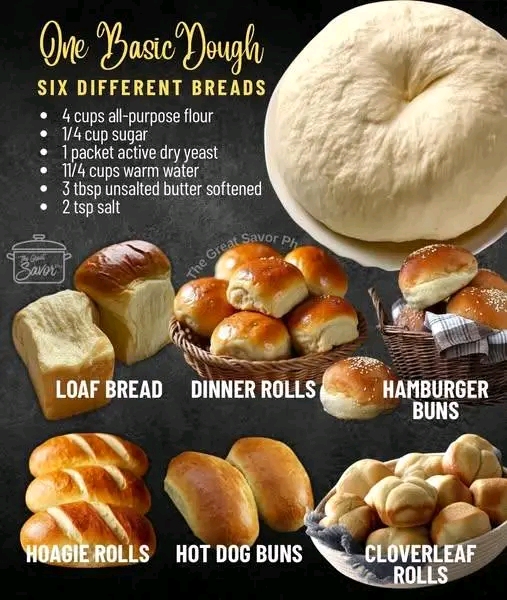
One Basic Dough Recipe – The Ultimate All-Purpose Bread Dough
Introduction
There is something truly special about making fresh bread from scratch. The aroma of warm, homemade bread filling the kitchen is comforting, inviting, and timeless. This versatile basic dough recipe is a baker’s best friend because it can be transformed into countless baked goods using one simple dough. Whether you’re baking a classic sandwich loaf, fluffy dinner rolls, soft hamburger buns, hoagie rolls, hot dog buns, or beautiful decorative rolls, this recipe delivers consistently soft, light, and delicious results every time.
Perfect for beginners and experienced bakers alike, this dough is easy to prepare and produces bakery-quality bread with a tender crumb and golden crust. Once you master this recipe, you’ll have the foundation for countless homemade bread creations.
Ingredients
For the Dough
- 4 cups all-purpose flour
- ¼ cup granulated sugar
- 1 packet (2¼ teaspoons) active dry yeast
- 1¼ cups warm water (105–110°F / 40–43°C)
- 3 tablespoons unsalted butter, softened
- 2 teaspoons salt
Optional Egg Wash
- 1 large egg
- 1 tablespoon water
Instructions
Step 1: Activate the Yeast
Combine the warm water, sugar, and active dry yeast in a mixing bowl. Stir gently and allow the mixture to rest for 5–10 minutes until it becomes foamy. This confirms the yeast is alive and ready to create a light, airy dough.
Step 2: Mix the Dough
Add the softened butter and salt to the yeast mixture. Gradually add the flour one cup at a time while mixing until a soft dough forms.
Step 3: Knead
Transfer the dough to a lightly floured surface and knead for 8–10 minutes, or knead with a stand mixer using the dough hook for about 6–8 minutes. The dough should become smooth, elastic, and slightly tacky without sticking to your hands.
Step 4: First Rise
Lightly oil a large bowl and place the dough inside. Cover with plastic wrap or a clean kitchen towel and let it rise in a warm place for 1 to 1½ hours, or until doubled in size.
Step 5: Punch Down
Gently press down the dough to release trapped air. Let it rest for about 10 minutes before shaping.
Shaping and Baking
Bake all shaped dough at 375°F (190°C) after the final proof.
Classic Sandwich Bread
Shape the dough into a tight loaf and place it into a greased loaf pan. Allow it to rise until it crowns above the pan. Bake for 30–35 minutes until deeply golden.
Soft Dinner Rolls
Divide into 45–50 g portions. Roll into smooth balls and arrange in a greased baking pan so they barely touch. Bake for 15–18 minutes.
Hamburger Buns
Divide into 80–90 g portions. Shape into balls, flatten slightly, brush with egg wash, sprinkle with sesame seeds if desired, and bake for 16–18 minutes.
Hoagie Rolls
Shape into oval logs approximately 6–8 inches long. Proof until puffy and bake for 18–20 minutes.
Hot Dog Buns
Roll into long cylinders and place close together for soft sides. Bake for 18–20 minutes.
Decorative Cloverleaf Rolls
Place three small dough balls into each muffin cup. Bake for 15–18 minutes.
Knot Rolls
Roll dough into ropes, tie into loose knots, proof until doubled, and bake for 16–18 minutes.
Professional Baking Methods
- Measure ingredients accurately for consistent results.
- Use warm—not hot—water to protect the yeast.
- Knead until the dough passes the “windowpane test.”
- Allow full proofing for the softest texture.
- Brush with egg wash for a shiny golden crust.
- Cool baked bread on a wire rack before slicing.
- Store bread in an airtight container to keep it soft.
History
Basic yeast bread has been enjoyed for thousands of years. Ancient civilizations discovered that naturally fermented dough produced lighter, more flavorful bread than flatbreads. Over time, bakers refined the process using cultivated yeast, creating the soft sandwich loaves, rolls, and buns we enjoy today. A simple master dough became the foundation of bakeries worldwide because one recipe could produce many different breads with only minor changes in shaping.
Formation and Texture
This dough develops its wonderful texture through gluten formation during kneading and fermentation. As the yeast feeds on the sugar, it produces carbon dioxide that creates tiny air pockets throughout the dough. During baking, these pockets expand, producing bread that is soft, fluffy, and beautifully risen with a tender interior and a lightly crisp golden crust.
Why You’ll Love This Recipe
- One dough makes multiple bread varieties.
- Soft, fluffy, bakery-style texture.
- Perfect for beginners.
- Easy to customize with herbs, cheese, or seeds.
- Great for sandwiches, burgers, hot dogs, and family dinners.
- Freezer-friendly for meal prep.
Tips for Success
- Proof dough in a warm, draft-free area.
- Avoid adding too much flour during kneading.
- Use fresh yeast for the best rise.
- Rotate baking pans halfway through baking for even browning.
- Brush warm bread with melted butter for an extra-soft crust.
Conclusion
This One Basic Dough Recipe is an essential recipe every home baker should have. With just a few pantry staples, you can create delicious homemade bread, dinner rolls, hamburger buns, hoagie rolls, hot dog buns, and decorative rolls that rival those from a professional bakery. Master this dough once, and you’ll have endless fresh bread possibilities for every meal and occasion.
Made with Love
Nothing brings people together quite like freshly baked bread. Whether you’re baking for family dinners, holiday celebrations, or simply enjoying warm bread with butter, every loaf is made with care, patience, and love. Homemade bread creates memories that last for generations and turns everyday meals into something truly special. Happy baking!