
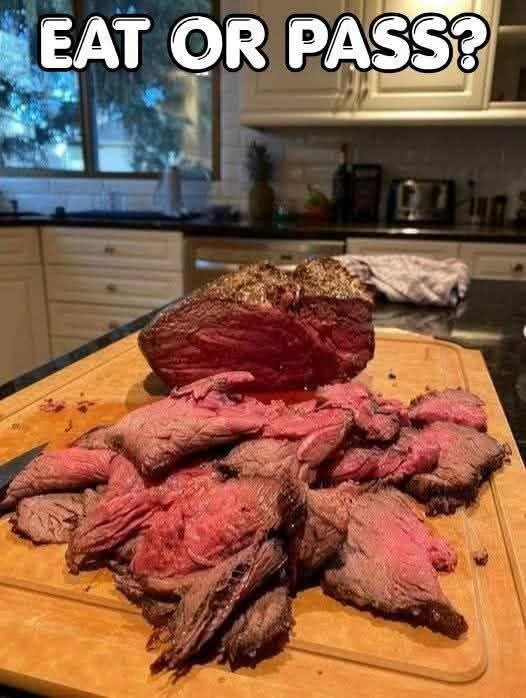
EAT. Without question. This isn’t just a meal; it’s a culinary experience.
Here is the Ultimate Guide to Slow-Roasted Beef Tenderloin—a foolproof method that delivers a buttery, rosy-pink center and a peppery, herb-crusted crust every single time.
📜 Introduction: The Crown Jewel of Roasts
Beef tenderloin is the most prized cut of the cow, renowned for its melt-in-your-mouth texture. However, because it is so lean, it is notoriously easy to dry out. The slow-roast method is the secret weapon. By starting the meat in a very low oven and finishing with a high-heat sear, you eliminate the dreaded “grey band” of overcooked meat, ensuring the roast is perfectly pink from edge to center. This is the centerpiece of holiday tables, anniversary dinners, and any occasion that demands elegance.
🥩 Ingredients
· For the Roast:
· 1 (4-5 lb) center-cut beef tenderloin, trimmed and tied (ask your butcher)
· 2 tbsp unsalted butter, softened
· 2 tbsp high-smoke-point oil (avocado or grapeseed)
· 2 tsp kosher salt (Diamond Crystal preferred)
· 1 tbsp freshly cracked black pepper
· 4 cloves garlic, minced
· 2 tbsp fresh thyme leaves, chopped
· 1 tbsp fresh rosemary, chopped
· For the Pan Sauce (Optional but Mandatory):
· 1 cup beef bone broth
· ½ cup dry red wine (or sherry)
· 2 tbsp unsalted butter, cold
· 1 shallot, finely minced
🔥 Instructions & Methods
- Prep & Rest: Pat the tenderloin completely dry with paper towels. Season generously with salt all over. Place it on a wire rack over a baking sheet and leave it uncovered in the fridge for 1 to 24 hours (this dry-brines the meat).
- Bring to Temp: Remove the roast from the fridge 2 hours before cooking. Rub it with the garlic, thyme, rosemary, and black pepper.
- The Slow Roast: Preheat oven to 250°F (120°C). Roast the beef until the internal temperature hits 115°F (46°C) for rare, or 125°F (52°C) for medium-rare. This will take roughly 1.5 to 2 hours. Do not rush this.
- The Sear (The Reverse Sear): Remove the roast from the oven. Heat a large cast-iron skillet over high heat with the oil. Add the butter. Sear the tenderloin for 1-2 minutes per side, rotating it until a deep, dark chestnut crust forms (about 8-10 minutes total).
- Rest: Place the roast on a cutting board. Do not slice for 15 minutes. This allows the juices to redistribute.
- The Sauce: While it rests, deglaze the hot skillet with shallots, wine, and broth. Scrape the browned bits. Reduce by half, turn off the heat, and whisk in the cold butter until glossy.
🏛️ History
The tenderloin comes from the psoas major muscle, which sits beneath the spine and does absolutely zero work—hence its incredible tenderness. While roasting beef dates back to medieval England, the “tenderloin” as a specific butcher cut gained fame in the early 20th century, popularized by high-end French cuisine (Chateaubriand). The slow-roast (reverse-sear) method is a modern innovation, popularized by chefs like J. Kenji López-Alt in the 2010s, using food science to perfect the steakhouse experience at home.
🧬 Nutrition (Per 6 oz serving, without sauce)
· Calories: ~450 kcal
· Protein: 48g (High-quality, complete amino acid profile)
· Fat: 28g (Monounsaturated & saturated, rich in CLA)
· Carbs: 0g
· Iron: 20% DV (Excellent for energy and blood health)
· B-Vitamins: High in B12 and B6, crucial for brain function.
🏆 Benefits
· Muscle Maintenance: Packed with bioavailable protein for muscle repair.
· Energy Boost: Rich in heme-iron, which is absorbed 3x better than plant-based iron, combatting fatigue.
· Low Carb/Keto Friendly: Zero sugar and zero starch, making it perfect for low-carb diets.
· Collagen & Connective Tissue: Contains glycine, which supports joint health and digestion.
🤝 Who This Is For (The Lovers)
This recipe is for the Steak Snobs, the Holiday Heroes, the Romantic Dinner Chefs, and the Meal-Prep Kings (slice it cold for salads!). It’s for anyone who loves the primal satisfaction of a perfect sear but respects the science of gentle cooking. If you love au jus, pink centers, and the sound of a knife slicing through butter-soft meat—this is your soulmate.
📝 Formation & Pro-Tips
· The Tie: If your tenderloin isn’t tied, do so! The thin “tail” cooks faster; tuck it under and tie it to create a uniform log shape.
· The Thermometer: Do not guess. Use an instant-read thermometer. The residual heat will carry the meat up 5-10°F while resting.
· The Carve: Slice into ½-inch thick medallions. Serve on a warm plate with the sauce drizzled over the top and a sprinkle of flaky sea salt (Maldon) for a final crunch.
✅ Conclusion
Slow-roasted beef tenderloin is the ultimate testament that patience is a virtue in the kitchen. By treating this luxurious cut with gentle heat and a final fiery kiss, you create a dish that is visually stunning, impossibly juicy, and deeply flavorful. It’s not just food; it’s a celebration on a plate.
The Final Verdict: HARD EAT. Pair it with creamy horseradish, garlic mashed potatoes, and a glass of bold Cabernet Sauvignon. Cheers! 🥩🍷