
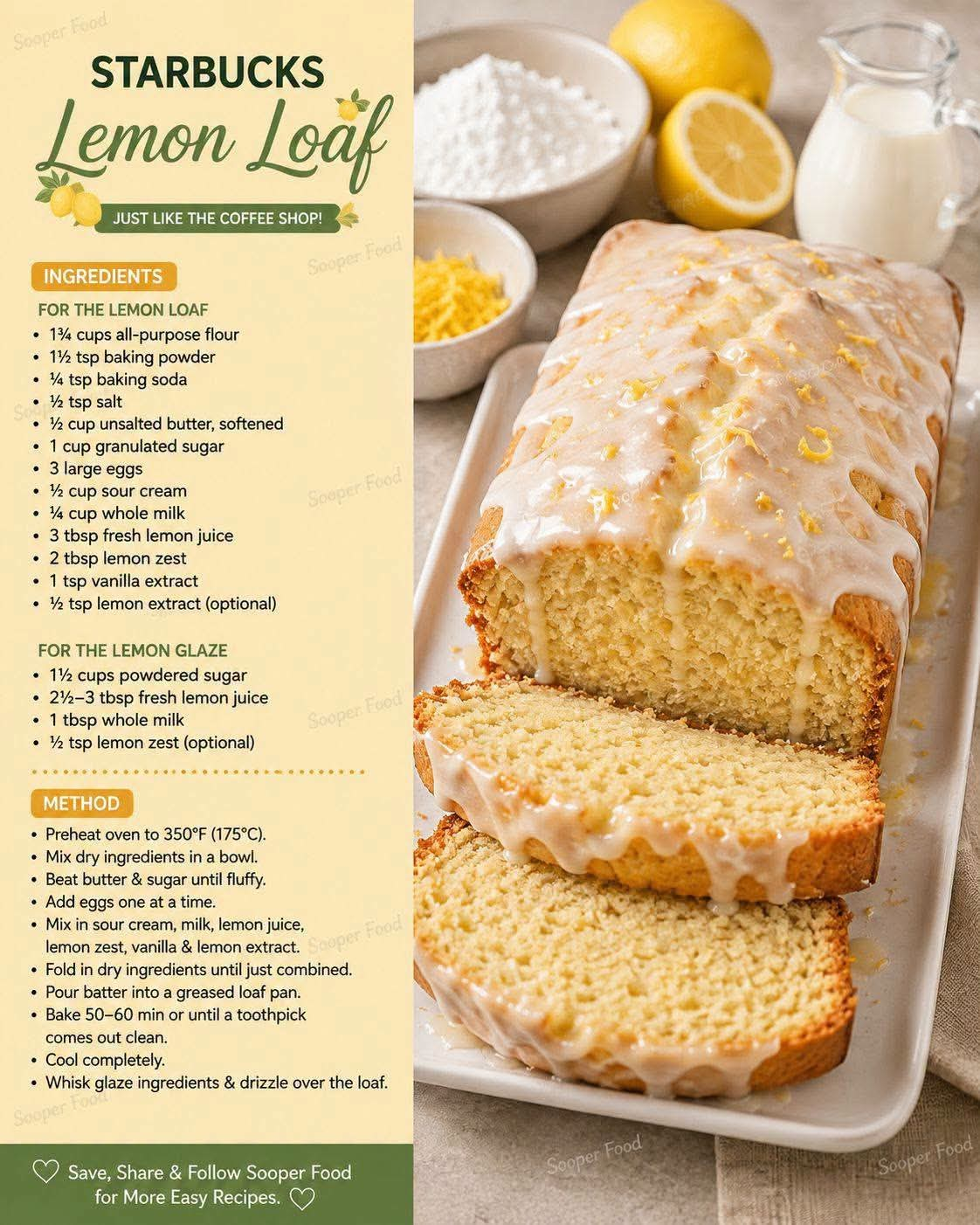
Starbucks-Inspired Lemon Loaf
Introduction
This Starbucks-inspired Lemon Loaf is a wonderfully moist, tender loaf cake filled with bright fresh lemon flavor and finished with a thick, creamy lemon glaze. It has a soft buttery crumb, a delicate citrus aroma, and the kind of bakery-style finish that makes it perfect alongside a cup of coffee or tea.
The combination of butter, sour cream, fresh lemon juice, and lemon zest keeps the loaf tender and flavorful. The thick lemon glaze adds another layer of sweetness and acidity, creating a delicious contrast with the rich cake underneath.
This recipe is inspired by the popular café-style lemon loaf, but it is a homemade interpretation rather than an official Starbucks recipe.
Ingredients
For the Lemon Loaf
- 1¾ cups (220 g) all-purpose flour
- 1½ teaspoons (6 g) baking powder
- ¼ teaspoon (1 g) baking soda
- ½ teaspoon (3 g) fine salt
- ½ cup (113 g) unsalted butter, softened
- 1 cup (200 g) granulated sugar
- 3 large eggs, room temperature
- ½ cup (120 g) sour cream
- ¼ cup (60 ml) whole milk
- 3 tablespoons (45 ml) fresh lemon juice
- 2 tablespoons finely grated lemon zest, approximately 12 g
- 1 teaspoon (5 ml) vanilla extract
- ½ teaspoon (2.5 ml) lemon extract, optional
For the Thick Lemon Glaze
- 1½ cups (180 g) powdered sugar
- 2½ to 3 tablespoons (38–45 ml) fresh lemon juice
- 1 tablespoon (15 ml) whole milk
- ½ teaspoon finely grated lemon zest, optional
Optional Decoration
- Thin lemon slices
- Finely grated lemon zest
- Small curls of lemon peel
- A light dusting of powdered sugar
Equipment
- 9-by-5-inch loaf pan
- Parchment paper
- Large mixing bowl
- Medium mixing bowl
- Electric hand mixer or stand mixer
- Whisk
- Rubber spatula
- Microplane or fine grater
- Wire cooling rack
- Toothpick or cake tester
Instructions
Step 1: Prepare the Oven and Loaf Pan
Preheat the oven to 350°F (175°C).
Grease a 9-by-5-inch loaf pan thoroughly.
Line the pan with parchment paper, leaving some overhang along the long sides. This will make it easier to lift the finished loaf from the pan.
For the most reliable release, lightly grease the parchment as well.
Method: Preparing the Dry Ingredients
Step 2: Combine the Dry Ingredients
In a medium bowl, whisk together:
- All-purpose flour
- Baking powder
- Baking soda
- Salt
Whisk thoroughly to distribute the leavening agents evenly throughout the flour.
Set the bowl aside.
Method: Building the Cake Batter
Step 3: Cream the Butter and Sugar
Place the softened butter and granulated sugar in a large mixing bowl.
Beat on medium speed for approximately 2 to 3 minutes.
The mixture should become noticeably lighter, smoother, and fluffy.
This step helps incorporate air into the butter, contributing to the loaf’s tender texture.
Step 4: Add the Eggs
Add the eggs one at a time.
Beat well after each addition.
Scrape down the sides of the bowl with a rubber spatula as necessary.
Adding the eggs gradually helps the mixture remain smooth and properly emulsified.
Step 5: Add the Lemon Ingredients
Add the sour cream, whole milk, fresh lemon juice, lemon zest, vanilla extract, and optional lemon extract.
Mix gently until everything is combined.
The batter may appear slightly curdled after the lemon juice is added. This is normal and does not mean anything has gone wrong.
The fresh lemon zest is particularly important because much of the lemon’s aromatic flavor is concentrated in the oils contained in the zest.
Method: Combining the Batter
Step 6: Add the Dry Ingredients
Add the dry ingredients to the wet mixture.
Using a rubber spatula, gently fold everything together.
Mix only until no obvious streaks of dry flour remain.
Do not overmix the batter.
Overmixing can develop excess gluten, which may make the finished loaf tougher and less tender.
Step 7: Transfer to the Pan
Pour the batter into the prepared loaf pan.
Use a spatula to smooth the surface.
Gently tap the pan against the counter once or twice to help release any unusually large air pockets.
Step 8: Bake the Lemon Loaf
Place the loaf pan in the center of the preheated oven.
Bake for approximately 50 to 60 minutes.
Begin checking around 50 minutes.
Insert a toothpick or cake tester into the center of the loaf.
The loaf is ready when the tester comes out clean or with a few moist crumbs attached.
Avoid waiting until the tester is completely dry if you want the moistest possible texture.
If the top begins to brown too quickly, loosely cover the loaf with aluminum foil during the final 10 to 15 minutes of baking.
Method: Cooling the Loaf
Step 9: Cool in the Pan
Remove the baked loaf from the oven.
Place the pan on a cooling rack and allow the loaf to cool for approximately 15 minutes.
Do not attempt to remove it immediately, because the cake is still delicate and may break.
After 15 minutes, use the parchment overhang to carefully lift the loaf from the pan.
Place it directly onto the wire rack.
Allow the loaf to cool completely before adding the glaze.
Method: Preparing the Lemon Glaze
Step 10: Make the Glaze
Place the powdered sugar in a medium bowl.
Add 2½ tablespoons of fresh lemon juice and 1 tablespoon of milk.
Whisk until smooth and thick.
Add the optional lemon zest.
If the glaze is too thick, add the remaining lemon juice a few drops or teaspoons at a time.
If the glaze becomes too thin, add additional powdered sugar.
The ideal consistency should be thick enough to sit on the surface of the loaf while slowly flowing over the edges.
Formation and Finishing
Step 11: Glaze the Loaf
Make sure the lemon loaf is completely cool before glazing.
Place it on a serving plate or wire rack positioned over a baking sheet.
Pour or spoon the thick lemon glaze over the top.
Use an offset spatula or the back of a spoon to gently spread the glaze toward the edges.
Allow some of the glaze to naturally drip down the sides.
For a particularly thick bakery-style coating, allow the first layer to set for approximately 10 minutes and then add a second thin layer.
Step 12: Let the Glaze Set
Allow the glazed loaf to sit uncovered for approximately 20 to 30 minutes.
The glaze will gradually become firmer as it dries.
Once set, use a sharp serrated knife to cut the loaf into slices.
For the cleanest slices, wipe the knife between cuts.
Formation and Texture
The texture of this lemon loaf comes from the balance of fat, moisture, flour, eggs, and chemical leavening.
The butter provides richness and tenderness.
The sour cream contributes moisture and a subtle tang while helping keep the crumb soft.
The eggs provide structure and help emulsify the fats and liquids.
The combination of baking powder and baking soda helps the loaf rise.
Fresh lemon juice contributes acidity and bright flavor, while lemon zest supplies concentrated citrus aroma.
The result should be a fine, soft crumb that is moist without being wet or heavy.
History and Inspiration
Lemon loaf cakes belong to a long tradition of simple citrus-flavored tea cakes and quick breads. Lemon has been a popular baking ingredient because its acidity and aromatic zest can brighten rich cakes and pastries.
Café-style lemon loaves became especially popular as individually sliced bakery treats, often paired with coffee or tea.
The Starbucks version has become particularly recognizable for its moist yellow cake, strong lemon flavor, and generous white lemon glaze. Homemade versions have since become popular because they allow bakers to reproduce the same general café experience with ingredients available in their own kitchens.
This recipe takes inspiration from that style while using a straightforward homemade cake method.
Important Tips for the Best Lemon Loaf
Use Fresh Lemons
Fresh lemon juice and freshly grated zest provide a much brighter flavor than bottled juice.
Zest Before Juicing
It is much easier to zest a whole lemon before squeezing it.
When zesting, remove only the yellow outer layer and avoid the white pith underneath, which can be bitter.
Bring Ingredients to Room Temperature
Room-temperature eggs, sour cream, and butter combine more easily and produce a smoother batter.
Do Not Overmix
Once the flour has been added, mix only until combined.
This is one of the most important steps for maintaining a tender crumb.
Do Not Overbake
Begin checking the loaf around the 50-minute mark.
Every oven is slightly different, and baking time can vary.
Cool Completely Before Glazing
If the loaf is warm, the glaze can melt and slide off rather than creating the thick coating you want.
Make-Ahead Method
The lemon loaf can be baked a day before serving.
Allow it to cool completely, then wrap it tightly in plastic wrap and store it at room temperature.
Prepare the glaze separately and refrigerate it in a covered container if making it ahead.
Bring the glaze back to a spreadable consistency before using.
For the freshest bakery-style appearance, glaze the loaf shortly before serving.
Storage
Store the finished lemon loaf in an airtight container at room temperature for approximately 2 to 3 days.
For longer storage, refrigerate it in a tightly sealed container.
Allow refrigerated slices to sit at room temperature for a short time before serving so the crumb can soften.
The loaf can also be frozen without the glaze.
Wrap it tightly in plastic wrap and then place it in a freezer-safe bag or container.
Thaw completely before glazing.
Variations for Lemon Lovers
Extra-Lemony Lemon Loaf
Add an additional teaspoon of finely grated lemon zest to the batter for a stronger citrus aroma.
Lemon Blueberry Loaf
Fold approximately 1 cup of fresh or frozen blueberries into the finished batter before transferring it to the loaf pan.
Lemon Poppy Seed Loaf
Add 1½ to 2 tablespoons of poppy seeds to the batter.
Raspberry Lemon Loaf
Gently fold fresh raspberries into the batter for a sweet-tart berry variation.
Cream Cheese Lemon Glaze
Replace part of the powdered sugar glaze with softened cream cheese for a thicker, tangier topping.
For Lemon Dessert Lovers
If you love bright citrus desserts, this loaf delivers lemon flavor in several different ways.
The lemon zest provides aromatic citrus oils, the fresh lemon juice brings acidity, and the glaze adds an intense lemon finish.
The buttery cake balances that sharpness with richness, while sour cream keeps the crumb tender.
A slice served slightly cool or at room temperature with coffee makes an especially satisfying breakfast or afternoon treat.
Serving Method
For the best presentation, allow the glaze to set completely before slicing.
Use a serrated knife and cut the loaf into thick, even slices.
Arrange the slices on a serving platter and garnish with a little fresh lemon zest or thin lemon slices.
Serve alongside:
- Coffee
- Espresso
- Black tea
- Green tea
- Herbal tea
- Fresh berries
- Whipped cream
The loaf can be served at room temperature or slightly chilled.
Professional Bakery-Style Formation
For a particularly polished appearance, make sure the loaf is completely level before glazing.
If the loaf develops a high center during baking, allow it to cool completely and carefully trim the top with a serrated knife if desired.
Place the loaf on a rack over a baking sheet.
Pour the glaze slowly down the center of the loaf and gently spread it toward the edges.
Let the glaze naturally drip down the sides rather than forcing it.
Once the glaze begins to set, add a few strands of fresh lemon zest across the top.
This produces the classic thick, glossy bakery-style finish.
Conclusion
This Starbucks-inspired Lemon Loaf combines a soft, moist buttery crumb with fresh lemon zest, bright citrus juice, creamy sour cream, and a thick lemon glaze.
The key to achieving the best result is maintaining the right balance of moisture, avoiding overmixing, baking only until the loaf is properly set, and allowing it to cool completely before glazing.
The finished loaf should be tender and moist inside, fragrant with fresh lemon, and covered with a thick layer of sweet-tart glaze.
Whether served for breakfast, brunch, afternoon coffee, a family gathering, or simply as a homemade weekend treat, this lemon loaf brings the comforting experience of a café-style pastry straight to your kitchen.