
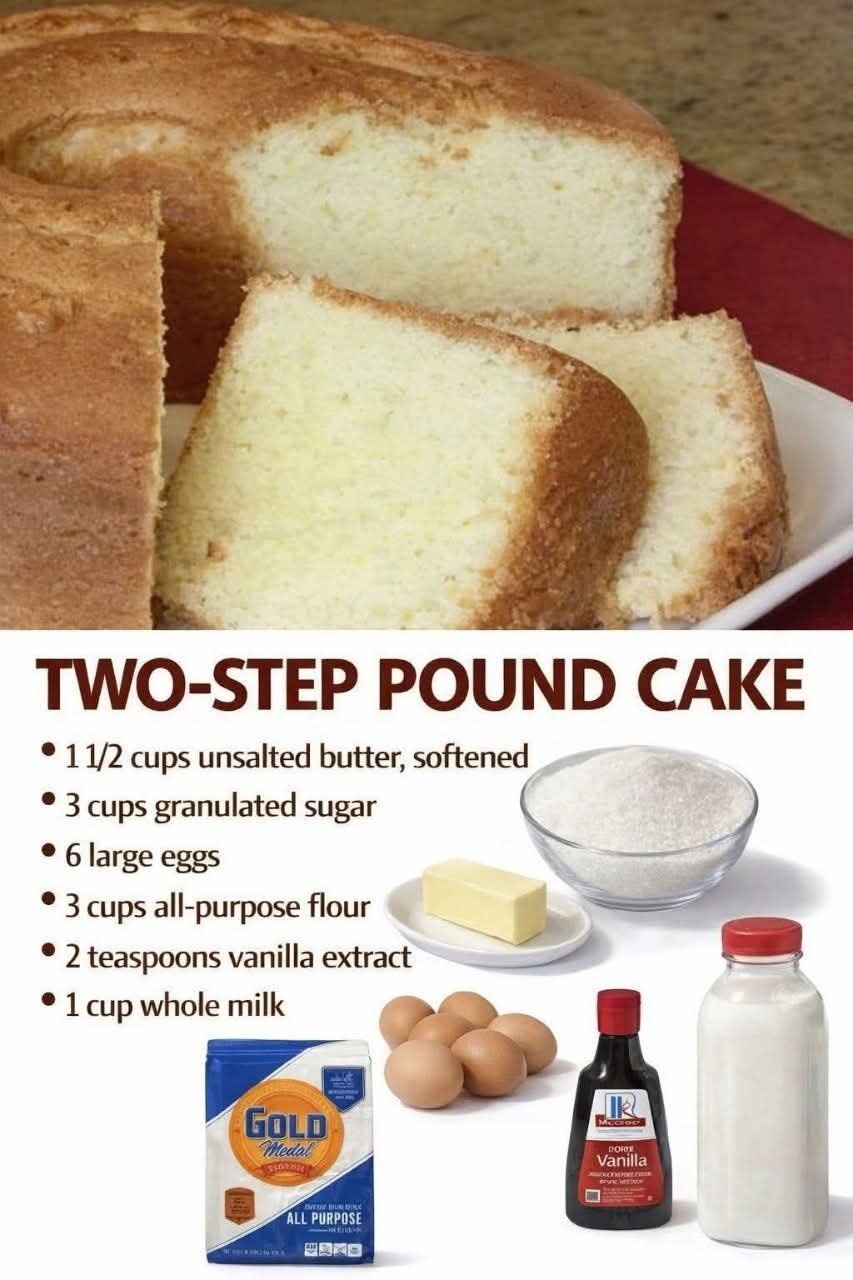
Two-Step Pound Cake
Here is a complete, classic Two-Step Pound Cake recipe built around a simple but important mixing method. The name comes from the way the batter is prepared: rather than adding every ingredient gradually in the traditional pound-cake fashion, the ingredients are combined in two main stages. The result is a rich, buttery cake with a fine, tender crumb and a beautiful golden crust.
Introduction
Pound cake is one of the great classics of home baking. It is known for its rich butter flavor, substantial texture, and delicate sweetness. This version uses four sticks of butter, plenty of eggs, and three cups of flour to create a generous cake that is excellent for family gatherings, holidays, afternoon coffee, or simply enjoying a slice at home.
The Two-Step method makes preparation especially convenient. The butter, sugar, eggs, and dry ingredients are combined carefully so that the batter develops enough structure to support the cake while still remaining tender.
For the best results, use room-temperature eggs and softened butter. Properly softened butter should be cool and pliable rather than melted.
Ingredients
For the Pound Cake
- 2 cups unsalted butter, softened
- 2 1/2 cups granulated sugar
- 6 large eggs, at room temperature
- 3 cups all-purpose flour
- 1/2 teaspoon baking powder, optional
- 1/2 teaspoon salt
- 1 teaspoon vanilla extract, optional but recommended
For Preparing the Pan
- 1 tablespoon butter or shortening
- 1 to 2 tablespoons flour
The vanilla is not included in the original ingredient list, but it adds a pleasant background flavor. You can also leave it out for a very traditional butter-forward pound cake.
Equipment
- Large mixing bowl
- Electric hand mixer or stand mixer
- Measuring cups and spoons
- Rubber spatula
- 10-inch tube pan or Bundt pan
- Wire cooling rack
- Toothpick or cake tester
Preparation
Before beginning, allow the butter and eggs to come to room temperature.
Preheat the oven to 325°F (165°C).
Grease a 10-inch tube or Bundt pan thoroughly. Dust it lightly with flour, then tap out any excess. Making sure the pan is properly prepared is important because pound cake is dense and can otherwise cling to the sides.
Two-Step Mixing Method
Step One: Combine the Butter, Sugar, and Dry Ingredients
Place the softened butter, granulated sugar, flour, baking powder if using, and salt into a large mixing bowl.
Using an electric mixer on low speed, begin combining the ingredients slowly. Increase the speed slightly and mix until the butter is distributed throughout the flour and sugar mixture.
The mixture will initially look thick and somewhat crumbly. Continue mixing until it becomes more evenly blended.
This first stage is important because coating some of the flour with fat can help produce a tender crumb.
Step Two: Add the Eggs
Add the eggs one at a time, mixing after each addition.
Once all six eggs have been incorporated, add the vanilla extract if using.
Continue mixing just until the batter is smooth and evenly combined. Scrape the sides and bottom of the bowl with a rubber spatula to make sure no dry ingredients remain.
Avoid excessive mixing once the batter is completely smooth. Overmixing can develop too much gluten and make the finished cake heavier or tougher than desired.
Forming the Cake
Transfer the finished batter into the prepared Bundt or tube pan.
Use a spatula to spread the batter evenly around the pan. Gently tap the pan on the countertop once or twice to help release any large air pockets.
Smooth the top of the batter.
Because pound cake batter is relatively thick, take a moment to distribute it evenly. This helps the cake bake more uniformly.
Baking Method
Place the pan on the center rack of the preheated oven.
Bake at 325°F (165°C) for approximately 75 to 90 minutes.
The exact baking time will depend on your oven and the type of pan you use.
Begin checking the cake around the 70-minute mark. Insert a wooden toothpick or cake tester into the deepest part of the cake. It should come out clean or with only a few moist crumbs attached.
The cake should have a golden-brown exterior and should feel firm but spring slightly when gently touched.
If the top becomes dark before the center is fully baked, loosely cover the cake with aluminum foil for the remaining baking time.
Cooling Method
When the cake is finished, remove it from the oven and place the pan on a wire rack.
Allow the cake to cool in the pan for approximately 10 to 15 minutes.
Do not immediately turn out a very hot pound cake because it can be fragile and may break.
After the short cooling period, gently loosen the edges with a thin knife or spatula if necessary.
Place a serving plate or cooling rack over the pan and carefully invert the cake.
Allow the cake to cool completely before slicing.
The Formation of the Pound Cake
The structure of a pound cake comes from the interaction between butter, sugar, eggs, and flour.
The butter provides richness and tenderness. The sugar contributes sweetness, moisture, browning, and a delicate texture. The eggs provide structure and help bind the ingredients together. The flour creates the framework that allows the cake to hold its shape.
The optional baking powder provides additional lift and produces a slightly lighter texture. Traditional pound cakes can be made without chemical leavening, relying primarily on the eggs and mixing method for their structure.
During baking, the butter melts, the eggs coagulate, the flour sets, and the sugars caramelize and contribute to the golden crust.
History of Pound Cake
Pound cake has a long history in European and American baking. Early versions were famous for their simple proportions, traditionally using approximately one pound each of flour, butter, sugar, and eggs. This straightforward formula made the cake easy to remember before standardized measuring equipment became common.
Over the years, pound cake recipes evolved. Bakers adjusted the quantities, added flavorings, introduced chemical leaveners, and developed different mixing methods.
Modern pound cakes are therefore available in countless variations, including vanilla, lemon, almond, chocolate, cream cheese, coconut, and fruit versions.
The Two-Step method represents a more streamlined approach to preparing this classic style of cake.
How to Make the Cake Extra Tender
For a particularly tender pound cake, pay attention to the following details:
Use Softened Butter
The butter should be soft enough to mix easily but should not be melted.
Melted butter changes the structure of the batter and can produce a different texture.
Use Room-Temperature Eggs
Room-temperature eggs incorporate more easily into the batter and help create a smoother mixture.
Measure Flour Correctly
For the most reliable result, spoon the flour into your measuring cup and level it with the back of a knife instead of packing flour directly into the cup.
Too much flour can make the pound cake unnecessarily dense.
Avoid Overbaking
A pound cake can go from moist to dry if baked considerably longer than necessary.
Begin testing toward the end of the recommended baking range rather than relying only on the clock.
Flavor Variations
Lemon Pound Cake
Add the finely grated zest of two lemons to the sugar before mixing. You can also prepare a simple lemon glaze using powdered sugar and fresh lemon juice.
Vanilla Pound Cake
Use the recommended teaspoon of vanilla extract and consider adding an additional 1/2 teaspoon of pure vanilla for a stronger vanilla flavor.
Almond Pound Cake
Add 1/2 teaspoon almond extract along with the vanilla.
Coconut Pound Cake
Add approximately 1 cup of finely shredded sweetened or unsweetened coconut to the finished batter.
Orange Pound Cake
Add finely grated orange zest and replace the vanilla with orange extract if desired.
Serving Suggestions
This cake is delicious served completely plain because its main flavors are butter, sugar, and eggs.
For a more elaborate presentation, serve slices with:
- Fresh strawberries
- Blueberries
- Whipped cream
- Powdered sugar
- Fresh fruit sauce
- Vanilla glaze
- Lemon glaze
- Caramel sauce
- Ice cream
A slice can also be lightly warmed and served with a small amount of butter.
Storage
Once completely cooled, store the cake in an airtight container at room temperature for approximately 3 to 4 days.
For longer storage, wrap the cake tightly in plastic wrap and then place it in a freezer-safe container or bag. It can generally be frozen for up to 2 to 3 months.
Thaw the cake at room temperature while keeping it wrapped. This helps prevent excessive moisture from forming on the surface.
Troubleshooting
The Cake Is Too Dense
Possible causes include excessive flour, insufficient mixing during the initial stage, or an oven temperature that is too low.
Make sure your flour is measured accurately and that the batter is properly combined.
The Cake Is Dry
The most common causes are overbaking and measuring too much flour.
Begin testing the cake toward the end of the baking period and remove it once the tester comes out clean or with a few moist crumbs.
The Cake Sank in the Middle
This can happen if the cake is underbaked, the oven door is opened too early, or the batter contains too much liquid.
Make sure the center is fully baked before removing the cake.
The Cake Stuck to the Pan
Use generous but even pan preparation. Coat the entire interior with butter or shortening and dust it with flour, paying particular attention to the center tube and decorative areas of a Bundt pan.
Conclusion
This Two-Step Pound Cake is a wonderful example of how a relatively simple list of ingredients can create an impressive homemade dessert. The combination of butter, sugar, eggs, and flour produces the unmistakable richness and texture associated with classic pound cake.
The key is not complicated equipment or unusual ingredients. It is careful preparation, accurate measuring, proper mixing, and patient baking.
Once completely cooled, slice the cake generously and enjoy it with coffee, tea, fresh fruit, whipped cream, or your favorite topping. It is the kind of traditional cake that can become a family favorite and a recipe worth returning to again and again.
A Cake for Pound Cake Lovers
For lovers of classic homemade cakes, this recipe offers exactly what makes pound cake so special: a rich buttery flavor, a golden crust, a tender interior, and a satisfying texture.
It is simple enough for an ordinary afternoon yet elegant enough for birthdays, holidays, family dinners, and special celebrations.
The beauty of this recipe is its versatility. Serve it plain for a traditional experience, add berries and cream for a summer dessert, or finish it with a lemon or vanilla glaze for something more festive.
Once you master the Two-Step method, you will have a dependable foundation for creating many different pound cake flavors while preserving the rich, comforting character of the original.