
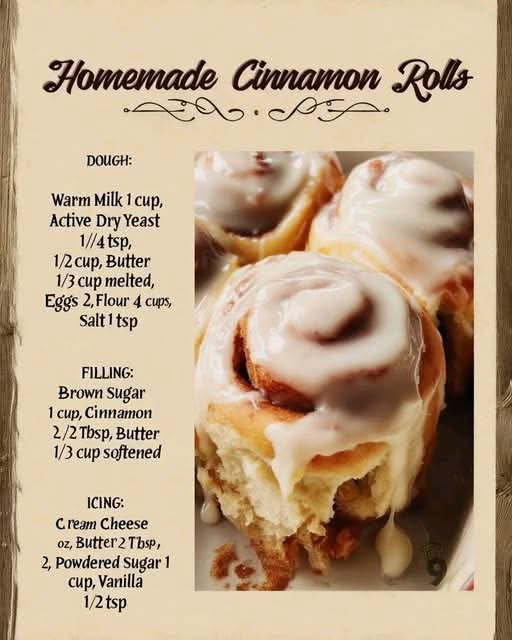
Homemade Cinnamon Rolls
Early morning baking has a special kind of comfort. The gentle aroma of yeast, butter, cinnamon, and brown sugar slowly filling the kitchen is enough to make an ordinary morning feel like a celebration. These homemade cinnamon rolls are soft, fluffy, buttery, and generously filled with a warm cinnamon-brown sugar mixture, then finished with a smooth cream cheese icing that melts beautifully over the warm spirals.
This recipe is designed to produce tender rolls with a rich flavor and a soft, pillowy center. The dough is allowed to rise patiently, giving the yeast time to create the light texture that makes a truly memorable cinnamon roll.
Introduction
Homemade cinnamon rolls are one of those recipes that bring people together. They are perfect for weekend breakfasts, holidays, brunches, family gatherings, bake sales, or simply a quiet morning when you want something special.
The secret is not complicated. Good cinnamon rolls depend on a few important things: properly activated yeast, a soft dough, sufficient rising time, a generous filling, and careful baking. The goal is a roll that is golden on the outside while remaining soft and tender inside.
The cream cheese icing adds the perfect finishing touch. Spread over the rolls while they are still warm, it begins to melt into the layers, creating a rich, creamy glaze.
Ingredients
For the Dough
- 1 cup warm whole milk
- 2 1/4 teaspoons active dry yeast
- 1/4 cup granulated sugar
- 1/2 cup unsalted butter, melted and slightly cooled
- 2 large eggs, room temperature
- 1 teaspoon vanilla extract
- 1 teaspoon salt
- 4 to 4 1/2 cups all-purpose flour
For the Cinnamon Filling
- 1/2 cup unsalted butter, softened
- 1 cup packed light brown sugar
- 2 tablespoons ground cinnamon
- 1/4 teaspoon salt
- 1 teaspoon vanilla extract
For the Cream Cheese Icing
- 4 ounces cream cheese, softened
- 1/4 cup unsalted butter, softened
- 1 1/2 cups powdered sugar
- 1 teaspoon vanilla extract
- 2 to 3 tablespoons milk or heavy cream
- Pinch of salt
Equipment
- Large mixing bowl
- Measuring cups and spoons
- Rolling pin
- Wooden spoon or spatula
- 9 x 13-inch baking dish
- Clean kitchen towel or plastic wrap
- Sharp knife or unflavored dental floss
- Wire rack
Method
Step 1: Prepare the Yeast
Pour the warm milk into a large mixing bowl. The milk should be warm but not hot. Add the granulated sugar and active dry yeast.
Stir gently and allow the mixture to stand for about 5 to 10 minutes.
The yeast should become foamy or creamy-looking on the surface. This is a good indication that the yeast is active.
If there is no activity at all, the yeast may be old or the milk may have been too hot or too cold. It is better to replace the yeast before continuing.
Step 2: Make the Dough
Add the melted butter, eggs, vanilla extract, and salt to the yeast mixture.
Stir until everything is well combined.
Begin adding the flour gradually, starting with about 4 cups. Mix until a soft dough forms.
The dough should be soft and slightly tacky but should not be extremely sticky. If necessary, add additional flour, one tablespoon at a time.
Avoid adding too much flour. A dough that is excessively stiff can produce dense cinnamon rolls instead of soft, fluffy ones.
Step 3: Knead the Dough
Transfer the dough to a lightly floured work surface.
Knead for approximately 8 to 10 minutes by hand, folding and turning the dough repeatedly.
The finished dough should feel smooth, elastic, and soft.
You can also use a stand mixer fitted with a dough hook. Knead on low to medium speed until the dough becomes smooth and elastic.
Step 4: First Rise
Place the dough into a lightly greased bowl.
Turn the dough once so that its surface is lightly coated with butter or oil.
Cover the bowl with a clean kitchen towel or plastic wrap.
Place it in a warm, draft-free area and allow it to rise for approximately 1 to 1 1/2 hours, or until it has doubled in size.
The exact rising time depends on the temperature of your kitchen.
Step 5: Prepare the Cinnamon Filling
While the dough is rising, prepare the filling.
Combine the brown sugar, cinnamon, salt, and vanilla extract in a small bowl.
Keep the softened butter separate so that it can be spread evenly across the dough.
The combination of brown sugar and cinnamon creates the classic caramel-like filling that melts between the layers during baking.
Step 6: Roll Out the Dough
Once the dough has doubled in size, gently punch it down to release excess air.
Transfer it to a lightly floured surface.
Roll the dough into a large rectangle approximately 15 x 20 inches.
Try to maintain an even thickness throughout the rectangle. This helps ensure that all the rolls bake evenly.
Step 7: Add the Filling
Spread the softened butter evenly over the entire surface of the dough.
Sprinkle the cinnamon-brown sugar mixture evenly over the butter.
Leave a small border along one long edge so that the dough can be sealed after rolling.
For extra richness, gently press the filling into the butter with your fingers or the back of a spoon.
Step 8: Roll the Cinnamon Rolls
Starting from one long side, carefully roll the dough into a tight log.
Roll slowly and evenly so the filling remains distributed throughout the spiral.
When you reach the opposite edge, gently pinch the seam closed.
Step 9: Cut the Rolls
Using a sharp knife, gently cut the log into approximately 12 equal pieces.
For exceptionally clean cuts, you can use unflavored dental floss. Slide the floss underneath the dough, bring the ends upward, cross them over the roll, and pull to create a clean slice.
Avoid pressing down too hard with a knife because this can flatten the rolls.
Step 10: Arrange the Rolls
Grease a 9 x 13-inch baking dish.
Arrange the cinnamon rolls in the dish, leaving a little space between them.
Cover the pan loosely with a towel or plastic wrap.
Allow the rolls to rise again for approximately 30 to 45 minutes.
They should become noticeably puffy and begin touching one another.
Step 11: Bake
Preheat the oven to 350°F (175°C).
Bake the rolls for approximately 22 to 28 minutes.
The tops should become lightly golden while the centers remain soft.
Do not overbake them. Cinnamon rolls continue cooking slightly from their residual heat after leaving the oven, and excessive baking can make them dry.
If the tops begin browning too quickly, loosely cover the pan with aluminum foil during the final portion of baking.
Step 12: Make the Cream Cheese Icing
While the cinnamon rolls are baking, prepare the icing.
Beat the softened cream cheese and butter together until smooth and creamy.
Add the powdered sugar gradually.
Mix in the vanilla extract, salt, and enough milk or heavy cream to create a smooth, spreadable consistency.
For a thicker frosting, use less milk. For a thinner glaze, add a little more.
Step 13: Finish the Cinnamon Rolls
Remove the rolls from the oven and allow them to cool for approximately 5 to 10 minutes.
Spread the cream cheese icing generously over the warm rolls.
The warmth of the rolls will soften the icing and allow it to flow into the cinnamon swirls.
For the best experience, serve them while they are still warm.
The Formation of Perfect Cinnamon Rolls
The formation of a cinnamon roll is simple but important.
First, the yeast creates air and structure inside the dough. During the first rise, the dough expands and becomes lighter.
Next, the dough is rolled into a rectangle and covered with butter, brown sugar, and cinnamon. When the dough is rolled into a log, those layers become the familiar spiral pattern.
During the second rise, the individual rolls become larger and softer.
Finally, the heat of the oven transforms the dough into golden, fluffy rolls while the butter and sugar filling melts into the layers.
This combination of fermentation, layering, rolling, proofing, and baking gives cinnamon rolls their distinctive texture.
Important Tips for Soft Cinnamon Rolls
Use the Right Amount of Flour
One of the most common mistakes is adding too much flour. The dough should remain soft and slightly tacky.
Do Not Overheat the Milk
Milk that is too hot can damage or kill the yeast. It should feel comfortably warm rather than hot.
Give the Dough Time to Rise
Rushing the rising process can result in dense rolls. Allow the dough to become visibly puffy and approximately double in size.
Roll Evenly
A uniform rectangle produces rolls that are similar in size and bake at the same rate.
Do Not Overbake
The rolls should be lightly golden rather than deeply browned. Overbaking is one of the easiest ways to lose that soft, tender texture.
Ice While Warm
Adding the icing while the rolls are warm allows it to melt slightly into the spirals.
Overnight Cinnamon Roll Method
These rolls can also be prepared the night before.
After cutting and arranging the rolls in the baking dish, cover the pan tightly and place it in the refrigerator overnight.
The next morning, remove the pan from the refrigerator and let the rolls sit at room temperature for approximately 45 to 90 minutes, depending on how warm your kitchen is.
Allow them to become visibly puffy before baking.
This method is especially convenient for holidays and weekend breakfasts because most of the preparation is completed the night before.
Make-Ahead Method
You can also freeze unbaked cinnamon rolls.
Prepare the rolls through the cutting and arranging stage. Place them in a freezer-safe dish and cover them tightly.
Freeze until solid.
When ready to bake, thaw them overnight in the refrigerator. The next morning, allow them to sit at room temperature until puffy, then bake according to the recipe.
You can also freeze baked rolls without icing and add fresh icing after reheating.
A Brief History of Cinnamon Rolls
Cinnamon rolls have a long history connected to European sweet breads and enriched yeast doughs.
Cinnamon itself has been valued as a spice for centuries, and sweetened breads containing spices, butter, and sugar developed across Europe. Sweden developed its own beloved version, known as kanelbulle, which became an important part of Swedish baking culture.
Similar sweet rolls eventually became popular throughout North America. American-style cinnamon rolls generally became larger, sweeter, and richer, often featuring brown sugar, generous butter, and cream cheese frosting.
Today, cinnamon rolls are enjoyed in many forms around the world. Some are simple and lightly sweetened, while others contain nuts, raisins, caramel, apples, maple flavors, or other fillings.
Despite the variations, the basic idea remains the same: soft yeast dough wrapped around a fragrant cinnamon-sugar filling.
Variations
Pecan Cinnamon Rolls
Add 1 cup of finely chopped pecans to the cinnamon filling before rolling the dough.
Raisin Cinnamon Rolls
Sprinkle 3/4 cup of raisins over the cinnamon-sugar mixture.
Apple Cinnamon Rolls
Add finely diced, lightly sautéed apples to the filling for a warm apple-cinnamon variation.
Caramel Cinnamon Rolls
Drizzle caramel sauce into the baking dish before adding the rolls. The caramel will melt underneath them as they bake.
Maple Cinnamon Rolls
Replace part of the milk in the icing with pure maple syrup and reduce the powdered sugar slightly if necessary.
Serving Suggestions
Warm cinnamon rolls are wonderful with:
- Fresh coffee
- Hot tea
- Cold milk
- Fresh fruit
- Sliced apples
- Berries
- A light dusting of powdered sugar
- Additional cream cheese icing
- Chopped pecans or walnuts
They are especially good when served straight from the baking dish while the centers are still warm and soft.
Storage
Store cooled cinnamon rolls in an airtight container at room temperature for up to 2 days.
For longer storage, refrigerate them for up to about 5 days.
To reheat, warm an individual roll in the microwave for approximately 15 to 25 seconds. The exact time will depend on the size of the roll and the strength of the microwave.
You can also reheat several rolls in a low oven until warmed through.
Conclusion
Homemade cinnamon rolls are more than just a sweet breakfast. They are a slow, comforting baking project that transforms simple ingredients into something warm, fragrant, and memorable.
The soft yeast dough, rich butter, brown sugar, and cinnamon create beautiful spirals that become golden and tender in the oven. The cream cheese icing brings everything together with a smooth, creamy finish.
There is something especially satisfying about making them from scratch: starting with a bowl of dough in the early morning, watching it rise on the counter, rolling it with cinnamon and brown sugar, and finally opening the oven to a kitchen filled with that unmistakable homemade aroma.
For Cinnamon Roll Lovers
If you love exceptionally soft cinnamon rolls, focus on three things: a soft dough, proper rising, and careful baking.
Do not overload the dough with flour, do not rush the fermentation, and do not leave the rolls in the oven longer than necessary.
The best cinnamon roll should be soft enough to pull apart with your fingers, rich enough to taste buttery, warmly spiced with cinnamon, and generously coated with icing.
That is the kind of cinnamon roll worth waking up early for.