
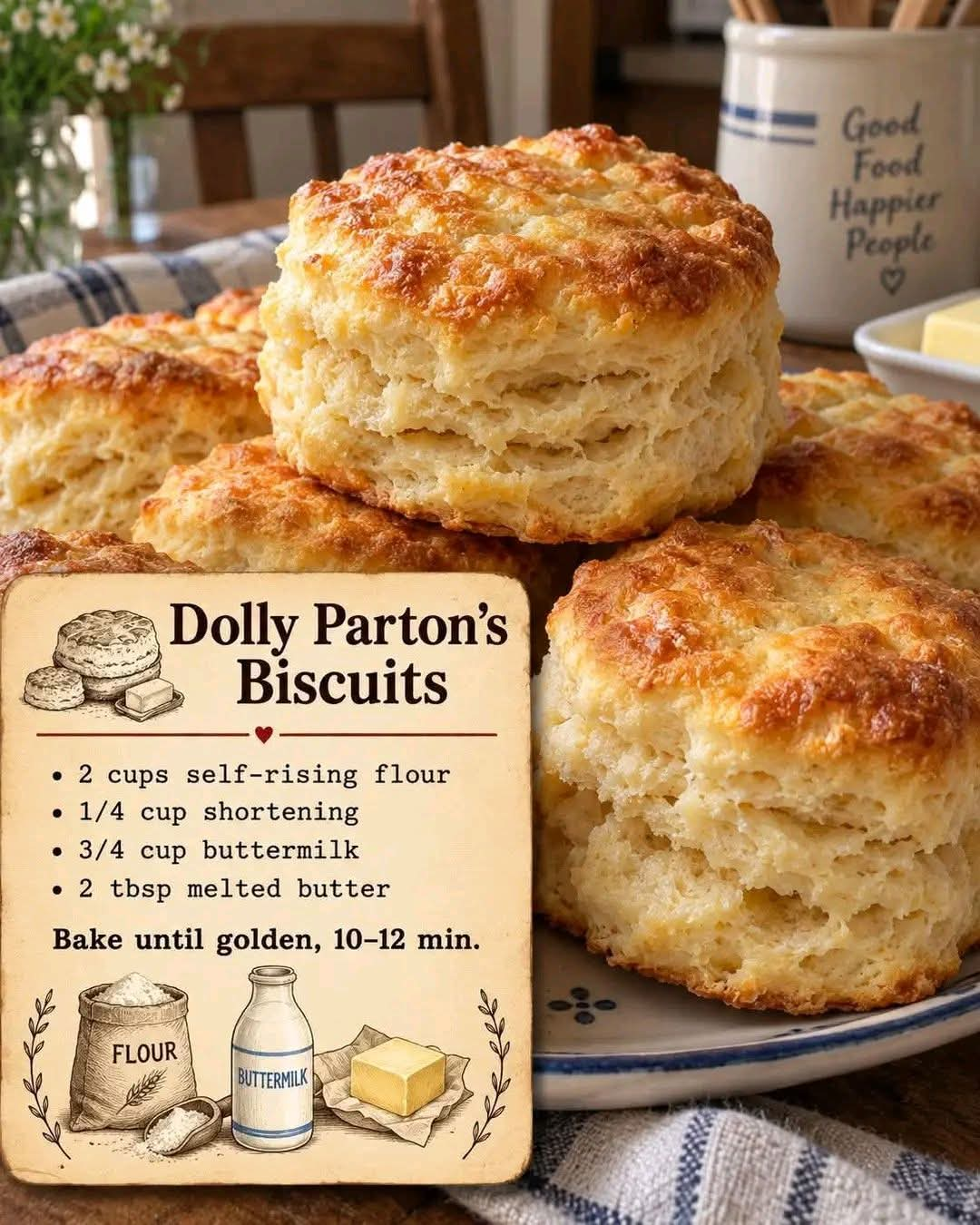
Dolly Parton’s Buttermilk Biscuits
Introduction
Dolly Parton’s Buttermilk Biscuits are a wonderfully simple Southern-style bake made with self-rising flour, shortening, tangy buttermilk, and melted butter. The result is a tender, golden biscuit with a soft interior and a deliciously buttery finish.
Biscuits are one of those recipes where a handful of basic ingredients can create something deeply comforting. They can be served alongside breakfast, added to a family dinner, or enjoyed warm with butter, honey, jam, or gravy.
The secret to good biscuits is not complicated equipment or elaborate preparation. The most important things are keeping the dough tender, avoiding excessive mixing, and handling it gently.
Ingredients
For the Biscuits
- 2 cups self-rising flour
- 1/4 cup vegetable shortening
- 3/4 cup buttermilk
- 2 tablespoons butter, melted
For the Work Surface
- A small amount of flour for dusting
- Additional flour for the biscuit cutter if needed
Equipment
- Large mixing bowl
- Pastry cutter or fork
- Measuring cups and spoons
- Rolling pin, optional
- Biscuit cutter or round cookie cutter
- Baking sheet
- Pastry brush
Method
Step 1: Preheat the Oven
Preheat the oven to 425°F, approximately 220°C.
Allow the oven to heat fully before placing the biscuits inside. A properly preheated oven helps the biscuits rise quickly and develop a beautiful golden surface.
Lightly grease a baking sheet or line it with parchment paper.
Step 2: Prepare the Flour
Place the self-rising flour in a large mixing bowl.
Self-rising flour already contains a leavening agent and salt, which makes it especially convenient for biscuit making.
Step 3: Cut in the Shortening
Add the shortening to the flour.
Using a pastry cutter, fork, or your fingertips, work the shortening into the flour until the mixture resembles coarse crumbs.
Do not try to make the mixture completely smooth. Small pieces of shortening distributed throughout the flour help create a tender biscuit.
Step 4: Add the Buttermilk
Pour the buttermilk into the flour mixture.
Using a wooden spoon or your hands, gently mix until a soft dough begins to form.
Do not overwork the dough. Stop mixing as soon as the ingredients are mostly combined.
If the dough seems extremely dry, a very small amount of additional buttermilk can be added. If it feels excessively sticky, lightly dust it with flour.
Step 5: Turn Out the Dough
Lightly flour a clean work surface.
Transfer the dough onto the surface and gently bring it together.
Pat or roll the dough to approximately 1/2 to 3/4 inch thick. For taller biscuits, keep the dough on the thicker side.
Avoid pressing or kneading aggressively because excessive handling can make the biscuits tough.
Step 6: Cut the Biscuits
Dip a biscuit cutter lightly into flour.
Press the cutter straight down into the dough and lift it straight back up.
Avoid twisting the cutter. Twisting can seal the edges of the dough and may prevent the biscuits from rising as well.
Place the cut biscuits onto the prepared baking sheet.
For softer sides, arrange them fairly close together. For slightly crispier edges, leave a little space between each biscuit.
Step 7: Bake
Place the biscuits in the preheated oven.
Bake for approximately 10 to 12 minutes, or until the tops are golden brown and the biscuits have risen.
Because ovens vary, begin checking them around the 10-minute mark.
Step 8: Add the Butter
Remove the biscuits from the oven while they are hot.
Immediately brush the tops generously with the melted butter.
Allow them to rest for a few minutes before serving.
Formation and Texture
The ideal biscuit should have a golden exterior and a soft, tender interior.
The shortening contributes tenderness, while the buttermilk provides moisture and a subtle tang. The self-rising flour supplies the structure and leavening needed for the biscuits to rise.
The dough should be soft but manageable. If it becomes heavily kneaded or compressed, the finished biscuits can become dense and chewy instead of light and tender.
Gentle handling is therefore one of the most important parts of the entire recipe.
The Importance of Buttermilk
Buttermilk is a classic ingredient in Southern-style biscuits. Its mild acidity contributes a pleasant tangy flavor and works with the leavening in the flour to help create a tender texture.
Cold buttermilk is generally preferred when making biscuits because keeping the dough relatively cool helps preserve the texture created by the shortening.
The History of Southern Biscuits
Biscuits have a long history in American cooking and became particularly important in Southern cuisine.
Before modern refrigeration and convenience foods, cooks relied heavily on inexpensive pantry staples such as flour and shortening. Biscuits were practical because they could be prepared relatively quickly and served with many different meals.
Buttermilk also became an important ingredient in Southern kitchens, particularly in areas where dairy products were commonly produced. Rather than wasting leftover buttermilk, cooks incorporated it into breads, biscuits, pancakes, cakes, and other baked goods.
Over generations, biscuit-making became a treasured part of home cooking. Families developed their own preferred techniques, ingredients, and methods for achieving the ideal texture.
Southern biscuits eventually became much more than a side dish. They became a symbol of hospitality, family meals, Sunday breakfasts, and comforting home cooking.
Serving Suggestions
These biscuits can be served in many different ways.
Breakfast
Serve warm biscuits with:
- Butter
- Honey
- Strawberry jam
- Raspberry preserves
- Peach preserves
- Scrambled eggs
- Sausage
- Bacon
Southern-Style Dinner
They are excellent alongside:
- Fried chicken
- Roast chicken
- Mashed potatoes
- Green beans
- Creamed vegetables
- Country gravy
- Stews and soups
Sweet Serving
For a simple dessert-style treat, split a warm biscuit and add butter, honey, and a little cinnamon sugar.
You can also use the biscuits as the base for strawberry shortcake.
Tips for Perfect Biscuits
Keep the Dough Tender
The less you handle the dough, the more tender your biscuits are likely to be.
Do Not Overmix
Once the buttermilk has been incorporated, stop mixing. A slightly rough-looking dough is perfectly acceptable.
Avoid Excess Flour
Use enough flour to prevent sticking, but do not incorporate excessive amounts into the dough. Too much flour can produce dry biscuits.
Cut Straight Down
Press the biscuit cutter straight down rather than twisting it.
Bake Immediately
Once the biscuits have been cut, place them in the oven without unnecessary delay.
Brush With Butter
Brushing the biscuits immediately after baking gives them a richer flavor and a beautiful finish.
Variations
Honey Butter Biscuits
Mix softened butter with a little honey and serve it alongside the warm biscuits.
Cheddar Biscuits
Add shredded cheddar cheese to the dough for a savory variation.
Herb Biscuits
Add finely chopped fresh rosemary, parsley, chives, or thyme for a fragrant savory biscuit.
Pepper Biscuits
Add freshly ground black pepper for a slightly more pronounced savory flavor.
Cinnamon Biscuits
For a sweeter version, add a small amount of cinnamon and sugar to the dough and serve with honey butter.
Storage
Fresh biscuits are best enjoyed on the day they are baked.
If you have leftovers, allow them to cool completely before placing them in an airtight container.
They can generally be kept at room temperature for a short period or refrigerated for longer storage. Reheat them gently before serving to restore some of their softness.
For longer storage, baked biscuits can also be frozen in an airtight freezer-safe container. Thaw and reheat before serving.
Make-Ahead Method
The dough can be prepared shortly before baking, but biscuits are at their best when baked fresh.
If preparing them for a gathering, cut the biscuits ahead of time and keep them chilled until you are ready to bake them.
This makes it easier to serve a basket of hot biscuits directly from the oven.
Conclusion
Dolly Parton’s Buttermilk Biscuits capture everything people love about classic homemade biscuits: simple ingredients, a tender texture, a golden exterior, and plenty of buttery flavor.
The recipe does not require complicated techniques. The most important principles are to measure carefully, work the shortening into the flour until crumbly, add the buttermilk gently, and handle the dough as little as possible.
Fresh from the oven and brushed with melted butter, these biscuits make an inviting addition to almost any meal.
For Biscuit Lovers
For biscuit lovers, few things compare with the smell of freshly baked buttermilk biscuits coming from the oven.
Their versatility is part of their appeal. The same basic biscuit can become a breakfast sandwich, a side for dinner, a base for biscuits and gravy, or a sweet treat with butter and honey.
Whether enjoyed around a busy family breakfast table or served alongside a comforting Southern dinner, these biscuits are a reminder that some of the most satisfying foods are also among the simplest.
Final Method at a Glance
- Preheat the oven to 425°F.
- Place self-rising flour in a mixing bowl.
- Cut in the shortening until crumbly.
- Add buttermilk and gently mix into a soft dough.
- Transfer the dough to a lightly floured surface.
- Pat or roll the dough to about 1/2 to 3/4 inch thick.
- Cut into rounds without twisting the cutter.
- Place the biscuits on a prepared baking sheet.
- Bake for 10 to 12 minutes until golden.
- Brush the hot biscuits generously with melted butter.
- Serve warm with your favorite sweet or savory accompaniment.