
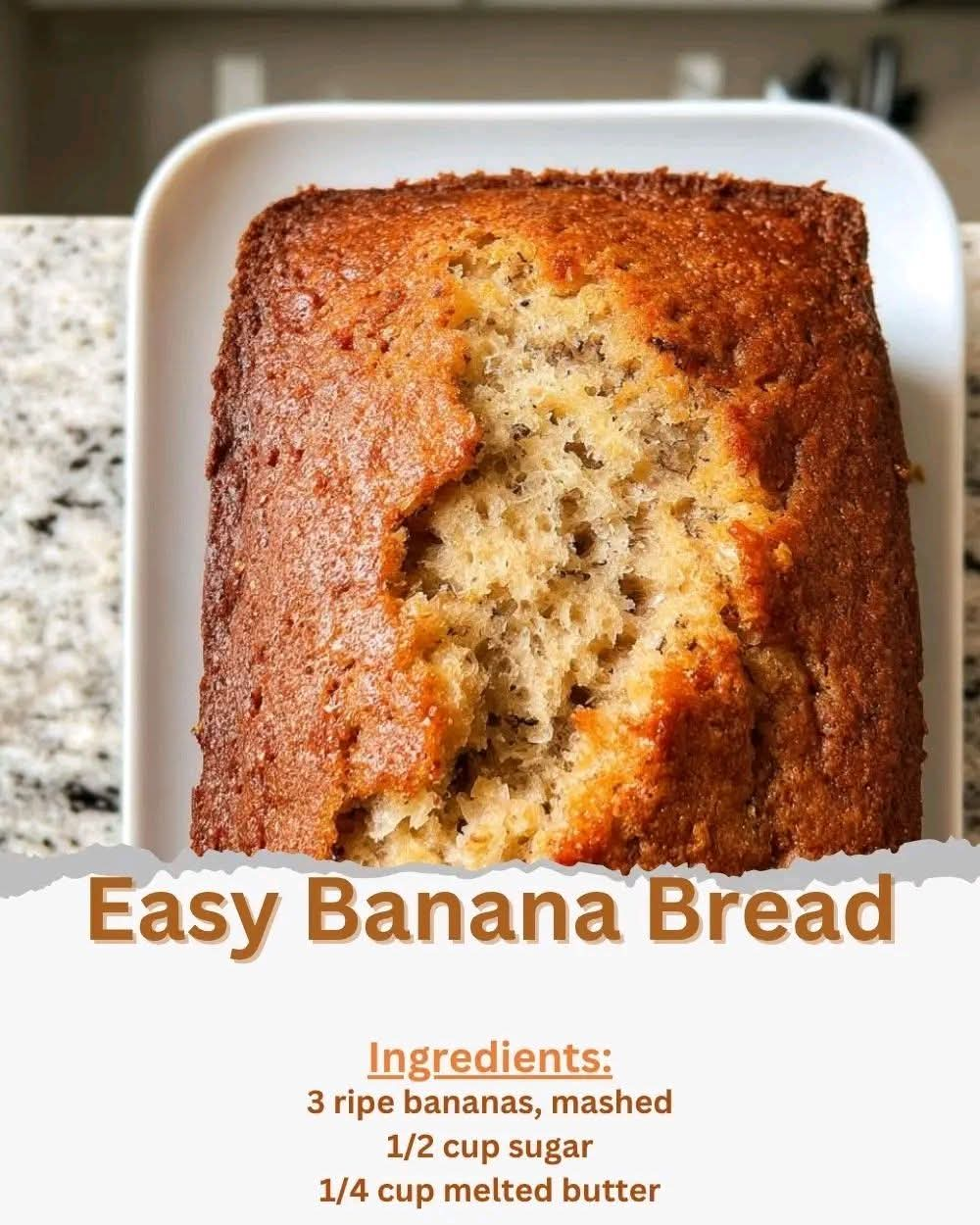
Easy Homemade Banana Bread
Introduction
Easy Banana Bread is one of those timeless homemade recipes that turns a few simple ingredients into a wonderfully comforting loaf. Moist, tender, lightly sweet, and full of natural banana flavor, it is an excellent way to use ripe bananas that might otherwise be forgotten.
This recipe requires no mixer and comes together in just a few minutes. The melted butter adds richness, while ripe bananas provide moisture and flavor. A touch of vanilla enhances the sweetness, and baking soda helps the loaf rise into a soft, golden-brown bread.
Whether served for breakfast, enjoyed with afternoon coffee, or offered as a simple homemade dessert, banana bread is a dependable favorite for families and baking lovers.
Ingredients
- 3 very ripe bananas, mashed
- 1/2 cup granulated sugar
- 1/4 cup unsalted butter, melted
- 1 teaspoon vanilla extract
- 1 teaspoon baking soda
- 1/4 teaspoon salt
- 1 large egg, beaten
- 1 1/2 cups all-purpose flour
- Butter or cooking spray, for greasing the loaf pan
Optional Additions
For a slightly different version, you can add:
- 1/2 cup chopped walnuts or pecans
- 1/2 cup chocolate chips
- 1/2 teaspoon ground cinnamon
- 1/4 teaspoon nutmeg
- A handful of sliced bananas for decorating the top
Preparation
Begin by preheating the oven to 350°F (175°C). Grease a 9 x 5-inch loaf pan thoroughly, making sure the corners and sides are covered. You can also line the bottom with parchment paper to make removing the finished loaf easier.
Peel the bananas and place them in a large mixing bowl. Mash them with a fork until they become mostly smooth. A few small pieces of banana are perfectly fine and can add pleasant texture to the finished bread.
Add the sugar, melted butter, and vanilla extract to the mashed bananas. Stir until the ingredients are evenly combined.
Next, sprinkle the baking soda and salt over the mixture and stir gently. Add the beaten egg and mix until incorporated.
Gradually add the flour. Stir with a wooden spoon or spatula only until the flour disappears and a thick batter forms. Do not overmix. A few small lumps are acceptable and will help keep the finished bread tender.
If using nuts, chocolate chips, cinnamon, or another optional addition, gently fold them into the batter at this stage.
Pour the batter into the prepared loaf pan. Smooth the top with a spatula. If desired, place a few thin banana slices over the surface before baking.
Baking Method
Place the loaf pan in the center of the preheated oven. Bake for approximately 60 minutes.
Begin checking the bread around the 55-minute mark because oven temperatures can vary. Insert a toothpick or thin skewer into the center of the loaf. If it comes out clean or with a few moist crumbs attached, the banana bread is ready.
If the top is becoming too dark before the center is completely baked, loosely cover the loaf with aluminum foil and continue baking until done.
Remove the pan from the oven and allow the banana bread to rest in the pan for about 10 minutes. Carefully transfer it to a wire rack and allow it to cool completely before slicing.
The Method Behind the Recipe
The success of this banana bread comes largely from balancing moisture and flour. Very ripe bananas contain plenty of moisture and natural sweetness, making them ideal for this recipe.
Melted butter provides richness without requiring a mixer. The beaten egg contributes structure and helps the loaf hold together, while baking soda creates the lift needed for a light texture.
The most important technique is to avoid overmixing after the flour is added. Excessive mixing develops gluten, which can make banana bread dense or chewy instead of soft and tender.
For the best result, mix the batter gently and stop as soon as the ingredients are combined.
A Brief History of Banana Bread
Banana bread became particularly popular in American home baking during the 20th century. The recipe is closely connected with the desire to avoid wasting food, especially overripe bananas.
As commercial baking ingredients such as baking soda and baking powder became common household staples, quick breads became increasingly convenient. Unlike yeast breads, quick breads do not require a lengthy rising period. This made banana bread especially practical for home cooks.
During the Great Depression, avoiding food waste was particularly important, and recipes that gave overripe fruit a second life became valuable household favorites. Banana bread continued to evolve through cookbooks, family recipes, and home kitchens, eventually becoming one of the best-known American-style quick breads.
Today, countless variations exist, including versions containing nuts, chocolate, cinnamon, oats, spices, or different sweeteners.
Formation and Texture
A properly baked banana bread should have a golden-brown exterior and a soft, moist interior. The crumb should hold together when sliced without being dry or crumbly.
The bananas provide much of the moisture, while the flour gives the loaf structure. The egg helps bind everything together, and the baking soda contributes to the rise.
Allowing the loaf to cool before slicing is important. Cutting it while it is extremely hot can make the center appear gummy and may cause the slices to break apart.
Serving Suggestions
Banana bread can be served plain while still slightly warm, or completely cooled and sliced for later.
For an extra-special serving, try it with:
- Softened butter
- Cream cheese
- Peanut butter
- Honey
- A light dusting of powdered sugar
- Fresh banana slices
- Chopped toasted nuts
- A small amount of chocolate spread
It is especially enjoyable alongside coffee, tea, or a glass of cold milk.
Storage
Once completely cooled, wrap the banana bread tightly in plastic wrap or place it in an airtight container.
It can generally be kept at room temperature for several days. For longer storage, refrigerate it in an airtight container.
Banana bread also freezes very well. You can freeze the entire loaf or wrap individual slices separately. Thaw at room temperature before serving.
Helpful Tips for the Best Banana Bread
Use bananas that are heavily speckled or mostly brown. The riper the bananas, the stronger their flavor and natural sweetness.
Measure the flour carefully. Adding too much flour is one of the easiest ways to produce dry banana bread.
Do not overmix once the flour is added. Gentle mixing produces a more tender loaf.
Use room-temperature ingredients when possible for more even mixing.
Make sure the loaf is fully baked in the center. Banana bread is naturally moist, so the toothpick test is especially useful.
Allow the bread to cool for at least 10 minutes in the pan and preferably longer on a wire rack before slicing.
Preparation and Timing
Prep Time: 10 minutes
Baking Time: Approximately 60 minutes
Cooling Time: At least 10 minutes
Total Time: Approximately 70 minutes, excluding complete cooling
Yield: 1 loaf
Servings: Approximately 8 slices
Approximate Calories: 280 calories per serving, depending on ingredient brands and slice size.
Conclusion
Easy Banana Bread is a classic example of simple ingredients creating something truly satisfying. With ripe bananas, flour, butter, sugar, egg, vanilla, and a few basic baking ingredients, you can make a fragrant homemade loaf without complicated equipment or techniques.
The secret is simple: use very ripe bananas, measure the flour carefully, mix gently, and bake until the center is completely set. The result is a soft, flavorful loaf with a golden crust and comforting banana aroma.
For banana bread lovers, this is a recipe worth keeping close. It is easy enough for everyday baking, delicious enough to serve to guests, and versatile enough to adapt with nuts, chocolate, spices, or your favorite additions.