
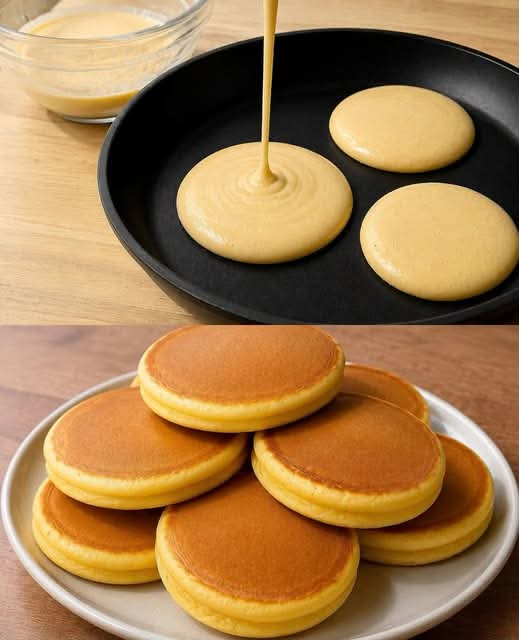
Classic Homemade Pancakes
Introduction
Few breakfasts are as comforting and familiar as a tall stack of warm, homemade pancakes. With their golden-brown edges, soft and fluffy centers, and buttery aroma, pancakes are a simple food that can turn an ordinary morning into something special.
This classic recipe uses basic pantry ingredients and a straightforward mixing method. The key to excellent pancakes is not complicated technique, but rather careful mixing and proper cooking. The batter should remain slightly lumpy, and the pancakes should be cooked over moderate heat so they become beautifully golden on the outside while remaining tender inside.
Serve them traditionally with butter and maple syrup, or customize them with fresh fruit, whipped cream, cinnamon, chocolate chips, nuts, or your favorite toppings.
Ingredients
For the Pancake Batter
- 1 1/2 cups all-purpose flour, about 190 g
- 3 1/2 teaspoons baking powder
- 1 teaspoon salt
- 1 tablespoon granulated white sugar
- 1 1/4 cups milk, about 300 ml
- 1 large egg
- 3 tablespoons unsalted butter, melted and slightly cooled
- 1 teaspoon vanilla extract
For Cooking
- 1–2 tablespoons butter or neutral cooking oil, as needed
For Serving
- Butter
- Maple syrup
- Honey
- Fresh strawberries, blueberries, or bananas
- Whipped cream
- Powdered sugar
- Chocolate chips or chocolate sauce
- Chopped nuts, if desired
Instructions
1. Prepare the Dry Ingredients
Place the flour, baking powder, salt, and sugar in a large mixing bowl.
Whisk the ingredients together thoroughly. This helps distribute the baking powder and salt evenly throughout the flour, which contributes to consistent rising and flavor.
2. Prepare the Wet Ingredients
In a separate bowl, whisk together the milk, egg, melted butter, and vanilla extract.
Make sure the melted butter has cooled slightly before adding it to the egg mixture. Very hot butter can partially cook the egg.
3. Combine the Batter
Make a well in the center of the dry ingredients.
Pour the wet mixture into the flour mixture. Using a whisk or wooden spoon, gently stir until the ingredients are just combined.
Do not overmix.
A few small lumps in the batter are perfectly acceptable. Overmixing develops too much gluten, which can make pancakes chewy or tough instead of light and tender.
4. Rest the Batter
Allow the batter to rest for approximately 5–10 minutes.
This short resting period allows the flour to absorb some of the liquid and gives the baking powder time to begin working.
The finished batter should be thick enough to pour slowly from a spoon or ladle. If it seems excessively thick, add a tablespoon or two of milk. If it is too thin, add a small amount of flour.
Cooking Method
5. Heat the Pan
Place a nonstick skillet, frying pan, or griddle over medium heat.
Allow the pan to become properly heated before adding the batter.
Lightly grease the surface with a small amount of butter or oil. Avoid using too much, because excessive fat can cause uneven browning.
6. Cook the First Side
Pour approximately 1/4 cup of batter onto the hot pan for each pancake.
Leave enough space between pancakes so they can spread without touching.
Cook for approximately 2–3 minutes.
You will know the pancake is ready to flip when bubbles begin appearing across the surface and the edges look set and slightly dry.
7. Flip the Pancakes
Slide a spatula underneath the pancake and flip it gently but confidently.
Cook the second side for approximately 1–2 minutes, or until golden brown and cooked through.
Do not repeatedly press down on the pancakes with the spatula. Pressing them can force out the air that makes them fluffy.
8. Continue Cooking
Repeat with the remaining batter.
If the pan becomes too hot, reduce the heat slightly. A pan that is excessively hot can brown the outside before the center has properly cooked.
Place finished pancakes on a plate and cover them loosely while you finish cooking the remaining batter.
The Best Pancake Method
For especially light and fluffy pancakes, remember these important principles:
Do Not Overmix
Mix only until the flour disappears. Small lumps are desirable.
Use Fresh Baking Powder
Baking powder is responsible for much of the pancake’s rise. If it is old or inactive, the pancakes may become flat and dense.
Control the Heat
Medium heat is usually ideal. Pancakes should cook gradually enough for the center to set while the outside becomes golden brown.
Avoid Flattening
Do not press the pancakes while they cook. The trapped air and steam help create their fluffy texture.
Cook in Consistent Portions
Using approximately 1/4 cup of batter for each pancake helps produce evenly sized pancakes that cook at the same rate.
History of Pancakes
Pancakes have a remarkably long history. Versions of flat cakes made from grains, eggs, and milk have appeared in many cultures throughout history.
Ancient civilizations prepared simple grain-based cakes cooked on hot surfaces. Over centuries, different regions developed their own versions using locally available ingredients.
The modern American-style pancake became especially associated with breakfast in North America. Unlike thin crepes, these pancakes are generally thicker because they contain a leavening agent such as baking powder or baking soda.
Pancakes eventually became a popular household breakfast because they could be prepared from inexpensive ingredients that were commonly available in the kitchen.
Today, pancakes are enjoyed around the world, although recipes and serving styles vary considerably from one country to another.
Formation and Texture
The texture of a pancake depends on several important elements.
Flour provides the structure. When flour comes into contact with liquid, proteins begin forming gluten. Some gluten is necessary to hold the pancake together, but excessive gluten development can make pancakes tough.
The egg contributes structure, richness, and tenderness.
Milk provides moisture and helps create a smooth batter.
Butter adds richness and flavor while also contributing to a tender texture.
Baking powder produces carbon dioxide gas when activated by moisture and heat. These bubbles expand during cooking, helping the pancakes rise and become fluffy.
Sugar contributes sweetness and encourages attractive browning on the surface.
The final result should be soft, tender, airy, and lightly golden.
Serving Ideas
Classic pancakes are wonderful with a simple combination of butter and maple syrup.
For a fruit breakfast, serve them with sliced bananas, strawberries, blueberries, or raspberries.
For a richer dessert-style presentation, add whipped cream, chocolate sauce, chocolate chips, and powdered sugar.
For a warm autumn-inspired version, add cinnamon and serve the pancakes with sautéed apples and a little maple syrup.
For a nutty variation, sprinkle chopped pecans or walnuts over the pancakes and finish with honey or maple syrup.
You can also add blueberries, chocolate chips, mashed banana, or chopped nuts directly to the batter immediately before cooking.
How to Keep Pancakes Warm
If you are preparing a large batch, keep the cooked pancakes warm in a low oven, around 200°F (95°C), while you finish cooking.
Place them on a baking sheet in a single layer whenever possible. Avoid stacking them too tightly for long periods because trapped steam can make them slightly soggy.
Storage
Allow leftover pancakes to cool completely.
Place them in an airtight container and refrigerate for up to several days.
For longer storage, pancakes can be frozen. Place sheets of parchment paper between individual pancakes and store them in a freezer-safe bag or container.
They can be reheated in a toaster, oven, skillet, or microwave.
Troubleshooting
Pancakes Are Too Dense
The batter may have been overmixed, or the baking powder may no longer be active.
Pancakes Are Burning Outside
The pan is probably too hot. Reduce the heat to medium or medium-low.
Pancakes Are Pale
The pan may not be hot enough, or there may not be enough cooking time.
Pancakes Are Dry
Too much flour or too little liquid can produce dry pancakes. Measuring flour accurately is especially important.
Pancakes Spread Too Much
The batter may be too thin. Add a small amount of flour and allow the batter to rest for a few minutes.
Conclusion
These classic homemade pancakes are proof that a delicious breakfast does not need complicated ingredients or elaborate techniques. With flour, milk, eggs, butter, sugar, and baking powder, you can create a warm and satisfying stack that is perfect for family breakfasts, weekend mornings, holidays, or whenever you are craving something comforting.
The most important secrets are simple: measure carefully, avoid overmixing, allow the batter to rest briefly, and cook the pancakes over moderate heat.
Once you master the basic recipe, you can make it your own with fruits, spices, chocolate, nuts, or different toppings.
For Pancake Lovers
For those who truly love pancakes, this recipe is an excellent foundation for endless variations. Try banana pancakes, blueberry pancakes, chocolate chip pancakes, cinnamon pancakes, apple pancakes, or even savory pancakes.
There is something especially satisfying about bringing a warm stack of homemade pancakes to the table, adding a small pat of butter, watching it melt into the golden surface, and finishing everything with a generous drizzle of syrup.
A good pancake is soft in the center, lightly crisp around the edges, beautifully golden, and full of comforting homemade flavor.
Final Method at a Glance
- Whisk flour, baking powder, salt, and sugar together.
- Whisk milk, egg, melted butter, and vanilla separately.
- Combine the wet and dry ingredients gently.
- Do not overmix; small lumps are acceptable.
- Rest the batter for 5–10 minutes.
- Heat a lightly greased pan over medium heat.
- Pour approximately 1/4 cup of batter for each pancake.
- Cook until bubbles form and the edges look set.
- Flip and cook until golden brown.
- Repeat with the remaining batter.
- Serve immediately with butter, maple syrup, fruit, or your favorite toppings.