
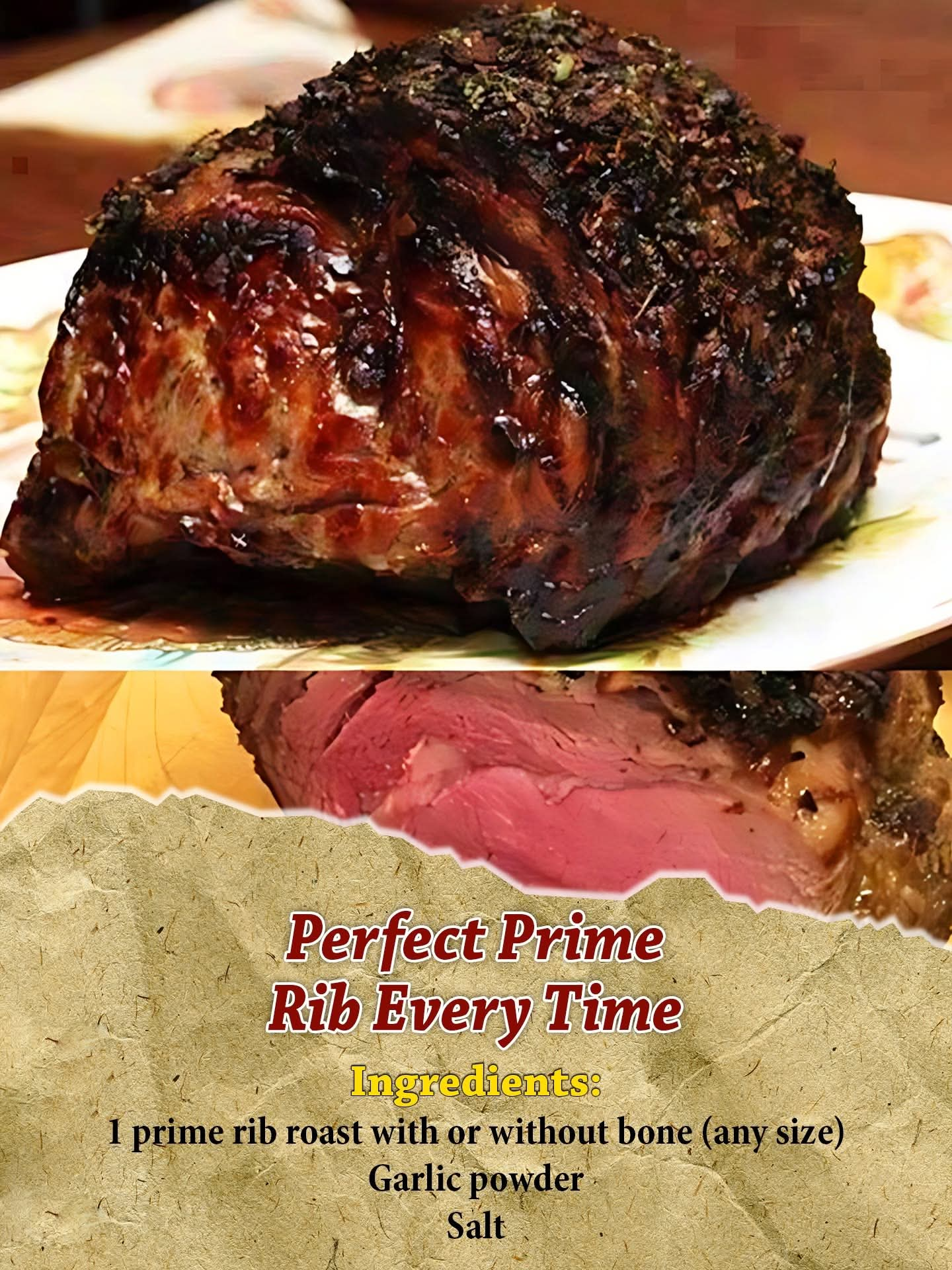
Perfect Prime Rib Every Time
Introduction
Prime rib is one of those classic meals that has a way of turning an ordinary dinner into a special occasion. Rich, tender, juicy, and beautifully seasoned, a well-cooked prime rib roast needs surprisingly little to make a memorable meal.
This traditional high-temperature method is especially appealing because it uses a simple seasoning blend and a dramatic cooking technique: the roast begins in an extremely hot oven, then continues cooking in the residual heat after the oven is turned off. The result is a flavorful roast with a beautifully browned exterior and a tender, rosy center.
Whether you are preparing a holiday dinner, Sunday roast, family gathering, or simply want to make an impressive meal, this recipe is worth keeping.
A Little History
Prime rib is traditionally associated with the classic American and British tradition of serving large roasted cuts of beef for family meals and celebrations. The name generally refers to a standing rib roast, which comes from the rib section of the beef.
Despite the name, a roast does not necessarily have to be graded “Prime” by the USDA to be called prime rib. The term commonly describes the cut itself. Bone-in roasts are particularly popular because the bones contribute flavor and help protect the meat during roasting, while boneless roasts are easier to carve.
The high-temperature roasting method became popular because it offers a relatively simple way to produce a deeply browned exterior while allowing the roast to continue cooking gently from retained oven heat.
Ingredients
For the Prime Rib
- 1 prime rib roast, bone-in or boneless, any size
- Salt, to taste
- Black pepper, to taste
- Garlic powder, to taste
Optional Serving Accompaniments
- Creamy horseradish sauce
- Prepared horseradish
- Au jus or beef gravy
- Roasted potatoes
- Steamed or roasted vegetables
- Yorkshire pudding
- Fresh green salad
- Dinner rolls
Preparation
Before cooking, remove the roast from the refrigerator and allow it to sit at room temperature for a while so that it is not extremely cold when it goes into the oven.
Pat the surface of the roast dry with paper towels. Removing excess moisture helps the seasoning adhere to the meat and encourages better browning.
Combine salt, black pepper, and garlic powder in a small bowl. Use enough seasoning to coat the entire exterior of the roast generously.
Rub the seasoning mixture evenly over all sides of the beef, paying particular attention to the top and exposed sides.
Place the seasoned roast fat side up in a shallow roasting pan. If using a bone-in roast, the bones can act as a natural rack beneath the meat.
Cooking Method
Step 1: Preheat the Oven
Preheat your oven to 550°F (290°C).
The oven needs to be fully preheated before the roast goes inside. This initial burst of high heat is what creates the deeply browned exterior.
Step 2: Season the Roast
Coat the prime rib generously with the mixture of salt, black pepper, and garlic powder.
Make sure the seasoning is distributed evenly. Because prime rib is a large cut of meat, seasoning only the top will not give the same depth of flavor as seasoning the entire exterior.
Step 3: Begin Roasting
Place the roast fat side up in a shallow roasting pan.
Roast at 550°F according to the original timing method:
- Rare: approximately 5 minutes per pound
- Medium: approximately 6 minutes per pound
- Well done: approximately 7 minutes per pound
For example, a 6-pound roast would initially roast for approximately 30 minutes for rare, 36 minutes for medium, or 42 minutes for well done.
Step 4: Turn Off the Oven
When the calculated initial cooking time has finished, turn the oven completely off.
Do not open the oven door.
This is one of the most important parts of the method. The retained heat inside the oven continues cooking the roast gradually.
Step 5: Let the Roast Rest in the Oven
Keep the oven door closed for approximately two hours.
Do not peek at the roast during this period. Opening the door releases a significant amount of heat and can interfere with the cooking process.
Step 6: Remove and Rest
After approximately two hours, carefully remove the roast from the oven.
Allow it to rest for several minutes before carving. Resting gives the juices time to redistribute throughout the meat.
Step 7: Slice and Serve
Using a sharp carving knife, slice the roast across the grain into portions.
For a bone-in roast, you can first separate the bones from the roast and then slice the meat. Alternatively, carve individual portions around the bones.
Serve immediately with your favorite side dishes and sauces.
Important Cooking Notes
Although this traditional method is simple, oven performance can vary considerably. Modern ovens may lose heat differently, and roast shape, starting temperature, bone structure, and exact weight can all affect the final result.
For the most reliable results, especially with an expensive roast, use an instant-read or leave-in meat thermometer to check the internal temperature.
The thermometer is ultimately more reliable than cooking time alone.
Remember that the roast can continue cooking as it rests, so it is generally better to remove it slightly before it reaches your final desired serving temperature.
If you prefer rare beef, aim for a lower internal temperature. For medium-rare, a final temperature around 130–135°F is a common target. Medium is generally around 140–145°F.
For food safety, use a reliable thermometer and follow appropriate food-safety guidance for whole cuts of beef.
Formation of the Roast
The shape and size of the roast can affect cooking considerably.
A long, relatively narrow roast may cook differently from a thick, compact roast of the same weight. A bone-in roast may also behave differently from a boneless roast.
The fat cap is valuable because it helps protect the surface of the beef while roasting. Keeping the roast fat side up allows the rendered fat to baste the exterior as it cooks.
When carving, cut against the grain whenever possible. This shortens the muscle fibers and makes each slice easier to chew.
Serving Ideas
Prime rib pairs beautifully with traditional steakhouse-style sides.
Consider serving it with:
- Creamy mashed potatoes
- Crispy roasted potatoes
- Yorkshire pudding
- Creamed spinach
- Roasted carrots
- Green beans
- Asparagus
- Sautéed mushrooms
- Fresh garden salad
- Horseradish cream
- Au jus
- Beef gravy
For a classic presentation, arrange the sliced beef on a large serving platter and surround it with roasted vegetables and potatoes.
Leftover Prime Rib
Leftover prime rib can be just as delicious as the original meal.
Thinly sliced leftovers are excellent in sandwiches with horseradish sauce and caramelized onions. You can also use the beef for steak-and-eggs breakfasts, beef hash, tacos, salads, or hearty soups.
To keep leftover beef tender, avoid aggressively reheating it. Gentle warming is preferable to prolonged high heat.
Why People Love This Method
There is something particularly satisfying about preparing a large roast with only a handful of ingredients.
The seasoning is simple, allowing the natural flavor of the beef to remain the star. The initial high heat encourages browning and creates a flavorful crust, while the long period of retained heat provides gentle cooking.
It is also an excellent method for entertaining because much of the cooking happens without constant attention. Once the oven is turned off, you can concentrate on preparing side dishes, setting the table, and enjoying time with your guests.
A Few Practical Tips
Choose a roast with good marbling whenever possible. Marbling helps contribute flavor and tenderness.
Do not skip drying the exterior before seasoning. A dry surface browns more effectively.
Season generously but evenly.
Keep the oven door closed during the resting/cooking period.
Use a meat thermometer when you want maximum control over the final doneness.
Always slice against the grain.
Save the bones if you have them. They can be used later to make a rich beef stock.
Conclusion
Perfect prime rib does not require a complicated list of ingredients. A quality roast, salt, pepper, garlic powder, high heat, patience, and careful temperature control can create an impressive centerpiece for the dinner table.
This classic method has remained popular because it transforms a simple preparation into a remarkably flavorful roast. The browned exterior, tender center, rich beef flavor, and traditional accompaniments make prime rib a favorite for holidays, celebrations, Sunday dinners, and special gatherings.
For the best possible result, remember that cooking time is only a guideline. Every oven and roast is different, so an accurate meat thermometer is your best friend when preparing a valuable cut of beef.
Slice it generously, serve it with your favorite sides, and enjoy the kind of meal that brings everyone back to the table for seconds.