
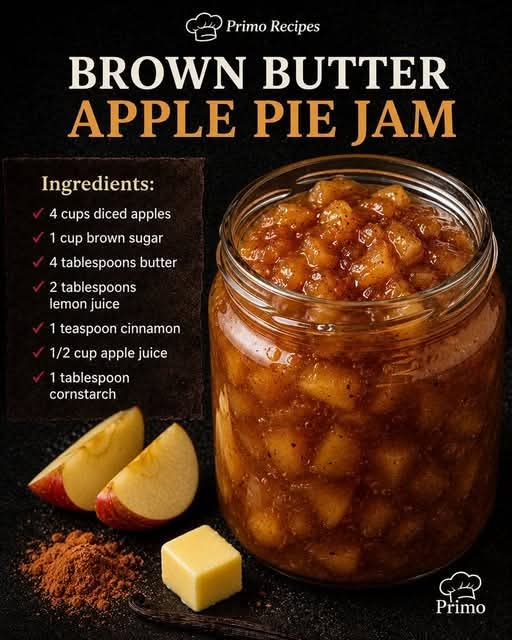
Brown Butter Cinnamon Apple Pie Filling
Introduction
Sweet, cozy, buttery, and deeply comforting, this Brown Butter Cinnamon Apple Pie Filling captures everything wonderful about a classic homemade apple pie in one simple preparation. Tender diced apples are gently cooked with brown sugar, granulated sugar, cinnamon, nutmeg, lemon juice, and rich butter until they become soft, glossy, fragrant, and beautifully caramelized.
The special touch is the browned butter. As the butter gently cooks, its milk solids toast and develop a warm, nutty aroma that gives the apples a deeper flavor than ordinary melted butter. Combined with brown sugar and cinnamon, it creates a filling that tastes like the inside of a freshly baked apple pie.
This apple mixture is incredibly versatile. It can be spooned over pancakes, waffles, French toast, oatmeal, ice cream, cheesecake, biscuits, pound cake, or used as a filling for pies, turnovers, hand pies, and pastries.
Ingredients
For the Apple Filling
- 4 cups peeled and diced apples
- 1 cup packed brown sugar
- 1/2 cup granulated sugar
- 4 tablespoons unsalted butter
- 2 tablespoons fresh lemon juice
- 1 teaspoon ground cinnamon
- 1/4 teaspoon ground nutmeg
- 1 teaspoon vanilla extract, optional
- 1/4 teaspoon salt
- 2 tablespoons water, if needed
Optional Thickener
For a thicker pie-style filling, use:
- 2 tablespoons cornstarch
- 3 tablespoons cold water
This creates a smooth slurry that can be added toward the end of cooking.
Choosing the Apples
For the best flavor, use apples that hold their shape reasonably well while cooking. A combination of sweet and slightly tart apples gives the filling more character.
Good choices include Granny Smith, Honeycrisp, Braeburn, Pink Lady, Fuji, or Golden Delicious. You can also combine two varieties for a more interesting flavor.
Peel the apples, remove the cores, and cut them into small, fairly even pieces. Keeping the pieces similar in size helps them cook evenly.
Instructions
Step 1: Prepare the Apples
Peel and core the apples. Cut them into approximately 1/2-inch pieces.
Place the diced apples in a large bowl and immediately add the lemon juice. Toss gently so the apples are coated.
The lemon juice adds brightness and helps prevent the apples from becoming overly sweet. It also helps slow down browning while you prepare the remaining ingredients.
Step 2: Brown the Butter
Place a large heavy-bottomed skillet or saucepan over medium heat.
Add the butter and allow it to melt completely.
Continue cooking the butter, stirring or swirling the pan occasionally. The butter will begin to foam. As the foam settles, you will notice small golden-brown specks developing on the bottom of the pan.
When the butter smells nutty and the milk solids are golden brown, immediately reduce the heat.
Be careful not to burn the butter. Brown butter can turn from beautifully nutty to bitter very quickly.
Step 3: Add the Apples
Carefully add the prepared apples to the browned butter.
Stir gently to coat every piece of apple with the butter.
Add the brown sugar, granulated sugar, cinnamon, nutmeg, and salt.
Stir until the apples are evenly coated and the sugar begins to dissolve.
Step 4: Cook the Apples
Cook over medium-low to medium heat for approximately 10 to 15 minutes, stirring occasionally.
The apples will begin releasing their natural juices. The sugar and butter will combine with those juices to create a glossy caramel-like sauce.
Continue cooking until the apples are tender but not completely falling apart.
For a filling with more texture, stop cooking as soon as the apples become fork-tender.
For a softer, more traditional pie filling, continue cooking for several additional minutes.
Step 5: Adjust the Sauce
If the mixture appears too dry, add 1 to 2 tablespoons of water.
If you want a thicker filling, combine the cornstarch with 3 tablespoons of cold water in a small bowl. Stir until completely smooth.
Pour the cornstarch slurry into the apple mixture while stirring constantly.
Cook for another 1 to 2 minutes, until the sauce thickens and becomes glossy.
Step 6: Add Vanilla
Remove the pan from the heat and stir in the vanilla extract, if using.
Taste the filling carefully.
If you prefer a slightly brighter flavor, add a small additional splash of lemon juice. If you prefer a richer and sweeter filling, allow it to cool slightly before deciding whether additional sugar is necessary.
Step 7: Cool
Allow the apple filling to cool for approximately 15 to 20 minutes.
The sauce will continue to thicken as it cools.
For use inside a pie or pastry, allow the filling to cool completely before adding it to the dough. Warm filling can make pastry soft and difficult to work with.
Method
The key to this recipe is controlling the heat.
First, brown the butter slowly so it develops a nutty, toasted flavor. Then add the apples and sugars and allow them to cook gently. The apples release their natural juices while the sugar melts into the butter, creating a rich sauce.
The cinnamon and nutmeg provide the classic warm spice profile associated with apple pie, while lemon juice balances the sweetness.
The goal is not to completely cook the apples into applesauce. The finished apples should remain tender and recognizable, surrounded by a thick, buttery, caramel-colored sauce.
The History of Apple Pie Flavors
Apple pie has a long history in European and American cooking. Apples have been used in baked desserts for centuries, with early versions appearing in European pastry traditions.
As apple pie became especially associated with American home cooking, cinnamon, nutmeg, butter, and sugar became familiar partners for cooked apples.
Brown sugar adds a deeper caramel-like sweetness than white sugar alone, while butter provides richness. Browning the butter takes that familiar combination one step further by adding toasted, nutty notes.
This recipe combines those traditional flavors into a simple apple preparation that can be enjoyed in many different ways.
Formation and Texture
The final texture depends on how long you cook the apples.
For a chunky filling, cook the apples only until tender.
For a softer pie filling, cook them longer until they begin breaking down.
For a thick pastry filling, use the cornstarch slurry.
For a spoonable dessert topping, you can leave the sauce slightly looser.
The ideal finished mixture should have tender apple pieces coated in a thick, glossy brown-butter cinnamon sauce.
How to Use the Apple Filling
This filling can be used in many desserts and breakfasts.
Apple Pie
Spoon the cooled filling into a prepared pie crust, cover with a second crust if desired, and bake until the pastry is golden brown.
Apple Turnovers
Place cooled filling onto squares of puff pastry or pie dough. Fold, seal the edges, brush with egg wash, and bake until golden.
Pancakes
Warm the apple mixture and spoon it over pancakes with a little maple syrup.
French Toast
Use it as a topping for French toast with powdered sugar or whipped cream.
Ice Cream
Spoon warm apples over vanilla ice cream for an easy apple-pie-inspired dessert.
Cheesecake
Add cooled apples over cheesecake for a beautiful cinnamon-apple topping.
Oatmeal
Stir a spoonful into hot oatmeal for a cozy breakfast.
Pound Cake
Serve warm apple filling over slices of pound cake with whipped cream or vanilla ice cream.
Biscuits
Split warm biscuits and fill them with buttery cinnamon apples.
Storage
Allow the filling to cool completely before storing.
Place it in an airtight container and refrigerate for up to 4 to 5 days.
For longer storage, the cooled filling can be frozen in a freezer-safe container. Leave a little room for expansion and thaw it in the refrigerator before reheating.
When reheating, warm it gently in a saucepan over low heat. Add a small splash of water if the sauce has become too thick.
Tips for the Best Results
Use fresh apples for the best texture and flavor.
Do not rush the browning of the butter. Medium heat and close attention are important.
Do not overcook the apples unless you specifically want a softer filling.
Use fresh lemon juice rather than bottled when possible.
Taste the filling before adding extra sugar because different apple varieties have different levels of natural sweetness.
Allow the filling to cool before placing it inside pastry.
For an especially rich dessert, serve the apples warm with vanilla ice cream.
Conclusion
Brown Butter Cinnamon Apple Pie Filling is a simple recipe with an impressive depth of flavor. The combination of tender apples, brown sugar, cinnamon, nutmeg, lemon, and nutty browned butter creates the unmistakable comfort of homemade apple pie without requiring an entire pie.
It is warm, buttery, sweet, slightly tangy, and wonderfully fragrant. Whether served over ice cream, layered into cheesecake, spooned onto pancakes, tucked inside pastry, or enjoyed straight from the bowl, these cinnamon apples are an easy way to bring homemade comfort to the table.
For Apple Pie Lovers
Anyone who loves classic apple pie will appreciate this recipe because it concentrates the best parts of the dessert: soft apples, buttery richness, brown sugar sweetness, and warm cinnamon spice.
It is especially perfect for autumn gatherings, holiday breakfasts, family desserts, Sunday dinners, and cozy evenings at home.
The best part is its versatility. Make a batch once and turn it into several different desserts throughout the week. A simple bowl of cooked apples can become a pie, topping, breakfast, pastry filling, or elegant dessert with very little extra effort.
Final Method Summary
- Peel, core, and dice the apples.
- Toss them with lemon juice.
- Melt the butter in a heavy skillet.
- Brown the butter until golden and nutty.
- Add the apples.
- Stir in brown sugar, granulated sugar, cinnamon, nutmeg, and salt.
- Cook until the apples are tender and the sauce is glossy.
- Add a cornstarch slurry if a thicker filling is desired.
- Stir in vanilla after removing the pan from the heat.
- Cool before using in pies or pastries.
- Serve warm as a topping or use as a filling for your favorite desserts.