
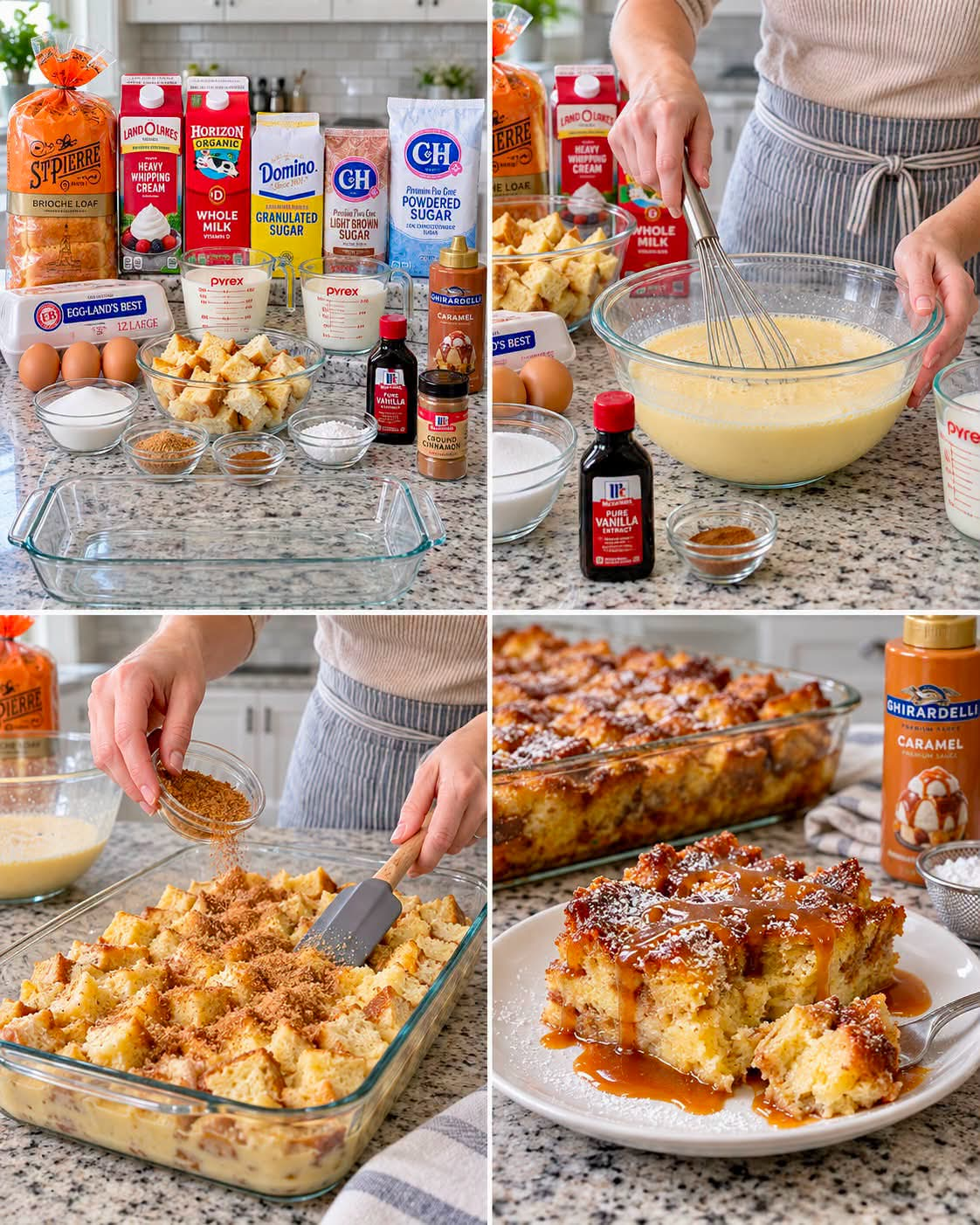
Old-Fashioned Bread Pudding
Introduction
Old-Fashioned Bread Pudding is one of those comforting desserts that proves simple ingredients can create something truly special. Made with soft pieces of brioche soaked in a rich vanilla custard, this classic dessert develops a beautifully golden, caramelized top while remaining tender, creamy, and moist in the center.
Bread pudding is especially wonderful because it transforms everyday bread into a warm dessert that feels homemade and nostalgic. The combination of buttery brioche, creamy custard, cinnamon, brown sugar, and vanilla creates a delicious aroma while it bakes. Finished with caramel sauce and a light dusting of powdered sugar, every serving is rich without being complicated.
This dessert is perfect for family dinners, Sunday gatherings, holidays, potlucks, and cozy evenings when you want something warm and satisfying.
Ingredients
For the Bread Pudding
- 1 loaf brioche, cut into approximately 1-inch cubes
- 4 large eggs
- 2 cups heavy cream
- 1 cup whole milk
- ¾ cup granulated sugar
- 2 teaspoons vanilla extract
- ¼ cup light brown sugar, packed
- 1 teaspoon ground cinnamon
For Serving
- Caramel sauce, for drizzling
- Powdered sugar, for dusting
Optional Additions
For a slightly different version, you can add:
- ½ cup raisins
- ½ cup chopped pecans or walnuts
- ½ teaspoon ground nutmeg
- 1 tablespoon melted butter for brushing the baking dish
- A small pinch of salt
- Whipped cream or vanilla ice cream for serving
Instructions
Step 1: Prepare the Oven and Baking Dish
Preheat the oven to 350°F (175°C).
Grease a 9-by-13-inch baking dish thoroughly. Make sure the bottom and sides are coated so the pudding will be easy to serve after baking.
If desired, use a little softened butter instead of cooking spray. The butter adds an extra layer of flavor around the edges.
Step 2: Prepare the Brioche
Cut the brioche into roughly 1-inch cubes.
Slightly stale brioche works particularly well because it has lost some moisture and can absorb more of the custard. If your brioche is very fresh and soft, spread the cubes on a baking sheet and let them sit uncovered for several hours. You can also place them in a 300°F oven for about 10 minutes to dry them slightly without browning them.
Step 3: Make the Custard
In a large mixing bowl, whisk together the eggs, heavy cream, whole milk, granulated sugar, and vanilla extract.
Continue whisking until the eggs are completely incorporated and the sugar has begun to dissolve.
The mixture should be smooth, creamy, and evenly combined.
If you are using nutmeg or salt, add them at this stage.
Step 4: Soak the Bread
Add the brioche cubes to the custard mixture.
Gently fold and stir the bread until every piece is coated.
Allow the bread to soak for 15 to 20 minutes. Stir gently once or twice during this time so the custard can reach the different layers of bread.
Do not aggressively mix the bread. You want the cubes to remain recognizable rather than turning into a completely smooth mixture.
Step 5: Transfer to the Baking Dish
Pour the soaked brioche and remaining custard into the prepared 9-by-13-inch baking dish.
Spread the bread evenly across the dish.
Gently press down on any pieces that are sitting completely dry above the surface so that they have a chance to absorb some custard.
Step 6: Add the Cinnamon Sugar Topping
Combine the light brown sugar and ground cinnamon.
Sprinkle the mixture evenly over the top of the bread pudding.
As it bakes, the brown sugar melts into the surface and helps create a deliciously fragrant, lightly caramelized crust.
Step 7: Bake
Place the baking dish in the preheated oven.
Bake for approximately 45 to 50 minutes.
The top should become golden brown, and the edges should look set. The center should still have a slight gentle movement when the dish is carefully moved.
Avoid baking until the center becomes completely firm and dry. Bread pudding continues to set as it cools, and the best texture is soft and custardy in the middle.
Step 8: Rest the Pudding
Remove the bread pudding from the oven and allow it to rest for 5 to 10 minutes.
This short resting period allows the custard to finish setting and makes the pudding easier to portion.
Step 9: Finish and Serve
Drizzle warm caramel sauce over individual servings.
Finish with a light dusting of powdered sugar.
Serve warm on its own, or add whipped cream or a scoop of vanilla ice cream for an especially indulgent dessert.
Method
The key method behind excellent bread pudding is the slow absorption of custard into the bread.
First, the bread is cut into cubes so that there is plenty of surface area for the custard to penetrate. Slightly stale bread is preferred because it absorbs the liquid without becoming immediately mushy.
The custard is made from eggs, cream, milk, sugar, and vanilla. The eggs provide structure as the pudding bakes, while the cream and milk create a rich, tender texture. Sugar adds sweetness and encourages browning, while vanilla gives the dessert its classic aroma.
Once the bread has soaked, it is transferred to the baking dish and topped with cinnamon and brown sugar. During baking, the eggs gently set the custard while the bread becomes soft and rich. At the same time, the top develops a golden crust.
The result should have several textures at once: a lightly crisp and caramelized top, tender bread around the edges, and a soft, creamy center.
The History of Bread Pudding
Bread pudding has a long history and is closely associated with practical home cooking. Throughout history, cooks have looked for ways to avoid wasting leftover bread. Instead of throwing away bread that had become dry, they softened it with milk or another liquid and combined it with available ingredients.
Early versions were generally much simpler than modern bread pudding. Depending on the household and region, leftover bread could be combined with milk, eggs, sugar, spices, dried fruit, or other inexpensive ingredients.
Over time, bread pudding became more than a way to use leftovers. It developed into a beloved traditional dessert in many countries and regions, with each culture creating its own variations.
In American home cooking, bread pudding became particularly associated with comforting family desserts and Southern-style cooking. Different families developed their own recipes, using ingredients such as raisins, cinnamon, nutmeg, pecans, bourbon, vanilla sauces, caramel sauces, or fruit.
Today’s brioche version is richer and more luxurious than many older recipes, but the basic idea remains the same: transform bread into a warm, creamy, satisfying dessert.
Formation and Texture
The formation of bread pudding depends largely on the relationship between the bread and custard.
The bread acts like a sponge, absorbing the mixture of eggs, milk, cream, sugar, and vanilla. During baking, the eggs coagulate and create the structure that holds everything together.
The cream contributes richness, while the milk keeps the custard from becoming excessively heavy. Brioche is particularly effective because it already contains butter and eggs, giving the finished pudding a naturally tender texture.
The brown sugar and cinnamon sprinkled over the top create an additional layer of flavor. As the pudding bakes, the sugar melts and caramelizes, producing a fragrant golden surface.
A properly baked bread pudding should not be dry. The ideal center should be soft and creamy while still holding together when served.
Important Tips for the Best Bread Pudding
Use Slightly Stale Bread
Fresh brioche contains a lot of moisture and may become overly soft. Slightly stale bread absorbs the custard more effectively and produces a better texture.
Give the Bread Enough Time to Soak
Allowing the bread to sit in the custard for 15 to 20 minutes helps ensure that the interior becomes moist rather than remaining dry.
Do Not Overmix
Mix gently when combining the bread and custard. Overmixing can break the brioche apart and create a pudding that is too dense.
Watch the Center
The edges usually set before the middle. The center should have a slight jiggle when the pudding is removed from the oven.
Let It Rest
A short resting period after baking makes a noticeable difference. The pudding becomes easier to cut while remaining warm and creamy.
Add Caramel at the End
Caramel sauce is best added immediately before serving. This keeps the sauce distinct and allows its rich flavor to complement the warm cinnamon-and-vanilla custard.
Variations
Raisin Bread Pudding
Add ½ cup of raisins to the soaked brioche. Raisins provide little bursts of sweetness throughout the pudding.
Pecan Bread Pudding
Add ½ cup of chopped pecans before transferring the mixture to the baking dish. The nuts add crunch and a buttery flavor.
Cinnamon Nutmeg Bread Pudding
Add ½ teaspoon of ground nutmeg along with the cinnamon for a warmer, more traditional spice profile.
Apple Bread Pudding
Fold in approximately 1 cup of peeled, finely diced apples. Apples pair beautifully with cinnamon, brown sugar, and caramel.
Holiday Bread Pudding
Add raisins, chopped pecans, cinnamon, nutmeg, and a small amount of orange zest for a festive variation.
How to Serve
Old-Fashioned Bread Pudding is best served warm.
For a simple presentation, place a generous square or spoonful onto a dessert plate and drizzle it with caramel sauce.
For a more indulgent dessert, serve it with vanilla ice cream. The contrast between the warm pudding and cold ice cream creates an especially delicious combination.
Whipped cream also works beautifully, while a small sprinkle of powdered sugar gives the dessert a classic homemade appearance.
Storage
Allow leftover bread pudding to cool before covering it.
Store it in an airtight container or cover the baking dish tightly and refrigerate for up to 3 days.
To reheat, place an individual portion in the microwave and warm it gently until heated through. You can also reheat larger portions in the oven at a moderate temperature.
If the pudding seems slightly dry after refrigeration, add a little caramel sauce, cream, or milk before reheating.
Conclusion
Old-Fashioned Bread Pudding is a wonderful example of traditional comfort baking. With simple ingredients such as brioche, eggs, cream, milk, sugar, vanilla, cinnamon, and brown sugar, you can create a dessert that is rich, tender, fragrant, and deeply satisfying.
The golden top, creamy center, warm cinnamon aroma, and sweet caramel drizzle make this pudding especially appealing for family meals and special occasions. It is simple enough for an ordinary weekend dessert but comforting enough to earn a place on a holiday table.
Most importantly, bread pudding is a recipe that invites you to make it your own. Add raisins, pecans, apples, spices, or your favorite sauce, and you can create a version that becomes a family favorite.
For Bread Pudding Lovers
If you love classic homemade desserts, this Old-Fashioned Bread Pudding is a recipe worth keeping close. It is warm, creamy, economical, easy to prepare, and filled with the kind of nostalgic flavor that reminds many people of traditional family kitchens.
Serve it warm with caramel sauce and vanilla ice cream, and you have a dessert that feels wonderfully old-fashioned while still being completely irresistible.
This is the kind of recipe that turns simple bread into something worth gathering around the table for.