
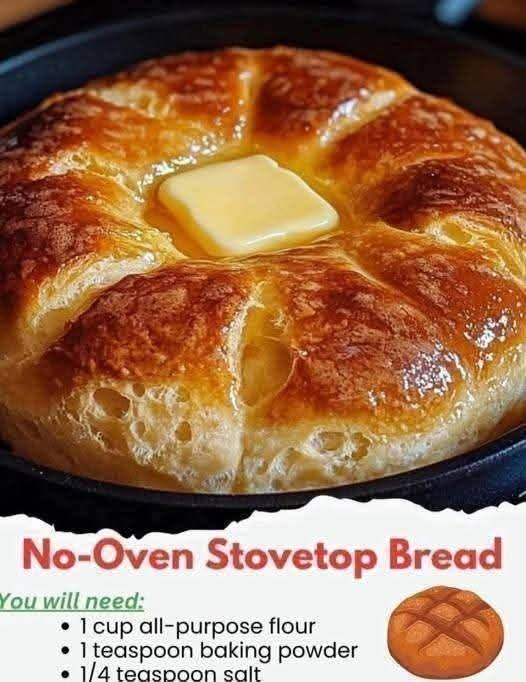
No-Oven Stovetop Bread
Introduction
There is something wonderfully comforting about making fresh bread at home, especially when you do not have an oven or simply want a quicker way to enjoy something warm and homemade. This No-Oven Stovetop Bread is a simple, tender bread that can be prepared entirely on the stovetop using a skillet or heavy-bottomed pan.
The recipe uses basic pantry ingredients: flour, baking powder, salt, melted butter, milk, and an egg. There is no yeast and no lengthy rising time, making it particularly convenient for busy mornings, quick lunches, or an easy homemade side dish for dinner.
The finished bread is soft and lightly buttery on the inside, with a gently golden exterior. It is delicious served warm with butter, honey, jam, cheese, or alongside soups and stews.
Ingredients
- 1 cup all-purpose flour
- 1 teaspoon baking powder
- 1/4 teaspoon salt
- 1/4 cup unsalted butter, melted
- 1/2 cup milk
- 1 large egg
- A little additional butter or oil for greasing the pan, if needed
Instructions
1. Prepare the dry ingredients
In a medium mixing bowl, combine the all-purpose flour, baking powder, and salt. Whisk or stir thoroughly so the baking powder and salt are evenly distributed throughout the flour.
This step is important because the baking powder is responsible for helping the bread rise while it cooks.
2. Combine the wet ingredients
In a separate bowl, whisk together the milk and egg until smooth and well combined.
Add the melted butter and stir again. Make sure the butter has cooled slightly before adding it so it does not accidentally cook the egg.
3. Make the dough
Pour the wet mixture into the bowl containing the dry ingredients.
Stir gently with a wooden spoon or spatula until everything is combined and a soft, thick batter-like dough forms.
Do not overmix. A few small lumps are perfectly acceptable. Overmixing can make the finished bread heavier and less tender.
4. Prepare the skillet
Place a heavy-bottomed skillet or nonstick frying pan over low to medium-low heat.
Lightly grease the pan with a small amount of butter or oil.
The pan should be warm but not extremely hot. Because this bread cooks directly on the stovetop, gentle heat is essential to allow the center to cook before the outside becomes too dark.
5. Add the dough
Transfer the dough into the prepared skillet.
Using a spatula or the back of a spoon, gently spread it into an even layer. Aim for a thickness of approximately 1/2 to 3/4 inch.
If your skillet is small, the bread will be thicker and will require additional cooking time. If your skillet is wider, the bread will be thinner and cook more quickly.
6. Cover and cook
Cover the skillet with a tight-fitting lid.
Cook over low heat for approximately 8 to 12 minutes.
The exact cooking time will depend on the thickness of the bread and the heat of your stovetop.
Avoid lifting the lid repeatedly because the trapped heat helps cook the center.
7. Check the first side
When the bottom is golden brown and the top looks mostly set, carefully loosen the bread from the pan with a spatula.
The center should no longer look wet or runny.
8. Flip the bread
Carefully flip the bread.
If necessary, add a tiny amount of butter to the pan before returning the bread.
Cover again and continue cooking for another 5 to 8 minutes, or until the second side is golden and the center is completely cooked.
9. Test for doneness
Insert a toothpick or thin skewer into the center.
If it comes out clean or with only a few moist crumbs, the bread is ready.
If the center is still wet, reduce the heat to low, cover the pan, and continue cooking for several more minutes.
10. Rest before serving
Transfer the finished bread to a plate or cooling rack.
Allow it to rest for approximately 5 minutes before cutting.
This short resting period allows the interior to finish setting and makes the bread easier to slice.
Cooking Method
The secret to successful stovetop bread is gentle, controlled heat.
Unlike an oven, a skillet places heat directly underneath the bread. If the temperature is too high, the bottom can become brown or even burnt before the center has cooked.
For this reason, use low to medium-low heat and keep the skillet covered.
The lid creates a warm environment inside the pan, allowing the upper portion of the bread to cook while the bottom develops a beautiful golden crust.
A heavy-bottomed skillet works especially well because it distributes heat more evenly and reduces the chance of scorching.
Formation and Texture
This recipe produces a bread that falls somewhere between a quick bread and a soft skillet biscuit.
The baking powder provides the leavening rather than yeast. When exposed to moisture and heat, the baking powder produces gas that helps create a lighter texture.
The egg contributes structure and richness, while the milk keeps the interior tender. Melted butter adds flavor and helps give the finished bread a soft, satisfying crumb.
Because there is no yeast, this recipe does not require kneading, proofing, or waiting for the dough to rise.
Helpful Tips
Keep the heat low
Low heat is one of the most important factors in this recipe. A slow cooking process gives the center enough time to become fully cooked.
Do not overmix
Stir only until the ingredients come together. Excessive mixing can develop too much gluten and produce a tougher texture.
Use a lid
Covering the skillet helps replicate some of the enclosed heat of an oven and is particularly important for cooking the top and center.
Watch the thickness
A very thick loaf takes longer to cook. If you prefer quicker cooking, spread the dough into a slightly thinner layer.
Let it rest
Cutting the bread immediately can make the center appear gummy. Give it a few minutes to cool and settle first.
Serving Ideas
This stovetop bread is extremely versatile.
Serve it warm with:
- Softened butter
- Honey
- Fruit preserves
- Strawberry or raspberry jam
- Cream cheese
- Cheddar cheese
- Scrambled eggs
- Fried eggs
- Soup
- Chili
- Stews
- Roasted vegetables
- Grilled chicken
- Breakfast meats
For a savory version, you can add a small amount of garlic powder, dried herbs, grated cheese, or finely chopped green onions to the batter.
For a slightly sweeter version, a little honey or sugar can be added to the mixture and the finished bread can be served with butter and fruit preserves.
History of Stovetop Bread
Bread cooked without an oven has a long culinary history. Before modern ovens became common in household kitchens, many communities relied on heated stones, griddles, cast-iron pans, clay cooking vessels, and covered pots to prepare breads and other staple foods.
Skillet breads developed in many different culinary traditions because they offered a practical solution: bread could be prepared over a fire or stovetop without requiring a dedicated baking oven.
Modern stovetop quick breads continue that tradition of simplicity. Recipes using baking powder instead of yeast are especially convenient because they eliminate the need for fermentation and long rising periods.
This particular recipe follows that practical spirit, combining everyday ingredients into a simple bread that can be cooked directly in a covered skillet.
Variations
Garlic Butter Stovetop Bread
Add 1/2 teaspoon of garlic powder and 1 teaspoon of dried parsley to the dry ingredients. After cooking, brush the warm bread with additional melted butter.
Cheesy Skillet Bread
Add approximately 1/2 cup of shredded cheddar, mozzarella, or another flavorful cheese to the batter.
Herb Bread
Add dried rosemary, thyme, oregano, or Italian seasoning for a savory herb-flavored bread.
Honey Butter Bread
Add 1 tablespoon of honey to the batter. Serve the finished bread warm with butter and a drizzle of honey.
Breakfast Skillet Bread
Serve slices with eggs, cheese, turkey sausage, or other favorite breakfast foods.
Storage
Allow leftover bread to cool completely before storing.
Keep it in an airtight container at room temperature for up to 2 days. For longer storage, refrigerate it for several days or wrap individual portions and freeze them.
To serve again, gently warm the bread in a skillet, toaster oven, or microwave.
Why Bread Lovers Enjoy This Recipe
Bread lovers appreciate this recipe because it removes many of the obstacles associated with traditional homemade bread.
There is no yeast to activate, no dough to knead for a long time, and no waiting for the dough to rise. Everything comes together in one bowl and cooks in a single skillet.
The result is warm, homemade comfort food with a buttery flavor and tender texture.
It is particularly useful when you want bread quickly or when an oven is unavailable.
Conclusion
No-Oven Stovetop Bread is a wonderfully simple way to make fresh homemade bread with basic ingredients and an ordinary skillet.
The combination of flour, baking powder, milk, egg, butter, and salt creates a tender, flavorful bread without yeast or an oven. Cooking it slowly under a lid allows the center to become fully cooked while the exterior develops a delicate golden crust.
Whether served alongside a bowl of soup, spread with butter and jam at breakfast, or enjoyed warm as an afternoon snack, this stovetop bread is an easy recipe worth keeping close.
Sometimes the simplest recipes become the ones we make most often, and this is exactly the kind of bread that can become a dependable favorite in any kitchen.