
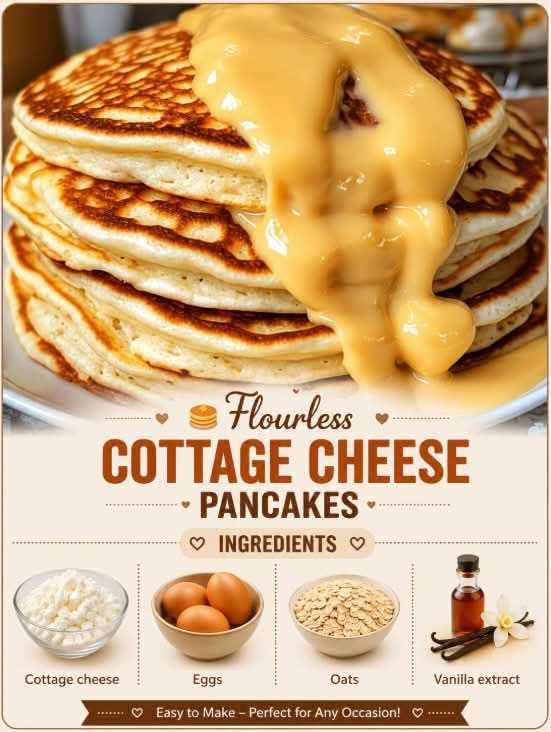
Flourless Cottage Cheese Pancakes
Introduction
Flourless Cottage Cheese Pancakes are a simple, nourishing breakfast made with a handful of everyday ingredients. Instead of traditional wheat flour, these pancakes use oats and cottage cheese to create a soft, tender texture with a satisfying amount of protein.
Cottage cheese gives the pancakes a creamy interior and subtle richness, while eggs help bind everything together and provide structure. Oats add body and a gentle nutty flavor, and vanilla extract brings a pleasant sweetness and aroma.
These pancakes are particularly useful when you want a homemade breakfast without relying on traditional flour. They are quick enough for a weekday morning but delicious enough for a relaxed weekend breakfast. Serve them with fresh fruit, Greek yogurt, nut butter, cinnamon, or a small drizzle of maple syrup for a comforting and filling meal.
Ingredients
Main Ingredients
- 1 cup cottage cheese
- 2 large eggs
- 1 cup rolled oats
- 1 teaspoon vanilla extract
Optional Ingredients
For additional flavor or sweetness, you can also add:
- 1 teaspoon baking powder for a lighter texture
- 1/2 teaspoon ground cinnamon
- 1 tablespoon honey or maple syrup
- A small pinch of salt
- 1/2 teaspoon lemon zest
- Fresh berries for serving
- Greek yogurt for topping
- Nut butter for serving
Instructions
Step 1: Prepare the Batter
Place the cottage cheese, eggs, rolled oats, and vanilla extract into a blender or food processor.
Blend until the mixture becomes mostly smooth and creamy. The oats should be finely broken down and incorporated into the batter.
If you prefer pancakes with a little more texture, blend the ingredients only until combined, leaving some small pieces of oats visible.
Let the batter rest for approximately 5 minutes. This allows the oats to absorb some of the moisture and helps the batter thicken slightly.
Step 2: Check the Consistency
After resting, check the batter.
It should be thick enough to pour slowly from a spoon but still spread naturally when added to the pan.
If the batter seems unusually thick, add a small splash of milk and blend or stir again. If it seems too thin, allow it to rest for another minute or two so the oats can absorb more liquid.
Step 3: Heat the Pan
Place a nonstick skillet or griddle over medium-low to medium heat.
Lightly grease the cooking surface with a small amount of butter or cooking oil.
Avoid using extremely high heat. Because these pancakes contain cottage cheese and oats rather than traditional flour, they can brown quickly on the outside while remaining soft inside if the pan is too hot.
Step 4: Cook the Pancakes
Pour approximately 2 to 3 tablespoons of batter onto the heated pan for each pancake.
Cook several pancakes at a time without overcrowding the pan.
Allow the first side to cook for approximately 2 to 3 minutes, or until the edges look set and small bubbles begin appearing on the surface.
Carefully slide a spatula underneath and flip the pancake.
Continue cooking for another 1 to 2 minutes, until the second side is lightly golden and the pancake is cooked through.
Repeat with the remaining batter.
Step 5: Serve
Transfer the cooked pancakes to a plate.
They can be served immediately while warm with your favorite toppings.
Fresh strawberries, blueberries, sliced banana, Greek yogurt, cinnamon, chopped nuts, peanut butter, almond butter, or a modest drizzle of maple syrup all work beautifully.
Cooking Method
The key to successful cottage cheese pancakes is gentle cooking.
Start with medium-low or medium heat rather than a very hot pan. Smaller pancakes are easier to flip and cook more evenly than large ones.
Allow the first side to develop a lightly golden surface before flipping. If you try to flip the pancakes too early, they may break because the batter is naturally softer than conventional pancake batter.
A blender is especially useful because it creates a smooth batter and breaks down the oats. However, if you do not have a blender, you can use oat flour or very finely ground oats and mix everything thoroughly by hand.
Formation and Texture
These pancakes form differently from traditional flour-based pancakes.
Eggs provide structure as they cook, while the cottage cheese contributes moisture, creaminess, and protein. The oats absorb some of the liquid and help give the pancakes enough body to hold together.
The finished pancakes should be tender and soft rather than dense or chewy.
For thicker pancakes, allow the batter to rest longer before cooking and use slightly smaller portions in the pan.
For thinner pancakes, add a small amount of milk to loosen the batter.
A Brief History of Pancakes
Pancakes are among the oldest styles of prepared breakfast foods, with variations appearing in many cultures throughout history. Different regions developed their own versions using locally available grains, dairy products, eggs, and other ingredients.
Modern pancakes are often associated with wheat flour, milk, eggs, and a leavening ingredient. However, pancakes do not have to follow one particular formula. Different grains and ingredients can be used to create distinct textures and flavors.
The modern popularity of cottage cheese pancakes reflects a broader interest in simple, protein-rich breakfasts and flour-free alternatives. Cottage cheese has become especially popular in contemporary home cooking because it can be blended into batters, desserts, sauces, and breakfast dishes while contributing creaminess and protein.
Tips for Perfect Pancakes
Use the Right Cottage Cheese
Small-curd cottage cheese works particularly well because it blends easily into the batter.
If your cottage cheese contains a lot of liquid, you may need to adjust the consistency by adding a little more oats or allowing the batter to rest longer.
Do Not Overheat the Pan
A moderate temperature is important.
The natural sugars and proteins in the batter can cause the pancakes to brown fairly quickly. Lower heat gives the center enough time to cook before the exterior becomes too dark.
Make Smaller Pancakes
Small pancakes are easier to turn and less likely to break.
Using a few tablespoons of batter for each pancake gives you better control during cooking.
Give the Batter Time to Rest
A short resting period allows the oats to absorb moisture and makes the batter easier to handle.
Blend for a Smooth Texture
Blending produces pancakes with a smoother, more traditional pancake-like texture.
For a more rustic breakfast, leave some oat texture in the mixture.
Serving Ideas
These pancakes are extremely versatile.
For a classic breakfast, serve them with fresh berries and a spoonful of Greek yogurt.
For a naturally sweet option, top them with sliced banana, cinnamon, and a small drizzle of maple syrup.
For a richer breakfast, add peanut butter or almond butter.
For a fresh summer version, combine strawberries, blueberries, and raspberries with a little yogurt.
For an apple-cinnamon version, add cinnamon to the batter and serve the finished pancakes with warm diced apples.
For a simple high-protein-style breakfast, serve the pancakes with plain Greek yogurt and fresh berries.
Make-Ahead Instructions
These pancakes can be prepared ahead of time.
Allow cooked pancakes to cool completely before placing them in an airtight container.
Refrigerate them for several days and reheat gently in a skillet, toaster oven, or microwave.
For longer storage, place the cooled pancakes in a freezer-safe container or bag with parchment paper between the layers to prevent sticking.
Reheat from frozen using a toaster, skillet, or microwave until warmed through.
Variations
Cinnamon Cottage Cheese Pancakes
Add 1/2 teaspoon of cinnamon to the batter for a warm, lightly spiced flavor.
Banana Pancakes
Add one ripe banana to the blender with the cottage cheese, eggs, oats, and vanilla. The banana provides natural sweetness and creates a softer texture.
Berry Pancakes
Fold a small amount of fresh blueberries into the batter immediately before cooking. Add them gently so the pancakes remain easy to flip.
Lemon-Vanilla Pancakes
Add a little finely grated lemon zest to the batter along with the vanilla. Serve with berries and Greek yogurt.
Nut Butter Pancakes
Serve the finished pancakes with peanut butter or almond butter and sliced banana.
Why People Love These Pancakes
There is something especially appealing about a breakfast recipe that uses only a few familiar ingredients.
These pancakes are easy to prepare, require no traditional flour, and can be customized according to your taste. The cottage cheese gives them a pleasantly creamy center, while the oats make them substantial enough to serve as a satisfying breakfast.
They are also a practical way to turn simple refrigerator and pantry staples into something that feels like a special morning meal.
Families can customize each plate with different toppings, making one batch suitable for several preferences. One person can choose berries and yogurt, another can add nut butter, while someone else can simply enjoy the pancakes warm with cinnamon.
Conclusion
Flourless Cottage Cheese Pancakes prove that a delicious homemade breakfast does not need a long ingredient list.
With cottage cheese, eggs, oats, and vanilla extract, you can create tender, flavorful pancakes with a soft center and lightly golden exterior. The recipe is straightforward, adaptable, and easy to make whenever you want something warm and homemade.
Whether served with fresh fruit and yogurt, topped with nut butter and banana, or enjoyed simply on their own, these pancakes are a wonderful addition to a breakfast routine.
They are the kind of recipe worth keeping close because the ingredients are simple, the preparation is easy, and the possibilities for customization are nearly endless.