
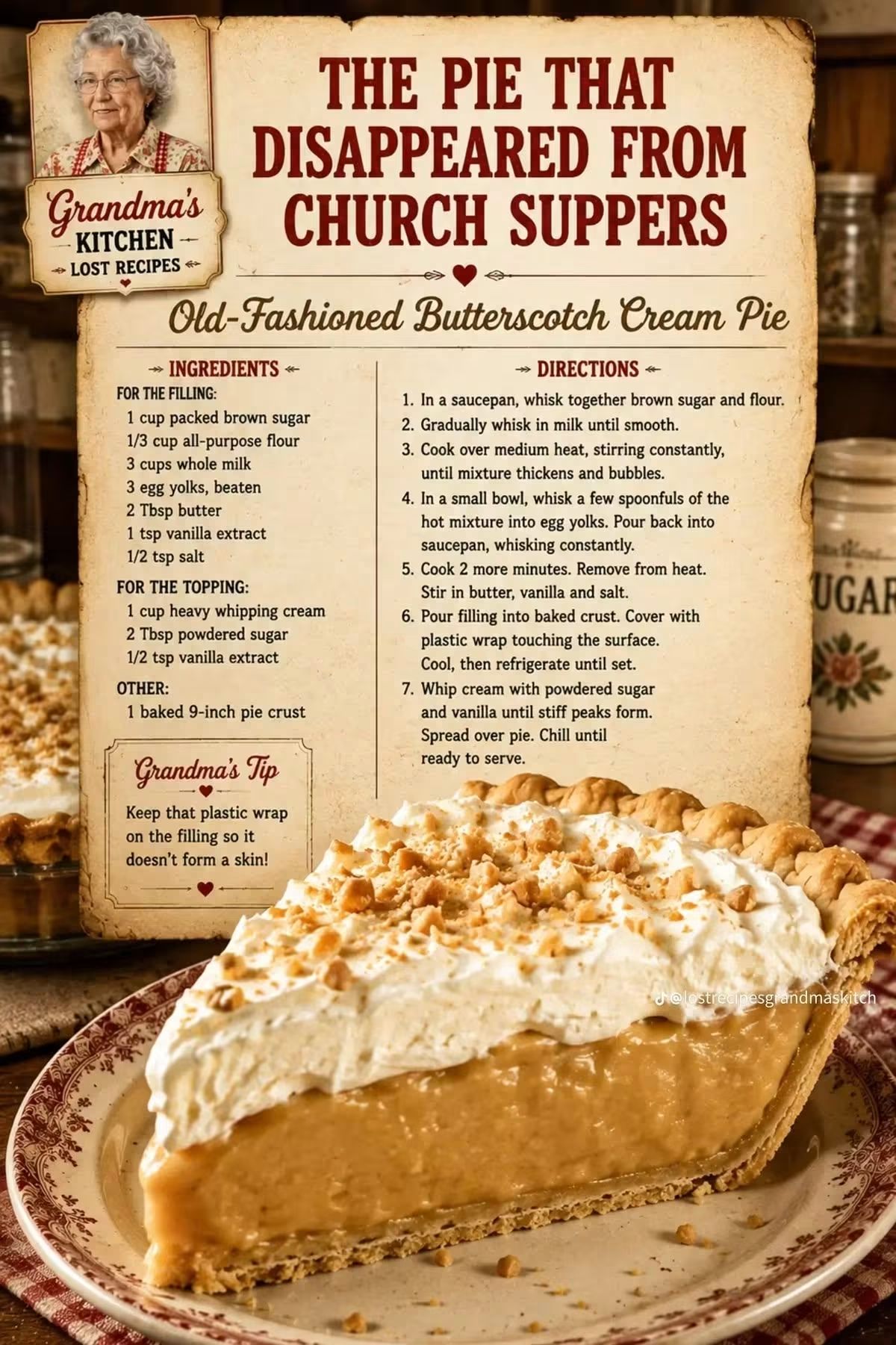
Butterscotch Cream Pie
Introduction
Butterscotch Cream Pie is a classic old-fashioned dessert made for anyone who loves the rich combination of butter, brown sugar, vanilla, and creamy custard. It has a crisp pastry crust filled with a smooth, silky butterscotch pudding and is often finished with a generous layer of softly whipped cream.
The flavor is warm, buttery, and deeply caramel-like without being overwhelmingly sweet. Brown sugar gives the filling its characteristic butterscotch flavor, while butter and vanilla add richness and depth. Chilling the pie allows the custard to become beautifully creamy and sliceable.
This is the kind of dessert that feels right at a family dinner, holiday gathering, Sunday supper, or potluck. It can be prepared ahead of time, making it especially convenient when you want an impressive dessert without having to bake everything at the last minute.
Ingredients
For the Pie Crust
- 1 9-inch unbaked or fully baked pie crust
- 1 tablespoon granulated sugar, optional
- A pinch of salt if using homemade crust
For a homemade crust:
- 1 1/4 cups all-purpose flour
- 1/2 teaspoon salt
- 1 tablespoon granulated sugar
- 1/2 cup cold unsalted butter, cut into small pieces
- 3 to 4 tablespoons ice water
For the Butterscotch Filling
- 3/4 cup packed light brown sugar
- 1/4 cup granulated sugar
- 1/4 cup cornstarch
- 1/2 teaspoon salt
- 3 cups whole milk
- 4 large egg yolks
- 3 tablespoons unsalted butter
- 2 teaspoons pure vanilla extract
For the Whipped Cream Topping
- 1 1/2 cups heavy whipping cream
- 3 tablespoons powdered sugar
- 1 teaspoon pure vanilla extract
Optional Garnishes
- A small amount of grated chocolate
- Butterscotch chips, finely chopped
- A light dusting of cinnamon
- Chopped toasted pecans
- A drizzle of butterscotch sauce
Instructions
Step 1: Prepare the Pie Crust
If making a homemade crust, combine the flour, salt, and sugar in a mixing bowl. Add the cold butter and work it into the flour using a pastry cutter or your fingertips until the mixture resembles coarse crumbs with some small pieces of butter remaining.
Add the ice water one tablespoon at a time, gently mixing until the dough begins to come together. Do not overwork the dough.
Shape the dough into a disk, wrap it, and refrigerate for at least 30 minutes.
Roll the chilled dough into a circle large enough to fit a 9-inch pie plate. Carefully transfer it to the pie plate, press it gently into the bottom and sides, and trim the edges.
Prick the bottom lightly with a fork. Line the crust with parchment paper and pie weights or dried beans. Bake according to your preferred pie-crust method until golden and completely cooked.
Allow the crust to cool before adding the filling.
If using a prepared pie crust, simply bake it according to the package instructions if it is not already baked, then allow it to cool.
Step 2: Make the Butterscotch Custard
In a medium saucepan, whisk together the brown sugar, granulated sugar, cornstarch, and salt.
Gradually whisk in the milk until the mixture is completely smooth and no lumps of cornstarch remain.
In a separate bowl, whisk the egg yolks until smooth.
Place the saucepan over medium heat and cook the milk mixture, whisking frequently. Continue cooking until it becomes hot and begins to thicken.
Step 3: Temper the Egg Yolks
To prevent the egg yolks from scrambling, slowly pour about 1 cup of the hot milk mixture into the bowl containing the yolks while whisking constantly.
Once combined, gradually pour the egg mixture back into the saucepan while continuing to whisk.
Return the mixture to medium heat.
Cook for several minutes, stirring constantly, until the custard becomes thick and creamy. It should be thick enough to coat the back of a spoon.
Do not leave the saucepan unattended because the bottom can scorch easily.
Step 4: Add the Butter and Vanilla
Remove the thickened custard from the heat.
Immediately stir in the butter and vanilla extract. Continue stirring until the butter has completely melted and the filling is smooth and glossy.
Taste the filling carefully once it has cooled slightly. The brown sugar should provide a deep caramel-like sweetness while the butter and vanilla round out the flavor.
Step 5: Fill the Pie
Pour the warm butterscotch filling into the cooled pie crust.
Use a spatula to smooth the surface.
If you notice any small lumps, you can strain the custard through a fine-mesh sieve before pouring it into the crust. This creates an especially smooth finished pie.
Place plastic wrap directly against the surface of the filling to prevent a skin from forming while it cools.
Refrigerate the pie for at least 4 hours, preferably overnight.
Step 6: Prepare the Whipped Cream
When the pie is completely chilled, prepare the topping.
Pour the heavy whipping cream into a cold mixing bowl. Beat with an electric mixer until it begins to thicken.
Add the powdered sugar and vanilla extract.
Continue beating until soft to medium peaks form. Be careful not to overbeat the cream, as it can become grainy and eventually turn into butter.
Spread or pipe the whipped cream over the chilled pie.
Step 7: Garnish and Serve
For a traditional presentation, leave the whipped cream soft and generous across the top.
For additional texture, sprinkle the pie with chopped toasted pecans or finely chopped butterscotch chips.
A small drizzle of butterscotch sauce can also be added immediately before serving.
For the cleanest slices, use a sharp knife dipped in warm water and wiped dry between cuts.
Method
The secret to a successful Butterscotch Cream Pie is the custard.
The filling should be cooked slowly enough that the cornstarch has time to thicken the mixture properly without allowing the milk to scorch. Constant whisking is particularly important once the mixture begins to thicken.
Tempering the egg yolks is another important step. Adding hot liquid gradually prevents the yolks from cooking too quickly. Once tempered, they can safely be returned to the saucepan to create a rich and creamy custard.
Butter is added after cooking because this preserves its richness and gives the finished filling a smooth texture. Vanilla is also added at the end so its delicate aroma remains noticeable.
The pie must be completely chilled before slicing. Although the filling becomes thick during cooking, refrigeration gives it the final structure needed for beautiful slices.
The History of Butterscotch Cream Pie
Butterscotch has long been associated with traditional American sweets. The flavor became particularly popular in candies, sauces, puddings, cakes, and pies because of the rich combination of butter and brown sugar.
The exact origin of butterscotch is not firmly established, and several historical explanations have been proposed for the name and development of the confection. What is clear is that butterscotch became a familiar flavor in home baking and confectionery.
Cream pies also became an important part of American home cooking. Custard-style fillings were practical because they could be prepared with everyday ingredients such as milk, eggs, sugar, butter, and starch. Over time, cooks adapted these fillings into many different flavors, including vanilla, chocolate, banana, coconut, and butterscotch.
Butterscotch Cream Pie combines these traditions into one dessert: a flaky crust, a cooked custard filling, and a light whipped-cream topping.
Formation of the Pie
The pie is built in three main layers.
First comes the pastry crust, which provides a crisp and slightly buttery contrast to the soft filling.
Second is the butterscotch custard. Brown sugar provides its characteristic caramel-like flavor, while milk, egg yolks, cornstarch, and butter create a thick and creamy texture.
Finally, the whipped cream adds a light, airy layer that balances the richness of the custard.
The contrast between crisp crust, silky filling, and fluffy cream is what makes this pie particularly satisfying.
Tips for the Perfect Butterscotch Cream Pie
Use fresh brown sugar. If the brown sugar is hard and dry, break up the lumps before measuring.
Use whole milk when possible. The extra richness produces a more luxurious custard.
Cook the custard patiently. High heat can cause scorching or uneven thickening.
Whisk continuously once the mixture begins to thicken.
Temper the egg yolks carefully.
Do not add the whipped cream until the pie is completely cold.
For an exceptionally smooth filling, strain the custard before pouring it into the crust.
Let the pie chill for at least four hours. Overnight chilling generally produces even cleaner slices.
Toast pecans before using them as a garnish. Toasting brings out their natural flavor and gives the pie a pleasant crunchy contrast.
Make-Ahead Instructions
This pie is particularly well suited to preparing ahead.
The custard-filled pie can be refrigerated overnight before adding the whipped cream. The whipped cream can then be prepared shortly before serving.
For the best texture, keep the finished pie refrigerated until it is ready to serve.
Storage
Store the finished pie covered in the refrigerator.
It is best enjoyed within several days while the crust and whipped cream are at their freshest.
Because the pie contains dairy and eggs, it should not be left at room temperature for extended periods.
Serving Suggestions
Butterscotch Cream Pie is delicious served cold and can be enjoyed exactly as it is.
For a more elaborate dessert, serve each slice with:
- A drizzle of warm butterscotch sauce
- Toasted chopped pecans
- A spoonful of additional whipped cream
- A small scoop of vanilla ice cream
- A sprinkle of cinnamon
- Finely chopped butterscotch candies
The combination of warm butterscotch sauce and cold custard pie is especially appealing.
Why People Love This Pie
Butterscotch Cream Pie has a comforting flavor that feels familiar without being ordinary. The brown sugar gives the custard a warm caramel character, while butter and vanilla make it rich and fragrant.
People who enjoy traditional cream pies often appreciate its smooth texture and simple ingredients. It is also an excellent dessert for gatherings because it can be prepared in advance and kept chilled until serving.
The pie has the nostalgic quality of something that could have been made in a family kitchen for a Sunday meal, holiday dinner, birthday celebration, or community potluck.
Conclusion
Butterscotch Cream Pie is a classic dessert built around simple ingredients and careful preparation. A crisp pastry crust holds a rich brown-sugar custard that is smooth, buttery, and fragrant with vanilla. A generous layer of whipped cream completes the pie with a light and creamy finish.
The most important steps are cooking the custard gently, tempering the egg yolks properly, adding the butter and vanilla at the right time, and allowing the pie to chill completely before serving.
Whether prepared for a holiday table, family gathering, weekend dessert, or simply because you are craving something old-fashioned and comforting, this Butterscotch Cream Pie is the kind of dessert that brings together rich flavor, creamy texture, and homemade charm in every slice.
For Butterscotch Pie Lovers
If you love traditional homemade desserts, this pie is especially appealing because it captures the flavor of classic butterscotch candy in a creamy, sliceable dessert.
The buttery brown-sugar filling is rich without requiring complicated ingredients, and the whipped cream adds just enough lightness to keep each bite balanced.
For an even more indulgent version, add toasted pecans and a thin drizzle of butterscotch sauce before serving. For a simpler old-fashioned presentation, leave the top covered only with softly whipped cream.
Either way, this is a dessert made for sharing, remembering, and returning to again and again.