
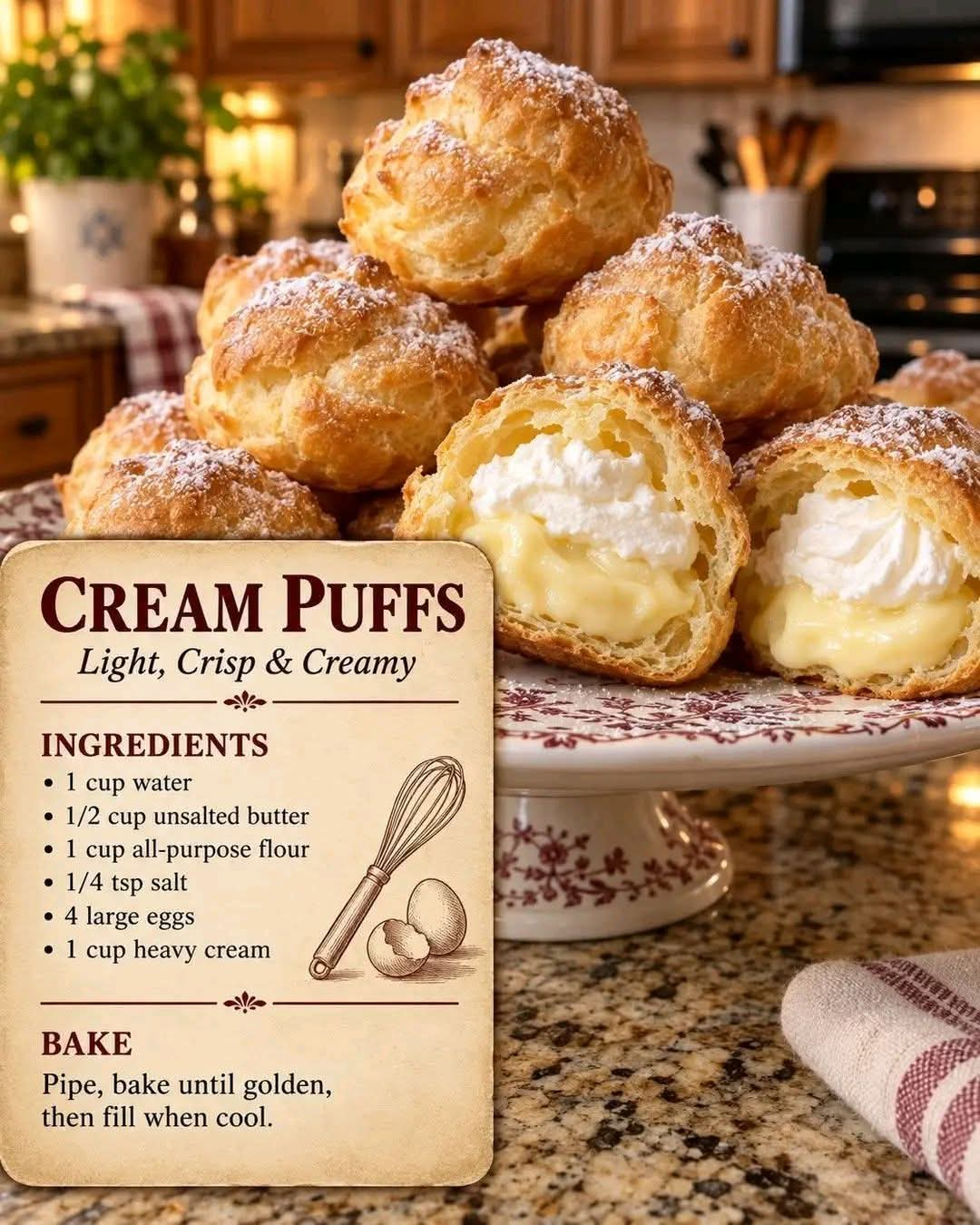
Classic Homemade Cream Puffs
Introduction
Cream puffs are one of those classic pastries that look elegant and complicated but are surprisingly simple once you understand the basic technique. Made from light choux pastry and filled with fluffy whipped cream, pastry cream, or pudding, these delicate pastries are crisp on the outside, airy and hollow inside, and wonderfully creamy when filled.
They are perfect for afternoon tea, birthdays, holidays, dinner parties, bridal showers, family gatherings, or simply when you want to make a homemade dessert that feels special.
The secret to successful cream puffs is the choux pastry. Unlike many traditional pastries, choux dough does not depend on baking powder or yeast to rise. Instead, the large amount of water in the dough turns into steam during baking. That steam expands inside the pastry, creating the characteristic hollow center that makes room for a generous filling.
Once baked and cooled, the pastries can be filled with sweetened whipped cream, vanilla pastry cream, chocolate cream, pudding, or another favorite filling. A light dusting of powdered sugar gives them a beautiful finishing touch.
Ingredients
For the Choux Pastry
- 1 cup water
- 1/2 cup unsalted butter
- 1 cup all-purpose flour
- 1/4 teaspoon salt
- 4 large eggs
For the Whipped Cream Filling
- 1 cup heavy whipping cream
- 2 to 3 tablespoons powdered sugar
- 1 teaspoon vanilla extract
Optional Finishing
- Powdered sugar
- Chocolate sauce
- Melted chocolate
- Vanilla pastry cream
- Chocolate pastry cream
- Vanilla pudding
- Fresh berries
- Caramel sauce
Equipment
- Medium saucepan
- Wooden spoon or sturdy spatula
- Mixing bowl
- Electric mixer
- Piping bag
- Large round piping tip
- Baking sheet
- Parchment paper
- Wire cooling rack
Instructions
Step 1: Prepare the Oven
Preheat the oven to 400°F (200°C).
Line a baking sheet with parchment paper.
Make sure the oven is fully heated before placing the pastry inside. The initial high temperature helps create the steam necessary for the cream puffs to rise.
Step 2: Boil the Water and Butter
Place the water and butter in a medium saucepan.
Heat over medium-high heat until the butter has completely melted and the mixture comes to a full boil.
It is important that the butter is completely melted before the flour is added. This allows the ingredients to combine evenly.
Step 3: Add the Flour
Add the flour and salt all at once.
Immediately stir vigorously with a wooden spoon or sturdy spatula.
The mixture will initially look rough and sticky, but continue stirring until it comes together into a smooth dough that forms a ball and pulls away from the sides of the saucepan.
Step 4: Cook the Dough
Continue stirring the dough over low to medium heat for approximately 1 to 2 minutes.
This step helps remove excess moisture from the dough and develops the proper consistency.
The finished dough should look smooth and slightly glossy. A thin film may begin to form on the bottom of the saucepan.
Step 5: Cool the Dough Slightly
Remove the saucepan from the heat.
Transfer the dough to a mixing bowl and allow it to cool for several minutes.
The dough should be warm but not extremely hot. If it is too hot, the eggs may begin to cook when added.
Step 6: Add the Eggs
Add the eggs one at a time.
Mix thoroughly after each addition until the egg is completely incorporated before adding the next one.
At first, the dough may appear separated or slippery. Keep mixing and it will gradually become smooth and glossy.
The final dough should be thick enough to hold its shape when piped but soft enough to spread slightly.
Step 7: Pipe the Cream Puffs
Transfer the dough into a piping bag fitted with a large round tip.
Pipe small mounds onto the prepared baking sheet, leaving approximately 2 inches of space between each one.
You can also use two spoons to portion the dough if you do not have a piping bag.
If small peaks remain on top of the piped dough, gently smooth them with a damp fingertip.
Step 8: Bake
Place the baking sheet in the preheated oven.
Bake until the cream puffs are noticeably puffed and golden brown.
Avoid opening the oven door too early because the sudden release of heat and steam can cause the pastries to collapse.
Once the pastries are golden and appear firm, remove them from the oven.
Step 9: Cool Completely
Transfer the cream puffs to a wire rack.
Allow them to cool completely before filling.
Do not fill them while they are still warm. The heat can melt the whipped cream and make the pastry soggy.
Step 10: Prepare the Whipped Cream
Pour the cold heavy whipping cream into a chilled mixing bowl.
Beat with an electric mixer until it begins to thicken.
Add the powdered sugar and vanilla extract.
Continue beating until the cream forms firm peaks.
Be careful not to overbeat the cream, as it can become grainy and eventually turn into butter.
Step 11: Fill the Cream Puffs
Once the pastries are completely cool, cut them horizontally with a sharp knife.
Alternatively, make a small opening in the bottom of each pastry and pipe the filling directly inside.
Fill generously with whipped cream, vanilla pastry cream, chocolate pastry cream, or pudding.
Replace the tops if you sliced the pastries open.
Step 12: Finish and Serve
Dust the tops lightly with powdered sugar.
For a more luxurious dessert, drizzle with melted chocolate or chocolate sauce.
Serve shortly after filling for the best contrast between the delicate pastry and creamy filling.
Methods
The Choux Pastry Method
The most important part of this recipe is properly preparing the choux dough.
The butter and water are brought to a boil before the flour is added. Adding the flour all at once and stirring rapidly allows the flour to absorb the liquid evenly.
Cooking the dough briefly after the flour is added helps evaporate some of the moisture and creates the foundation needed for a pastry that can expand in the oven.
The eggs are then incorporated gradually. They provide moisture, richness, structure, and elasticity.
The Steam-Rising Method
Cream puffs rise primarily because of steam.
The water contained in the dough turns into steam during baking. Because the pastry has a flexible structure created by the flour, eggs, and butter, the expanding steam pushes outward and upward.
This creates the large hollow interior characteristic of choux pastry.
Once the pastry has expanded, the heat of the oven helps dry and set the outer shell.
The Filling Method
The hollow center makes cream puffs especially versatile.
Whipped cream creates a light and airy dessert, while pastry cream gives the pastries a richer and more traditional custard-like filling.
For a chocolate version, chocolate pastry cream or chocolate whipped cream can be used.
For a fruit-inspired dessert, fill the pastries with vanilla cream and add fresh strawberries, raspberries, or blueberries.
A Brief History of Cream Puffs
Cream puffs are made from choux pastry, known in French as pâte à choux. Choux pastry became an important part of French pastry-making and eventually spread throughout Europe and beyond.
The name is associated with the pastry’s appearance, as baked choux can resemble small rounded cabbages.
Choux pastry became the foundation for many famous desserts and pastries, including éclairs, profiteroles, gougères, and cream puffs.
The technique is particularly interesting because the pastry does not require yeast or a traditional chemical leavening agent. Steam provides much of the lift during baking.
Over time, cream puffs became popular for both everyday baking and elegant celebrations. Their simple ingredients and impressive appearance helped make them a classic pastry in home kitchens and professional bakeries alike.
Formation of the Cream Puffs
The formation of a cream puff begins with the cooked flour mixture.
When the flour is added to the boiling butter and water, it absorbs the liquid and forms a paste. This paste is cooked briefly to develop the proper consistency.
Eggs are then incorporated one at a time. The eggs make the dough flexible enough to expand while also helping it develop a golden exterior during baking.
When the dough enters the hot oven, the water inside begins to turn into steam.
The steam expands rapidly, pushing the pastry outward and creating the hollow interior.
As baking continues, the outside becomes golden and crisp while the inside dries enough to create an open cavity.
After cooling, the hollow center can be filled with cream or custard.
Tips for Perfect Cream Puffs
Use Room-Temperature Eggs
Eggs that are not extremely cold can incorporate more smoothly into the warm dough.
Add Eggs Gradually
Never add all the eggs at once. Adding them one at a time gives you better control over the consistency.
Do Not Make the Dough Too Thin
The finished choux dough should be thick enough to hold its shape when piped.
If the dough becomes too loose, the pastries may spread instead of rising properly.
Do Not Open the Oven Too Early
Opening the oven door can release heat and steam before the pastry structure has set.
Wait until the cream puffs are visibly puffed and beginning to turn golden before checking them.
Bake Until Golden
Underbaked cream puffs can collapse after coming out of the oven.
A properly baked cream puff should have a firm, golden exterior.
Cool Completely
Always cool the shells before adding the filling.
Warm pastry and whipped cream do not make a good combination because the heat can melt the filling.
Filling Ideas
Classic Vanilla Whipped Cream
Use lightly sweetened whipped cream with vanilla for a simple, airy filling.
Vanilla Pastry Cream
A thick vanilla custard creates a rich and traditional filling.
Chocolate Cream
Chocolate pastry cream or chocolate whipped cream gives the dessert a deeper flavor.
Strawberry Cream
Fold finely chopped strawberries into whipped cream or serve fresh berries alongside the filled pastries.
Lemon Cream
A little lemon zest and lemon curd can be combined with whipped cream for a bright and refreshing filling.
Caramel Cream
Add caramel sauce to whipped cream or pastry cream for a rich caramel variation.
Make-Ahead Method
The pastry shells can be prepared ahead of time.
Bake the cream puffs and allow them to cool completely. Store the empty shells in an airtight container.
For longer storage, the unfilled shells can also be frozen. Thaw them completely before filling.
Prepare the cream separately and fill the pastries shortly before serving.
Keeping the filling separate until close to serving time helps preserve the crisp texture of the pastry.
Serving Suggestions
Cream puffs are wonderful served as individual desserts, but they can also be arranged into an impressive centerpiece.
For a family gathering, arrange them on a large platter and dust lightly with powdered sugar.
For a more elegant presentation, drizzle the filled cream puffs with chocolate and add fresh berries.
They are also excellent served alongside coffee, tea, hot chocolate, or a scoop of ice cream.
Common Mistakes to Avoid
Adding the eggs while the dough is extremely hot can cause them to partially cook.
Adding too much egg can make the dough too loose and difficult to pipe.
Opening the oven door too early can interfere with the rise.
Removing the cream puffs before they are sufficiently browned can result in a weak structure.
Filling the pastries while they are warm can cause the filling to melt and the shells to become soft.
Overwhipping the cream can produce a grainy texture.
Conclusion
Homemade Cream Puffs are a timeless pastry that combines a crisp, golden choux shell with a soft, creamy filling.
Although the technique may seem intimidating at first, the ingredients are simple and the process becomes straightforward once you understand how the dough works. The combination of water, butter, flour, salt, and eggs creates a pastry that rises beautifully through steam, leaving a hollow center ready to be filled.
Whether filled with vanilla whipped cream, pastry cream, chocolate cream, or a favorite homemade pudding, these little pastries are perfect for special occasions or an afternoon treat.
They are proof that a handful of basic ingredients can be transformed into something elegant, delicious, and memorable.
For Cream Puff Lovers
For anyone who loves classic homemade desserts, cream puffs are especially satisfying because they offer several textures in one bite.
The outside is delicate and lightly crisp, the inside is airy and hollow, and the filling adds a rich and creamy contrast.
They can be made small for parties, larger for individual desserts, or arranged together for an impressive dessert display.
Once you master the basic choux pastry method, you can use the same technique to create many different desserts. Experiment with fillings, toppings, sauces, and flavors to create your own signature cream puffs.
Final Method at a Glance
- Preheat the oven to 400°F (200°C).
- Line a baking sheet with parchment paper.
- Bring water and butter to a boil.
- Add flour and salt all at once.
- Stir vigorously until the dough forms a smooth ball.
- Cook the dough briefly to remove excess moisture.
- Cool the dough slightly.
- Add the eggs one at a time, mixing thoroughly after each addition.
- Pipe small rounds onto the baking sheet.
- Bake until puffed, firm, and golden.
- Cool completely.
- Whip the heavy cream with powdered sugar and vanilla.
- Slice or pierce the cream puffs.
- Fill generously with whipped cream, pastry cream, or pudding.
- Dust with powdered sugar or drizzle with chocolate.
- Serve and enjoy.