
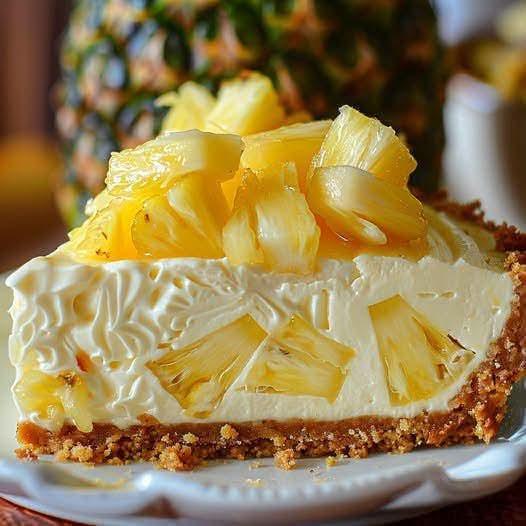
Pineapple Cheesecake
Introduction
Pineapple Cheesecake is a creamy, rich, and refreshing dessert that combines the smooth texture of classic baked cheesecake with the bright tropical flavor of pineapple. A buttery graham cracker crust provides a crisp, slightly sweet foundation, while the cheesecake filling is rich and velvety with just enough tang from sour cream to balance the sweetness.
The crushed pineapple folded into the filling adds small pieces of fruit throughout the cheesecake, creating a wonderful contrast between the dense cream cheese mixture and the juicy tropical flavor. A layer of whipped cream, extra pineapple, and toasted coconut can turn this simple cheesecake into an elegant centerpiece for a family dinner, spring gathering, summer celebration, birthday, picnic, or holiday dessert table.
The most important secret to a successful pineapple cheesecake is controlling the moisture. Pineapple contains a considerable amount of liquid, so the crushed pineapple should be drained extremely well before being added to the filling. Taking this extra step helps the cheesecake bake properly and develop the firm yet creamy texture that makes a great cheesecake so satisfying.
Ingredients
For the Graham Cracker Crust
- 2 cups graham cracker crumbs
- 5 tablespoons unsalted butter, melted
- 2 tablespoons granulated sugar
For the Pineapple Cheesecake Filling
- 24 ounces cream cheese, softened to room temperature
- ¾ cup granulated sugar
- 3 large eggs
- 1 teaspoon vanilla extract
- ½ cup sour cream
- 1 tablespoon all-purpose flour
- 1 cup crushed pineapple, extremely well drained
- ½ cup pineapple juice
For the Topping
- 1 cup whipped cream
- ½ cup crushed pineapple, well drained
- Pineapple chunks or pineapple slices
- Toasted coconut, optional
Equipment
- 9-inch springform pan
- Mixing bowls
- Electric hand mixer or stand mixer
- Rubber spatula
- Measuring cups and spoons
- Fine strainer or sieve
- Baking sheet
- Wire cooling rack
Preparation Before Baking
Before beginning, remove the cream cheese, eggs, and sour cream from the refrigerator and allow them to come closer to room temperature. Room-temperature cream cheese blends much more smoothly and helps prevent lumps in the finished filling.
The pineapple should receive special attention. Place the crushed pineapple in a fine-mesh strainer and press gently with a spoon to remove as much liquid as possible. For an especially reliable result, place the pineapple in a clean kitchen towel or several layers of paper towel and gently squeeze out additional moisture.
Do not skip this step. Too much pineapple liquid can make the filling excessively loose and may interfere with the cheesecake setting properly.
Preheat the oven to 325°F (165°C).
Method 1: Preparing the Graham Cracker Crust
Place the graham cracker crumbs in a medium mixing bowl. Add the granulated sugar and stir until evenly combined.
Pour in the melted butter and mix thoroughly. Every crumb should be lightly coated with butter. The mixture should resemble damp sand and hold together when pressed between your fingers.
Transfer the mixture to a 9-inch springform pan.
Using the bottom of a measuring cup or a flat glass, firmly press the crumbs across the bottom of the pan. Create an even layer, paying particular attention to the edges.
Bake the crust for approximately 8 to 10 minutes.
The crust does not need to become dark brown. It simply needs to become lightly toasted and set.
Remove it from the oven and allow it to cool slightly while you prepare the cheesecake filling.
Method 2: Preparing the Cheesecake Filling
Place the softened cream cheese into a large mixing bowl.
Beat the cream cheese on medium-low speed until smooth and creamy. Scrape down the sides of the bowl as necessary.
Add the granulated sugar gradually and continue mixing until the sugar is incorporated and the mixture becomes smooth.
Add the eggs one at a time. Mix each egg into the cream cheese mixture on low speed just until incorporated before adding the next egg.
Avoid overmixing at this stage. Excessive mixing can incorporate too much air into the batter, which may contribute to cracks or an uneven surface during baking.
Add the vanilla extract, sour cream, and flour.
Pour in the pineapple juice and mix gently until everything is combined.
Finally, add the very well-drained crushed pineapple.
Use a rubber spatula to fold the pineapple into the cheesecake batter. Folding rather than aggressively mixing helps maintain the smooth consistency of the filling.
Method 3: Assembling the Cheesecake
Pour the pineapple cheesecake filling over the slightly cooled graham cracker crust.
Use a spatula to gently spread the filling into an even layer.
Lightly tap the pan against the countertop once or twice to help release any large air bubbles. Do not hit the pan forcefully.
Place the springform pan on a baking sheet. This makes it easier to move the cheesecake in and out of the oven and provides additional stability.
Method 4: Baking the Cheesecake
Place the cheesecake in the preheated 325°F oven.
Bake for approximately 55 to 65 minutes.
The cheesecake is ready when the edges appear set and slightly firm while the center still has a gentle jiggle when the pan is carefully moved.
Do not wait for the entire cheesecake to become completely firm inside the oven. Cheesecake continues cooking from residual heat after it is removed, and baking it until completely firm can result in a dry or overly dense texture.
Once the baking time is complete, turn off the oven.
Leave the cheesecake inside the oven with the door slightly cracked open for approximately 30 to 60 minutes.
This gradual cooling process helps reduce the sudden temperature change that can cause the surface of a cheesecake to crack.
Method 5: Cooling the Cheesecake
After the cheesecake has rested in the turned-off oven, carefully remove it.
Place the cheesecake on a wire rack and allow it to cool completely at room temperature.
Do not immediately transfer a hot cheesecake to the refrigerator. Allowing it to cool gradually helps maintain its structure.
Once cooled, cover the cheesecake and refrigerate it for at least 6 hours.
For the best texture and flavor, refrigerate it overnight.
The long chilling period allows the cheesecake to fully set and makes it much easier to slice cleanly.
Method 6: Preparing the Topping
When you are ready to serve the cheesecake, prepare the topping.
Make sure the additional crushed pineapple is well drained.
Spread or pipe whipped cream over the chilled cheesecake.
Add small portions of crushed pineapple over the whipped cream.
Decorate with pineapple chunks or thin pineapple slices.
For an additional tropical flavor, sprinkle toasted coconut over the top.
The coconut is optional, but it adds a pleasant toasted flavor and a little texture that works beautifully with pineapple.
How to Toast Coconut
If using coconut, place shredded coconut in a dry skillet over medium-low heat.
Stir frequently as it warms.
The coconut can change from pale to toasted very quickly, so do not leave it unattended.
Once lightly golden and fragrant, remove it from the heat immediately and allow it to cool before decorating the cheesecake.
The Importance of Draining Pineapple
One of the most important steps in this recipe is draining the pineapple.
Fresh and canned pineapple both contain significant amounts of moisture. When too much liquid enters a cheesecake batter, it can change the consistency of the filling and make it more difficult for the cheesecake to set properly.
For the crushed pineapple used inside the cheesecake, drain it thoroughly before measuring.
For the pineapple used on top, drain it separately.
If the pineapple still appears very wet after straining, press it gently with the back of a spoon against the sides of the strainer or use paper towels to absorb additional moisture.
This simple step can make a noticeable difference in the final cheesecake.
Tips for the Perfect Pineapple Cheesecake
Use full-fat cream cheese when possible. It provides the richness and structure traditionally associated with baked cheesecake.
Make sure the cream cheese is softened before mixing. Cold cream cheese can remain lumpy and requires more mixing.
Mix the eggs gently and only until incorporated. Overmixing can add unnecessary air to the batter.
Do not skip the sour cream. It contributes a pleasant tanginess and helps create a smooth, creamy filling.
Drain the pineapple extremely well.
Do not overbake the cheesecake. The center should still have a slight jiggle when the cheesecake is removed from the oven.
Allow the cheesecake to cool gradually.
Chill the cheesecake thoroughly before slicing.
For especially clean slices, use a sharp knife dipped in warm water and wiped dry between cuts.
Flavor and Texture
The finished Pineapple Cheesecake should have a firm but creamy texture. The crust should be buttery and slightly crisp, while the filling should be smooth, rich, and tender.
The cream cheese provides the familiar cheesecake flavor, while sour cream adds a subtle tang that prevents the dessert from becoming overwhelmingly sweet.
Pineapple brings a bright tropical note that cuts through the richness of the cream cheese. The whipped cream creates a soft finishing layer, while toasted coconut adds another tropical element and a gentle crunch.
Together, these components create a dessert that is rich enough for cheesecake lovers but fresh and fruity enough to feel lighter than many traditional chocolate or caramel cheesecakes.
A Brief History of Cheesecake
Cheesecake has a long culinary history, with early forms of cheese-based cakes appearing in ancient Mediterranean cultures. Ancient Greeks prepared simple cakes using cheese, flour, and honey, and similar concepts evolved over centuries.
As cheesecake traditions developed throughout Europe, different regions created their own versions using various fresh cheeses, spices, fruits, and crusts.
The modern baked cheesecake became particularly associated with American dessert culture, especially with the development and widespread use of cream cheese. Graham cracker crusts also became a popular foundation for American cheesecake.
Fruit-flavored cheesecakes eventually became a natural extension of the classic dessert. Pineapple, with its sweet-tart flavor and tropical character, became especially appealing for warm-weather desserts.
The Formation of This Cheesecake
The beauty of this recipe comes from the way several simple layers work together.
The first layer is the graham cracker crust. Butter binds the crumbs together and helps create a firm, slightly crisp foundation.
The second layer is the cream cheese filling. Cream cheese provides the main body of the dessert, while sugar adds sweetness, eggs provide structure, and sour cream contributes richness and tang.
Flour provides a small amount of additional structure, while pineapple juice and crushed pineapple introduce the tropical flavor.
During baking, the eggs coagulate and help the liquid cheesecake mixture transform into a firm but creamy dessert. The gradual cooling process then allows the structure to stabilize.
Finally, refrigeration completes the setting process and produces the characteristic chilled cheesecake texture.
Serving Suggestions
Pineapple Cheesecake is delicious served cold and can be presented in several ways.
For a simple presentation, serve each slice with a small spoonful of whipped cream.
For a tropical presentation, add pineapple pieces and toasted coconut.
For a special celebration, decorate the entire cheesecake with alternating pineapple slices and whipped cream rosettes.
You can also serve each slice with additional crushed pineapple on the side.
The cheesecake pairs particularly well with coffee, tea, iced tea, or a refreshing fruit drink.
Storage
Keep the cheesecake refrigerated in a tightly covered container or under a cake dome.
Because it contains cream cheese, eggs, sour cream, and whipped cream, it should remain refrigerated when not being served.
For the best quality, enjoy the cheesecake within several days.
If you want to freeze the cheesecake, freeze it without the whipped cream and fresh pineapple topping. Wrap individual slices or the entire chilled cheesecake carefully in plastic wrap followed by a layer of aluminum foil.
Thaw the cheesecake slowly in the refrigerator and decorate it after it has completely thawed.
Make-Ahead Method
This is an excellent make-ahead dessert.
The cheesecake can be baked the day before serving and refrigerated overnight. In fact, preparing it a day ahead often produces an even better texture because the cheesecake has plenty of time to fully set.
Wait until shortly before serving to add the whipped cream, pineapple topping, and toasted coconut.
This keeps the decoration fresh and attractive.
Common Mistakes to Avoid
Do not use poorly drained pineapple.
Do not use cold cream cheese if you can avoid it.
Do not beat the eggs aggressively.
Do not bake until the center is completely firm.
Do not cut the cheesecake before it has chilled properly.
Do not decorate the cheesecake while it is still warm.
Avoid adding too much pineapple juice beyond the specified amount because additional liquid can alter the consistency of the filling.
Conclusion
Pineapple Cheesecake is a beautiful combination of classic cheesecake richness and bright tropical flavor. The buttery graham cracker crust provides the perfect base for a creamy pineapple-infused filling, while whipped cream, pineapple, and toasted coconut create an inviting finishing touch.
Although cheesecake requires patience, particularly during cooling and chilling, the process is straightforward when each step is followed carefully. The key is to use softened cream cheese, mix gently, drain the pineapple thoroughly, avoid overbaking, and give the finished cheesecake enough time to chill.
The result is a smooth, creamy, refreshing dessert with a delicious balance of sweet, tangy, buttery, and tropical flavors.
For Pineapple Cheesecake Lovers
This cheesecake is especially enjoyable for anyone who loves creamy desserts combined with fresh fruit. It offers something different from traditional plain cheesecake while still keeping the familiar rich texture that makes cheesecake so popular.
For family gatherings, summer celebrations, birthdays, potlucks, or a simple weekend dessert, Pineapple Cheesecake can be prepared ahead of time and brought to the table beautifully decorated.
Each slice delivers a buttery crust, creamy cheesecake filling, pieces of sweet pineapple, and a refreshing tropical finish. With a little toasted coconut and whipped cream on top, it becomes a dessert that looks as impressive as it tastes.
Pineapple Cheesecake is ultimately a celebration of simple ingredients transformed into a rich, elegant, and memorable homemade dessert.