
Angel Wings
Introduction
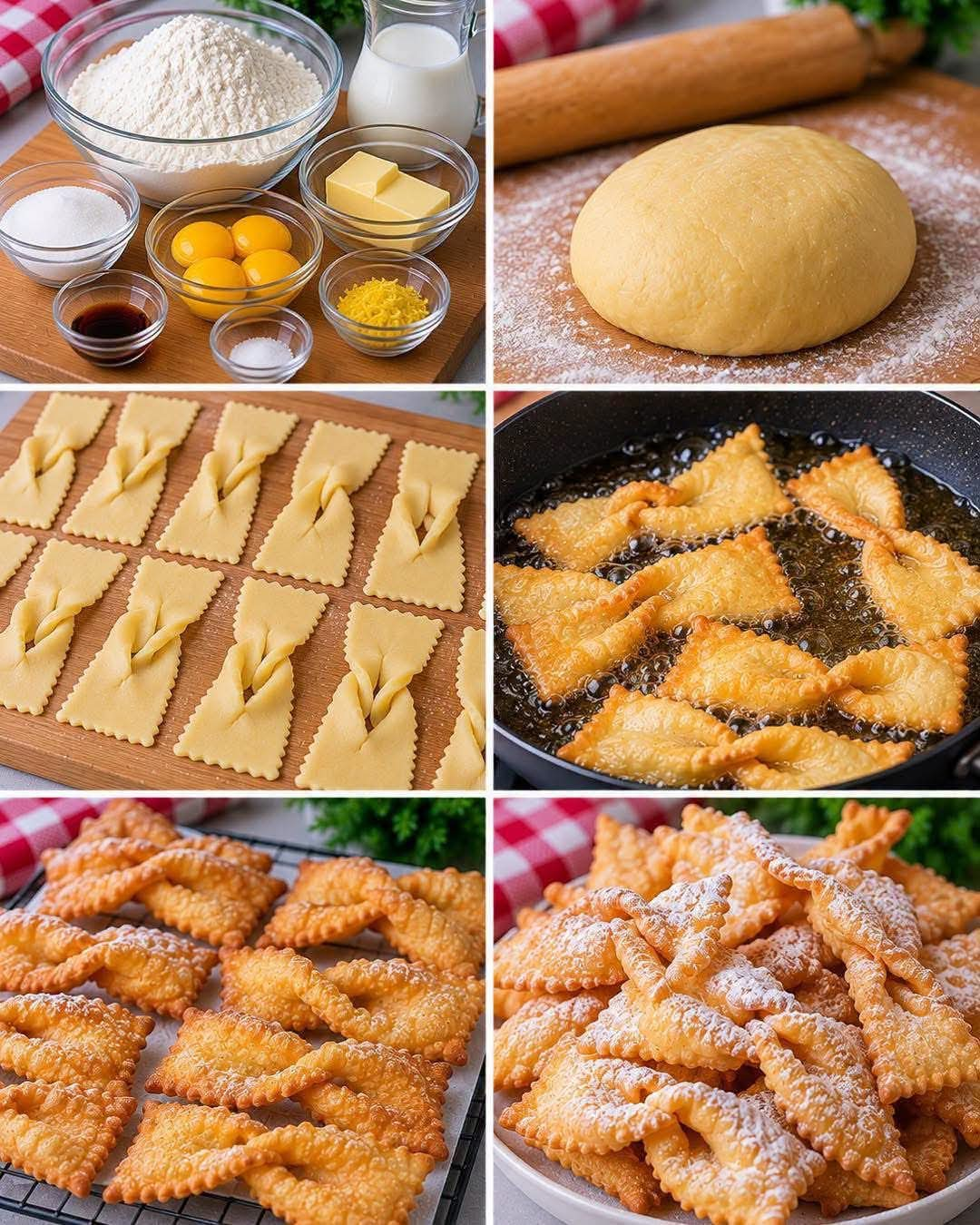
Angel Wings are delicate, crisp, golden pastries made from a simple dough of flour, egg yolks, milk, butter, sugar, and fragrant lemon zest. The dough is rolled very thin, cut into elegant pieces, and quickly fried until light and beautifully golden. A generous dusting of powdered sugar gives them their classic sweet finish.
These pastries are especially enjoyable when served fresh and slightly warm. Their texture is one of their greatest attractions: wonderfully crisp on the outside, light and delicate in the center, and sweet without being overly heavy.
Angel Wings are an excellent choice for holidays, family gatherings, afternoon tea, celebrations, or simply whenever you want to make a traditional homemade treat with ingredients that are usually already in the kitchen.
Ingredients
For the Dough
- 2 cups all-purpose flour
- 4 egg yolks
- 2 tablespoons granulated sugar
- 2 tablespoons unsalted butter, melted and cooled slightly
- 1/4 cup milk
- 1 teaspoon vanilla extract
- 1/4 teaspoon salt
- 1 teaspoon finely grated lemon zest
For Frying
- Vegetable oil, enough for deep frying
For Finishing
- Powdered sugar, for generous dusting
Instructions
1. Prepare the Dough
Begin by placing the flour in a large mixing bowl. Add the sugar and salt and whisk them together briefly to distribute the ingredients evenly.
In a separate bowl, combine the egg yolks, melted butter, milk, vanilla extract, and lemon zest. Whisk until the mixture is smooth.
Gradually add the wet mixture to the flour. Stir with a wooden spoon or sturdy spatula until a rough dough begins to form.
Transfer the dough to a lightly floured work surface and knead it for approximately 5 to 8 minutes. The dough should become smooth, firm, and elastic.
If the dough feels excessively sticky, add a very small amount of flour. Avoid adding too much because a heavy dough can make the finished pastries less delicate.
2. Rest the Dough
Shape the dough into a ball and cover it with plastic wrap or place it in a covered bowl.
Allow it to rest for approximately 30 minutes at room temperature.
This resting period is important because it allows the gluten to relax. Relaxed dough is much easier to roll very thin without constantly shrinking back.
3. Roll the Dough
After resting, divide the dough into several smaller portions. Working with smaller pieces makes it easier to achieve the very thin texture needed for Angel Wings.
Lightly flour your work surface and rolling pin. Roll each portion as thinly as possible.
The dough should be almost paper-thin. If you have a pasta machine, you can use it to achieve an especially even and thin sheet.
The thinner the dough, the lighter and crispier the finished Angel Wings will become.
4. Cut the Pastries
Using a sharp knife, pastry wheel, or ravioli cutter, cut the thin dough into strips or decorative shapes.
You can make simple rectangles, diamonds, or long strips. For the classic Angel Wings appearance, make narrow strips and cut a small slit through the center of each piece.
If desired, gently pull one end of each strip through the center slit to create a twisted, wing-like shape.
Do not make the pieces too large because they will expand slightly during frying.
5. Heat the Oil
Pour enough vegetable oil into a deep, heavy-bottomed saucepan or deep fryer to allow the pastries to move freely while cooking.
Heat the oil to approximately 350°F to 360°F (175°C to 180°C).
Maintaining the correct temperature is important. Oil that is too cool can make the pastries greasy, while oil that is too hot can brown the outside before the pastry becomes properly crisp.
If you do not have a thermometer, test the oil with a small piece of dough. It should immediately begin bubbling and rise toward the surface without burning rapidly.
6. Fry the Angel Wings
Carefully place a few pieces of dough into the hot oil. Do not overcrowd the pan because adding too many pieces at once can lower the oil temperature.
Fry the pastries for approximately 1 to 2 minutes per side, turning them gently with tongs or a slotted spoon.
They should become light golden and crisp.
Because the dough is thin, the cooking process happens quickly. Keep a close eye on the pastries throughout frying.
7. Drain the Pastries
Remove the cooked Angel Wings from the oil using a slotted spoon or kitchen tongs.
Place them on a plate or tray lined with paper towels to absorb excess oil.
Continue frying the remaining dough in small batches, allowing the oil to return to the correct temperature between batches.
8. Add the Powdered Sugar
Allow the pastries to cool for several minutes.
Place them on a large serving platter and generously dust them with powdered sugar.
For an especially beautiful presentation, use a fine-mesh sieve to distribute the sugar evenly over the entire surface.
Method
The method behind Angel Wings is simple but depends on several important techniques.
First, the dough needs to be kneaded until smooth but not overworked. Second, resting the dough allows the gluten to relax. Third, rolling the dough extremely thin creates the characteristic light and crispy texture.
The pastries are then cut and shaped before being quickly fried in hot oil. Because the dough is so thin, they cook rapidly and develop a delicate golden color.
Finally, powdered sugar is added after frying. This gives the pastries their traditional sweet appearance without making the dough itself excessively sugary.
The History of Angel Wings
Angel Wings belong to a large family of thin, fried pastries found in different forms throughout Europe and surrounding regions. Similar pastries have been prepared for generations under different names, particularly during festive periods, carnivals, holidays, weddings, and family celebrations.
The exact origin of the name “Angel Wings” varies according to the tradition and region. The name generally refers to the light, twisted, wing-like appearance of the finished pastry.
Similar recipes are known in several culinary traditions, where the dough may be rolled thin, cut into ribbons, twisted, fried, and covered with powdered sugar.
Their popularity comes partly from their simplicity. Flour, eggs, butter, sugar, and milk can be transformed into a large platter of crisp pastries without requiring complicated equipment or elaborate ingredients.
Formation and Texture
The formation of Angel Wings begins with a relatively firm dough. Egg yolks contribute richness and color, while butter adds tenderness and flavor. Milk helps bring the ingredients together, and vanilla and lemon zest provide a delicate aroma.
The dough is rolled very thin because thickness has a major effect on the final texture.
A thin sheet produces a pastry that is light, crisp, and almost delicate enough to melt away when bitten.
The twisted shape also creates folds and layers that become beautifully crisp during frying. These irregular surfaces catch the powdered sugar and make each piece look unique.
Important Tips for Perfect Angel Wings
Roll the Dough Very Thin
This is one of the most important steps. Thick dough will produce heavier pastries rather than the characteristic delicate and crispy texture.
Do Not Overcrowd the Oil
Fry only a few pieces at a time. Too many pastries can cause the oil temperature to drop significantly.
Watch the Color Carefully
Angel Wings cook quickly. Remove them once they reach a light golden color rather than waiting for them to become dark brown.
Keep the Oil at the Right Temperature
A thermometer makes this much easier. Aim for approximately 350°F to 360°F (175°C to 180°C).
Dust After Cooling Slightly
Powdered sugar should be added after the pastries have drained and cooled slightly. This helps keep the sugar light and attractive.
Use Fresh Lemon Zest
The lemon zest adds brightness to the recipe. Grate only the yellow outer portion of the lemon and avoid the white pith, which can taste bitter.
Serving Suggestions
Angel Wings are wonderful served with coffee, tea, hot chocolate, or a glass of cold milk.
They can be arranged on a large serving platter and dusted generously with powdered sugar just before serving.
For special occasions, you can place them in decorative paper liners or arrange them in overlapping layers on a dessert tray.
They are also delicious alongside fresh berries, sliced fruit, whipped cream, or a simple fruit sauce.
Storage
Angel Wings are best enjoyed on the day they are made because their crisp texture is at its finest when fresh.
If you have leftovers, allow them to cool completely before placing them in an airtight container. Keep them at room temperature in a dry place.
Avoid refrigerating them because moisture can soften the pastry.
If the pastries lose some of their crispness, placing them briefly in a warm oven can sometimes help restore some of their texture. Allow them to cool again before serving.
Conclusion
Angel Wings are a beautiful example of how simple ingredients can create an elegant homemade dessert. The dough requires only a handful of basic ingredients, but careful rolling and frying transform it into something remarkably light, crisp, and delicate.
The combination of buttery dough, fragrant lemon zest, vanilla, and powdered sugar makes every bite inviting. Their twisted shapes also give them a special appearance that makes them perfect for sharing.
Whether prepared for a holiday celebration, afternoon gathering, family dessert table, or a quiet cup of coffee, Angel Wings bring the charm of traditional homemade baking to the table.
For Lovers of Traditional Homemade Sweets
For anyone who loves old-fashioned pastries, Angel Wings are especially satisfying. They have the kind of simple preparation that feels connected to generations of home cooks who made special desserts without complicated ingredients or modern equipment.
The real pleasure comes from making the dough by hand, rolling it thin, shaping every piece, and watching the pastries puff and turn golden in the hot oil.
Once finished, a generous cloud of powdered sugar completes the dessert. The result is crisp, delicate, fragrant, and wonderfully nostalgic.
Angel Wings are more than just a fried pastry. They are a dessert made for sharing, gathering around the table, and enjoying the simple pleasure of something prepared from scratch.