
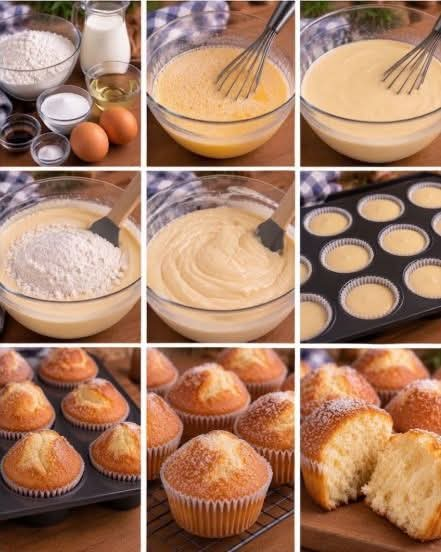
Traditional Homemade Magdalenas
Introduction
Light, fluffy, fragrant, and delicately sweet, traditional homemade Magdalenas are a classic Spanish-style treat that is perfect for breakfast, afternoon coffee, or a simple homemade snack. These little cakes have a tender, airy crumb and a wonderful vanilla aroma, with a lightly golden top that makes them especially inviting when they come fresh from the oven.
Magdalenas are wonderfully simple to prepare. The ingredients are basic pantry staples, but the method of mixing, resting, and baking the batter is what helps create their characteristic soft texture and beautifully rounded tops.
Serve them warm with coffee, tea, hot chocolate, or a glass of milk. They are also excellent packed into lunch boxes or kept on the kitchen counter for an easy homemade treat throughout the day.
Ingredients
For the Magdalenas
- 3 large eggs, preferably at room temperature
- 3/4 cup granulated sugar
- 1 teaspoon pure vanilla extract
- 1 cup all-purpose flour
- 1 1/2 teaspoons baking powder
- 1/4 teaspoon salt
- 1/2 cup neutral vegetable oil
- 1/4 cup whole milk
- 1 teaspoon finely grated lemon zest, optional
- 1 tablespoon fresh lemon juice, optional
For finishing
- 1 to 2 tablespoons granulated sugar for sprinkling
- A little powdered sugar for serving, optional
Instructions
Step 1: Prepare the oven and pan
Preheat the oven to 375°F (190°C). Line a standard muffin pan with paper cupcake liners.
For the most traditional appearance, use simple white or lightly colored paper liners. Make sure the oven is fully heated before the batter goes inside because the initial heat helps the cakes rise.
Step 2: Beat the eggs and sugar
Place the eggs and sugar in a large mixing bowl. Using an electric mixer, beat them for approximately 3 to 5 minutes, or until the mixture becomes pale, thick, and noticeably increased in volume.
This step is important because incorporating air into the eggs helps give the Magdalenas their light and fluffy texture.
Add the vanilla extract and lemon zest if using, then mix briefly.
Step 3: Add the oil and milk
With the mixer running at low speed, slowly drizzle in the vegetable oil.
Once incorporated, add the milk and mix just until combined.
Do not overmix at this stage. The goal is to keep the batter smooth while maintaining some of the air created during the egg-whipping process.
Step 4: Combine the dry ingredients
In a separate bowl, whisk together the flour, baking powder, and salt.
Gradually add the dry ingredients to the wet mixture. Use a whisk or spatula and mix gently until no large streaks of flour remain.
Avoid excessive mixing because overworking the flour can produce a heavier, less tender cake.
Step 5: Rest the batter
Cover the bowl and refrigerate the batter for approximately 30 minutes to 1 hour.
This resting period is optional but highly recommended. Chilling the batter helps create a stronger contrast between the cold batter and the hot oven, which can encourage the characteristic rise and rounded tops associated with Magdalenas.
Step 6: Fill the liners
Remove the batter from the refrigerator and gently stir it once.
Fill each paper liner approximately two-thirds to three-quarters full. Do not fill them completely because the batter needs room to rise.
Sprinkle a small amount of granulated sugar over the top of each portion.
Step 7: Bake
Place the pan in the preheated oven and bake for approximately 15 to 20 minutes.
The Magdalenas should become lightly golden on top and should spring back gently when touched in the center.
Insert a toothpick into the middle of one cake. If it comes out clean or with only a few moist crumbs, they are ready.
Step 8: Cool
Remove the pan from the oven and allow the Magdalenas to cool for several minutes.
Transfer them to a wire rack and allow them to cool completely, or enjoy them slightly warm.
Traditional Method
The traditional method begins with beating eggs and sugar until light and airy. This creates the foundation for the delicate crumb. Oil is then incorporated slowly, followed by milk and vanilla.
The flour, baking powder, and salt are added gently rather than aggressively mixed. Once the batter is prepared, allowing it to rest in the refrigerator gives the flour time to hydrate and helps the batter develop a better structure.
The chilled batter is then portioned into paper liners and baked in a hot oven. The combination of a well-aerated batter, chilled resting period, and hot oven produces soft Magdalenas with lightly crisp edges and beautifully rounded tops.
The History of Magdalenas
Magdalenas are a beloved traditional pastry associated with Spanish baking culture. They resemble small individual cakes or muffins and have long been enjoyed as a breakfast and snack food.
Their exact origins are surrounded by several culinary stories and traditions. One popular tradition connects the name to a woman named Madeleine, while another links these small cakes with regional baking traditions in Spain. Regardless of which story is followed, Magdalenas became firmly established in Spanish home baking.
Over time, families developed their own versions. Some recipes emphasize lemon zest, while others focus on vanilla. Some use olive oil, while others use sunflower or another mild vegetable oil. The basic concept remains the same: a simple, tender little cake made from eggs, sugar, flour, fat, and a leavening agent.
Today, Magdalenas remain especially popular because they are inexpensive, straightforward, and wonderfully comforting.
Formation and Texture
The formation of the Magdalena begins during the mixing process.
Whipping the eggs with sugar introduces air into the batter. Baking powder provides additional leavening during baking, while the oil contributes moisture and tenderness.
The resting period allows the flour to absorb some of the liquid. When the chilled batter enters the hot oven, the rapid change in temperature encourages the cakes to expand.
The finished texture should be soft and airy rather than dense. The outside may have a slightly firmer golden surface, while the inside should remain moist, delicate, and fluffy.
Tips for Perfect Magdalenas
Use room-temperature eggs
Room-temperature eggs generally whip more easily and can help create a lighter batter.
Do not overmix
Once the flour is incorporated, stop mixing as soon as the batter becomes smooth. Excessive mixing can make the cakes dense.
Do not skip the resting period
Although Magdalenas can be baked immediately, chilling the batter can help produce a more pronounced rise and attractive tops.
Preheat the oven completely
A properly heated oven is essential for good volume. Avoid placing the batter into an oven that has not reached the required temperature.
Measure the flour carefully
Too much flour can make the Magdalenas dry and heavy. For the most consistent results, weigh the flour when possible.
Do not overbake
Magdalenas should be lightly golden and just cooked through. Leaving them in the oven too long can remove much of their moisture.
Serving Suggestions
Traditional Magdalenas are delicious on their own, but there are many ways to serve them.
Enjoy them alongside:
- Fresh coffee
- Black tea
- Hot chocolate
- Warm milk
- Fresh fruit
- Yogurt
- Honey or fruit preserves
- A light dusting of powdered sugar
For a simple breakfast, serve two Magdalenas with fresh fruit and a hot drink. For an afternoon gathering, arrange them on a serving platter and offer coffee or tea alongside them.
Storage
Once completely cooled, store the Magdalenas in an airtight container at room temperature.
They are generally best within the first two to three days, when the crumb is at its softest and freshest.
If you want to keep them longer, they can also be frozen. Place the completely cooled cakes in a freezer-safe container or bag and freeze them individually or in a single layer. Allow them to thaw at room temperature before serving.
Variations
Lemon Magdalenas
Increase the amount of finely grated lemon zest and add a small amount of fresh lemon juice for a brighter citrus flavor.
Orange Magdalenas
Replace the lemon zest with finely grated orange zest. Orange pairs beautifully with vanilla and gives the cakes a warm, fragrant aroma.
Cinnamon Magdalenas
Add a small amount of ground cinnamon to the dry ingredients for a comforting spiced version.
Chocolate Chip Magdalenas
Fold a small handful of miniature chocolate chips into the finished batter before filling the liners.
Olive Oil Magdalenas
For a more traditional Mediterranean-style flavor, replace the neutral vegetable oil with a mild olive oil.
Common Mistakes to Avoid
One of the most common mistakes is overmixing the batter after adding the flour. Another is filling the liners too high, which can cause the batter to spill over as it rises.
Baking at a temperature that is too low may result in flatter cakes, while excessive oven temperature can brown the outside before the center is fully baked.
It is also important not to open the oven repeatedly during the early part of baking. Sudden temperature changes can interfere with the rise.
Conclusion
Traditional homemade Magdalenas are proof that simple ingredients can create something wonderfully special. Their soft texture, delicate sweetness, and fragrant vanilla flavor make them an excellent choice for breakfast, afternoon coffee, family gatherings, or an everyday homemade snack.
The recipe is easy enough for beginners but rewarding enough for experienced home bakers. Once you master the basic version, you can experiment with lemon, orange, cinnamon, chocolate chips, or olive oil to create your own favorite variation.
Fresh from the oven, these little cakes have a warm homemade aroma and a tender crumb that makes them difficult to resist. They are the kind of simple bake that can become part of a family’s regular baking tradition.
For Magdalenas Lovers
If you love traditional homemade baking, Magdalenas are a recipe worth keeping close. They require no complicated decoration, unusual ingredients, or elaborate techniques. Their appeal comes from their simplicity.
A plate of freshly baked Magdalenas beside a cup of coffee or tea can turn an ordinary morning into a comforting moment. They are equally suitable for sharing with family, serving to guests, or enjoying quietly at home.
Once you make them successfully, you may find yourself returning to this recipe again and again, changing the flavor slightly depending on the season or occasion while keeping the same beloved soft and fluffy base.