
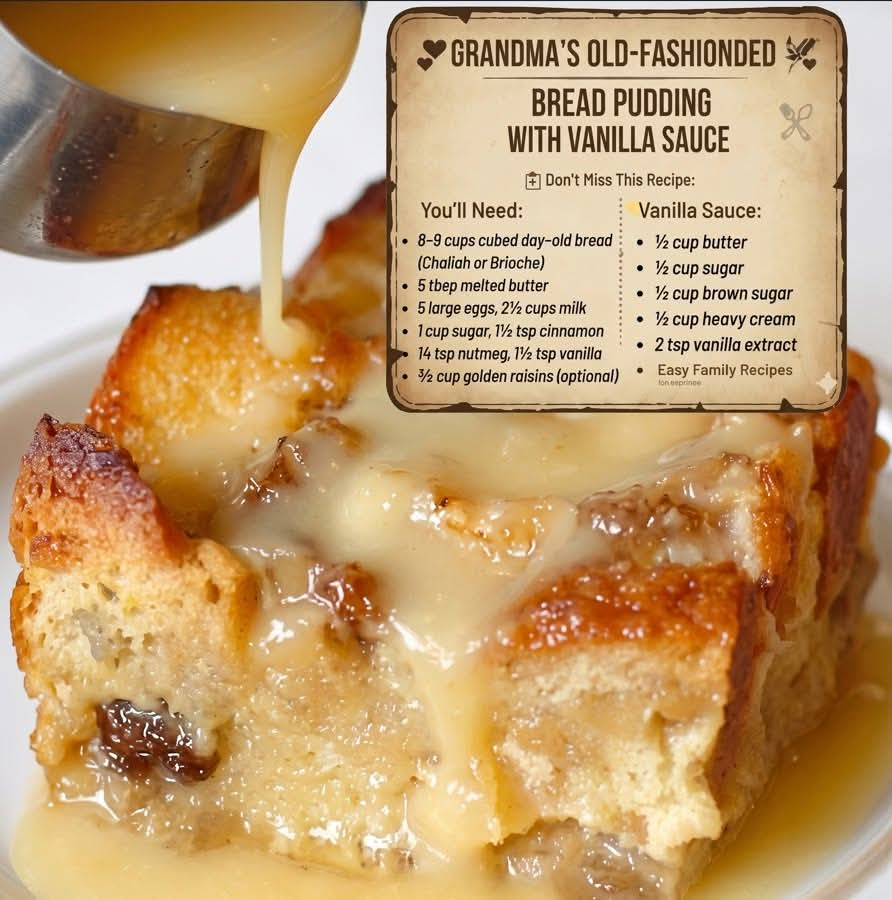
Bread Pudding with Rich Homemade Vanilla Sauce
Introduction
There is something truly special about a warm bread pudding fresh from the oven. With its soft, custardy center, lightly golden top, sweet raisins, warm spices, and comforting vanilla aroma, this old-fashioned dessert brings the taste of home into every bite. But this is not just an ordinary bread pudding. What makes this recipe unforgettable is the rich, buttery vanilla sauce poured generously over the warm pudding, allowing every piece of bread to soak up its sweet, creamy goodness.
This Bread Pudding with Vanilla Sauce is the perfect dessert for family dinners, Sunday gatherings, holiday celebrations, or any evening when you crave something sweet and comforting. It transforms simple ingredients such as bread, milk, eggs, butter, sugar, and vanilla into a dessert that tastes wonderfully homemade.
The raisins add little bursts of sweetness, while nutmeg provides a gentle warmth that complements the creamy custard. Chopped pecans are an optional addition that brings a pleasant crunch to the soft texture. The finishing touch is a homemade vanilla sauce made with butter, granulated sugar, brown sugar, heavy cream, and vanilla extract.
Best of all, this recipe is an excellent way to use leftover bread instead of letting it go to waste. Whether served warm straight from the baking dish or reheated the following day, this classic dessert is sure to become a favorite.
Ingredients
For the Bread Pudding
- 4 cups white bread, cut into cubes, approximately 8 slices
- 1/2 cup raisins
- 2 cups milk
- 1/4 cup butter
- 1/2 cup granulated sugar
- 2 large eggs, slightly beaten
- 1 tablespoon vanilla extract
- 1/2 teaspoon ground nutmeg
- 1/2 teaspoon ground cinnamon, optional
- 1/2 cup chopped pecans, optional
- A small pinch of salt, optional
For the Homemade Vanilla Sauce
- 1/2 cup butter
- 1/2 cup granulated sugar
- 1/2 cup brown sugar, firmly packed
- 1/2 cup heavy whipping cream
- 1 tablespoon vanilla extract
The sauce ingredients create a rich, buttery topping that complements the soft bread pudding beautifully.
Instructions
Step 1: Prepare the Bread
Preheat your oven to 350°F (175°C). Lightly grease a medium-sized baking dish with butter.
Cut the white bread into small cubes, approximately one inch in size. Place the bread cubes in a large mixing bowl.
Slightly stale bread works particularly well because it absorbs the custard without becoming excessively mushy. If your bread is fresh, spread the cubes on a baking sheet and let them dry in the oven for about 5–10 minutes before assembling the pudding. Allow them to cool slightly before continuing.
Add the raisins and, if desired, the chopped pecans. Toss everything together so the fruit and nuts are distributed evenly throughout the bread.
Step 2: Prepare the Milk and Butter Mixture
Place the milk and 1/4 cup butter in a small saucepan. Heat gently over medium-low heat until the butter melts and the milk becomes warm.
Do not allow the mixture to boil. You only need enough heat to melt the butter and help the ingredients combine smoothly.
Remove the saucepan from the heat and stir in the granulated sugar until it dissolves. Allow the mixture to cool slightly before adding it to the eggs.
This step helps distribute the butter and sugar throughout the pudding, giving it a rich flavor and a tender, moist texture.
Step 3: Prepare the Custard
In a separate bowl, whisk the two eggs until the yolks and whites are fully combined.
Slowly pour a small amount of the warm milk mixture into the eggs while whisking continuously. This process gently warms the eggs and helps prevent them from scrambling.
Gradually whisk in the remaining milk mixture. Add the vanilla extract, ground nutmeg, optional cinnamon, and a small pinch of salt.
Continue whisking until the custard is smooth and evenly blended.
The vanilla provides a sweet aroma, while the nutmeg gives the pudding its traditional warm, comforting flavor.
Step 4: Combine the Bread and Custard
Pour the prepared custard evenly over the bread cubes, raisins, and pecans.
Use a large spoon to gently toss the bread so that each piece absorbs some of the liquid. Press the bread down lightly to help it soak up the custard.
Allow the mixture to rest for approximately 10–15 minutes. This resting period is important because it gives the bread time to absorb the milk, eggs, butter, and vanilla.
The bread should become moist throughout without completely losing its shape.
Step 5: Transfer to the Baking Dish
Pour the soaked bread mixture into the prepared baking dish. Spread it evenly and gently press down any pieces of bread that remain dry on top.
Make sure the raisins and pecans are distributed throughout the mixture rather than concentrated in one area.
Place the dish in the preheated oven on the center rack.
Step 6: Bake Until Golden and Set
Bake for approximately 35–45 minutes, depending on the depth of your baking dish and the type of bread used.
The top should become lightly golden, and the center should look set rather than liquid. A little softness is desirable, but the custard should not remain runny.
If the top begins browning too quickly, loosely cover the dish with foil for the remainder of the baking time.
For food safety, the center should reach 160°F (71°C) when checked with a food thermometer.
Remove the pudding from the oven and let it rest for 10 minutes before serving. This allows the custard to settle and makes the pudding easier to portion.
How to Make the Rich Vanilla Sauce
Step 1: Melt the Butter
Place the 1/2 cup butter in a small saucepan over medium-low heat.
Allow it to melt slowly, stirring occasionally. Avoid browning the butter unless you specifically want a toasted, nutty flavor.
Step 2: Add the Sugars
Add the granulated sugar and packed brown sugar to the melted butter.
Stir continuously until the sugars are well combined with the butter. The mixture may look slightly grainy at this stage, which is normal.
The granulated sugar provides sweetness, while the brown sugar adds a deeper, caramel-like flavor.
Step 3: Pour in the Cream
Slowly add the heavy whipping cream while stirring.
Continue cooking over medium-low heat until the mixture becomes smooth and begins to gently simmer. Stir frequently to prevent the sauce from sticking to the bottom of the saucepan.
Let it simmer gently for approximately 3–5 minutes, until it thickens slightly.
Avoid a vigorous boil, which can cause the sauce to reduce too quickly or become overly thick.
Step 4: Add the Vanilla
Remove the saucepan from the heat and stir in the vanilla extract.
Mix thoroughly until the sauce is smooth, glossy, and fragrant.
Allow it to cool for a few minutes before serving. The sauce will thicken slightly as it stands. If it becomes too thick, stir in a small splash of warm cream or milk until it reaches your preferred consistency.
How to Assemble and Serve
Once the bread pudding has rested, cut it into generous squares or spoon portions directly onto dessert plates.
Pour the warm vanilla sauce over each serving, allowing it to flow into the soft bread and custard. For an extra-indulgent presentation, serve additional sauce in a small jug at the table.
The contrast between the warm, tender pudding and the rich, buttery sauce makes this dessert especially satisfying.
For a more elaborate dessert, consider serving it with a scoop of vanilla ice cream, a spoonful of whipped cream, or an additional sprinkle of chopped pecans.
Methods and Techniques for Perfect Bread Pudding
Choose the Right Bread
White sandwich bread is convenient and absorbs the custard well. However, brioche, French bread, challah, or leftover dinner rolls can also work beautifully.
Slightly stale bread generally produces a better texture because it holds its shape while soaking up the custard.
Do Not Rush the Soaking Process
Allowing the bread to rest in the custard for 10–15 minutes helps the liquid penetrate the cubes. Skipping this step may leave some pieces dry while others become overly soft.
Temper the Eggs Carefully
Never add eggs directly to very hot milk. Gradually mixing a little warm liquid into the eggs first reduces the risk of scrambling and helps produce a smooth, creamy custard.
Avoid Overbaking
Overbaking can make bread pudding dry or rubbery. Start checking the center around the 35-minute mark, especially if you are using a shallow baking dish.
The pudding should be moist and tender, with a lightly browned top.
Make the Sauce Gently
Keep the sauce at a gentle simmer and stir regularly. A low, steady heat helps the butter, sugars, and cream combine into a smooth topping.
Add the vanilla after removing the pan from the heat to preserve its pleasant aroma.
Serve at the Right Temperature
Bread pudding is at its best when served warm, while the vanilla sauce is still pourable. If the pudding has cooled, gently reheat individual portions before adding the sauce.
The History of Bread Pudding
Bread pudding has a long history rooted in practical home cooking. For generations, households throughout Europe and other parts of the world have found creative ways to use leftover bread rather than throwing it away.
Older bread could be combined with milk or other available liquids, eggs, sweeteners, spices, and dried fruit to create a satisfying dish. The exact ingredients varied according to local traditions, household budgets, and the ingredients available at the time.
Over the years, bread pudding developed into many different regional variations. Some versions are lightly sweetened and served as simple baked puddings, while others include cinnamon, nutmeg, raisins, nuts, cream, or rich sauces.
In American home cooking, bread pudding became a familiar comfort dessert, particularly in Southern kitchens, where cooks often served it warm with a sweet sauce. Vanilla, butter, brown sugar, and cream became popular additions that transformed a humble dish into something suitable for family dinners and special occasions.
Today, bread pudding remains popular because it is affordable, adaptable, and easy to prepare. It is also a wonderful example of how simple ingredients can become a memorable dessert when handled with care.
Although the exact origins of this particular vanilla sauce variation are not tied to one specific historical recipe, its flavors reflect the traditional combination of butter, cream, sugar, and vanilla that has long been enjoyed with homemade desserts.
Formation and Texture: What Makes This Recipe Special?
The beauty of bread pudding comes from the way its ingredients work together during baking.
The bread absorbs the milk and egg mixture, creating a soft structure throughout the dish. As the pudding heats in the oven, the eggs set and hold the soaked bread together, producing a tender custard-like center.
The butter contributes richness, while the sugar sweetens the pudding and helps the surface develop a delicate golden color. Vanilla provides fragrance, and nutmeg introduces a gentle spice that complements the creamy ingredients.
Raisins become plump and tender as they absorb moisture during baking. Optional pecans provide a contrasting crunch that makes each bite more interesting.
The vanilla sauce adds another layer of texture and flavor. Butter gives it richness, brown sugar contributes a caramel-like note, granulated sugar balances the flavor, and heavy cream creates a smooth consistency.
When the warm sauce meets the freshly baked pudding, it coats the surface and seeps into the bread. This combination creates a dessert that is soft, moist, buttery, and wonderfully comforting.
Variations to Try
Cinnamon Raisin Bread Pudding
Increase the cinnamon slightly and use cinnamon-raisin bread instead of plain white bread. Reduce the additional raisins if you prefer a less-sweet dessert.
Pecan Bread Pudding
Add 1/2 cup chopped pecans to the bread mixture. For extra flavor, lightly toast the pecans before adding them.
Apple Bread Pudding
Add approximately one cup of peeled, diced apple. A firm baking apple works particularly well. Toss the apple pieces with a little cinnamon before mixing them into the bread.
Chocolate Chip Bread Pudding
Fold 1/2 cup chocolate chips into the bread mixture before baking. The chocolate melts into the warm custard and creates a richer dessert.
Extra-Vanilla Bread Pudding
Add a little additional vanilla to the custard or use vanilla bean paste for a more pronounced vanilla flavor.
Creamy Holiday Bread Pudding
Add a small amount of extra cinnamon and nutmeg, along with raisins and pecans. Serve with the warm vanilla sauce for a comforting dessert during holiday gatherings.
Storage and Reheating
Allow leftover bread pudding to cool, then cover it or transfer it to an airtight container. Refrigerate within two hours of baking and use within three to four days.
Store the vanilla sauce separately in a covered container in the refrigerator.
To reheat the pudding, place an individual serving in the microwave and warm it in short intervals until heated through. Alternatively, cover the baking dish with foil and reheat it in a 325°F (165°C) oven until warm.
Reheat the vanilla sauce gently in a saucepan over low heat, stirring regularly. Add a small amount of cream or milk if necessary to restore its pourable consistency.
For longer storage, the baked pudding can be frozen in suitable airtight portions for up to two months for best quality. Thaw it in the refrigerator before reheating. The sauce is best prepared fresh, although leftovers can be refrigerated and reheated gently.
Tips for Making This Recipe Ahead
If you are preparing dessert for a gathering, you can assemble the bread pudding a few hours ahead and refrigerate it before baking.
Cover the baking dish and allow the bread to absorb the custard in the refrigerator. When ready to bake, place the dish in the oven and allow additional baking time if it is still cold. Use an oven-safe dish and avoid transferring a very cold glass dish directly into a hot oven.
The vanilla sauce can also be prepared ahead and refrigerated. Reheat it slowly before serving.
For the freshest texture, bake the pudding on the day you plan to serve it and pour the sauce over each portion just before bringing it to the table.
Conclusion
Bread Pudding with Vanilla Sauce is a timeless homemade dessert that turns simple pantry ingredients into something truly special. The soft bread, creamy custard, sweet raisins, warm spices, and optional pecans create a delicious combination of flavors and textures.
What makes this recipe especially memorable is the buttery vanilla sauce. Its smooth consistency and rich sweetness complement the warm pudding, transforming every serving into a comforting treat.
Whether you prepare it for a Sunday family dinner, a holiday celebration, or a quiet evening at home, this dessert offers the kind of familiar flavor that brings people together.
It is economical, adaptable, and forgiving enough for beginner bakers, yet delicious enough to serve to guests. Once you try the combination of warm bread pudding and homemade vanilla sauce, you may find yourself making it whenever you have leftover bread and a craving for an old-fashioned dessert.
For the Lovers of Homemade Desserts
If you love classic desserts that are warm, soft, creamy, and full of homemade flavor, this bread pudding deserves a place in your recipe collection.
It is perfect for lovers of traditional family recipes, comforting baked desserts, sweet raisins, buttery sauces, and simple ingredients that create extraordinary results.
Serve it warm, add an extra spoonful of vanilla sauce, and enjoy every bite with family and friends. For an especially comforting finish, pair it with a cup of coffee, tea, or a glass of cold milk.
The best part is that this recipe does not require expensive ingredients or complicated techniques. With a few slices of bread, a simple custard, and a rich homemade sauce, you can create a dessert that feels both nostalgic and indulgent.
Keep this recipe close for the days when you want something sweet, satisfying, and made with love.