
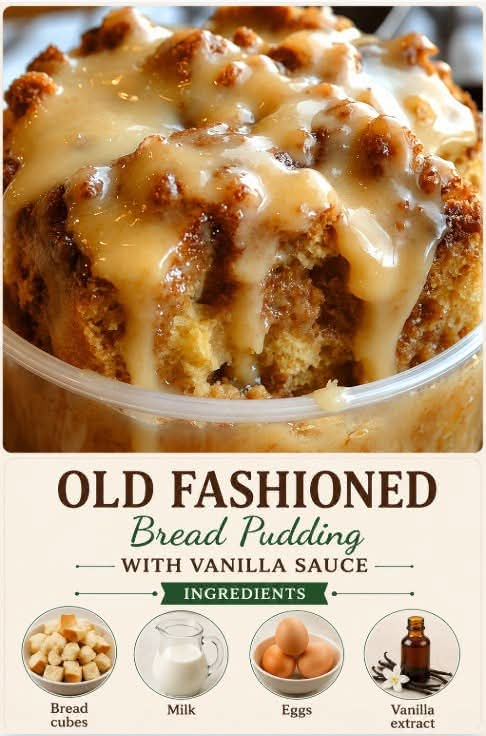
Old-Fashioned Bread Pudding with Homemade Vanilla Sauce
Introduction
There is something truly special about an old-fashioned bread pudding fresh from the oven. It is warm, soft, comforting, and filled with the simple flavors that remind us of home, family gatherings, and desserts made with love. This classic recipe transforms ordinary cubes of bread into a delicious, custard-like dessert with a lightly golden top and a tender, creamy center.
Old-fashioned bread pudding is one of those timeless desserts that proves you do not need expensive ingredients or complicated techniques to make something wonderful. With a few pantry staples, including bread, milk, eggs, sugar, and vanilla extract, you can prepare a comforting homemade treat that tastes like it came straight from a grandmother’s kitchen.
But what makes this recipe even more special is the homemade vanilla sauce. Smooth, creamy, and wonderfully fragrant, the sauce is poured over the warm bread pudding, soaking into every soft layer and creating a dessert that is rich without being overly complicated.
Whether you are preparing a Sunday family dessert, using leftover bread, celebrating a holiday, or simply craving an old-fashioned sweet treat, this bread pudding is a recipe worth keeping. Serve it warm from the oven, and watch everyone return for another spoonful.
Ingredients
For the Bread Pudding
- 6 cups day-old bread, cut into approximately 1-inch cubes
- 2 cups whole milk
- 3 large eggs
- 3/4 cup granulated sugar
- 2 tablespoons unsalted butter, melted
- 2 teaspoons pure vanilla extract
- 1 teaspoon ground cinnamon
- 1/4 teaspoon ground nutmeg
- 1/4 teaspoon salt
- 1/2 cup raisins, optional
- 1 tablespoon butter for greasing the baking dish
For the Homemade Vanilla Sauce
- 1 cup whole milk
- 1/2 cup heavy cream
- 1/3 cup granulated sugar
- 2 tablespoons unsalted butter
- 1 tablespoon cornstarch
- 2 tablespoons cold milk
- 2 teaspoons pure vanilla extract
- A small pinch of salt
Optional Toppings
- A light dusting of ground cinnamon
- A little powdered sugar
- Chopped pecans or walnuts
- A spoonful of whipped cream
- A small scoop of vanilla ice cream
- Extra raisins for garnish
Instructions
Step 1: Prepare the Oven and Baking Dish
Preheat your oven to 350°F (175°C).
Lightly grease an 8-by-8-inch or similarly sized baking dish with butter. This prevents the bread pudding from sticking and helps create delicious, buttery edges.
If your bread is fresh, spread the cubes on a baking sheet and allow them to dry in the oven for approximately 8–10 minutes. Let them cool slightly before using. Day-old or slightly stale bread is ideal because it absorbs the custard without immediately falling apart.
Step 2: Arrange the Bread
Place the bread cubes in a large mixing bowl. If you are using raisins, sprinkle them throughout the bread so they are distributed evenly.
French bread, brioche, challah, or ordinary sandwich bread can all work well. Brioche creates a richer pudding, while French bread produces a traditional texture with a slightly firmer bite.
Transfer the bread cubes to the prepared baking dish, spreading them into an even layer.
Step 3: Prepare the Custard Mixture
In a separate bowl, whisk together the eggs and granulated sugar until the mixture is smooth and slightly lighter in color.
Add the milk, melted butter, vanilla extract, cinnamon, nutmeg, and salt. Whisk until all the ingredients are thoroughly combined.
The cinnamon and nutmeg give the pudding its traditional warm flavor, while the vanilla adds sweetness and fragrance. The eggs help the mixture set into a soft, custard-like texture during baking.
Step 4: Combine the Bread and Custard
Slowly pour the custard mixture over the bread cubes, making sure to cover as much of the bread as possible.
Gently press the bread down with the back of a spoon so the cubes can absorb the liquid.
Allow the mixture to rest for 15–20 minutes before baking. This resting period is important because it allows the bread to soak up the custard, creating a moist and tender pudding instead of a dry dessert.
For particularly dry bread, allow a little extra soaking time.
Step 5: Bake the Bread Pudding
Place the baking dish in the preheated oven and bake for approximately 40–50 minutes.
The top should become lightly golden, and the center should be set rather than liquid. A knife inserted near the center should come out without raw custard clinging to it.
If the top begins browning too quickly, loosely cover the dish with aluminum foil for the remaining baking time.
Remove the pudding from the oven and let it rest for about 10 minutes before serving. This helps the custard settle and makes the pudding easier to portion.
Step 6: Begin the Vanilla Sauce
While the bread pudding is baking, prepare the vanilla sauce.
In a small saucepan, combine the milk, heavy cream, sugar, butter, and salt.
Place the saucepan over medium-low heat and stir gently until the butter melts and the sugar dissolves. Do not allow the mixture to boil vigorously.
In a separate small bowl, whisk the cornstarch with 2 tablespoons of cold milk until completely smooth.
Step 7: Thicken the Sauce
Slowly pour the cornstarch mixture into the warm milk and cream mixture, whisking constantly.
Continue cooking over medium-low heat for approximately 2–4 minutes, stirring continuously until the sauce thickens enough to coat the back of a spoon.
Remove the saucepan from the heat and stir in the vanilla extract.
If the sauce becomes thicker than you prefer, whisk in a little additional milk until it reaches your desired consistency.
Taste the sauce and adjust the sweetness if necessary. The finished sauce should be silky, creamy, and fragrant with vanilla.
Step 8: Serve the Bread Pudding
Cut the warm bread pudding into squares or spoon generous portions into individual dessert bowls.
Pour the homemade vanilla sauce over each serving, allowing it to soak into the warm bread.
For an extra-special presentation, add a light sprinkle of cinnamon or a small scoop of vanilla ice cream.
Serve immediately while the pudding is warm and the sauce is smooth and creamy.
Cooking Methods and Techniques
Traditional Oven-Baking Method
Baking is the classic method for preparing bread pudding. The oven gently cooks the egg-and-milk custard while allowing the top of the bread to become golden.
For the best results, use moderate heat and avoid overbaking. Excessive baking can make the pudding dry or rubbery instead of soft and tender.
The Bread-Soaking Method
The secret to a good bread pudding is allowing enough time for the bread to absorb the custard.
Stale bread works especially well because it has less moisture than fresh bread. It can absorb more of the milk-and-egg mixture while still maintaining its structure.
Avoid stirring the mixture too aggressively after soaking, as this may break the bread into a paste.
The Homemade Sauce Method
The vanilla sauce should be cooked slowly and stirred continuously. Adding the cornstarch slurry gradually helps prevent lumps.
For a thinner sauce, reduce the amount of cornstarch slightly. For a thicker sauce, allow it to simmer gently for a little longer, stirring constantly.
Always add the vanilla extract near the end of cooking to preserve its delicate aroma.
A Water-Bath Option
If you prefer a particularly delicate custard, you can bake the pudding in a water bath. Place the baking dish inside a larger roasting pan and carefully add hot water to the outer pan until it reaches approximately halfway up the sides of the baking dish.
Bake at 350°F (175°C), checking the pudding periodically. The water bath helps moderate the heat and can reduce the risk of overcooking the custard.
For the simplest traditional version, however, direct oven-baking works beautifully.
The History of Old-Fashioned Bread Pudding
Bread pudding has a long history rooted in resourcefulness and the desire to avoid wasting food.
For centuries, cooks throughout Europe and other parts of the world have found ways to transform leftover bread into satisfying meals and desserts. Rather than throwing away stale loaves, households soaked the bread in milk or another liquid, combined it with available ingredients, and cooked it until tender.
Over time, sweet versions became popular, particularly in British cooking, where bread pudding and related baked puddings developed into familiar household dishes.
As recipes traveled and evolved, different regions introduced their own ingredients and traditions. Some versions included dried fruit, spices, butter, or citrus zest. Others were served with custard, cream, or sweet sauces.
In the United States, bread pudding became a beloved comfort-food dessert, especially in Southern kitchens, where cooks often used simple pantry ingredients to prepare generous dishes for family meals.
Vanilla sauce became a natural companion because its creamy sweetness complements the warm spices and soft texture of the pudding.
Today, old-fashioned bread pudding remains popular because it is affordable, adaptable, and deeply comforting. It connects modern kitchens with generations of home cooks who understood that even humble ingredients could create something memorable.
The Formation and Texture of Perfect Bread Pudding
The beauty of bread pudding comes from the way its ingredients work together during baking.
The bread provides structure and absorbs the custard. The milk supplies moisture, while the eggs bind the mixture and help it set as they cook. Sugar adds sweetness and encourages the surface to brown, while butter contributes richness.
Vanilla, cinnamon, and nutmeg create the familiar aroma associated with traditional homemade desserts.
During baking, the custard gradually thickens around the bread cubes. The interior becomes soft and moist, while the exposed pieces on top develop a lightly crisp, golden surface.
The ideal bread pudding should not be watery, but it should also not be dry. Each spoonful should hold together while remaining tender enough to absorb the vanilla sauce.
The sauce adds another layer of texture. Its creamy consistency coats the pudding and settles into the spaces between the bread cubes, creating a delicious contrast between the warm baked dessert and the smooth topping.
Tips for the Best Old-Fashioned Bread Pudding
Choose the right bread. Day-old French bread, brioche, challah, or white sandwich bread can all work well. Avoid bread that is moldy or spoiled.
Cut the bread evenly. Similar-sized cubes help the pudding bake more consistently.
Let the bread soak. Give the custard time to penetrate the bread before baking.
Do not overbake. Remove the pudding once the center is set. Baking too long can make it tough and dry.
Use real vanilla extract. Pure vanilla adds a deeper aroma and a more traditional homemade flavor.
Adjust the sweetness. If your bread is already sweet, reduce the sugar slightly.
Make the sauce fresh. Warm vanilla sauce poured over freshly baked pudding gives the best texture and flavor.
Add fruit if desired. Raisins, chopped apples, or dried cranberries can provide extra sweetness and texture.
Let it rest before serving. Ten minutes of resting time helps the pudding settle without losing its warmth.
Delicious Variations to Try
Cinnamon Raisin Bread Pudding
Replace some of the plain bread with cinnamon raisin bread. Reduce the additional raisins if the bread already contains plenty of fruit.
Apple Cinnamon Bread Pudding
Add one peeled, finely diced apple and a little extra cinnamon. The apple softens during baking and provides a pleasant fruity flavor.
Pecan Bread Pudding
Stir in 1/2 cup chopped pecans before baking. The nuts add a pleasant crunch that contrasts with the soft custard.
Chocolate Chip Bread Pudding
Add 1/2 cup chocolate chips to the bread cubes before pouring over the custard. The chocolate melts slightly during baking, creating a richer dessert.
Holiday Bread Pudding
Add raisins, dried cranberries, a pinch of additional nutmeg, and a little orange zest. This variation works particularly well for Thanksgiving, Christmas, and winter family gatherings.
Rich Brioche Bread Pudding
Use brioche instead of ordinary bread for a richer, more buttery result. Because brioche is already soft and sweet, keep an eye on the soaking time and sweetness.
Serving Suggestions
Old-fashioned bread pudding is delicious on its own, but a few simple accompaniments can make it feel even more special.
- Serve warm with homemade vanilla sauce.
- Add a scoop of vanilla ice cream for a classic hot-and-cold combination.
- Pair with freshly brewed coffee or tea.
- Sprinkle with cinnamon for extra warmth.
- Add chopped toasted pecans for crunch.
- Serve as the finishing dessert after a Sunday roast or family dinner.
- Include it on a holiday dessert table alongside fruit pies and homemade cakes.
For a beautiful family-style presentation, bring the baking dish to the table while it is still slightly warm and serve the sauce separately in a small jug.
Storage and Reheating
Allow leftover bread pudding to cool, then place it in an airtight container and refrigerate within two hours of baking.
The pudding can generally be refrigerated for 3–4 days. Store the vanilla sauce separately when possible so that you can reheat each component to the desired consistency.
To reheat individual portions, microwave them in short intervals until warmed through. For larger portions, cover the baking dish and warm it in an oven set to 300°F (150°C).
If the pudding seems dry after refrigeration, add a small spoonful of milk or vanilla sauce before reheating.
The vanilla sauce can be reheated gently in a saucepan over low heat, with frequent stirring. Add a little milk if necessary to loosen it.
For longer storage, the baked pudding can be frozen in well-wrapped portions for approximately 2–3 months for best quality. Thaw in the refrigerator before reheating. The sauce is best prepared fresh, although it can also be refrigerated separately for several days.
Frequently Asked Questions
Can I make bread pudding with fresh bread?
Yes. Fresh bread works, but it may become overly soft if it absorbs too much custard too quickly. Dry the cubes in a low oven for several minutes before using them.
Why is my bread pudding soggy?
It may contain too much liquid, the bread may not have absorbed the custard evenly, or the center may need more baking time. Make sure the center is set before removing the pudding from the oven.
Why is my bread pudding dry?
Overbaking is a common cause. Using bread that is too dense without enough custard can also affect the texture. Check the pudding toward the end of the recommended baking time.
Can I prepare it ahead of time?
Yes. Assemble the bread and custard in the baking dish, cover, and refrigerate for several hours or overnight. Bake when ready, allowing the chilled mixture a little extra time in the oven if needed. Prepare the vanilla sauce separately.
Can I make it without raisins?
Absolutely. Raisins are optional, and the pudding is delicious without them.
Can I use a different sauce?
Yes. Caramel sauce, warm custard, bourbon-free butter sauce, or a simple cream sauce can all complement bread pudding. Homemade vanilla sauce remains a classic choice.
How do I know when it is done?
The top should be golden, the edges should be set, and the center should no longer look liquid. For a precise check, the center should reach at least 160°F (71°C).
Conclusion
Old-fashioned bread pudding with vanilla sauce is more than a simple dessert. It is a celebration of traditional home cooking, a reminder that wonderful food does not need complicated ingredients, and a comforting way to turn leftover bread into something the whole family can enjoy.
The soft bread, rich egg custard, gentle cinnamon flavor, and homemade vanilla sauce create a dessert that feels both familiar and special. Every serving brings together warmth, sweetness, and the simple pleasure of homemade food.
Whether you prepare it for a quiet evening at home, a Sunday dinner, or a festive family gathering, this recipe is easy to adapt to your taste and the ingredients you already have in your kitchen.
Serve it warm, pour the vanilla sauce generously over the top, and enjoy every spoonful of this timeless homemade favorite.
For the Lovers of Old-Fashioned Desserts
If you love traditional recipes, creamy custards, warm cinnamon, and desserts that remind you of childhood, this old-fashioned bread pudding deserves a place in your recipe collection.
It is perfect for anyone who appreciates simple ingredients, comforting flavors, and homemade sweets that bring people together around the table.
Make it once, share it with your family, and it may quickly become one of those recipes everyone requests again and again. The best part is that you can make it your own by adding raisins, apples, pecans, or your favorite seasonal spices.
A warm serving of bread pudding with homemade vanilla sauce is proof that some of the most memorable desserts are also the simplest.