
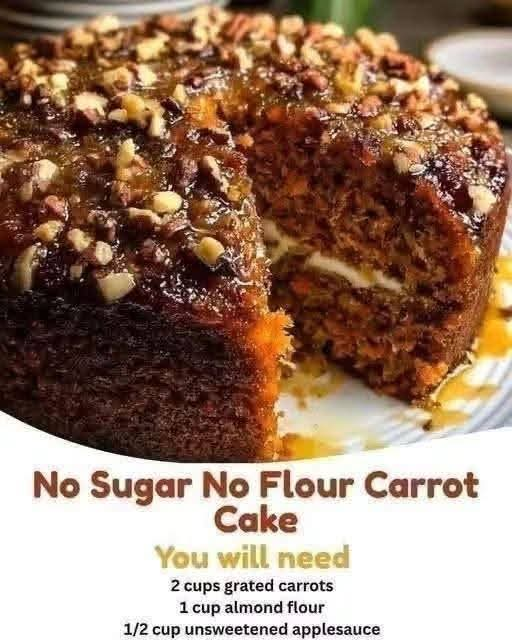
No Sugar, No Flour Carrot Cake
A Moist, Naturally Sweetened, Gluten-Free Carrot Cake
Introduction
If you love homemade carrot cake but want a recipe without refined sugar or traditional wheat flour, this No Sugar, No Flour Carrot Cake is a wonderful treat to add to your kitchen collection. Made with freshly grated carrots, almond flour, unsweetened applesauce, eggs, warm cinnamon, and vanilla, this cake is full of comforting flavors and has a soft, moist texture.
The natural sweetness of the carrots and applesauce helps make this cake delicious without adding refined sugar. Almond flour gives it a tender crumb, while coconut oil or melted butter adds richness. For extra crunch and flavor, you can also add chopped walnuts or pecans.
This simple carrot cake is perfect for breakfast, an afternoon snack, a light dessert, or a special weekend treat. It is easy to prepare, requires basic ingredients, and fills your kitchen with the wonderful aroma of cinnamon and freshly baked carrots.
Best of all, you do not need white flour or granulated sugar to make a satisfying homemade cake. Every slice brings together the natural sweetness of carrots, the warmth of spices, and the delicate nutty flavor of almond flour.
Ingredients
Preparation time: 15 minutes
Baking time: 30–40 minutes
Total time: Approximately 50–55 minutes
Servings: 8 slices
Main Ingredients
- 2 cups finely grated carrots
- 1 cup almond flour
- 1/2 cup unsweetened applesauce
- 3 large eggs
- 1/4 cup coconut oil, melted and slightly cooled, or melted butter
- 1 1/2 teaspoons ground cinnamon
- 1 teaspoon vanilla extract
- 1 teaspoon baking soda
- 1/4 teaspoon salt
- 1/2 cup chopped walnuts or pecans, optional
Optional Additions
If you want to customize your carrot cake, consider adding:
- 1/4 teaspoon ground nutmeg for extra warmth
- 1/4 teaspoon ground ginger for a gentle spicy flavor
- 2 tablespoons unsweetened shredded coconut for added texture
- A small handful of raisins for extra natural sweetness
- A pinch of orange zest for a fresh citrus aroma
These additions are optional and may change the cake’s sweetness, texture, and nutritional content.
Instructions
Step 1: Prepare the Oven and Cake Pan
Preheat your oven to 350°F (175°C).
Lightly grease an 8-inch round cake pan or line it with parchment paper. You can also use a small square baking pan if you prefer a different shape.
Preparing the pan before mixing the ingredients makes it easier to remove the cake after baking and helps prevent sticking.
Step 2: Grate the Carrots
Wash, peel, and finely grate the carrots.
Freshly grated carrots are recommended because they provide moisture and a naturally sweet flavor. Use the fine side of a box grater for a soft, evenly distributed texture.
If the carrots release a lot of liquid, gently blot away excess moisture with a paper towel. Avoid squeezing them completely dry because their moisture helps keep the cake tender.
Measure out 2 cups of grated carrots.
Step 3: Mix the Wet Ingredients
In a large mixing bowl, crack the three eggs and whisk until they are well combined.
Add the unsweetened applesauce, melted coconut oil or butter, and vanilla extract. Whisk everything together until the mixture is smooth.
The applesauce contributes moisture and a mild fruity sweetness, while the eggs help bind the ingredients together.
Make sure the melted oil or butter is not too hot before adding it to the eggs.
Step 4: Combine the Dry Ingredients
In a separate bowl, combine the almond flour, ground cinnamon, baking soda, and salt.
Stir well to distribute the cinnamon and baking soda evenly throughout the flour.
This step helps the cake bake more uniformly and prevents pockets of baking soda from forming in the finished cake.
Step 5: Make the Carrot Cake Batter
Gradually add the dry ingredients to the wet mixture.
Stir gently with a spatula or wooden spoon until everything is combined. Add the grated carrots and fold them into the batter.
If you are using chopped walnuts or pecans, add them now and mix gently.
The batter will be thicker and more textured than a traditional wheat-flour cake batter. This is normal because almond flour behaves differently from all-purpose flour.
Avoid overmixing. Stir only until the ingredients are evenly incorporated.
Step 6: Transfer the Batter to the Pan
Pour the batter into the prepared cake pan.
Use a spatula to spread it evenly, paying attention to the center and edges. Gently tap the pan on the counter once or twice to help settle the batter.
If desired, sprinkle a few chopped walnuts over the top for a simple decorative finish.
Step 7: Bake the Cake
Place the cake in the preheated oven and bake for approximately 30–40 minutes.
Because ovens and cake pans vary, begin checking the cake after 30 minutes.
The cake is ready when the center feels set, the edges are lightly golden, and a toothpick inserted into the middle comes out clean or with a few moist crumbs.
If the top browns too quickly before the center is done, loosely cover it with aluminum foil for the remaining baking time.
Step 8: Allow the Cake to Cool
Remove the cake from the oven and let it rest in the pan for about 15 minutes.
Carefully transfer it to a wire rack and allow it to cool completely before slicing.
Almond-flour cakes are delicate while warm, so cooling is important. It allows the cake to firm up and makes slicing easier.
Step 9: Serve and Enjoy
Cut the cooled cake into eight slices and serve as it is.
For a special occasion, you can add a spoonful of plain Greek yogurt or a simple cream cheese topping made without added sugar. You can also sprinkle a little cinnamon over each slice.
The result is a tender, moist carrot cake with a delicate nutty flavor and the comforting taste of homemade baking.
Cooking Methods
Traditional Oven Method
The oven method is the best choice for this recipe because it provides even heat and allows the center of the cake to cook thoroughly.
Bake at 350°F (175°C) for approximately 30–40 minutes, adjusting the time according to your pan and oven.
Muffin Method
You can turn this recipe into individual carrot cake muffins.
Divide the batter among 8–10 lined muffin cups, filling each approximately three-quarters full. Bake at 350°F (175°C) for about 18–25 minutes, checking for doneness with a toothpick.
Muffins are convenient for meal preparation, lunchboxes, and portion-controlled snacks.
Small Loaf Method
Transfer the batter to a small parchment-lined loaf pan.
Bake at 350°F (175°C), allowing approximately 35–45 minutes, depending on the pan’s dimensions. Check the center carefully before removing it from the oven.
Let the loaf cool thoroughly before slicing.
The History of Carrot Cake
Carrot cake has a long culinary history connected to the use of vegetables and naturally sweet ingredients in baking.
Before refined sugar became widely accessible and affordable, cooks in various regions used ingredients such as carrots and other naturally sweet vegetables in puddings, cakes, and desserts. Carrots were useful because their natural sugars and moisture could contribute sweetness and softness.
Modern carrot cake became especially popular during the twentieth century. Its familiar ingredients often include grated carrots, flour, eggs, oil or butter, warm spices, and sometimes nuts, raisins, or cream cheese frosting.
Today, carrot cake appears in many variations, from traditional layered celebration cakes to simple homemade loaves and muffins.
This no-sugar, no-flour version is a modern adaptation of the classic idea. It replaces conventional wheat flour with almond flour and uses unsweetened applesauce and carrots for moisture and natural sweetness.
Although the recipe differs from traditional carrot cake, it preserves the familiar flavors of carrots, cinnamon, and nuts that make this dessert so appealing.
What Makes This Carrot Cake Special?
No Refined Sugar Added
This recipe contains no added granulated sugar, brown sugar, or powdered sugar. Instead, it relies on the natural sweetness of carrots and unsweetened applesauce.
However, it is not sugar-free in the strict nutritional sense. Carrots and applesauce contain naturally occurring sugars, so the cake still contains sugar and carbohydrates.
No Wheat Flour
Almond flour replaces conventional all-purpose flour.
It gives the cake a delicate, moist texture and a pleasant nutty flavor. It also makes the recipe suitable for people avoiding wheat flour, provided that the other ingredients meet their dietary needs.
Almond flour is not suitable for anyone with an almond or tree-nut allergy.
Naturally Moist Texture
Grated carrots, applesauce, eggs, and oil or butter all contribute moisture to the batter.
These ingredients work together to create a cake that is soft without requiring a large amount of added sugar.
Warm Cinnamon Flavor
Cinnamon complements the natural sweetness of the carrots and applesauce. It gives the cake a cozy flavor that works especially well during autumn and winter, although the recipe can be enjoyed throughout the year.
Optional Nutty Crunch
Walnuts and pecans provide texture and a richer flavor. You can leave them out if you prefer a smoother cake or need to avoid nuts other than the almond flour.
Formation and Texture of the Cake
The texture of this cake depends on how its ingredients work together.
Almond flour: Provides structure, a delicate crumb, and a mild nutty taste. Unlike wheat flour, it contains no gluten, so the cake will not have the same elasticity as a traditional cake.
Eggs: Bind the ingredients and help the cake hold its shape as it bakes.
Unsweetened applesauce: Adds moisture and natural sweetness while helping keep the cake soft.
Grated carrots: Distribute moisture throughout the batter and provide the characteristic flavor of carrot cake.
Coconut oil or butter: Adds richness and improves the cake’s mouthfeel.
Baking soda: Helps the batter rise when the ingredients provide suitable acidic conditions. Applesauce contributes some acidity, but the cake may rise less than a conventional wheat-flour cake.
Cinnamon and vanilla: Create a warm, fragrant flavor that complements the carrots and almonds.
The finished cake should be moist, tender, and slightly dense compared with a traditional sponge cake. It should hold together when sliced after cooling.
Tips for the Best Results
- Use finely grated carrots. They blend more evenly into the batter and create a softer texture.
- Measure the almond flour carefully. Too much can make the cake dry and crumbly.
- Use room-temperature eggs when possible so the batter combines more smoothly.
- Choose unsweetened applesauce to avoid unnecessary added sugar.
- Let the melted coconut oil or butter cool before mixing it with the eggs.
- Do not overbake. Almond-flour cakes can become dry if left in the oven too long.
- Cool the cake completely before slicing to help it hold together.
- For a sweeter cake without refined sugar, consider adding a small amount of mashed ripe banana or a suitable sugar-free sweetener. Both options will change the flavor or texture.
- Store the cake in an airtight container in the refrigerator because of its moist ingredients.
Optional Sugar-Free Cream Cheese Topping
If you want your carrot cake to feel more like a traditional celebration cake, prepare this simple topping.
Ingredients
- 4 ounces (115 g) cream cheese, softened
- 2 tablespoons plain Greek yogurt
- 1/2 teaspoon vanilla extract
- Sugar-free powdered sweetener, to taste, optional
Instructions
- Place the softened cream cheese in a small bowl.
- Add the Greek yogurt and vanilla extract.
- Beat until smooth and creamy.
- Add the sugar-free sweetener if desired and mix again.
- Spread a thin layer over the completely cooled cake.
Keep the cake refrigerated after adding the topping.
For a strictly no-added-sugar version, choose unsweetened ingredients and check the sweetener and cream cheese labels. The finished cake will still contain naturally occurring sugars.
Serving Suggestions
This carrot cake is versatile enough for many occasions.
For breakfast: Serve a slice with plain Greek yogurt and a cup of coffee or tea.
For an afternoon snack: Enjoy a small slice on its own or with a handful of berries.
For dessert: Add the optional cream cheese topping and a few chopped walnuts.
For family gatherings: Bake the cake in a round pan and decorate it with a light dusting of cinnamon.
For meal preparation: Bake the cake in advance, cool it completely, and divide it into individual portions for convenient snacks throughout the week.
Storage Instructions
Refrigerator
Place the cooled cake in an airtight container and refrigerate for up to 4–5 days. Refrigeration is especially important if you add cream cheese topping.
Freezer
For longer storage, slice the cooled cake and wrap each piece individually. Place the wrapped slices in a freezer-safe container and freeze for up to 2–3 months for best quality.
Thaw individual slices in the refrigerator overnight or at room temperature until ready to eat.
Reheating
If you prefer a slightly warm slice, heat it briefly in the microwave. Use short intervals to prevent the cake from drying out.
Frequently Asked Questions
1. Is this carrot cake completely sugar-free?
No. It contains no added refined sugar, but carrots and applesauce naturally contain sugars. For a recipe with lower total sugar, the amount and type of applesauce can be adjusted, although this may affect moisture and texture.
2. Is this carrot cake gluten-free?
The listed ingredients contain no wheat flour, and almond flour is naturally gluten-free. If you require strict gluten avoidance, verify that all packaged ingredients are certified or labeled gluten-free and prevent cross-contact during preparation.
3. Can I replace almond flour with coconut flour?
Not in a one-to-one substitution. Coconut flour absorbs much more liquid than almond flour, so replacing it directly will likely produce a dry, crumbly cake. A different recipe designed specifically for coconut flour is recommended.
4. Can I use olive oil instead of coconut oil?
Yes. A mild-tasting olive oil can replace the coconut oil in the same quantity. It may give the cake a slightly different flavor.
5. Can I leave out the nuts?
Yes. Simply omit the walnuts or pecans. The cake will still bake successfully.
6. Why did my cake fall apart?
The cake may have been sliced while warm, underbaked in the center, or made with too much almond flour. Allow it to cool completely, measure the ingredients accurately, and confirm that the center is fully baked.
7. Can I make this recipe into cupcakes?
Yes. Divide the batter among muffin cups and bake for approximately 18–25 minutes, checking for doneness.
8. Is this cake suitable for people with diabetes?
Not automatically. Although it contains no added refined sugar, the carrots and applesauce provide carbohydrates and natural sugars, and almond flour also contributes calories and nutrients. Anyone managing blood glucose should consider the portion size and the complete nutritional content.
Conclusion
This No Sugar, No Flour Carrot Cake is a delicious alternative to traditional carrot cake for anyone who wants to bake with almond flour and avoid adding refined sugar.
With freshly grated carrots, unsweetened applesauce, eggs, cinnamon, and vanilla, it delivers a moist texture and comforting homemade flavor without complicated preparation.
Enjoy it plain for a simple snack, add chopped walnuts for crunch, or finish it with a creamy topping for a more indulgent dessert. You can even turn the batter into convenient muffins for busy mornings.
The best part is that this recipe uses everyday ingredients and allows you to enjoy the familiar taste of carrot cake in a different way.
For Carrot Cake Lovers
If you love carrot cake but want an option without conventional flour and added refined sugar, this recipe deserves a place in your collection.
The carrots bring natural sweetness, the cinnamon adds warmth, and the almond flour creates a tender, nutty crumb. Every slice is a reminder that homemade baking can be simple, comforting, and adaptable to different preferences.
Serve it to family, share it with friends, or prepare it ahead for a convenient treat during the week.
If you love easy homemade cakes, give this No Sugar, No Flour Carrot Cake a try and share it with someone who enjoys a naturally sweet carrot dessert.