
Best Homemade Pizza Dough and Pizza Sauce
Introduction
There is nothing quite like homemade pizza fresh from the oven, with a golden, slightly crispy crust, a soft and chewy center, rich tomato sauce, and melted cheese stretching with every slice. Making pizza from scratch may seem difficult at first, but with a few simple ingredients and the right techniques, you can prepare a delicious homemade pizza that tastes just as good as your favorite pizzeria.
This homemade pizza dough and pizza sauce recipe is perfect for family dinners, weekend cooking, parties, or a fun pizza night with friends. The dough is easy to prepare, the sauce is full of classic Italian-inspired flavors, and you can customize every pizza with your favorite toppings.
The best part is that you can prepare both the dough and the sauce in your own kitchen using affordable ingredients you may already have at home. Once you try this recipe, you may never want to buy ready-made pizza dough again.
Ingredients
For the Homemade Pizza Dough
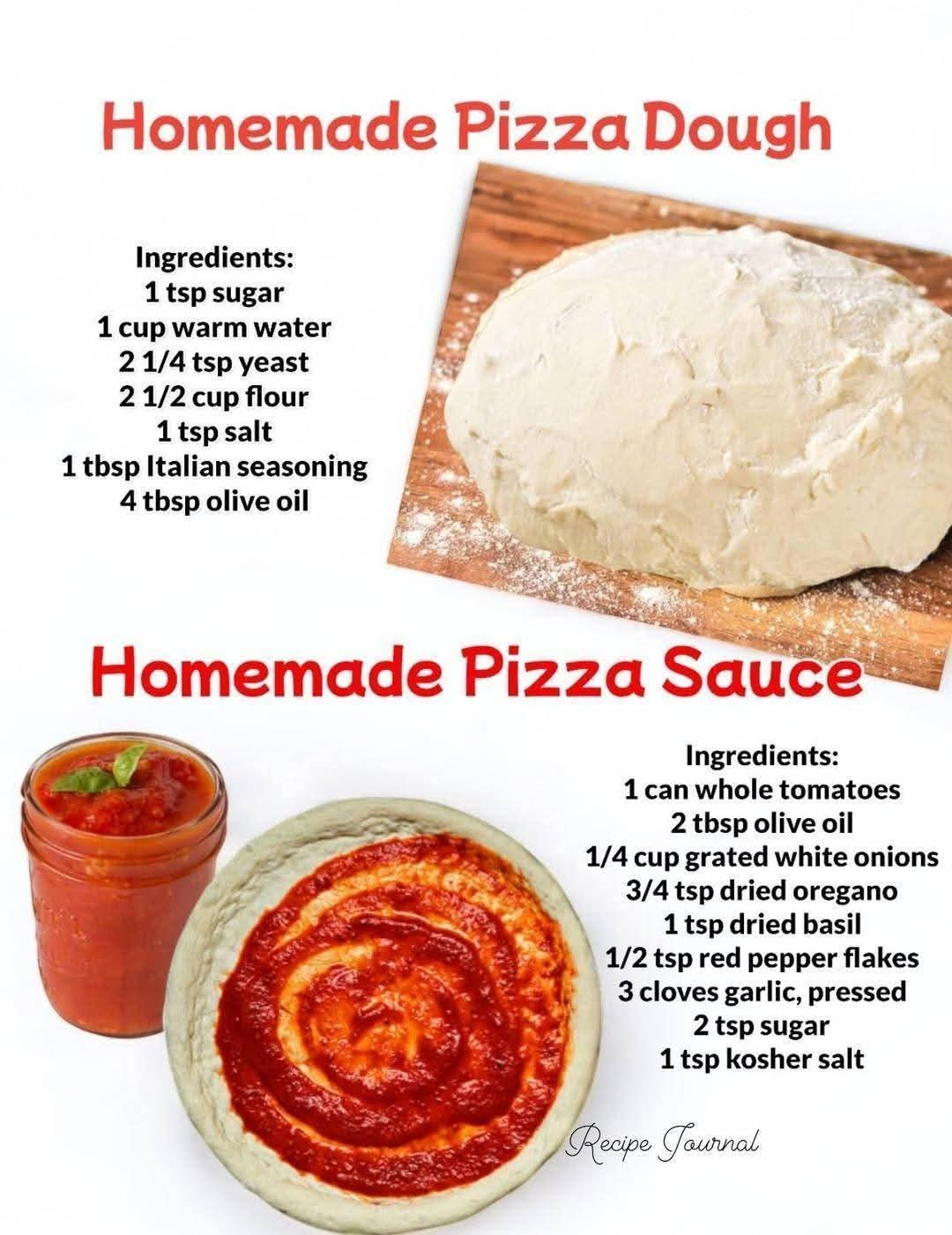
- 1 teaspoon granulated sugar
- 1 cup warm water, approximately 105–110°F (40–43°C)
- 2 1/4 teaspoons active dry yeast (one standard packet)
- 2 1/2 cups all-purpose flour, plus extra for kneading
- 1 teaspoon salt
- 1 tablespoon Italian seasoning, optional
- 4 tablespoons olive oil
For the Homemade Pizza Sauce
- 1 can (15 ounces or approximately 425 g) tomato sauce
- 2 tablespoons tomato paste
- 1 tablespoon olive oil
- 2 cloves garlic, finely minced
- 1 teaspoon dried oregano
- 1 teaspoon dried basil
- 1/2 teaspoon sugar, optional
- 1/2 teaspoon salt, or to taste
- 1/4 teaspoon black pepper
- A pinch of red pepper flakes, optional
For Assembling the Pizza
- 2 cups shredded mozzarella cheese
- 1/2 cup grated Parmesan cheese, optional
- Sliced pepperoni, optional
- Sliced mushrooms, optional
- Chopped bell peppers, optional
- Sliced onions, optional
- Black olives, optional
- Fresh basil leaves, optional
Instructions
Step 1: Activate the Yeast
Pour the warm water into a large mixing bowl. Add the sugar and stir until dissolved. Sprinkle the active dry yeast over the water and let it stand for approximately 5–10 minutes.
The mixture should become foamy or bubbly, indicating that the yeast is active. If nothing happens, the water may have been too hot or too cold, or the yeast may no longer be active.
Step 2: Mix the Dough Ingredients
Add the olive oil, salt, and optional Italian seasoning to the yeast mixture. Stir to combine.
Gradually add the flour, mixing with a wooden spoon until a rough dough begins to form. Depending on the flour and humidity, you may need a small amount of additional flour or water to achieve the right consistency.
The dough should be soft and slightly tacky, but not excessively sticky.
Step 3: Knead the Dough
Transfer the dough to a lightly floured surface. Knead for approximately 8–10 minutes, pressing the dough forward with the heel of your hand, folding it over, and turning it as you work.
Continue kneading until the dough becomes smooth, elastic, and easy to handle.
If the dough sticks excessively to your hands, add flour one tablespoon at a time. Avoid adding too much flour because it can make the finished crust dry and tough.
Step 4: Let the Dough Rise
Lightly coat a clean bowl with olive oil. Place the dough inside and turn it once so that its surface is lightly coated.
Cover the bowl with a clean kitchen towel or plastic wrap. Leave it in a warm, draft-free place for approximately 60–90 minutes, or until it has doubled in size.
The rising time will depend on the temperature of your kitchen.
Step 5: Prepare the Homemade Pizza Sauce
While the dough rises, heat one tablespoon of olive oil in a small saucepan over medium-low heat.
Add the minced garlic and cook for approximately 30–60 seconds, stirring frequently. Do not allow the garlic to burn.
Stir in the tomato sauce, tomato paste, oregano, basil, salt, black pepper, and optional sugar and red pepper flakes.
Bring the sauce to a gentle simmer, then reduce the heat to low. Cook for 10–15 minutes, stirring occasionally, until the sauce thickens slightly and the flavors combine.
Taste and adjust the seasonings as needed. Allow the sauce to cool before spreading it over the pizza dough.
Step 6: Preheat the Oven
Preheat your oven to 475°F (245°C). If you have a pizza stone or steel, place it in the oven while it heats, following the manufacturer’s instructions.
A thoroughly preheated oven helps the crust cook quickly and develop a crisp exterior.
If you do not have a pizza stone, a heavy baking sheet turned upside down can work well. Allow it to preheat, using oven mitts when handling it.
Step 7: Shape the Pizza Dough
Once the dough has doubled in size, gently press it down to release excess air.
Transfer it to a lightly floured surface and divide it into two portions if you prefer two smaller pizzas. Alternatively, keep it whole for one large pizza, depending on the size of your baking tray.
Shape the dough into a circle by gently stretching it with your hands or rolling it with a rolling pin. Aim for a thickness of approximately 1/4 inch for a thinner crust, or leave it slightly thicker for a softer, chewier pizza.
Transfer the dough to a piece of parchment paper or a lightly oiled pizza pan. If desired, brush the outer edge with a little olive oil for a golden crust.
Step 8: Add the Pizza Sauce
Spread a thin, even layer of the cooled tomato sauce over the dough, leaving approximately 1/2 inch around the edges for the crust.
Avoid adding too much sauce, as excess moisture can make the center of the pizza soggy.
You may have some sauce left over. Store it in the refrigerator for another meal or freeze it for future pizzas.
Step 9: Add Cheese and Toppings
Sprinkle the mozzarella cheese evenly over the sauce. Add Parmesan cheese if desired.
Arrange your favorite toppings over the cheese. Pepperoni, mushrooms, bell peppers, onions, olives, and cooked sausage are excellent options.
For the best results, avoid piling on too many toppings. A moderate amount allows the dough to bake properly and keeps the pizza from becoming watery.
Step 10: Bake the Pizza
Carefully transfer the pizza to the preheated oven.
Bake for approximately 10–15 minutes, depending on the thickness of the dough, the toppings, and your oven.
The pizza is ready when the crust is golden brown, the cheese is melted and bubbling, and the bottom is cooked through.
If you are baking two pizzas, bake them one at a time for the most consistent results unless your oven heats evenly on multiple racks.
Step 11: Rest, Slice, and Serve
Remove the pizza from the oven and let it rest for approximately 3–5 minutes before slicing.
Add fresh basil leaves or a light drizzle of olive oil if desired. Cut into slices and serve while warm.
Enjoy your homemade pizza with a fresh salad, roasted vegetables, garlic bread, or your favorite side dishes.
Methods for Making the Best Pizza
Method 1: The Classic Homemade Dough Method
The classic method relies on yeast fermentation and proper kneading to create a dough that is soft, stretchy, and flavorful.
Allowing the dough to rise gives the yeast time to produce gas, which creates the light texture of the crust. Kneading develops the gluten that helps the dough stretch without tearing.
For a more developed flavor, prepare the dough the day before, place it in a covered container, and refrigerate it for 12–24 hours. Bring it toward room temperature before shaping. A slower rise can improve flavor and texture.
Method 2: The Easy Weeknight Method
When you need pizza quickly, prepare the dough and sauce on the same day. Allow the dough to rise in a comfortably warm place, prepare your toppings while you wait, and preheat the oven well in advance.
This approach makes homemade pizza practical even on busy evenings.
Method 3: The Crispy-Crust Method
For a crispier crust, preheat your pizza stone or baking surface thoroughly. Keep the sauce layer thin, avoid wet toppings, and bake at a high temperature.
You can also bake the shaped dough with a thin layer of sauce for 3–4 minutes before adding cheese and toppings, particularly if your oven struggles to cook the center evenly.
Method 4: The Soft and Chewy Crust Method
For a softer, chewier crust, avoid adding too much flour during kneading. Allow the dough to rise fully and stretch it gently rather than pressing out all the air.
Use a moderate amount of sauce and cheese, and remove the pizza once the crust is cooked and golden.
The History of Homemade Pizza
Pizza has a long history connected to flatbreads topped with various ingredients in Mediterranean cultures. However, the modern pizza most people recognize today developed in Naples, Italy, where flatbreads were topped with tomatoes and other inexpensive ingredients.
During the eighteenth and nineteenth centuries, pizza became a popular food among working people in Naples. Over time, tomato sauce, cheese, and other toppings helped establish the familiar pizza style enjoyed around the world today.
Pizza spread internationally through Italian migration, particularly to the United States, where cooks developed new regional styles and countless topping combinations.
Homemade pizza became especially popular because it allows families to control the ingredients, experiment with flavors, and enjoy freshly baked food together. Today, making pizza from scratch remains a favorite kitchen activity for beginners and experienced cooks alike.
Formation: How Pizza Dough and Sauce Work Together
The secret to a delicious pizza lies in the balance between the dough, sauce, cheese, and toppings.
The yeast produces carbon dioxide during fermentation, helping the dough expand and become airy. Kneading develops gluten, giving the dough the strength and elasticity needed to hold its shape.
Olive oil contributes tenderness and flavor, while salt improves taste and helps regulate yeast activity. Sugar provides a small amount of food for the yeast and can help with browning, although it is not always necessary for yeast fermentation.
The tomato sauce provides acidity, sweetness, and savory depth. Garlic and herbs add aroma, while simmering allows the flavors to blend and removes some excess moisture.
During baking, the dough sets and browns, the cheese melts, and the toppings release their aromas. A hot oven helps these changes happen quickly, creating the delicious contrast between a crisp crust, a tender interior, and a flavorful topping.
Tips for Perfect Homemade Pizza
- Check your yeast: Use fresh yeast and warm water, not hot water.
- Measure the flour carefully: Too much flour can produce a tough crust.
- Knead thoroughly: Smooth, elastic dough is easier to stretch and shape.
- Give the dough time to rise: Rushing fermentation can result in a denser crust.
- Cool the sauce: Hot sauce can make the dough difficult to handle and may affect the cheese.
- Use less sauce rather than more: Too much moisture can leave the center undercooked.
- Preheat the oven fully: A hot baking surface helps the bottom crust brown.
- Use low-moisture mozzarella: It usually produces a less watery topping than fresh mozzarella.
- Do not overload the pizza: Too many toppings can interfere with even baking.
- Let the pizza rest briefly: A short resting period makes slicing easier.
Storage and Reheating
Storing Leftover Pizza
Allow leftover pizza to cool, then refrigerate it in an airtight container within two hours of cooking. For best quality, eat refrigerated leftovers within 3–4 days.
Reheat slices in a skillet over medium-low heat, covering briefly to melt the cheese while the bottom becomes crisp. Alternatively, use an oven at 350°F (175°C) until the pizza is heated through.
Storing Extra Dough
After the dough has risen, place it in a lightly oiled, covered container and refrigerate it for up to about 2–3 days. Allow it to warm slightly at room temperature before shaping.
For longer storage, freeze individual portions in airtight freezer bags for up to approximately 2–3 months for best quality. Thaw overnight in the refrigerator and let the dough relax before stretching.
Storing Homemade Pizza Sauce
Store cooled sauce in a sealed container in the refrigerator for up to 4 days. You can also freeze it in small portions for approximately 2–3 months for best quality.
Variations to Try
Garlic and Herb Pizza
Add a little extra garlic, oregano, basil, and olive oil to create a fragrant pizza with a classic Italian-inspired flavor.
Pepperoni and Mozzarella Pizza
Spread the homemade sauce over the dough, cover with mozzarella, and add pepperoni slices before baking.
Vegetable Lover’s Pizza
Top the dough with mushrooms, bell peppers, red onions, olives, and mozzarella. Lightly cook watery vegetables beforehand if needed.
Four-Cheese Pizza
Combine mozzarella, Parmesan, provolone, and a small amount of Gorgonzola or another flavorful cheese. Use a light hand with strong cheeses so the flavors remain balanced.
Chicken and Garlic Pizza
Add cooked chicken, mozzarella, a little garlic, and a sprinkle of Italian seasoning. You can use the tomato sauce or replace it with a thin layer of garlic-infused olive oil.
Spicy Pizza
Add red pepper flakes, sliced jalapeños, or a little spicy sausage for extra heat.
Frequently Asked Questions
Can I make the dough without Italian seasoning?
Yes. Italian seasoning is optional. The dough will still be delicious without it, and you can add herbs to the sauce instead.
Can I use instant yeast?
Yes. Instant yeast can generally be mixed directly with the flour. Use the same approximate quantity and follow the package instructions. You may not need to activate it separately.
Why is my pizza dough not rising?
The yeast may be old, the water may have been too hot or too cold, or the room may be too cool. Give the dough more time in a warm, draft-free place if the yeast is active.
Can I make the sauce without cooking it?
Yes. Mix the tomato sauce, tomato paste, garlic, herbs, salt, pepper, and olive oil together. Spread a thin layer over the dough and bake. Cooking the sauce beforehand develops a deeper flavor, but an uncooked sauce can work well too.
Can I make the pizza dough ahead of time?
Absolutely. Refrigerating the dough overnight can develop its flavor. Keep it covered and allow it to warm slightly before stretching.
Can I make this recipe without a pizza stone?
Yes. A regular pizza pan or preheated heavy baking sheet works well. Always handle hot trays carefully.
How many pizzas does this recipe make?
This recipe makes approximately one large pizza or two smaller, thinner pizzas, depending on how you divide and stretch the dough.
Conclusion
This best homemade pizza dough and pizza sauce recipe proves that delicious pizza does not require complicated ingredients or expensive equipment. With flour, yeast, warm water, olive oil, tomatoes, herbs, and your favorite toppings, you can create a satisfying homemade meal that brings everyone to the table.
The dough is soft and stretchy, the sauce is rich and flavorful, and the topping combinations are almost endless. Whether you prefer a simple cheese pizza, a classic pepperoni pizza, or a colorful vegetable pizza, this recipe gives you a reliable starting point.
Make it for a family dinner, a weekend gathering, or a cozy night at home. Once you master the basic dough and sauce, you can experiment with different cheeses, herbs, vegetables, and seasonings to create your own signature pizza.
For the Love of Homemade Pizza
Homemade pizza is more than a meal. It is an opportunity to gather in the kitchen, share favorite toppings, and create something delicious together. Children can help sprinkle the cheese, family members can choose their own toppings, and everyone can enjoy a pizza made just the way they like it.
The beauty of this recipe is its simplicity. A little patience, a few everyday ingredients, and a hot oven are all you need to turn an ordinary evening into a special occasion.
Save this recipe for your next pizza night and make it your own. Once you taste the difference between freshly prepared dough, homemade sauce, and bubbling cheese straight from the oven, homemade pizza may become a regular favorite in your kitchen.