
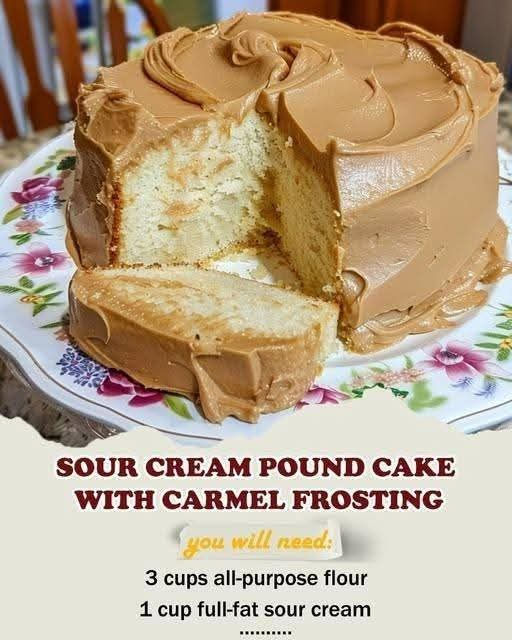
Sour Cream Pound Cake with Caramel Frosting
Introduction
There is something truly special about an old-fashioned pound cake fresh from the oven. With its rich buttery flavor, soft and tender crumb, and beautiful golden crust, Sour Cream Pound Cake with Caramel Frosting is the kind of homemade dessert that brings warmth and happiness to every gathering.
This classic cake combines simple pantry ingredients with the richness of sour cream to create a moist, dense, and velvety texture. A generous layer of homemade caramel frosting takes it to another level, adding a sweet, buttery flavor with delicious notes of brown sugar and vanilla.
Perfect for Sunday dinners, birthdays, holidays, family reunions, potlucks, or an afternoon cup of coffee, this cake is a wonderful choice whenever you want a dessert that feels both comforting and elegant. Each slice delivers the perfect balance of buttery cake and creamy caramel sweetness.
If you love traditional Southern-style desserts and homemade cakes that taste as though they came straight from Grandma’s kitchen, this Sour Cream Pound Cake with Caramel Frosting deserves a place in your recipe collection.
Ingredients
For the Sour Cream Pound Cake
- 3 cups all-purpose flour, sifted
- ½ teaspoon baking soda
- ¼ teaspoon salt
- 1 cup unsalted butter, softened to room temperature
- 3 cups granulated sugar
- 6 large eggs, at room temperature
- 1 cup sour cream, at room temperature
- 1 tablespoon pure vanilla extract
For the Homemade Caramel Frosting
- ½ cup unsalted butter
- 1 cup packed light brown sugar
- ¼ cup whole milk or heavy cream
- 2 cups powdered sugar, sifted
- 1 teaspoon pure vanilla extract
- A small pinch of salt, optional
Equipment Needed
- One 10-inch tube pan or 12-cup Bundt pan
- Electric mixer or stand mixer
- Large mixing bowls
- Measuring cups and spoons
- Fine-mesh flour sifter
- Rubber spatula
- Wire cooling rack
- Small saucepan for the caramel frosting
Instructions
Step 1: Prepare the Oven and Pan
Preheat your oven to 325°F (165°C). Generously grease and flour a 10-inch tube pan or a 12-cup Bundt pan, making sure to coat all the grooves and corners.
Properly preparing the pan helps prevent the cake from sticking and makes it easier to remove the finished cake without damaging its beautiful shape.
For extra insurance, you can use baking spray specifically designed for cakes.
Step 2: Combine the Dry Ingredients
In a medium-sized bowl, sift together the all-purpose flour, baking soda, and salt.
Sifting helps remove lumps and distributes the baking soda and salt evenly throughout the flour. Set the mixture aside while you prepare the butter and sugar.
Step 3: Cream the Butter and Sugar
Place the softened butter in a large mixing bowl. Beat it with an electric mixer on medium speed until smooth and creamy.
Gradually add the granulated sugar, continuing to beat for approximately 4–6 minutes, until the mixture becomes pale, light, and fluffy.
This step is particularly important because creaming incorporates tiny air pockets into the batter, helping the cake develop a fine, tender texture.
Scrape down the sides and bottom of the bowl as needed to ensure everything is evenly combined.
Step 4: Add the Eggs
Add the eggs one at a time, beating well after each addition.
Allow each egg to become incorporated into the mixture before adding the next. Scrape the sides of the bowl occasionally to maintain a smooth batter.
Room-temperature eggs blend more easily with the creamed butter and sugar, reducing the chance of the batter separating.
If the mixture looks slightly curdled, don’t worry. Adding the flour mixture gradually should help bring it together.
Step 5: Add the Flour and Sour Cream
Reduce the mixer speed to low.
Add approximately one-third of the flour mixture, followed by half of the sour cream. Mix until just combined.
Continue alternating the remaining flour mixture and sour cream, beginning and ending with the flour.
Mix in the vanilla extract until incorporated.
Avoid overmixing the batter. Once the ingredients are combined and no large streaks of flour remain, stop mixing. Overworking the batter can make the finished cake tougher than desired.
The batter should be thick, smooth, and creamy.
Step 6: Transfer the Batter to the Pan
Spoon the batter evenly into the prepared pan.
Use a rubber spatula to spread the batter into the corners and gently smooth the top. Tap the pan lightly on the countertop once or twice to release any large air pockets.
Place the pan on the center rack of the preheated oven.
Step 7: Bake the Pound Cake
Bake for approximately 75–95 minutes, checking toward the earlier end of the baking range.
Because ovens and pans vary, the cake may need additional time.
The cake is ready when the top is golden brown, the center springs back lightly when touched, and a long wooden skewer inserted into the thickest part comes out clean or with a few moist crumbs.
If the top browns too quickly, loosely cover it with aluminum foil during the final portion of baking.
Avoid opening the oven repeatedly, especially during the first hour, because sudden temperature changes can affect the cake’s rise.
Step 8: Cool the Cake
Remove the cake from the oven and let it rest in the pan for 15–20 minutes.
Carefully loosen the edges if necessary, then invert the cake onto a wire rack.
Allow it to cool completely before adding the caramel frosting. Frosting a warm cake can cause the topping to melt and slide off.
The cake should have a firm golden crust and a moist, tender interior.
How to Make the Caramel Frosting
Step 9: Melt the Butter and Brown Sugar
Place the butter in a medium saucepan over medium-low heat.
Once melted, add the packed brown sugar and milk or heavy cream. Stir continuously until the sugar dissolves and the mixture becomes smooth.
Bring the mixture to a gentle boil, stirring frequently. Let it bubble gently for approximately 1–2 minutes.
Do not leave the saucepan unattended, as caramel mixtures can become very hot and may scorch if cooked too aggressively.
Remove the saucepan from the heat.
Step 10: Add the Vanilla
Allow the caramel mixture to cool for about 5 minutes.
Stir in the vanilla extract and the optional pinch of salt. The salt helps balance the sweetness and enhances the buttery caramel flavor.
Gradually whisk in the sifted powdered sugar until the frosting is smooth and thick enough to spread or drizzle over the cake.
If the frosting becomes too thick, add a teaspoon of milk at a time. If it is too thin, add a little more powdered sugar.
Step 11: Frost the Pound Cake
Place the completely cooled pound cake on a serving plate or cake stand.
Pour the caramel frosting over the top, allowing it to flow naturally down the sides. Use a spatula or the back of a spoon to guide the frosting where needed.
For a thicker coating, let the first layer set slightly and then add another thin layer.
Allow the frosting to set for approximately 20–30 minutes before slicing.
The finished cake should look glossy and inviting, with caramel frosting gently draped over its golden sides.
Methods for the Best Results
The Creaming Method
The creaming method is the foundation of this recipe. Beating softened butter and granulated sugar together incorporates air and creates the structure needed for a fine-textured pound cake.
Take your time during this step instead of rushing it.
The Alternating Method
Adding the flour and sour cream in alternating portions helps the batter remain smooth and evenly mixed. It also prevents the flour from becoming overly worked, which can make the cake dense or tough.
The Slow-Baking Method
Pound cakes benefit from a moderate oven temperature. Baking at 325°F allows the center to cook gradually while the exterior develops a golden crust.
The Cooling Method
Allowing the cake to cool before frosting helps preserve its shape and keeps the caramel topping from melting excessively.
For the cleanest slices, let the frosting set before cutting with a sharp knife.
The History of Pound Cake
Pound cake has a long history dating back to European baking traditions, particularly in Britain. Early versions were traditionally made with a pound each of butter, sugar, eggs, and flour. This simple formula gave the dessert its memorable name.
Over time, bakers adapted the original recipe to suit different tastes, ingredients, and baking techniques. Smaller proportions, flavorings, and dairy products such as milk and sour cream became popular additions.
Sour cream is especially useful in modern pound cake recipes because its fat contributes richness while its acidity interacts with baking soda to help the batter rise.
In the American South, pound cakes became beloved desserts for family gatherings, church suppers, celebrations, and holiday tables. Many families developed their own treasured versions, passing recipes from one generation to the next.
Caramel frosting is another favorite in traditional American home baking. Made with butter, brown sugar, and milk or cream, it adds a rich sweetness that pairs beautifully with buttery cakes.
Although this particular combination does not belong to one single historical tradition, it brings together two classic homemade dessert styles: rich sour cream pound cake and old-fashioned caramel icing.
Formation: Understanding the Perfect Cake
The success of this dessert comes from the way its ingredients work together.
Butter provides richness, flavor, and a tender texture.
Granulated sugar sweetens the cake and helps incorporate air during creaming.
Eggs bind the ingredients together and provide structure, helping the cake hold its shape.
All-purpose flour creates the cake’s framework.
Baking soda reacts with the acidity in the sour cream, helping the cake rise.
Sour cream adds moisture, richness, and a subtle tang that balances the sweetness.
Vanilla extract enhances the buttery flavor and gives the cake a warm, inviting aroma.
The caramel frosting adds another layer of flavor and texture. Brown sugar provides its characteristic caramel notes, while butter gives it richness and milk or cream helps create a smooth consistency.
Together, these ingredients produce a cake that is substantial without being dry, sweet without being one-dimensional, and rich without needing an elaborate decoration.
Tips for a Moist and Delicious Pound Cake
- Use room-temperature butter, eggs, and sour cream for better mixing.
- Measure flour carefully. Too much flour can make the cake dry.
- Cream the butter and sugar thoroughly, but avoid overmixing after adding the flour.
- Grease every part of the Bundt or tube pan to make releasing the cake easier.
- Keep the oven temperature steady and check the cake for doneness before removing it.
- Cool the cake completely before applying the caramel frosting.
- Adjust the frosting consistency gradually rather than adding too much milk or powdered sugar at once.
- For the richest flavor, use real butter and pure vanilla extract.
Variations to Try
Brown Butter Caramel Pound Cake
Brown the butter for the frosting until it develops a nutty aroma and golden-brown flecks. Let it cool slightly before adding the brown sugar and cream. This creates a deeper, toasted flavor.
Pecan Caramel Pound Cake
Sprinkle chopped toasted pecans over the caramel frosting before it sets. The crunchy nuts add a wonderful contrast to the soft cake.
Vanilla Bean Pound Cake
Replace some or all of the vanilla extract with vanilla bean paste for a more pronounced vanilla flavor and attractive flecks throughout the cake.
Salted Caramel Pound Cake
Add a small amount of flaky sea salt over the finished frosting. The salt balances the sweetness and makes the caramel flavor stand out.
Cinnamon Caramel Pound Cake
Add ½ teaspoon of ground cinnamon to the dry ingredients for a gentle warmth that works especially well during autumn and winter.
Serving Suggestions
Sour Cream Pound Cake with Caramel Frosting is delicious served at room temperature, when the crumb is soft and the caramel topping has settled.
Serve a slice with freshly brewed coffee, black tea, or a glass of cold milk. For a more indulgent dessert, add a scoop of vanilla ice cream or a spoonful of lightly whipped cream.
Fresh strawberries, sliced apples, or lightly toasted pecans also make lovely accompaniments.
For holidays and family celebrations, arrange slices on a cake stand and finish the platter with a few pecans or a light dusting of powdered sugar around the edges.
Storage Instructions
At room temperature: Store the cake in an airtight container in a cool place for up to 2 days, provided the room is not excessively warm.
In the refrigerator: Because the frosting contains dairy, refrigerate the cake in an airtight container for up to 5 days for the best quality. Let individual slices sit at room temperature briefly before serving for a softer texture.
In the freezer: Freeze unfrosted cake portions tightly wrapped in plastic wrap and placed in a freezer-safe container for up to 3 months for best quality. Thaw overnight in the refrigerator or until fully thawed at room temperature while still wrapped. Prepare fresh caramel frosting before serving for the best finish.
Frequently Asked Questions
Why did my pound cake turn out dry?
The most common causes are too much flour, overbaking, or overmixing after the flour is added. Measure carefully and begin checking for doneness near the lower end of the baking time.
Can I make this cake a day ahead?
Yes. The cake can be baked one day ahead and stored in an airtight container after cooling. You can prepare the frosting on the day of serving for the freshest appearance.
Can I use a Bundt pan?
Yes. A 12-cup Bundt pan is suitable, provided it is properly greased and floured. Do not fill the pan more than about two-thirds to three-quarters full; if you have extra batter, bake it separately in a small pan.
How do I fix caramel frosting that becomes too hard?
Gently rewarm it over very low heat and stir in a small amount of milk or cream until it becomes spreadable again. Let it cool slightly before using.
How do I fix frosting that is too runny?
Allow it to cool a little longer or whisk in additional sifted powdered sugar, a tablespoon at a time, until it reaches the desired consistency.
Can I make the cake without an electric mixer?
Yes, although it takes more effort. Use a sturdy whisk or wooden spoon to cream the butter and sugar thoroughly, then mix the remaining ingredients carefully. A stand mixer or hand mixer makes the process easier.
Conclusion
Sour Cream Pound Cake with Caramel Frosting is a beautiful example of how simple ingredients can create an unforgettable homemade dessert. The rich butter, creamy sour cream, delicate vanilla flavor, and sweet caramel topping come together in a cake that feels comforting, generous, and timeless.
Whether you bake it for a birthday, a holiday dinner, a weekend family gathering, or simply because you are craving something homemade, this cake is sure to make the occasion feel special.
Take your time with the creaming process, bake the cake until perfectly done, and allow the caramel frosting to settle before serving. The result is a delicious dessert with a golden exterior, a tender interior, and a rich caramel finish.
For the Pound Cake Lovers
If you love old-fashioned pound cakes, buttery homemade desserts, and caramel frosting made from scratch, this recipe is worth saving. It is the kind of cake that looks beautiful on the table, tastes wonderful with a cup of coffee, and makes ordinary moments feel like celebrations.
Bake it for the people you love, share a slice with a friend, or keep a piece for yourself to enjoy later. Sometimes, the best desserts are not the most complicated ones but the familiar recipes that bring everyone back for another slice.
This Sour Cream Pound Cake with Caramel Frosting is a sweet reminder that homemade baking never goes out of style.