
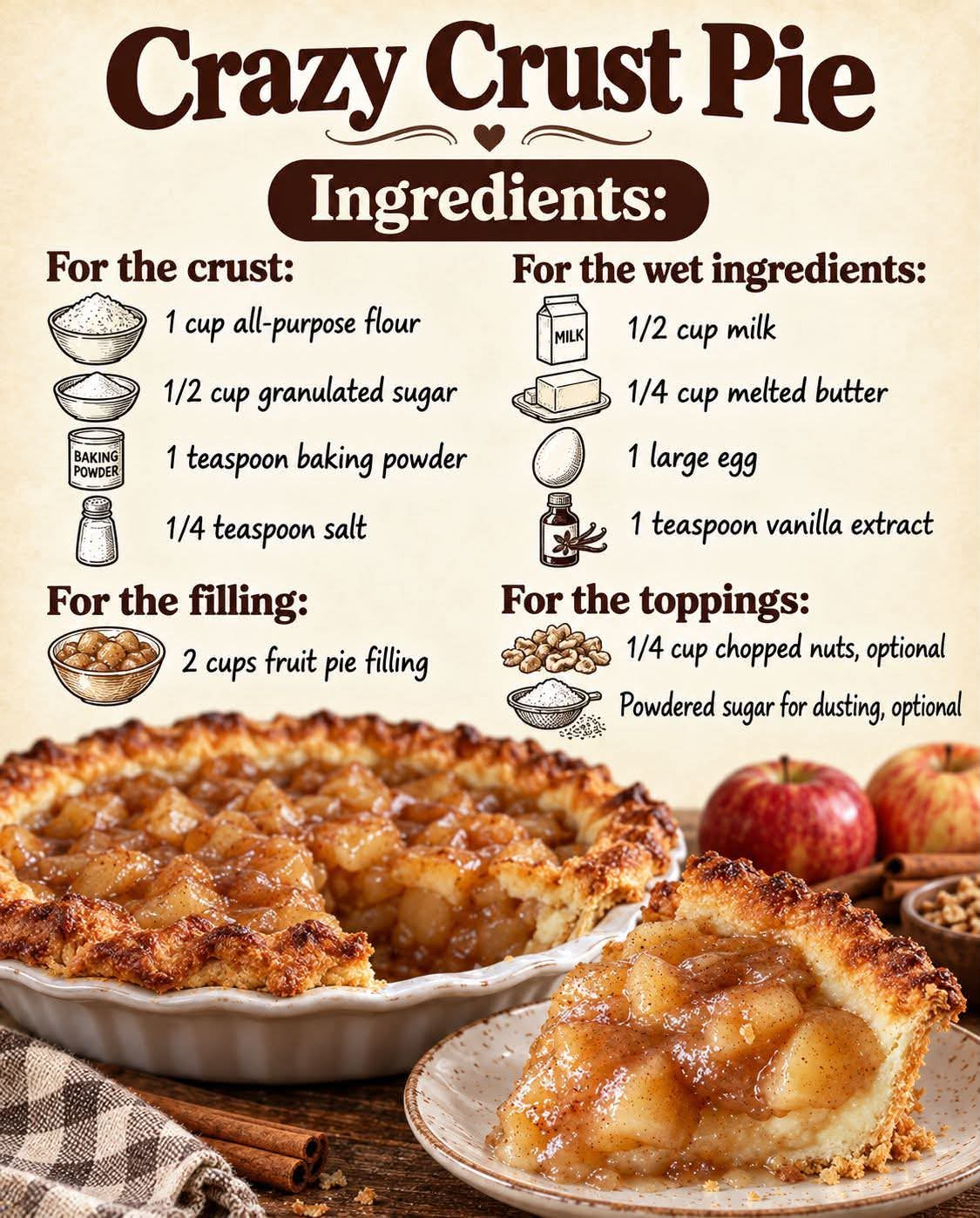
Crazy Crust Pie — The Old-Fashioned Homemade Dessert That Tastes Like Grandma’s Kitchen

Introduction
Some recipes are more than desserts. They bring back memories of childhood kitchens, family gatherings, and the wonderful things our mothers and grandmothers made without measuring every ingredient or writing anything down. Crazy Crust Pie is one of those old-fashioned treasures.
If your mom made a pie she called Crazy Crust Pie, you may remember its unusual crust, sweet fruit filling, and comforting homemade flavor. Unlike traditional pies that require rolling out a separate pastry crust, this clever recipe uses a simple batter that bakes around the fruit filling to create a golden, tender crust.
The beauty of Crazy Crust Pie is its simplicity. You don’t need special baking equipment, complicated techniques, or hours of preparation. With a handful of everyday ingredients and your favorite pie filling, you can create a nostalgic dessert that tastes as though it came straight from a family recipe box.
This version uses cherry pie filling, but you can easily substitute apple, peach, blueberry, or another favorite fruit. It is an excellent recipe to keep on hand whenever you want a homemade dessert without the work of making traditional pie pastry.
Ingredients
Preparation: 15 minutes · Baking: 40–50 minutes · Servings: 8

For the crust batter:
- 1 cup all-purpose flour
- 1 cup granulated sugar
- 1 teaspoon baking powder
- 1/4 teaspoon salt
- 1/2 cup unsalted butter, softened
- 2 large eggs
- 1 teaspoon vanilla extract
- 2 tablespoons milk, if needed to loosen the batter
For the filling:
- 1 can (21 ounces) cherry pie filling
- 1/2 teaspoon ground cinnamon, optional for a warmer flavor
- 1 teaspoon lemon juice, optional to balance the sweetness
For finishing:
- 1 tablespoon granulated sugar, optional
- Powdered sugar for dusting, optional
- Vanilla ice cream or whipped cream for serving, optional
Important note: Crazy Crust Pie has several family and regional variations. This recipe is a simple batter-style version inspired by the traditional idea of a crust that forms during baking. Your mother’s original recipe may have used different proportions or a different filling.
Instructions


Step 1: Prepare the oven and pie dish
Preheat your oven to 350°F (175°C).
Lightly grease a 9-inch deep pie dish or an appropriately sized baking dish with butter. Make sure the bottom and sides are coated to help prevent sticking.
Place the dish aside while you prepare the batter.
Step 2: Combine the dry ingredients
In a medium mixing bowl, whisk together the flour, sugar, baking powder, and salt.
Mix thoroughly so the baking powder is distributed evenly throughout the flour. This helps the batter rise and develop a soft, tender texture as it bakes.
Step 3: Prepare the butter mixture
In a separate bowl, beat the softened butter until creamy.
Add the eggs one at a time, mixing after each addition. Stir in the vanilla extract until the mixture is smooth.
Gradually add the dry ingredients to the butter mixture, stirring until a thick batter forms. If the batter is unusually stiff, add the milk a little at a time.
The batter should be thick enough to spoon into the baking dish rather than run like pancake batter.
Step 4: Add the fruit filling
Spoon the cherry pie filling into the prepared dish and spread it evenly.
If desired, stir the filling with the optional lemon juice and cinnamon before adding it to the dish. The lemon juice adds brightness, while cinnamon gives the dessert a cozy, old-fashioned flavor.
Step 5: Add the crazy crust batter
Spoon the batter over the fruit filling in small portions.
Spread it gently, leaving some small gaps if necessary. Depending on the particular variation, the batter may spread and rise around the fruit as it bakes.
For a more rustic appearance, don’t worry about making the surface perfectly smooth.
Step 6: Bake until golden
Place the dish in the preheated oven and bake for approximately 40–50 minutes.
The top should become golden brown, and the batter should be set in the center. Because fruit fillings vary in moisture, the exact baking time may differ.
If the top browns too quickly, loosely cover it with aluminum foil for the remaining baking time.
Insert a toothpick into a thicker section of the crust to check that the batter is cooked through. Avoid testing only the fruit-filled center, which will naturally remain moist.
Step 7: Cool before serving
Remove the pie from the oven and let it rest for at least 20–30 minutes.
This cooling time allows the filling to settle and makes serving easier. Sprinkle with powdered sugar if desired.
Serve warm with a scoop of vanilla ice cream, or enjoy a slice at room temperature with a cup of coffee or tea.
Methods for Making the Perfect Crazy Crust Pie

1. The simple batter method
This is the easiest approach for home bakers. Instead of rolling out pastry, you prepare a thick batter and spoon it over the filling. The batter bakes into a soft, golden topping.
It is ideal for anyone who wants the comfort of homemade pie without the extra work of preparing traditional pie dough.
2. The fruit-first method
Adding the fruit filling before the batter creates a lovely contrast between the sweet, juicy fruit and the tender baked crust.
Cherry filling gives the pie a bright color and sweet-tart flavor, but other fruit fillings work well too.
3. The homemade fruit method
If you prefer fresh fruit, you can make a cooked filling using chopped apples, sliced peaches, or berries.
Cook the fruit with sugar and a little cornstarch until the juices thicken. Cool the filling before assembling the pie so excess liquid does not make the batter soggy.
4. The extra-golden crust method
For a slightly crispier top, sprinkle a little granulated sugar over the batter before baking.
Bake until the surface is golden and the edges are lightly browned. Keep an eye on the final minutes so the crust doesn’t become too dark.
The History of Crazy Crust Pie
Crazy Crust Pie belongs to the tradition of resourceful home baking, when cooks developed clever ways to make comforting desserts from affordable pantry staples.
Recipes for unusual crusts, batter pies, cobblers, and self-forming desserts have appeared in many home kitchens and community cookbooks. These recipes often offered a practical alternative to making pastry from scratch.
The name “Crazy Crust” reflects the unusual way the crust is prepared compared with a conventional pie. Instead of carefully rolling pastry and fitting it into a pie plate, the baker uses a batter or dough that takes shape during baking.
There isn’t one universally documented origin or single original recipe for Crazy Crust Pie. Different families may have their own versions, passed down through handwritten cards, newspaper clippings, church cookbooks, or simply by watching a parent bake.
That is part of the charm of this dessert. One household might use cherries, another apples, and another peaches. The ingredients may change, but the idea remains the same: a simple, satisfying homemade pie that brings people together.
Formation: How Crazy Crust Pie Comes Together
The finished pie develops its texture through several baking processes.
The batter structure: Flour provides the structure, while eggs help bind the ingredients together. Baking powder releases gas as the batter heats, helping it rise.
The golden surface: Butter contributes richness and helps the crust brown. Sugar adds sweetness and encourages a golden finish.
The fruit layer: The pie filling softens and releases some moisture as it heats. Its juices mingle with the edges of the batter, creating a tender contrast between fruit and crust.
The final texture: As the pie cools, the batter firms and the filling settles. Allowing it to rest before slicing makes the dessert easier to serve.
The exact way the crust forms depends on the family recipe and the proportions of the batter. Some versions use a more traditional pastry-like dough, while others rely on a cake-style batter.
Delicious Variations to Try

1. Cherry Crazy Crust Pie
The classic sweet-tart choice. Cherry filling pairs beautifully with vanilla, and a little almond extract can add a bakery-style aroma.

2. Apple Cinnamon Crazy Crust Pie
Use apple pie filling and add cinnamon with a pinch of nutmeg. Serve warm for a flavor reminiscent of traditional autumn desserts.

3. Peach Crazy Crust Pie
Peach filling creates a fragrant, summery dessert. A little lemon zest can brighten the flavor.

4. Blueberry Crazy Crust Pie
Blueberry filling provides a rich berry flavor. Add a little lemon zest for a fresh, balanced finish.
Tips for Success
- Use room-temperature eggs and softened butter so the batter combines evenly.
- Avoid overmixing once the flour has been added; mix only until the ingredients come together.
- Choose a deep enough baking dish to accommodate the fruit and rising batter.
- If using homemade filling, thicken it before assembling the pie.
- Let the dessert cool before slicing to help the filling settle.
- Store leftovers covered in the refrigerator for up to 3–4 days, and reheat individual portions gently.
Serving Suggestions
Crazy Crust Pie is delicious on its own, but a few simple additions can make it feel extra special.
- Serve warm with vanilla ice cream.
- Add a spoonful of freshly whipped cream.
- Dust the top lightly with powdered sugar.
- Pair a slice with hot coffee or tea.
- Serve it after Sunday dinner or bring it to a family gathering.
For a nostalgic presentation, place the pie in a simple ceramic dish and serve it straight from the table, just as many families do with homemade desserts.
Frequently Asked Questions
Can I use a different pie filling?
Yes. Cherry, apple, peach, blueberry, and many other thick pie fillings can work. Adjust seasonings to complement the fruit.
Is Crazy Crust Pie the same as a cobbler?
Not exactly. Both are fruit desserts with a baked topping, but recipes for Crazy Crust Pie generally use a distinctive crust batter or dough, while cobblers can use biscuits, pastry, or cake-like toppings.
Can I make it ahead of time?
Yes. Bake it a day ahead, allow it to cool, and refrigerate it covered. Rewarm individual servings before serving if you prefer it warm.
Can I use fresh fruit instead of canned filling?
Yes, but prepare and thicken the fruit first. Fresh fruit releases varying amounts of juice, so adding it raw may produce a watery result.
Why is my crust soggy?
Excess moisture in the filling, an underbaked center, or slicing the pie before it has rested can contribute to a soggy texture. Use a thick filling and bake until the batter is set.
Conclusion
Crazy Crust Pie is a wonderful reminder that some of the best desserts come from simple ingredients and a little kitchen creativity. With its tender crust, sweet fruit filling, and easy preparation, it is a comforting alternative to a traditional pastry pie.
Whether you choose cherries, apples, peaches, or blueberries, this recipe is easy to adapt to your family’s tastes. Make it for a weekend treat, a holiday gathering, or an ordinary evening when you want something homemade.
And if your mother made Crazy Crust Pie without ever writing down the recipe, baking a version of it today can be a lovely way to reconnect with those memories. You may even create a new family tradition of your own.
For the Lovers of Old-Fashioned Desserts
This recipe is for everyone who loves the taste of home, the smell of a pie baking in the oven, and the memories attached to family recipes.
It is for those who remember standing beside their mothers in the kitchen, waiting for dessert to cool, and sneaking a taste when nobody was looking.
Sometimes, a recipe doesn’t need to be complicated to be special. It simply needs to be shared, enjoyed, and passed along.
A little piece of advice: If you remember any details about your mother’s original Crazy Crust Pie—whether she used apples, cherries, or another filling, or whether the crust was soft like cake or more like pastry—that clue may help you find a version much closer to the recipe she used to make.