
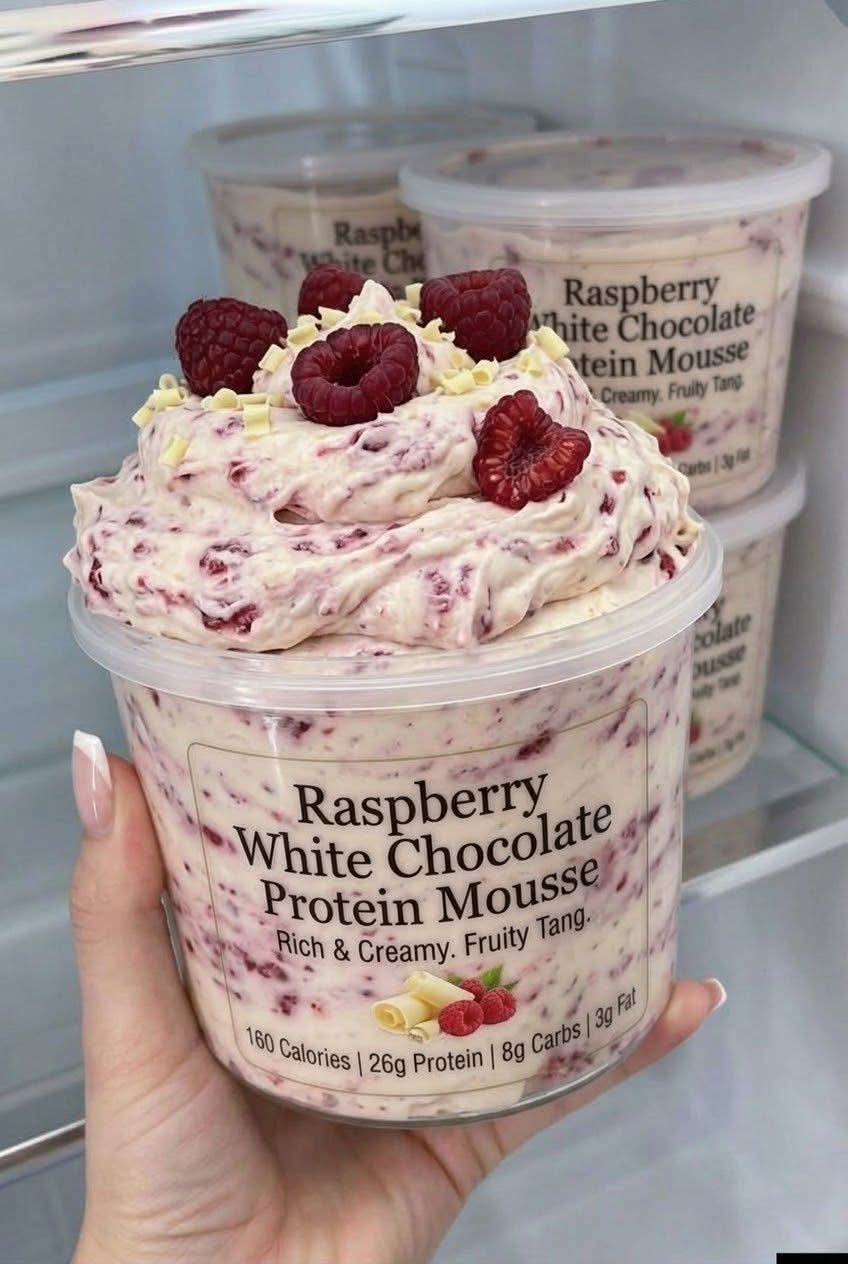
High-Protein Raspberry White Chocolate Mousse
Introduction
If you love creamy, sweet desserts but want a healthier option packed with protein, this High-Protein Raspberry White Chocolate Mousse is a recipe you need to try. It is smooth, velvety, refreshing, and full of delicious raspberry flavor, with a creamy white chocolate taste that makes every spoonful feel indulgent.
The secret to this recipe is the cottage cheese blending hack. Although cottage cheese has a naturally curdled texture, blending it thoroughly transforms it into a silky-smooth base that works beautifully in mousse-style desserts. Combined with juicy raspberries and white chocolate, it creates a creamy treat that feels like a dessert from a bakery while remaining simple enough to prepare at home.
This recipe is perfect for anyone looking for a protein-rich snack, a lighter dessert after dinner, or a sweet treat to enjoy during the week. It requires only a few ingredients, minimal preparation, and a short chilling time if you prefer a firmer mousse.
Unlike traditional mousse recipes that often rely on heavy cream and large amounts of sugar, this version uses cottage cheese to provide protein and a creamy consistency. You can also adjust the sweetness and chocolate quantity to suit your taste and nutritional goals.
Ingredients
Servings: 2 | Preparation time: 10 minutes | Chilling time: 30–60 minutes, optional
- 1 cup (225 g) cottage cheese, preferably a smooth, high-protein variety
- 1/2 cup (60–75 g) fresh or frozen raspberries
- 30 g white chocolate, melted and slightly cooled
- 1–2 tablespoons powdered sweetener or honey, to taste
- 1/2 teaspoon vanilla extract
- 1–2 tablespoons plain Greek yogurt, optional, for extra creaminess
- 1 teaspoon lemon juice, optional, to enhance the raspberry flavor
Optional toppings
- A few fresh raspberries
- 1 teaspoon white chocolate shavings
- A small amount of crushed freeze-dried raspberries
- A spoonful of plain Greek yogurt
- A light dusting of unsweetened cocoa butter or white chocolate curls
Instructions
Step 1: Prepare the raspberries
Wash the fresh raspberries gently and allow them to drain. If using frozen raspberries, thaw them first and remove excess liquid if necessary.
For a stronger raspberry flavor, lightly mash a few berries with a fork. You can also blend all the raspberries directly into the mousse for an evenly pink color.
If you prefer a completely smooth texture, strain the raspberry puree through a fine-mesh sieve to remove the seeds before adding it to the mixture.
Step 2: Melt the white chocolate
Place the white chocolate in a microwave-safe bowl. Heat it in short intervals of 15–20 seconds, stirring between each interval until smooth.
Alternatively, melt it gently in a heatproof bowl over a saucepan of barely simmering water.
Allow the chocolate to cool slightly before mixing it with the cottage cheese. It should remain melted but not be extremely hot.
This step helps prevent the chocolate from forming little solid pieces when it comes into contact with the cooler ingredients.
Step 3: Blend the cottage cheese
Add the cottage cheese to a blender or food processor.
Blend for approximately 1–2 minutes, stopping occasionally to scrape down the sides of the container. Continue blending until the cottage cheese becomes completely smooth and creamy.
This is the most important step in the recipe. Proper blending eliminates the grainy texture and creates the silky consistency that makes this mousse so enjoyable.
If your blender struggles to process the cottage cheese, add a small spoonful of Greek yogurt to help the mixture move more easily.
Step 4: Add the raspberry flavor
Add the raspberries, vanilla extract, and your preferred sweetener to the blended cottage cheese.
Blend again until the mixture is evenly combined and has a delicate pink color.
Taste the mixture before adding more sweetener. Raspberries can vary in sweetness, so you may need slightly more or less depending on whether you use fresh or frozen fruit.
If you enjoy a brighter fruit flavor, add a teaspoon of lemon juice.
Step 5: Incorporate the white chocolate
Pour the slightly cooled melted white chocolate into the raspberry mixture.
Blend briefly until everything is smooth and evenly incorporated. Avoid overmixing once the chocolate has been added.
Taste the mousse and adjust the sweetness if necessary. For a richer white chocolate flavor, you can add a little more melted chocolate, keeping in mind that this will increase the calories and fat content.
Step 6: Adjust the consistency
Check the texture of your mousse.
If it is too thick, add a teaspoon of Greek yogurt and blend briefly. If it is too thin, refrigerate it for 30–60 minutes to help it firm up.
For the best result, transfer the mousse to two small serving glasses or dessert bowls before chilling.
Step 7: Chill and decorate
Refrigerate the mousse until cold and slightly firmer.
Before serving, decorate with fresh raspberries and a few white chocolate shavings. You can also add a small spoonful of Greek yogurt for extra creaminess.
Serve chilled for the best flavor and texture.
Method
The method behind this recipe is simple: blend, flavor, combine, and chill.
The cottage cheese creates the protein-rich foundation, while the raspberries contribute natural fruit flavor and a refreshing tartness. White chocolate adds sweetness and richness, making the dessert taste more indulgent.
Blending is essential because it breaks down the cottage cheese curds and creates a smoother texture. The small amount of melted white chocolate adds body as the mousse cools, while optional Greek yogurt can help adjust the consistency.
For the smoothest results, use a high-speed blender or food processor and allow the finished mousse to chill before serving.
This is a mousse-style dessert rather than a traditional whipped mousse. It does not require egg whites or heavy cream, and its final consistency will be creamy and spoonable rather than airy.
A Brief History of Mousse and a Modern Protein Twist
The word mousse comes from French and means foam. Traditional mousse desserts became popular in French cuisine because of their light texture and ability to combine rich flavors with an airy consistency.
Classic chocolate mousse is commonly made with chocolate, eggs, and sometimes cream. Fruit mousses also became popular, using berries and other fruits to create refreshing desserts.
Modern home cooks have adapted these traditional ideas to suit different dietary preferences. Greek yogurt, cottage cheese, protein powders, and lower-calorie sweeteners are now frequently used to create desserts with more protein and less reliance on heavy cream.
This raspberry white chocolate version is a modern interpretation. It borrows the creamy character of mousse while using blended cottage cheese as its main ingredient.
Formation and Texture
The formation of this mousse depends on how the ingredients work together.
Cottage cheese: Provides protein and a thick, creamy base. Blending thoroughly creates a smooth texture.
Raspberries: Add moisture, color, natural fruit flavor, and a pleasant tartness that balances the white chocolate.
White chocolate: Contributes sweetness, cocoa butter, and richness. As it cools, it can help the mixture become firmer.
Greek yogurt: An optional addition that can soften the texture and add extra protein, depending on the brand used.
Chilling: Helps the flavors blend and allows the melted chocolate to firm up slightly.
For the best formation, make sure the melted chocolate is not too hot and blend the cottage cheese until no noticeable curds remain.
High-Protein and Macro-Friendly Tips
- Choose high-protein cottage cheese. Compare nutrition labels because protein content varies between brands.
- Use a calorie-free sweetener if desired. This can reduce added sugar compared with honey.
- Measure the white chocolate. A small amount gives plenty of flavor while helping you manage the total calories.
- Add Greek yogurt carefully. It can improve the texture and may increase the protein content.
- Avoid adding unnecessary cream. The blended cottage cheese already provides a creamy base.
- Portion before serving. Dividing the mousse into two containers makes it easier to track your portions.
Estimated nutrition per serving
The following values are estimates for half the recipe, assuming the ingredients listed above and using a low-calorie sweetener.
| Nutrient | Approximate amount |
|---|---|
| Calories | 200–250 |
| Protein | 16–20 g |
| Carbohydrates | 15–22 g |
| Fat | 7–11 g |
| Fiber | 3–4 g |
Actual nutrition will vary depending on the cottage cheese, white chocolate, sweetener, and optional Greek yogurt you use. For accurate macros, calculate the totals using the nutrition labels of your specific ingredients.
Variations to Try
1. Raspberry Cheesecake Mousse
Add a little extra vanilla and one or two tablespoons of Greek yogurt. Blend until smooth for a flavor reminiscent of raspberry cheesecake filling.
2. White Chocolate Raspberry Swirl
Reserve a tablespoon of raspberry puree before blending. Prepare the mousse as directed, then swirl the reserved puree through each serving before chilling.
3. Extra-Protein Raspberry Mousse
Use a high-protein cottage cheese and add one or two tablespoons of plain Greek yogurt. You can also add a small amount of vanilla protein powder, but reduce the sweetener if your powder is already sweetened. Add a little liquid if necessary to maintain a smooth consistency.
4. Raspberry Lemon Mousse
Add extra lemon zest and a small squeeze of lemon juice. The citrus brightens the berries and balances the sweetness of the white chocolate.
5. Frozen Raspberry Mousse Bites
Spoon the mixture into small silicone molds and freeze until firm. Allow the bites to soften for a few minutes before eating. Their texture will be firmer than refrigerated mousse.
Storage Instructions
Store the mousse in an airtight container in the refrigerator for up to 2–3 days. Keep it chilled until serving because it contains fresh dairy.
If liquid separates slightly during storage, stir gently before serving.
For the best texture and flavor, prepare the mousse a few hours before serving rather than freezing the entire batch. Freezing and thawing can change the texture of cottage cheese.
Serving Suggestions
This mousse works beautifully as a light dessert after dinner, a protein-rich afternoon snack, or a sweet addition to a meal-prep routine.
Serve it in small glass jars for an attractive presentation. Layer it with fresh raspberries and a spoonful of Greek yogurt for a parfait, or add a few white chocolate curls when serving guests.
If you are preparing it for a special occasion, chill the mousse in individual glasses and decorate just before serving to keep the toppings fresh.
Conclusion
High-Protein Raspberry White Chocolate Mousse proves that a simple dessert can be creamy, fruity, satisfying, and easy to prepare. With blended cottage cheese as its base, fresh raspberries for brightness, and white chocolate for sweetness, this recipe offers a delicious alternative to traditional heavy-cream mousse.
It is customizable, requires only a handful of ingredients, and can be adjusted to fit your preferred macros. Whether you enjoy it as a post-workout treat, a quick afternoon snack, or a lighter dessert, this recipe is a wonderful way to enjoy something sweet while adding protein to your day.
The best part is the blending hack: once you try cottage cheese blended until silky smooth, you may find yourself using it in many more dessert recipes.
For Cottage Cheese Dessert Lovers
If you love cheesecake, creamy puddings, berry desserts, and high-protein treats, this recipe deserves a place in your kitchen.
Make it with raspberries for a fresh, tangy finish, experiment with different sweeteners, or try a little extra vanilla for a richer dessert flavor.
A little sweetness, a burst of berries, and a creamy protein-rich base make this mousse a treat worth repeating.