
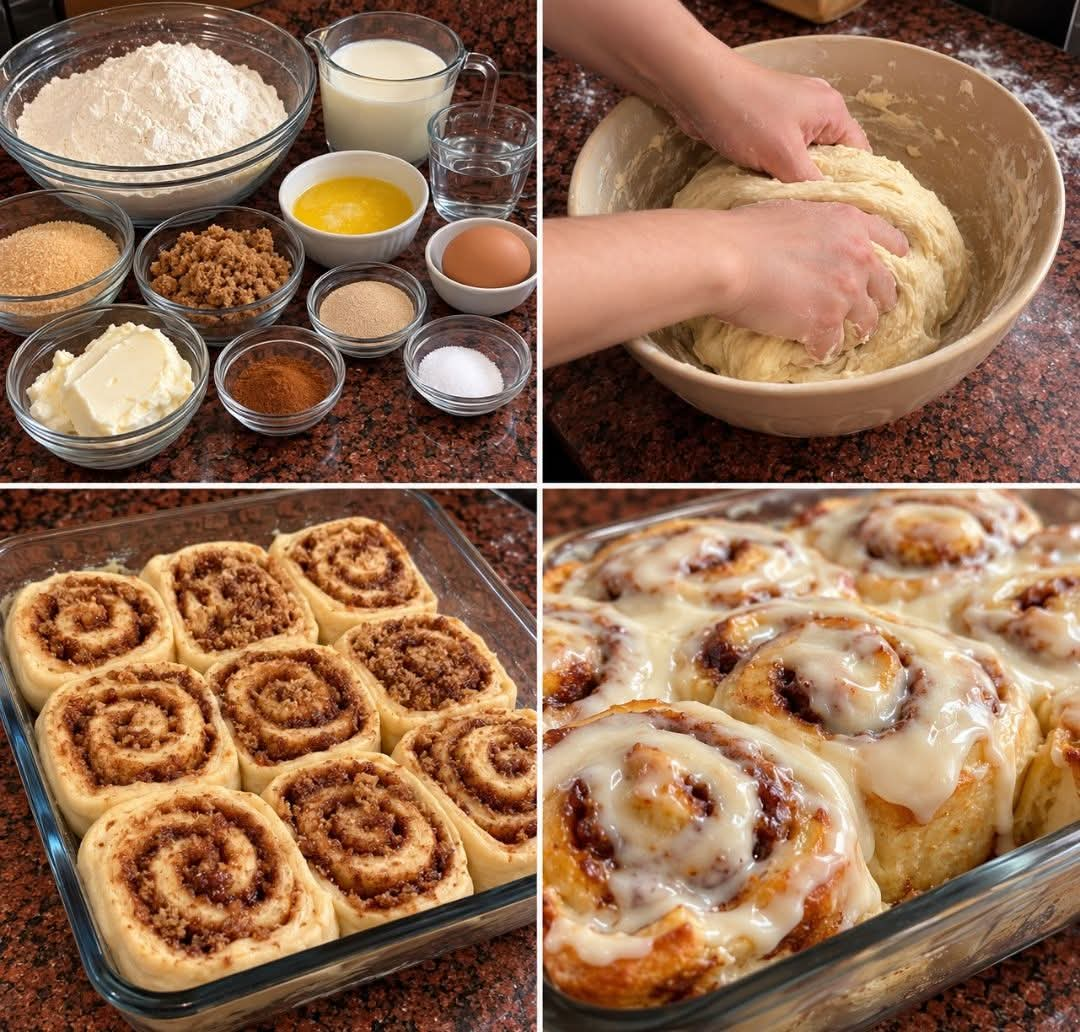
Homemade Cinnamon Rolls: Soft, Fluffy, and Sweet with Creamy Vanilla Glaze
Introduction
Homemade Cinnamon Rolls are one of the most comforting baked treats you can prepare in your own kitchen. These soft, fluffy rolls are filled with a rich mixture of butter, brown sugar, and ground cinnamon, creating beautiful swirls of sweetness in every bite. Once baked, they develop a golden-brown exterior while remaining tender and pillowy inside.
Finished with a smooth vanilla glaze or a rich cream cheese frosting, these cinnamon rolls are perfect for breakfast, brunch, afternoon coffee, holiday gatherings, or a special weekend treat. The wonderful aroma of cinnamon and freshly baked dough filling the kitchen makes this recipe feel warm, nostalgic, and welcoming.
Making cinnamon rolls from scratch may seem complicated, but the process is straightforward when you follow each step carefully. With a little patience to allow the dough to rise, you can create bakery-style cinnamon rolls that your family and friends will love.
Ingredients
This recipe makes approximately 12 cinnamon rolls.
For the dough
- 1 cup warm milk (240 ml)
- 1/4 cup water at room temperature (60 ml)
- 1/4 cup unsalted butter, melted (57 g)
- 1 large egg, at room temperature
- 3 1/2 cups all-purpose flour (approximately 420 g), plus a little extra if needed
- 1/4 cup granulated sugar (50 g)
- 2 1/4 teaspoons active dry yeast (one standard 7 g packet)
- 1 teaspoon salt
- 1 teaspoon vanilla extract, optional
For the cinnamon filling
- 1/2 cup unsalted butter, softened (113 g)
- 3/4 cup packed brown sugar (150 g)
- 2 tablespoons ground cinnamon
- 1 teaspoon vanilla extract, optional
For the vanilla glaze
- 1 cup powdered sugar (120 g)
- 2 tablespoons milk, plus more if needed
- 1/2 teaspoon vanilla extract
- 1 tablespoon melted butter, optional
Optional cream cheese frosting
- 4 ounces cream cheese, softened (113 g)
- 2 tablespoons unsalted butter, softened (28 g)
- 1 cup powdered sugar (120 g)
- 1/2 teaspoon vanilla extract
- 1–2 tablespoons milk, as needed
Instructions
Step 1: Prepare the yeast mixture
Pour the warm milk into a large mixing bowl. The milk should feel comfortably warm, not hot. Add the yeast and a teaspoon of the measured granulated sugar.
Stir gently and allow the mixture to stand for about 5–10 minutes if using active dry yeast. It should become foamy or bubbly, indicating that the yeast is active.
If using instant yeast, it can generally be mixed directly with the dry ingredients, although activating it in the milk is also an option.
Step 2: Mix the wet ingredients
Add the room-temperature water, melted butter, egg, remaining granulated sugar, and vanilla extract to the yeast mixture.
Whisk until everything is evenly combined. Make sure the melted butter has cooled slightly before adding it so that it does not cook the egg or damage the yeast.
Step 3: Make the dough
In a separate bowl, combine the flour and salt.
Gradually add the dry ingredients to the wet mixture, stirring until a soft dough begins to form. Transfer the dough to a lightly floured surface and knead for approximately 8–10 minutes by hand, or knead with a stand mixer fitted with a dough hook for 5–7 minutes.
The finished dough should be smooth, elastic, and slightly tacky. Add extra flour only a tablespoon at a time if the dough is excessively sticky. Too much flour can make the finished cinnamon rolls dry and dense.
Step 4: Allow the dough to rise
Place the dough in a lightly greased bowl and turn it once to coat the surface. Cover the bowl with a clean kitchen towel or plastic wrap.
Leave the dough in a warm, draft-free place for approximately 1–1 1/2 hours, or until it has doubled in size.
The rising time will depend on the temperature of your kitchen. Allow the dough to rise until it looks noticeably puffy rather than relying only on the clock.
Step 5: Prepare the cinnamon filling
While the dough rises, combine the brown sugar and ground cinnamon in a small bowl.
Keep the softened butter separate. It will be spread over the rolled-out dough to help the cinnamon sugar adhere and create the delicious, buttery swirls.
Step 6: Roll out the dough
Once the dough has doubled in size, gently press it to release some of the trapped air.
Transfer it to a lightly floured surface and roll it into a rectangle approximately 16 by 12 inches (40 by 30 cm).
Try to keep the thickness even throughout the rectangle so the rolls bake uniformly.
Step 7: Add the cinnamon sugar
Spread the softened butter evenly over the dough, leaving a small border along one long edge.
Sprinkle the cinnamon and brown sugar mixture over the buttered surface. Gently press the filling into the dough so that it stays in place while rolling.
For a richer flavor, make sure the filling reaches close to the edges without becoming too thick in any one area.
Step 8: Roll and slice the cinnamon rolls
Starting from one long edge, roll the dough into a tight log. Keep the roll even, but avoid squeezing it so tightly that the filling escapes.
Pinch the seam gently to seal it.
Using a sharp knife or unflavored dental floss, cut the log into 12 equal pieces. Arrange the rolls cut-side up in a greased 9-by-13-inch baking dish, leaving a little space between them for expansion.
Step 9: Let the rolls rise again
Cover the baking dish loosely and leave the rolls to rise for another 30–45 minutes, or until they look puffy and begin touching one another.
This second rise is important because it gives the rolls their soft, airy texture.
Meanwhile, preheat the oven to 350°F (175°C).
Step 10: Bake until golden
Place the baking dish on the center rack of the preheated oven.
Bake for approximately 20–25 minutes, or until the rolls are lightly golden on top and cooked through in the center. If the tops brown too quickly, cover them loosely with foil for the remaining baking time.
Avoid overbaking, as this can cause the rolls to become dry. Let them rest in the baking dish for about 5–10 minutes before adding the glaze.
Step 11: Prepare the vanilla glaze
In a small bowl, whisk together the powdered sugar, vanilla extract, and 2 tablespoons of milk.
Add the optional melted butter for a richer flavor. If the glaze is too thick, add a little more milk. If it is too thin, add a little more powdered sugar.
Drizzle the glaze over the warm cinnamon rolls, allowing it to flow into the cinnamon swirls.
Step 12: Make the optional cream cheese frosting
For a richer bakery-style finish, beat the softened cream cheese and butter together until smooth.
Add the powdered sugar and vanilla extract, then beat until creamy. Add milk gradually until the frosting reaches your preferred consistency.
Spread the frosting over the cinnamon rolls while they are still slightly warm, rather than piping hot, so it softens without completely melting away.
Methods for Perfect Cinnamon Rolls
1. The traditional kneading method
Kneading develops the gluten in the flour, allowing the dough to stretch and trap air during rising. This is what gives cinnamon rolls their soft, fluffy structure.
Knead until the dough becomes smooth and elastic. If it feels slightly sticky, lightly flour your hands rather than adding large amounts of flour to the dough.
2. The two-rise method
The first rise develops the dough’s volume and texture. The second rise allows the shaped rolls to become light and airy before baking.
Skipping either rise can result in denser rolls, so allow the dough enough time to expand.
3. The even-rolling method
Roll the dough into a uniform rectangle and distribute the filling evenly. When rolling the dough into a log, maintain gentle, consistent pressure.
For neat slices, dental floss can cut through the soft dough without flattening the spirals.
4. The soft and moist method
Do not add too much flour, and avoid baking the rolls longer than necessary. Using room-temperature eggs and properly measured ingredients also helps create a consistent dough.
Adding the glaze while the rolls are still warm allows some of the sweetness to settle into the surface.
5. The overnight preparation method
If you want freshly baked cinnamon rolls in the morning, prepare and shape them the evening before.
Arrange the rolls in the greased baking dish, cover tightly, and refrigerate overnight. The next morning, allow them to sit at room temperature until puffy, which may take approximately 45–90 minutes depending on the dough’s temperature and activity. Bake as directed.
If the rolls have already risen considerably in the refrigerator, they may need less additional rising time.
The History of Cinnamon Rolls
Cinnamon rolls have a long history rooted in European sweet bread traditions. Many countries developed their own versions of enriched dough flavored with spices, sugar, and butter.
Sweden is especially famous for kanelbullar, a traditional cinnamon bun often enjoyed with coffee. These buns are commonly flavored with cardamom and are celebrated during Sweden’s Cinnamon Bun Day on October 4.
In Northern Europe, sweet yeasted pastries became popular through the use of ingredients such as butter, milk, sugar, and imported spices. As baking traditions traveled between countries, different recipes evolved according to local ingredients and customs.
In the United States, cinnamon rolls became especially popular as large, soft pastries filled generously with cinnamon sugar and often topped with icing. American-style versions are frequently served warm for breakfast, brunch, holidays, and family gatherings.
Today, cinnamon rolls appear in countless variations, from classic homemade rolls to caramel pecan buns, apple cinnamon rolls, pumpkin-spiced versions, and cream cheese-frosted bakery favorites.
Formation: How Cinnamon Rolls Develop Their Beautiful Swirls
The distinctive spiral inside a cinnamon roll is created by spreading butter and cinnamon sugar across a sheet of dough before rolling it into a log.
As the dough is rolled, the filling becomes trapped between layers. When the log is sliced, each piece reveals a beautiful spiral pattern.
During the second rise, the yeast produces carbon dioxide, expanding the dough and making the rolls soft and airy. In the oven, the dough continues to expand before its structure sets.
The butter melts into the cinnamon sugar, creating a rich filling that becomes slightly syrupy as the rolls bake. Meanwhile, the exposed dough turns golden brown, adding a delicate contrast to the tender interior.
The final glaze adds sweetness and a smooth finish, making each roll look inviting and taste even more indulgent.
Tips for the Best Homemade Cinnamon Rolls
- Use warm, not hot, milk. Excessive heat can damage the yeast.
- Measure flour carefully. Too much flour can produce heavy rolls.
- Use softened butter for the filling. It spreads more easily than cold butter.
- Roll the dough evenly. Uniform thickness helps the rolls bake at the same rate.
- Do not rush the rising process. Properly risen dough creates a lighter texture.
- Check the center rolls. The middle of the baking dish may cook more slowly than the edges.
- Glaze at the right time. Add vanilla glaze while the rolls are warm, or use cream cheese frosting once they have cooled slightly.
- Store leftovers properly. Keep cooled rolls in an airtight container at room temperature for up to 2 days, or refrigerate them for up to 5 days. Reheat briefly before serving for the softest texture.
Serving Suggestions
Homemade cinnamon rolls are delicious on their own, but they can also be served with a variety of breakfast and dessert favorites.
- Serve warm with freshly brewed coffee or tea.
- Pair with fresh strawberries, blueberries, or sliced apples.
- Add chopped pecans or walnuts to the filling for extra crunch.
- Serve alongside scrambled eggs and fresh fruit for a weekend brunch.
- Drizzle with caramel sauce for a richer dessert.
- Add a little orange zest to the glaze for a fresh citrus flavor.
For a holiday breakfast, arrange the rolls on a large serving platter and add the glaze just before bringing them to the table.
Variations to Try
Classic brown sugar cinnamon rolls
Follow the original recipe and finish with vanilla glaze. This version highlights the comforting combination of butter, cinnamon, and brown sugar.
Cream cheese cinnamon rolls
Use the cream cheese frosting instead of the vanilla glaze. The slight tanginess of the cream cheese balances the sweetness of the filling.
Pecan cinnamon rolls
Sprinkle 1/2 cup of chopped pecans over the cinnamon sugar before rolling the dough. The nuts add a pleasant crunch and a warm, nutty flavor.
Caramel cinnamon rolls
Drizzle caramel sauce over the baked rolls or spread a little caramel in the baking dish before adding the shaped rolls. The result is a rich, sticky-sweet variation.
Apple cinnamon rolls
Add approximately 1/2 cup of finely diced apples to the filling. Pat the apples dry first to reduce excess moisture, and distribute them evenly for a fruity variation.
Storage and Reheating
Allow the cinnamon rolls to cool before storing them in an airtight container.
- Room temperature: Up to 2 days.
- Refrigerator: Up to 5 days.
- Freezer: Freeze well-wrapped rolls for up to 2–3 months for best quality.
To reheat, microwave an individual roll for approximately 15–25 seconds, checking frequently, or warm several rolls in a covered oven-safe dish at 300°F (150°C) until heated through.
For the best texture, add the glaze after reheating if you plan to freeze the rolls without frosting.
Conclusion
These homemade cinnamon rolls are a wonderful combination of soft, fluffy dough, buttery cinnamon filling, and sweet vanilla glaze. Although they require time for the dough to rise, the preparation is simple and rewarding, and the result is a batch of comforting pastries that taste fresh from a bakery.
The secret to success is using the right amount of flour, allowing the dough to rise properly, spreading the filling evenly, and removing the rolls from the oven before they become dry.
Whether you make them for a quiet breakfast, a family brunch, a holiday gathering, or an afternoon treat, these cinnamon rolls are a recipe worth keeping and sharing.
For Cinnamon Roll Lovers
If you love the smell of cinnamon, the softness of freshly baked bread, and the sweetness of homemade frosting, this recipe deserves a place in your kitchen.
There is something special about setting a warm dish of cinnamon rolls on the table and watching everyone reach for a piece. The tender layers, fragrant filling, and creamy topping make each bite feel comforting and familiar.
Save this recipe for the next time you want to bake something homemade and memorable. Once you have mastered the basic dough, you can experiment with nuts, fruit, caramel, or cream cheese frosting to create your own favorite version.
Final Method: A Quick Recipe Overview
- Activate the yeast in warm milk with a little sugar.
- Mix in the water, melted butter, egg, and remaining sugar.
- Add the flour and salt, then knead until smooth and elastic.
- Cover and let the dough double in size.
- Roll into a rectangle and spread with softened butter.
- Sprinkle with brown sugar and cinnamon.
- Roll into a log and cut into 12 pieces.
- Arrange in a greased baking dish and let rise again.
- Bake at 350°F (175°C) for 20–25 minutes, until golden and cooked through.
- Prepare the vanilla glaze or cream cheese frosting.
- Finish the warm rolls with the topping of your choice.
- Serve fresh and enjoy.
Recipe reminder: Keep this recipe handy whenever you want soft, homemade cinnamon rolls with beautiful swirls and a delicious sweet finish.