
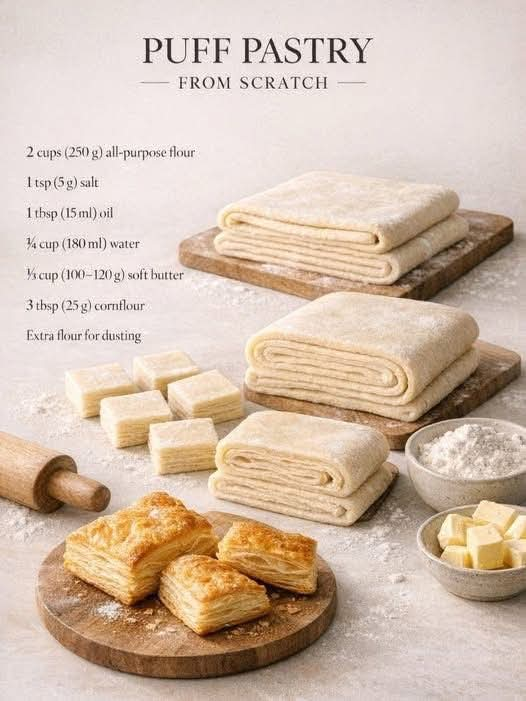
Homemade Puff Pastry From Scratch: Buttery, Flaky, and Delicious
Introduction
There is something truly special about homemade puff pastry. With its delicate, golden layers, crisp exterior, and tender, buttery center, it can transform even the simplest ingredients into something extraordinary. Whether you are preparing sweet pastries for breakfast, savory appetizers for a family gathering, or elegant desserts for a special occasion, homemade puff pastry is a wonderful recipe to keep in your kitchen.
Making puff pastry from scratch may seem difficult at first, but this simple method uses everyday ingredients such as flour, salt, water, oil, butter, and cornflour. You do not need expensive equipment or professional baking experience. With a little patience, careful folding, and enough chilling time, you can create beautiful layers that puff up in the oven.
The secret is to prepare a smooth dough, incorporate the butter properly, and fold the dough several times to create thin layers. When baked at a high temperature, the moisture in the dough turns into steam, helping separate the layers and giving the pastry its signature flaky texture.
Once you try this homemade version, you will have a versatile pastry ready for countless delicious creations.
Ingredients

For the dough
- 2 cups (250 g) all-purpose flour
- 1 teaspoon (5 g) salt
- 1 tablespoon (15 ml) oil
- ¾ cup (180 ml) water, added gradually as needed
For the butter layers
- ½ cup (100–120 g) softened butter
- 3 tablespoons (25 g) cornflour (cornstarch)
- Extra flour for dusting the work surface
Helpful note: The butter should be soft enough to spread easily but not melted or oily. The cornflour is used to help create a smooth butter mixture and reduce sticking during the layering process.
Instructions
Step 1: Prepare the dough

- Place the flour and salt in a large mixing bowl and stir to combine.
- Add the oil and gradually pour in the water while mixing.
- Mix until the ingredients begin to form a dough.
- Transfer the dough to a lightly floured surface and knead for approximately 5–8 minutes, until smooth and elastic.
- If the dough feels too dry, add a little more water. If it is very sticky, sprinkle on a small amount of flour.
- Cover the dough and allow it to rest for 20–30 minutes.
Resting helps relax the gluten, making the dough easier to roll out without shrinking.
Step 2: Prepare the butter mixture

- Place the softened butter in a small bowl.
- Add the cornflour and mix until the two ingredients form a smooth, spreadable mixture.
- Set aside while you prepare the dough.
The butter mixture should be soft and easy to spread. If it becomes runny, chill it briefly before continuing.
Step 3: Roll out the dough

- Place the rested dough on a lightly floured work surface.
- Roll it into a large rectangle, approximately 3–4 mm thick.
- Try to keep the edges straight and the thickness even.
- Brush away any excess flour from the surface.
A neat rectangle makes folding easier and helps create more uniform pastry layers.
Step 4: Spread the butter mixture
- Spread the butter and cornflour mixture evenly over the rolled dough.
- Leave a small border around the edges to prevent too much butter from squeezing out during folding.
- Make sure the butter is distributed evenly, especially near the corners.
Avoid using melted butter because it can soak into the dough instead of forming distinct layers.
Step 5: Fold the dough

- Fold one short end of the rectangle toward the center.
- Fold the opposite end over it, like folding a letter into thirds.
- Gently press the edges together to seal.
- Turn the dough 90 degrees and roll it carefully into another rectangle.
- Fold it into thirds again.
If the dough becomes sticky or the butter begins to soften too much, wrap it and refrigerate it for 20–30 minutes before continuing.
Step 6: Repeat the folding process
Repeat the rolling and folding process another 2–3 times, chilling the dough whenever it becomes difficult to handle.
Work gently and avoid pressing too hard with the rolling pin. The goal is to create many thin layers without allowing the butter to melt into the dough.
After the final fold, cover the dough and refrigerate it for at least 30–60 minutes before shaping.
Step 7: Shape your pastry

Once chilled, roll the pastry to the thickness required for your recipe.
You can cut it into:
- Squares for cheese or vegetable pastries.
- Rectangles for filled turnovers.
- Strips for twists and cheese straws.
- Circles for tartlets and small pies.
- Larger sheets for savory pies and layered desserts.
Use a sharp knife or pastry cutter, and avoid squashing the cut edges. Clean edges help the pastry rise properly.
Step 8: Bake until golden

- Preheat your oven to 200–220°C (400–425°F), depending on the shape and size of your pastry.
- Place the shaped pastry on a baking tray lined with parchment paper.
- Bake small pieces for approximately 15–25 minutes, or until well risen and golden brown.
- Larger pastries may need 25–40 minutes or longer, depending on their size and filling.
- Allow the pastry to cool slightly before serving.
Avoid opening the oven too early, as a sudden temperature drop can interfere with the pastry’s rise. Always check that the center is fully cooked, especially when baking thick or filled pastries.
Methods for Perfect Homemade Puff Pastry
1. The mixing method
The dough should be smooth, pliable, and easy to roll. Add the water gradually because flour absorbs moisture differently depending on the brand and environment.
2. The butter-layering method
The butter mixture must remain cool enough to stay between the layers. If it melts into the dough, the pastry may become dense rather than flaky.
3. The folding method
Folding creates alternating layers of dough and fat. Each fold increases the number of layers, helping produce a light and crisp pastry when baked.
4. The chilling method
Refrigeration allows the dough to relax and firms up the butter. This makes rolling easier and reduces the risk of the butter leaking during baking.
5. The baking method
A properly preheated oven helps create steam quickly, separating the layers and encouraging the pastry to rise. Bake until the pastry is deeply golden rather than removing it while it is still pale.
The History of Puff Pastry
Puff pastry has a long history in European baking, with early forms of layered pastry developing over centuries. French pastry traditions helped refine the technique of repeatedly folding dough with butter to create delicate, distinct layers.
The method became an important part of classical French patisserie, where it was used for pastries, savory pies, vol-au-vents, and elaborate desserts. Similar layered doughs also appear in many other culinary traditions, each with its own ingredients and preparation techniques.
Today, puff pastry is loved around the world because it can be used for both sweet and savory dishes. Although ready-made pastry is widely available, making it at home offers control over the ingredients, thickness, and final texture.
This homemade version is a practical approach for everyday baking, using a simple dough and a butter mixture to help produce a crisp, layered result.
Formation: How Puff Pastry Gets Its Layers
The beautiful structure of puff pastry comes from the way the dough and butter interact during baking.

1. Layer formation
Folding stacks thin sheets of dough and butter on top of one another.

2. Steam production
During baking, water in the dough turns to steam. The steam pushes apart the layers as the butter helps separate them.

3. Crisp, golden finish
As the pastry continues baking, its structure sets and moisture escapes, creating the crisp, airy texture everyone loves.
The key is to keep the butter from melting before the pastry enters the oven. Proper chilling and a hot oven make a significant difference.
Delicious Ways to Use Homemade Puff Pastry

Apple turnovers
Fill pastry squares with chopped apples, cinnamon, and a little sugar. Fold, seal, and bake until golden.

Cheese twists
Sprinkle grated cheese and herbs over the pastry, cut into strips, twist, and bake for a crisp snack.

Sausage rolls
Wrap seasoned sausage filling in strips of pastry and bake until cooked through and beautifully browned.

Fruit tarts
Top pastry rounds or rectangles with fruit and bake until crisp. Add a light glaze after baking if desired.
Expert Tips for the Best Results
- Keep everything cool: If the butter becomes greasy or starts melting, refrigerate the dough before rolling again.
- Use just enough flour: Too much flour can make the dough dry and tough.
- Do not skip resting: Resting improves the dough’s flexibility and makes the rolling process easier.
- Avoid stretching the pastry: Stretching can cause it to shrink during baking.
- Use a sharp cutter: Pressing down too firmly on the edges can seal the layers and limit their rise.
- Do not overload the filling: Excess moisture can make the bottom of the pastry soggy.
- Store properly: Wrap unused pastry tightly and refrigerate it for up to 2–3 days, or freeze it for longer storage. Thaw frozen pastry in the refrigerator before rolling.
Conclusion
Homemade puff pastry is a rewarding recipe that turns a handful of basic ingredients into something wonderfully versatile. Although it takes a little time to prepare, the process is simple once you understand the importance of rolling, folding, and chilling.
The result is a golden, flaky pastry that works beautifully in sweet desserts, savory snacks, family pies, and special-occasion dishes. You can prepare a batch ahead of time, keep it chilled or frozen, and use it whenever you need a reliable homemade pastry.
With practice, you will learn how to handle the dough confidently and achieve more consistent layers every time. There is no need to rush the process; patience is what helps create the best texture.
For Puff Pastry Lovers
If you love the smell of freshly baked pastry filling your kitchen, this recipe is worth keeping. Imagine serving warm apple turnovers with tea, crispy cheese twists as an appetizer, or golden savory pastries for a family meal. Every batch gives you another opportunity to create something delicious from scratch.
Homemade puff pastry is not just a baking technique; it is a foundation for countless recipes and a wonderful skill to share with family and friends.
Baking question: What would you make first with this homemade puff pastry: sweet apple turnovers, cheese twists, sausage rolls, or a delicious fruit tart?
Save this recipe for your next baking day and enjoy the satisfaction of making flaky pastry from scratch, without relying on store-bought dough.