
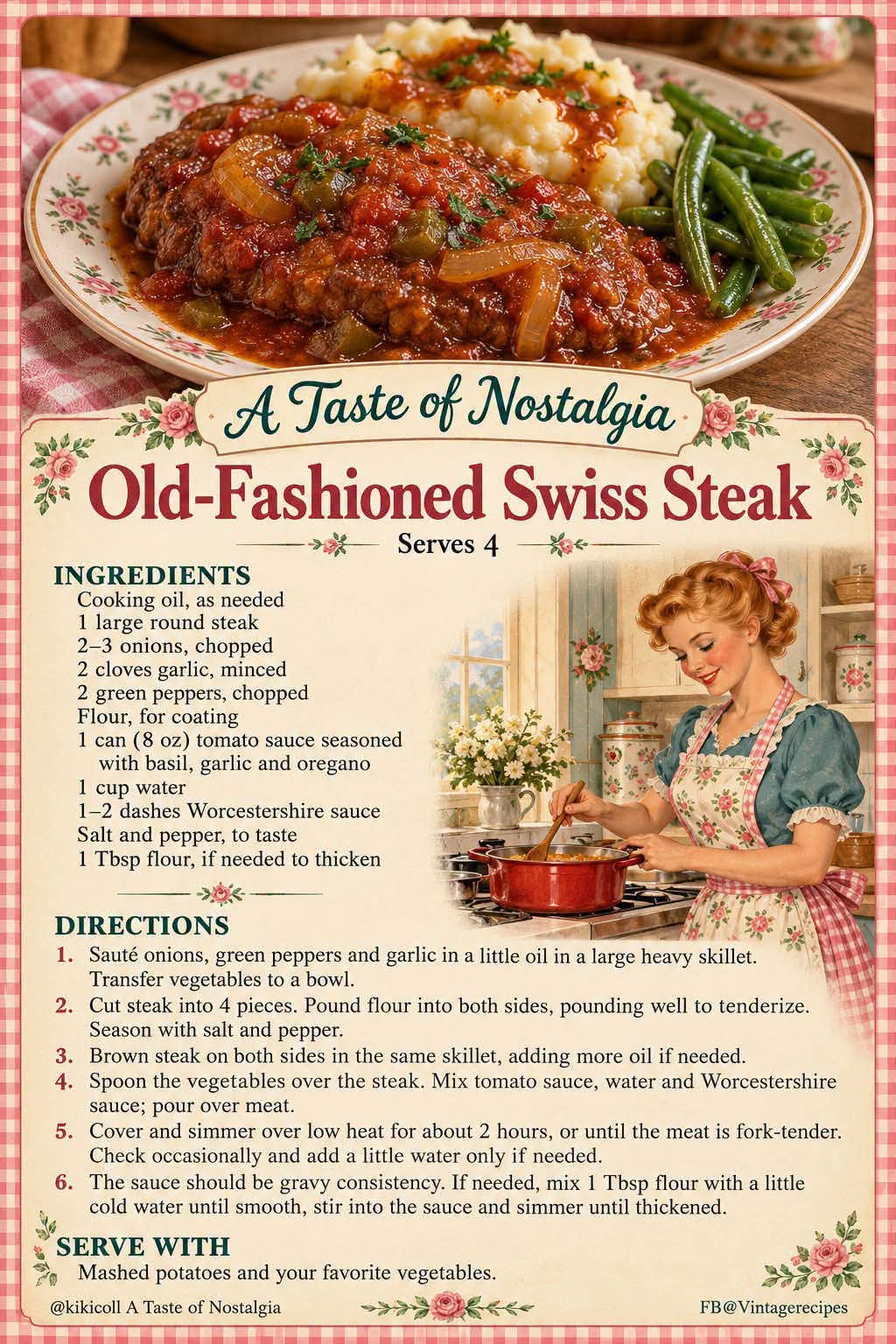
Old fashioned Swiss steak
– A Classic Homestyle Comfort Food Recipe
Introduction
Old-Fashioned Swiss Steak is one of those timeless comfort food dishes that brings warmth, flavor, and a sense of nostalgia to the dinner table. Made with tenderized beef steak slowly simmered in a rich tomato gravy with onions, bell peppers, garlic, and seasonings, this traditional recipe transforms an affordable cut of meat into a delicious, fork-tender meal.
This is the kind of dinner many families remember from childhood, when the kitchen filled with the smell of slowly cooking beef and savory gravy. It is hearty, satisfying, and perfect for Sunday dinners, chilly evenings, or any night when you want to serve something comforting and homemade.
The secret to a wonderful Swiss steak is patience. The beef is first coated in seasoned flour and browned to develop a deep, savory flavor. Then it slowly cooks in a flavorful tomato-based sauce until the meat becomes tender and the gravy thickens into a delicious sauce that is perfect for spooning over mashed potatoes, rice, or egg noodles.
Best of all, this old-fashioned recipe uses simple ingredients and straightforward cooking techniques. You do not need expensive steak or complicated equipment to create a meal your family will want to enjoy again and again.
Ingredients

Preparation time: 20 minutes
Cooking time: 1 hour 45 minutes to 2 hours 15 minutes
Total time: Approximately 2 hours 30 minutes
Servings: 4–6 people
For the steak
- 2 pounds beef round steak, cut into serving-size pieces
- 1/2 cup all-purpose flour
- 1 teaspoon salt
- 1/2 teaspoon freshly ground black pepper
- 1 teaspoon paprika
- 1/2 teaspoon garlic powder
- 3 tablespoons vegetable oil
- 1 medium yellow onion, thinly sliced
- 1 green bell pepper, sliced (optional)
- 2 cloves garlic, minced
For the tomato gravy
- 1 can (14.5 ounces) diced tomatoes, with their juices
- 1 can (8 ounces) tomato sauce
- 1 cup beef broth
- 1 tablespoon Worcestershire sauce
- 1 teaspoon brown sugar, optional, to balance the acidity
- 1/2 teaspoon dried thyme
- 1/2 teaspoon dried oregano
- 1 bay leaf
- Salt and black pepper, to taste
Optional additions
- 1 cup sliced mushrooms
- 1/2 teaspoon smoked paprika
- 1 tablespoon tomato paste for a richer flavor
- Fresh parsley for garnish
Instructions
Step 1: Prepare the beef
Place the beef round steak on a sturdy cutting board. If the steak is thick, use a meat mallet to tenderize it, working over both sides. You can also ask your butcher for cube steak or tenderized round steak.
Cut the meat into four to six pieces, depending on the size of the steak.
In a shallow bowl, combine the flour, salt, black pepper, paprika, and garlic powder. Mix thoroughly so the seasonings are evenly distributed.
Dredge each piece of beef in the seasoned flour, coating both sides. Gently shake off any excess flour and set the pieces aside.
This flour coating helps develop a flavorful brown crust and also contributes to thickening the gravy as the steak cooks.
Step 2: Brown the steak
Heat the vegetable oil in a large, heavy-bottomed skillet or Dutch oven over medium-high heat.
When the oil is hot, add the beef pieces in a single layer. Work in batches if necessary to avoid overcrowding the pan.
Brown the steak for approximately 3–4 minutes on each side, until a deep golden-brown crust forms.
The beef does not need to be fully cooked at this stage. The purpose is to develop flavor before the slow braising process.
Transfer the browned steak to a plate and set aside.
Step 3: Cook the onions and peppers
Reduce the heat to medium. Add the sliced onions and green bell peppers to the same skillet.
Cook for 5–7 minutes, stirring occasionally, until the vegetables begin to soften. Scrape up the browned bits from the bottom of the pan because they add wonderful flavor to the sauce.
Add the minced garlic and cook for another 30 seconds, just until fragrant.
If you are using mushrooms, add them now and cook until they begin to soften.
Step 4: Prepare the tomato gravy
Add the diced tomatoes, tomato sauce, beef broth, Worcestershire sauce, thyme, oregano, and optional brown sugar to the skillet.
Stir well to combine the ingredients. If you are using tomato paste, mix it into the sauce until fully incorporated.
Taste the sauce and adjust the salt and black pepper as needed.
Bring the mixture to a gentle simmer, allowing the flavors to begin blending together.
Step 5: Return the beef to the skillet
Place the browned steak pieces back into the skillet, nestling them into the tomato gravy.
Spoon some of the sauce and vegetables over the top of the meat. Add the bay leaf.
The liquid should come partway up the sides of the beef. If the pan looks too dry, add a little more beef broth.
Bring the sauce back to a gentle simmer, then reduce the heat to low.
Step 6: Cover and simmer slowly
Cover the skillet or Dutch oven with a tight-fitting lid.
Let the Swiss steak simmer gently for approximately 1 hour 45 minutes to 2 hours 15 minutes, checking occasionally to ensure the sauce is not drying out.
Turn the beef pieces carefully once or twice during cooking, and add a splash of broth if needed.
The steak is ready when it is fork-tender and easily separates under gentle pressure. If it is still tough, continue cooking and check again in 15–20 minutes.
Avoid boiling the sauce rapidly, as a gentle simmer helps the beef become tender without drying out.
Step 7: Finish the gravy
Once the beef is tender, remove the bay leaf.
If the gravy is thinner than you prefer, uncover the pan and simmer for another 5–10 minutes to reduce the sauce.
Taste and adjust the seasoning one final time.
For an extra-rich finish, spoon the gravy over each steak portion and allow the dish to rest for about 5 minutes before serving.
Step 8: Serve and enjoy
Arrange the tender steak on a serving platter or serve directly from the skillet.
Spoon plenty of tomato gravy, onions, and peppers over the beef. Sprinkle with freshly chopped parsley if desired.
Serve hot with mashed potatoes, steamed rice, buttered egg noodles, or warm crusty bread to soak up every bit of the delicious gravy.
Cooking Methods
There are several ways to prepare old-fashioned Swiss steak, depending on your schedule and preferred cooking equipment.

1. Stovetop method
This is the traditional approach. Brown the beef, prepare the gravy, cover the pan, and simmer over low heat until tender. Check the liquid occasionally and keep the sauce at a gentle simmer.

2. Oven-braised method
Preheat the oven to 325°F (165°C). Brown the steak and prepare the sauce in an oven-safe Dutch oven. Cover and bake for approximately 2–2 1/2 hours, checking occasionally until the beef is fork-tender.

3. Slow cooker method
Brown the beef and soften the vegetables first for the best flavor. Transfer everything to a slow cooker with the sauce. Cover and cook on LOW for about 7–8 hours or HIGH for about 4–5 hours, until tender. Cooking time varies with the thickness of the beef and the appliance.
The History of Old-Fashioned Swiss Steak
Swiss steak is a traditional American home-cooking dish that became popular through economical, practical cooking. It is not originally a dish from Switzerland, despite its name.
The term Swiss in this recipe is generally associated with the process called swissing, which refers to mechanically tenderizing meat by pounding or passing it through rollers. This technique helps soften tougher cuts of beef, making them suitable for slow cooking.
In earlier generations, families often purchased less expensive cuts of meat, such as round steak. Rather than relying on premium steaks, home cooks used flour, seasonings, vegetables, and slow braising to turn these cuts into tender and flavorful meals.
Tomatoes became a common part of many American Swiss steak recipes, creating the familiar tomato gravy that distinguishes this version. Some family recipes use canned tomatoes, while others call for tomato sauce, celery, green peppers, or a little beef broth.
As the recipe passed from one generation to another, cooks adapted it to suit their kitchens and families. Some prepared it in cast-iron skillets, others in covered roasting pans or Dutch ovens, and later generations embraced slow cookers for added convenience.
Today, old-fashioned Swiss steak remains a beloved example of traditional comfort food: simple ingredients, careful preparation, and slow cooking that produces a satisfying family meal.
Formation and Texture: What Makes Swiss Steak Special?
The beauty of Swiss steak lies in how its ingredients work together during cooking.
The beef: Round steak contains connective tissue that benefits from slow, moist cooking. As the meat braises, it gradually becomes tender and develops a rich, savory flavor.
The flour coating: Seasoned flour helps the beef brown beautifully. Some of the flour also combines with the cooking liquid, helping the sauce develop body.
The tomatoes: Diced tomatoes and tomato sauce provide acidity, sweetness, and a deep tomato flavor that complements the beef.
The onions and peppers: These vegetables soften during cooking, adding sweetness and a traditional homestyle flavor to the gravy.
The broth and seasonings: Beef broth, Worcestershire sauce, garlic, thyme, and paprika create a more complex sauce that tastes as though it has been cooking all day.
The slow braising process: Gentle heat and sufficient cooking time allow the beef to become tender while the flavors blend together. The finished dish should have soft, succulent steak and a thick, spoonable gravy.
The most important rule is not to rush the cooking process. If the beef is still tough, it usually needs more time rather than a higher temperature.
Tips for the Best Old-Fashioned Swiss Steak
- Choose the right cut. Round steak is a classic option. Cube steak or another braising-friendly cut can also work.
- Tenderize the beef. Pounding helps break down tough muscle fibers and improves the final texture.
- Brown in batches. Crowding the pan causes the beef to steam rather than brown.
- Use a heavy pan. A Dutch oven or thick-bottomed skillet distributes heat more evenly.
- Keep the heat low. A gentle simmer helps produce tender meat and prevents the sauce from scorching.
- Do not skip the browned bits. Scrape them into the gravy when adding the vegetables and liquid.
- Check the sauce. Add small amounts of beef broth if too much liquid evaporates during cooking.
- Make it ahead. Swiss steak often tastes even better the next day after the flavors have had more time to blend.
Best Side Dishes to Serve with Swiss Steak


Swiss steak is versatile and pairs beautifully with classic side dishes.
- Creamy mashed potatoes: Their smooth texture is perfect for soaking up the tomato gravy.
- Buttered egg noodles: A comforting option that turns the sauce into a complete meal.
- Steamed white or brown rice: Simple rice allows the rich beef and tomato flavors to shine.
- Green beans: Their fresh flavor balances the hearty steak.
- Roasted carrots: Their natural sweetness complements the savory gravy.
- Cornbread: A wonderful choice for a traditional homestyle dinner.
- Crusty bread or dinner rolls: Ideal for enjoying every last spoonful of sauce.
For a classic family-style plate, serve a piece of Swiss steak over mashed potatoes with green beans on the side.
Storage and Reheating
Refrigeration: Allow leftovers to cool slightly, then refrigerate in an airtight container within 2 hours of cooking. Store for 3–4 days.
Freezing: Place cooled steak and gravy in a freezer-safe container. Freeze for approximately 2–3 months for best quality.
Reheating: Warm gently in a covered saucepan over low heat, adding a little beef broth or water if the gravy has thickened. You can also reheat individual portions in the microwave, stirring the sauce and checking that the food is heated thoroughly.
If frozen, thaw in the refrigerator before reheating for the most even results.
Conclusion
Old-Fashioned Swiss Steak is proof that a delicious meal does not need expensive ingredients or complicated techniques. With affordable beef, a handful of vegetables, a flavorful tomato gravy, and a little patience, you can prepare a comforting dinner that feels like a treasured family tradition.
The tender beef, soft onions, savory tomato sauce, and rich gravy make this recipe especially satisfying when served over creamy mashed potatoes or warm egg noodles.
Whether you prepare it for Sunday dinner, a quiet weeknight, or a gathering around the family table, this timeless recipe brings the warmth of old-fashioned home cooking into your kitchen.
Prepare it once, and it may become one of those dependable recipes you return to whenever you want something hearty, familiar, and full of flavor.
For the Lovers of Old-Fashioned Comfort Food
If you love traditional recipes that remind you of family dinners, handwritten recipe cards, and the wonderful smells of a home-cooked meal, old-fashioned Swiss steak deserves a place in your recipe collection.
It is especially wonderful for people who appreciate tender beef, homemade gravy, simple pantry ingredients, and meals that bring everyone together around the table.
Serve it generously, share it with people you love, and enjoy the kind of satisfying comfort food that never goes out of style.
Recipe reminder: The secret to the best Swiss steak is to brown the meat well, keep the gravy flavorful, and simmer slowly until the beef is genuinely fork-tender.