
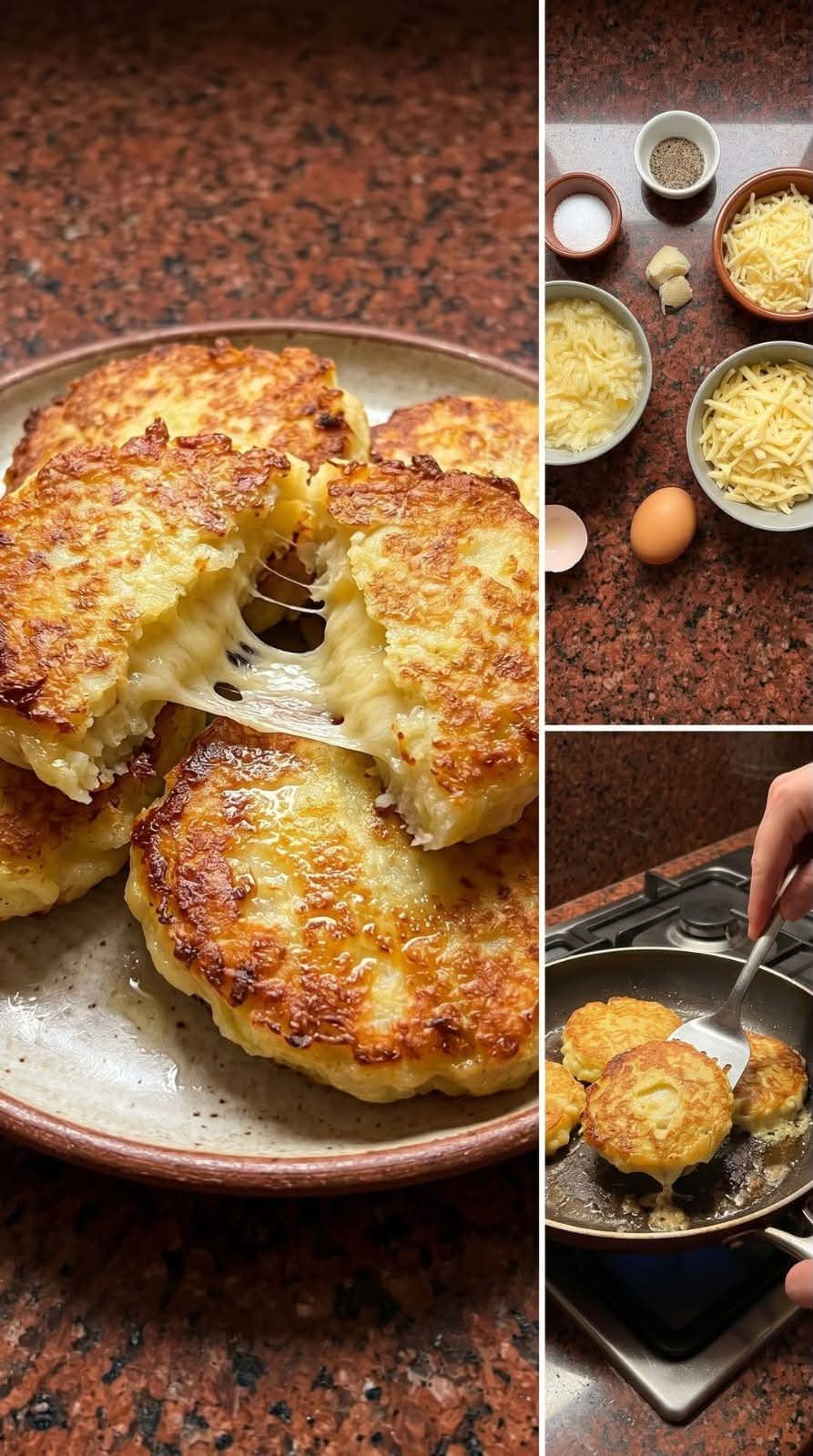
Potato Cheese Pancakes – Crispy on the Outside, Soft and Cheesy on the Inside
Introduction
If you love potatoes, melted cheese, and golden, crispy comfort food, these Potato Cheese Pancakes are about to become one of your favorite homemade recipes. They are crispy on the outside, soft and tender on the inside, and filled with delicious melted cheese that makes every bite irresistible.
Made with simple, affordable ingredients, these savory pancakes are perfect for breakfast, lunch, dinner, or an afternoon snack. They are a wonderful way to transform ordinary potatoes into something special without spending hours in the kitchen.
The best part is that you can customize them with your favorite cheese, fresh herbs, garlic, or spices. Serve them hot with sour cream, garlic sauce, or your favorite dipping sauce for a comforting meal the whole family will enjoy.
Whether you are preparing a quick family dinner or looking for a delicious appetizer to share with guests, these Potato Cheese Pancakes are guaranteed to bring everyone to the table.
Ingredients
Preparation time: 20 minutes
Cooking time: 20–25 minutes
Total time: Approximately 45 minutes
Servings: 4 people
For the Potato Pancakes
- 4 medium potatoes, approximately 700 g
- 1 cup shredded mozzarella cheese
- 1/2 cup shredded cheddar cheese
- 1 large egg
- 1/3 cup all-purpose flour
- 2 tablespoons finely chopped fresh parsley or green onions
- 2 cloves garlic, minced
- 1/2 teaspoon salt, or to taste
- 1/2 teaspoon black pepper
- 1/2 teaspoon paprika, optional
- 2–3 tablespoons cooking oil, for frying
Optional Ingredients
- 2 tablespoons grated Parmesan cheese for extra flavor
- 1/4 teaspoon onion powder
- A pinch of chili flakes for a little heat
- 2 tablespoons sour cream for serving
- Extra mozzarella cheese for an even cheesier center
Instructions
Step 1: Prepare the Potatoes
Peel the potatoes and cut them into evenly sized chunks. Place them in a large saucepan and cover with cold water.
Bring the water to a boil and cook the potatoes for approximately 12–15 minutes, or until they are fork-tender.
Drain the potatoes thoroughly and allow them to sit for a few minutes so excess moisture can evaporate. This step is important because potatoes that contain too much water can make the pancakes difficult to shape.
Transfer the potatoes to a large mixing bowl and mash them until smooth. Avoid adding milk or butter, as the mixture needs to remain firm enough to form into pancakes.
Allow the mashed potatoes to cool slightly before adding the remaining ingredients.
Step 2: Add the Cheese and Seasonings
Add the shredded mozzarella, cheddar cheese, egg, flour, chopped parsley, minced garlic, salt, black pepper, and paprika to the mashed potatoes.
Mix everything thoroughly until the ingredients are evenly distributed and a soft dough forms.
The mixture should be moist but firm enough to hold its shape. If it feels too sticky, add another tablespoon of flour at a time until it becomes easier to handle.
For an extra cheesy result, reserve a small portion of mozzarella to place in the center of each pancake.
Step 3: Shape the Pancakes
Lightly flour your hands to prevent sticking.
Take approximately two tablespoons of the potato mixture and roll it into a ball. Flatten it gently into a small pancake about 1/2 inch thick.
If you want a gooey cheese center, flatten a portion of the mixture in your palm, place a little extra mozzarella in the middle, and carefully cover it with more potato mixture. Seal the edges completely so the cheese stays inside during frying.
Repeat the process until all the potato mixture has been used.
Place the shaped pancakes on a plate or tray. If the mixture feels too soft, refrigerate the pancakes for 10–15 minutes before cooking.
Step 4: Heat the Oil
Place a large nonstick or heavy-bottomed skillet over medium heat.
Add enough cooking oil to lightly coat the bottom of the pan. Allow the oil to heat up before adding the pancakes.
The oil should be hot enough to create a gentle sizzle when the potato mixture touches the pan, but it should not smoke. Excessively hot oil can brown the outside before the inside has heated through.
Step 5: Fry Until Golden and Crispy
Carefully place the potato pancakes in the skillet, leaving space between each one. Cook in batches if necessary to avoid overcrowding.
Fry each pancake for approximately 3–5 minutes on the first side, until the bottom becomes golden brown and crispy.
Using a thin spatula, gently flip each pancake and cook for another 3–5 minutes.
The outside should develop a beautiful golden crust, while the inside becomes hot, tender, and cheesy.
If the pancakes are particularly thick, reduce the heat slightly and cook them for a little longer so the centers heat through without burning the crust.
Step 6: Drain and Rest
Transfer the cooked pancakes to a plate lined with paper towels or to a wire rack.
Allow them to rest for one or two minutes before serving. This helps the crust settle while the cheese inside remains soft and melted.
Continue frying the remaining pancakes, adding a little more oil to the skillet whenever necessary.
Step 7: Serve and Enjoy
Arrange the Potato Cheese Pancakes on a serving platter while they are still warm.
Garnish with freshly chopped parsley or green onions. Serve with sour cream, homemade garlic sauce, plain yogurt dip, or a fresh tomato salad.
For the ultimate comfort-food experience, cut one pancake open while it is hot and let the melted cheese stretch from the center.
Enjoy them immediately for the best combination of crispy edges, fluffy potatoes, and delicious melted cheese.
Cooking Methods
Method 1: Traditional Pan-Frying
Pan-frying is the recommended method for the crispiest exterior.
Heat a thin layer of oil in a skillet over medium heat. Cook the pancakes for approximately 3–5 minutes per side, adjusting the heat as needed.
This method creates a golden crust while keeping the potato mixture soft and the cheese deliciously melted.
Method 2: Oven-Baked Potato Cheese Pancakes
If you prefer using less oil, baking is an excellent alternative.
- Preheat the oven to 200°C (400°F).
- Line a baking tray with parchment paper.
- Arrange the shaped pancakes in a single layer.
- Lightly brush or spray both sides with cooking oil.
- Bake for 20–25 minutes, flipping halfway through.
- Continue baking until the pancakes are golden and cooked through.
For extra browning, place them under the broiler for the final 1–2 minutes, watching carefully to prevent burning.
The baked version will generally have a slightly different crust from the pan-fried version, but it remains flavorful and satisfying.
Method 3: Air Fryer Method
For an air fryer version, preheat the air fryer to 190°C (375°F).
Lightly brush the potato pancakes with oil and arrange them in a single layer in the basket. Do not overcrowd them.
Air-fry for approximately 12–16 minutes, flipping halfway through, until golden and heated through.
Cooking times may vary depending on the thickness of the pancakes and the air fryer model.
The History of Potato Pancakes
Potato pancakes have a long history in many food traditions around the world. Potatoes became a major food crop in Europe after their introduction from South America, eventually becoming an affordable and versatile ingredient in everyday cooking.
Different cultures developed their own versions of potato pancakes. In Eastern Europe, potato-based pancakes are commonly associated with dishes such as latkes and draniki. In Germany, Kartoffelpuffer are traditionally prepared from grated potatoes and fried until crisp. Other regions have their own variations made with mashed potatoes, herbs, onions, or flour.
Cheese-filled potato pancakes are a modern and home-style variation that combines the familiar comfort of potatoes with the rich flavor and texture of melted cheese.
Although the exact origin of this particular recipe is not tied to one specific country, its appeal comes from a simple culinary idea: using inexpensive ingredients to create something hearty, satisfying, and delicious.
Today, potato and cheese combinations remain popular in family kitchens because they are easy to prepare, adaptable, and suitable for many occasions.
Formation and Texture: What Makes These Pancakes Special?
The secret to excellent Potato Cheese Pancakes is achieving the right balance between moisture, structure, and heat.
1. The Potato Base
Mashed potatoes create a soft, tender foundation. Cooking them until fork-tender and draining them well helps prevent a watery mixture.
2. The Cheese Filling
Mozzarella provides the stretchy, gooey texture, while cheddar adds a stronger, more savory flavor. Combining the two creates a delicious balance.
3. The Egg and Flour
The egg helps bind the ingredients together, while the flour absorbs some moisture and gives the pancakes enough structure to hold their shape.
4. The Golden Crust
Cooking the pancakes in a properly heated skillet allows the outside to brown while the inside heats through. Avoid turning them too early, because the crust needs time to develop before the pancakes can be flipped easily.
5. The Melted Center
Using cheese that melts well and sealing the edges carefully helps create a soft, cheesy center. Do not overfill the pancakes, as too much cheese can escape during cooking.
The final result should be a pancake that holds together beautifully, has a crisp exterior, and offers a soft, flavorful center.
Tips for Perfect Potato Cheese Pancakes
- Remove excess moisture: Well-drained potatoes make shaping and frying much easier.
- Let the potatoes cool slightly: This helps the egg combine evenly without cooking prematurely.
- Grate your own cheese if possible: Freshly grated cheese often melts more smoothly than some pre-shredded varieties.
- Keep the pancakes similar in size: Evenly sized pancakes cook at a more consistent rate.
- Do not overcrowd the pan: Too many pancakes can lower the pan temperature and prevent proper browning.
- Use medium heat: This allows the outside to crisp while the center becomes hot.
- Chill a soft mixture: Ten to fifteen minutes in the refrigerator can make shaping easier.
- Avoid excessive flipping: Turning the pancakes once is usually enough.
- Serve immediately: The crust is at its best when freshly cooked.
Delicious Variations
Garlic and Herb Potato Pancakes
Add extra garlic, parsley, chives, and a little grated Parmesan for a fragrant, savory variation.
Spicy Cheddar Potato Pancakes
Use sharp cheddar cheese and add paprika, black pepper, and a small pinch of chili flakes.
Ham and Cheese Potato Pancakes
Fold in a small amount of finely diced cooked ham for a heartier meal. Ensure the ham is heated through during cooking.
Green Onion and Mozzarella Pancakes
Add chopped green onions and mozzarella for a fresh, mild flavor that pairs beautifully with sour cream.
Parmesan Crusted Potato Pancakes
Mix a little Parmesan into the potato mixture and sprinkle some onto the outside before frying. This creates an extra savory crust, although it may brown more quickly.
Serving Suggestions
Potato Cheese Pancakes are versatile enough to serve as a snack, side dish, or main meal.
For breakfast, serve them with scrambled eggs and fresh tomatoes.
For lunch, pair them with a crisp cucumber salad, shredded cabbage, or roasted vegetables.
For dinner, serve them alongside grilled chicken, roasted fish, or a bowl of vegetable soup.
For a party appetizer, make smaller pancakes and offer several dipping sauces, such as garlic yogurt sauce, sour cream, or a mild tomato dip.
For a comforting weekend meal, arrange them on a large platter and let everyone choose their favorite toppings.
Storage and Reheating
Refrigeration
Allow the pancakes to cool, then store them in an airtight container in the refrigerator for up to 3–4 days.
Freezing
Arrange fully cooled pancakes in a single layer on a tray and freeze until firm. Transfer them to a freezer-safe container or bag, separating layers with parchment paper. For best quality, use within approximately 2 months.
Reheating
For the best texture, reheat the pancakes in an oven at 180°C (350°F) until thoroughly hot, or use an air fryer at 180°C (350°F) for several minutes.
A skillet over medium-low heat also works well. Avoid relying on the microwave if you want to preserve the crispy exterior, as it can make the pancakes soft.
When reheating leftovers, ensure the centers are steaming hot throughout.
Conclusion
These Potato Cheese Pancakes prove that simple ingredients can create an extraordinary comfort-food dish. With creamy mashed potatoes, flavorful cheese, aromatic garlic, and a beautiful golden crust, every bite delivers a satisfying combination of textures.
They are easy enough for an ordinary weekday meal, yet delicious enough to serve when friends and family gather around the table.
You can keep the recipe classic, experiment with different cheeses, add your favorite herbs, or prepare a lighter baked version. No matter which method you choose, the result is a warm, homemade dish that is both comforting and versatile.
Prepare a batch, serve them fresh from the pan, and enjoy the irresistible contrast between the crispy outside and the soft, cheesy inside.
For the Lovers of Homemade Comfort Food
If you love crispy potatoes, melted cheese, and easy recipes made with everyday ingredients, these Potato Cheese Pancakes deserve a place in your kitchen.
They are perfect for potato lovers, cheese lovers, busy families, and anyone who appreciates a delicious homemade meal without complicated preparation.
Make them for breakfast, share them as an appetizer, or serve them for dinner with your favorite sauce. Once you discover how easy they are to prepare, you may find yourself making them again and again.
A Final Word for Recipe Lovers
Good food does not need to be complicated. Sometimes, the most memorable dishes come from a few simple ingredients prepared with care.
These Potato Cheese Pancakes are a wonderful example: affordable potatoes, delicious cheese, a few seasonings, and a hot skillet are all you need to create something special.
If you try this recipe, enjoy experimenting with your favorite ingredients and serving styles. For an especially delicious result, serve the pancakes hot, when the crust is crisp and the cheese is still melted.
This is the kind of comforting homemade recipe that brings people together, one golden, cheesy bite at a time.