
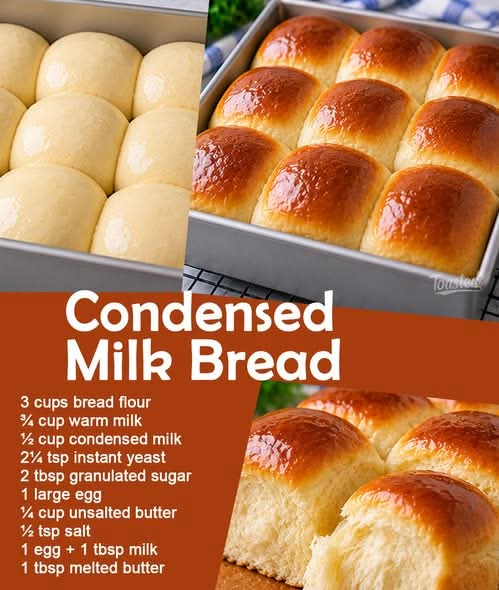
Condensed Milk Bread Recipe – Soft, Fluffy, Buttery Homemade Bread
Introduction
Condensed Milk Bread is a wonderfully soft, fluffy, and slightly sweet homemade bread with a delicate golden crust and a tender, cloud-like interior. Made with bread flour, warm milk, sweetened condensed milk, butter, and eggs, this delicious bread has a rich flavor and a beautiful texture that makes every bite special.
The secret to this bread is the combination of condensed milk and softened butter. The condensed milk adds sweetness, richness, and tenderness, while the butter helps create a soft, pillowy crumb. Once baked, the bread develops a beautiful golden top, and brushing it with melted butter gives it an irresistible shine and extra flavor.
This recipe makes nine soft bread rolls arranged together in a square baking pan. They rise beautifully and bake into a pull-apart loaf that is perfect for breakfast, afternoon tea, or a comforting snack. Serve it warm with butter, jam, honey, or your favorite spread.
Whether you are an experienced baker or making homemade bread for the first time, this recipe is a wonderful way to fill your kitchen with the comforting aroma of freshly baked bread.
Ingredients

For the bread dough
- 3 cups bread flour (375 g)
- ¾ cup warm milk (180 ml)
- ½ cup sweetened condensed milk (150 g)
- 2¼ teaspoons instant yeast (7 g)
- 2 tablespoons granulated sugar
- 1 large egg, at room temperature
- ¼ cup unsalted butter (55 g), softened
- ½ teaspoon salt
For the egg wash
- 1 large egg
- 1 tablespoon milk
For brushing after baking
– 1 tablespoon melted butter
Instructions
Step 1: Prepare the ingredients
Measure all your ingredients before beginning. Allow the egg and butter to come to room temperature so they blend easily into the dough.
Warm the milk until it feels comfortably warm to the touch, approximately 35–40°C (95–104°F). Avoid overheating the milk, as excessive heat can damage the yeast.
Grease a 9-inch square baking pan with butter or a light coating of oil. Set it aside while you prepare the dough.
Step 2: Mix the dry ingredients
In a large mixing bowl, combine the bread flour, instant yeast, granulated sugar, and salt.
Stir the ingredients together until evenly distributed. Mixing the dry ingredients first helps ensure that the yeast and salt are spread throughout the flour.
Step 3: Add the wet ingredients
Pour the warm milk and sweetened condensed milk into the flour mixture. Add the egg and mix everything with a wooden spoon or a stand mixer fitted with a dough hook.
Continue mixing until the ingredients form a rough, sticky dough. At this stage, the dough may look uneven, but it will become smoother as you knead it.
Step 4: Add the butter
Add the softened butter gradually, mixing it into the dough a little at a time.
Initially, the dough may become slippery or sticky as the butter is incorporated. Continue mixing until the butter is fully absorbed.
Knead the dough for approximately 10–12 minutes by hand or with a stand mixer until it becomes smooth, elastic, and stretchy.
The dough should feel soft and slightly tacky rather than dry. Avoid adding too much extra flour, because this can make the finished bread dense instead of fluffy.
Step 5: Let the dough rise
Shape the dough into a ball and place it in a lightly greased bowl. Cover with plastic wrap or a clean kitchen towel.
Leave the dough in a warm, draft-free place for approximately 1–1½ hours, or until it has doubled in size.
The exact rising time depends on your kitchen temperature. In a cool room, the dough may need additional time.
Step 6: Divide and shape the dough
Once the dough has risen, gently press it down to release excess air.
Transfer it to a clean work surface and divide it into nine equal portions. For consistent rolls, weigh the dough and divide the total weight by nine.
Shape each portion into a smooth ball by folding the edges underneath and gently rolling it against the work surface.
Arrange the dough balls in the prepared 9-inch square baking pan, leaving a little space between them so they can expand.
Step 7: Allow the second rise
Cover the pan loosely with a clean towel or plastic wrap.
Let the dough rise for another 30–45 minutes, or until the rolls look puffy and have expanded noticeably.
They should begin to touch one another as they rise. This second proof is important because it helps produce a light, tender texture.
Meanwhile, preheat your oven to 175°C (350°F).
Step 8: Prepare the egg wash
In a small bowl, whisk together one egg and one tablespoon of milk until smooth.
Gently brush the mixture over the tops of the risen dough balls. Use a soft pastry brush and avoid pressing down on the delicate dough.
The egg wash gives the bread an attractive golden-brown finish and a slight sheen.
Step 9: Bake the bread
Place the pan on the middle rack of the preheated oven.
Bake for approximately 22–28 minutes, or until the tops are golden brown and the rolls are cooked through.
If the tops brown too quickly, loosely cover the pan with aluminum foil during the final part of baking.
For the most reliable result, the center of the bread should reach approximately 88–93°C (190–200°F).
Step 10: Brush with melted butter
Remove the bread from the oven and immediately brush the tops with the tablespoon of melted butter.
This final step adds flavor, gives the crust a lovely shine, and helps keep the surface tender.
Allow the bread to cool in the pan for about 10 minutes before carefully removing it or serving it directly from the pan.
Step 11: Serve and enjoy
Pull apart the soft rolls while they are still slightly warm. The inside should be tender and fluffy, with a delicate sweetness from the condensed milk.
Enjoy them plain, spread with butter, or paired with jam, honey, cream cheese, or a cup of coffee or tea.
Method of Preparation
This recipe uses the enriched yeast dough method, which combines flour, yeast, milk, condensed milk, eggs, sugar, and butter to create a soft and flavorful loaf.
The process involves five essential stages:
- Mixing: The dry and wet ingredients are combined to form a soft dough.
- Kneading: The dough is worked until it becomes smooth and elastic, helping develop the gluten structure needed to hold the bread’s shape.
- First fermentation: The yeast produces gas, causing the dough to expand and develop flavor.
- Shaping and proofing: The dough is divided into nine portions, shaped into balls, and allowed to rise again for a lighter texture.
- Baking and finishing: The egg wash creates a golden crust, while melted butter adds shine and a tender finish.
The most important rule is to let the dough rise according to its appearance rather than relying only on the clock. Properly risen dough produces softer, lighter bread.
History of Condensed Milk Bread
Sweet milk breads have long been popular in many baking traditions because milk, sugar, eggs, and butter create a richer and more tender loaf than ordinary lean bread.
Sweetened condensed milk became widely used in home baking because it provides concentrated milk solids and sweetness in one convenient ingredient. It is especially useful in enriched doughs, where it contributes a creamy flavor and helps create a tender crumb.
Soft, pull-apart milk breads are particularly popular across many Asian-style bakeries and home kitchens, where pillowy textures and gently sweet flavors are appreciated. Condensed milk bread is one of the many modern home-baking variations inspired by this broader tradition.
Although this particular recipe does not have one established historical origin, it brings together familiar bread-making techniques and the convenience of sweetened condensed milk to create a delicious homemade loaf.
Formation and Texture: What Makes This Bread So Soft?
The texture of condensed milk bread comes from the interaction of several ingredients.
Bread flour: Provides the gluten-forming proteins that give the dough strength and elasticity.
Warm milk: Adds moisture and contributes to the bread’s creamy flavor.
Sweetened condensed milk: Adds sugar and milk solids, creating a richer taste and helping the finished crumb remain tender.
Yeast: Produces carbon dioxide, which expands the dough and creates the bread’s airy structure.
Egg: Adds richness, color, and structure.
Butter: Softens the crumb and gives the bread its characteristic buttery flavor.
Egg wash: Encourages an attractive golden-brown surface during baking.
Together, these ingredients create a soft interior with a delicate crust. The nine-roll arrangement also makes the finished bread easy to pull apart and share.
Tips for Perfect Condensed Milk Bread
- Measure the flour accurately. Too much flour can make the bread heavy and dry. Weighing 375 g is preferable when possible.
- Use warm, not hot, milk. Very hot milk can interfere with yeast activity.
- Knead thoroughly. The dough should stretch without tearing easily.
- Keep the dough soft. A slightly tacky dough usually produces a more tender loaf than a stiff dough.
- Be patient during proofing. The dough should visibly expand before baking.
- Avoid overbaking. Excessive baking can dry out the bread.
- Brush with butter after baking. This gives the rolls a softer, more flavorful finish.
Serving Suggestions


Condensed Milk Bread is versatile enough to serve at almost any time of day.
- For breakfast: Serve warm with butter, jam, honey, or peanut butter.
- For afternoon tea: Pair with tea, coffee, or warm milk.
- For dessert: Add a light drizzle of condensed milk or serve with fresh berries.
- For a family snack: Pull apart the rolls and enjoy them straight from the pan.
- For a special brunch: Serve alongside scrambled eggs, fresh fruit, and yogurt.
For storage, keep the completely cooled bread in an airtight container at room temperature for up to 2–3 days. Warm individual rolls briefly in the microwave or oven to refresh their softness. For longer storage, freeze the bread in a well-sealed bag for up to 2 months and thaw before reheating.
Frequently Asked Questions
Can I make this bread without a stand mixer?
Yes. Knead the dough by hand for approximately 12–15 minutes, or until it becomes smooth and elastic. The dough may feel sticky at first, so keep working it before deciding to add more flour.
Can I prepare the dough ahead of time?
Yes. After kneading, cover the dough and refrigerate it overnight. The next day, let it warm slightly, shape the rolls, allow them to rise until puffy, and bake as directed. The cold dough may need additional time to rise.
Why did my bread turn out dense?
Common causes include adding too much flour, insufficient kneading, underproofing, inactive yeast, or overbaking. Make sure the dough is soft, properly kneaded, and allowed to rise adequately.
Can I use all-purpose flour instead of bread flour?
Yes. All-purpose flour can work, although the finished bread may be slightly less chewy and elastic. Add liquid gradually if the dough feels too soft.
How do I know when the bread is fully baked?
The tops should be golden brown, and the center should be fully cooked. If you have a food thermometer, check that the center reaches approximately 88–93°C (190–200°F).
Conclusion
Condensed Milk Bread is a wonderful homemade treat that combines the comforting aroma of fresh bread with a rich, milky sweetness and a beautifully fluffy texture. Its simple ingredients and straightforward preparation make it suitable for weekend baking, family breakfasts, afternoon snacks, or special occasions.
The secret to success is simple: knead the dough until elastic, allow enough time for both rises, and avoid adding unnecessary flour. Finish with melted butter for a soft, glossy top and enjoy the bread while it is fresh.
Once you try these tender, golden rolls, they may become a favorite in your regular baking routine.
For the Love of Homemade Bread
There is something special about placing a pan of freshly baked bread on the kitchen table and watching everyone pull apart the warm, fluffy rolls. Each piece is soft, slightly sweet, and full of comforting buttery flavor.
Serve this Condensed Milk Bread to family and friends, share it over a relaxed breakfast, or enjoy a quiet afternoon with a warm roll and your favorite drink. Homemade bread does not need to be complicated to feel special.
Bake a batch, share it with the people you love, and enjoy the simple pleasure of soft, fresh bread made from scratch.