
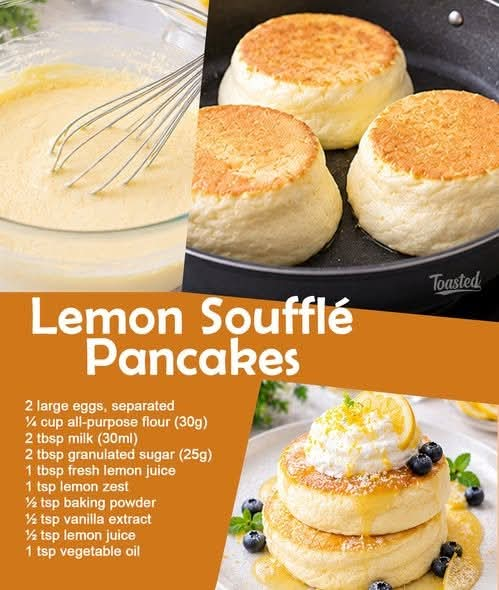
Lemon Soufflé Pancakes Recipe: Light, Fluffy, and Bursting with Fresh Lemon Flavor
Introduction
Lemon Soufflé Pancakes are a delightful breakfast treat that combines the delicate texture of a French soufflé with the comforting taste of homemade pancakes. They are incredibly soft, airy, tall, and tender, with a refreshing lemon flavor that makes every bite taste bright and delicious.
Unlike traditional pancakes, which are made by mixing all the ingredients together, these special pancakes use separated eggs. The egg whites are whipped into a glossy, fluffy meringue and gently folded into the lemon-flavored batter. This technique creates a beautifully light texture that almost melts in your mouth.
Fresh lemon juice and finely grated lemon zest provide a wonderful balance of sweetness and citrus tang, while a touch of vanilla adds warmth and fragrance. When served with whipped cream, fresh blueberries, powdered sugar, and a drizzle of honey or maple syrup, these pancakes become an elegant breakfast or brunch centerpiece.
Whether you are preparing a relaxing weekend breakfast, planning a special brunch with family, or simply craving something different from ordinary pancakes, this Lemon Soufflé Pancakes recipe is a wonderful choice. Although they look impressive, you can make them at home using simple ingredients and a little patience.
Ingredients
This recipe makes approximately 2 servings, depending on the size of the pancakes.
For the Lemon Soufflé Pancakes
- 2 large eggs, separated into yolks and whites
- 1/4 cup all-purpose flour (30 g)
- 2 tablespoons milk (30 ml)
- 2 tablespoons granulated sugar (25 g)
- 1 tablespoon fresh lemon juice
- 1 teaspoon finely grated lemon zest
- 1/2 teaspoon baking powder
- 1/2 teaspoon vanilla extract
- 1/2 teaspoon lemon juice for whipping the egg whites
- 1 teaspoon vegetable oil for cooking
For the Topping
- Whipped cream, as desired
- Powdered sugar, for dusting
- Fresh blueberries
- Fresh lemon slices
- Additional lemon zest
- Honey or maple syrup, for drizzling
Optional Additions
If you want to customize your pancakes, you can also prepare:
- Fresh strawberries or raspberries
- A few mint leaves for garnish
- A spoonful of lemon curd
- A small amount of Greek yogurt
- A light dusting of extra powdered sugar
These additions can give your pancakes a different flavor while preserving their delicate lemon character.
Equipment Needed
Before beginning, gather the following kitchen equipment:
- Two medium mixing bowls
- A hand whisk or electric mixer
- A rubber spatula
- Measuring cups and spoons
- A fine grater or zester
- A nonstick frying pan with a lid
- A small spoon or piping bag for shaping the batter
- A thin spatula for flipping the pancakes
A nonstick pan with a well-fitting lid is especially useful because the pancakes need gentle, even heat to rise without burning.
Instructions: How to Make Lemon Soufflé Pancakes
Step 1: Prepare the Eggs
Carefully separate the two eggs, placing the yolks in one bowl and the whites in another.
Make sure the bowl containing the egg whites is completely clean and free from grease. Even a small amount of egg yolk can make it difficult to whip the whites properly.
Allow the eggs to come close to room temperature if possible. This can help the whites whip more easily and incorporate air more effectively.
Set the bowls aside while you prepare the lemon batter.
Step 2: Make the Lemon-Flavored Yolk Batter
In the bowl containing the egg yolks, add the milk, fresh lemon juice, lemon zest, and vanilla extract.
Whisk everything together until the mixture is smooth and evenly combined.
Next, sift the flour and baking powder into the bowl. Sifting helps prevent lumps and distributes the baking powder throughout the flour.
Gently whisk until you obtain a smooth, thick batter.
Avoid overmixing. The goal is to create a uniform mixture without developing too much gluten, which could make the pancakes less tender.
Set the yolk batter aside while you prepare the egg whites.
Step 3: Whip the Egg Whites
Pour the egg whites into a clean, dry mixing bowl. Add the additional 1/2 teaspoon of lemon juice.
Using an electric mixer or a hand whisk, beat the egg whites until they become foamy.
Gradually add the granulated sugar while continuing to beat. Adding the sugar slowly helps the mixture develop a stable, glossy texture.
Continue beating until stiff peaks form. When you lift the beaters, the peaks should stand upright with little or no drooping.
The egg whites should look glossy and smooth rather than dry or grainy.
This step is the secret to achieving tall, airy soufflé pancakes. The trapped air expands during cooking and gives the pancakes their characteristic height.
Step 4: Combine the Two Mixtures
Add approximately one-third of the whipped egg whites to the lemon yolk batter.
Gently stir this first portion into the batter to lighten it.
Next, add the remaining egg whites in two additions. Use a rubber spatula to fold the mixture together by scooping from the bottom of the bowl and lifting the batter over itself.
Rotate the bowl as you fold, stopping as soon as the mixture is evenly combined.
Do not beat, stir vigorously, or press the batter down. Doing so can remove the air that makes these pancakes fluffy.
The finished batter should be light, airy, and thick enough to hold its shape when spooned into the pan.
Step 5: Prepare the Cooking Pan
Place a nonstick frying pan over very low heat.
Lightly grease the surface with the vegetable oil, using a paper towel to spread it into a thin, even layer. Too much oil can make the pancake surfaces uneven.
Allow the pan to warm gently for a few minutes.
Avoid high heat. Soufflé pancakes are thick, so they need time to cook through. If the pan is too hot, the outside may brown before the center is fully cooked.
Step 6: Shape the Pancakes
Spoon the batter into tall mounds in the prepared pan, leaving enough space between each pancake.
For taller pancakes, add the batter in layers. Spoon a little batter into the pan, wait briefly for it to settle, and then add another small spoonful on top.
Keep the heat low so the bottom begins to set slowly without becoming too dark.
If the batter seems too delicate to shape with a spoon, you can transfer it to a piping bag and pipe neat, tall circles.
Step 7: Steam and Cook the First Side
Add a few drops of water to an empty area of the pan, away from the batter.
Immediately cover the pan with its lid. The water creates gentle steam, helping the thick pancakes cook more evenly.
Cook for approximately 4–5 minutes over very low heat.
Check the bottoms occasionally to make sure they are not browning too quickly. The tops should begin to look slightly set, and the pancakes should hold their shape when gently touched.
Cooking time may vary depending on your pan, stove, and pancake size.
Step 8: Carefully Flip the Pancakes
Once the first side has cooked sufficiently, use a thin spatula to carefully lift and turn each pancake.
Soufflé pancakes are delicate, so move slowly and support the pancake as you flip it.
If the tops still look very wet, give them a little more time before turning.
Add a few more drops of water to the empty area of the pan if needed, cover again, and cook the second side for another 4–5 minutes.
The pancakes should be lightly golden on both sides and cooked through in the center.
If they brown too quickly, reduce the heat further. If the centers remain raw, continue cooking gently with the lid on.
Step 9: Check for Doneness
Gently press the side of a pancake. It should feel soft and springy rather than liquid or collapsed.
Because these pancakes are thick, color alone does not guarantee that the center is cooked. If you are unsure, carefully check the center of one pancake.
Avoid serving them while the interior is still raw. The eggs and flour should be fully cooked before serving.
Step 10: Add the Toppings and Serve
Transfer the pancakes to serving plates as soon as they are ready.
Stack them gently to preserve their height and delicate texture.
Add a generous spoonful of whipped cream, scatter fresh blueberries over the top, and dust lightly with powdered sugar.
Finish with fresh lemon zest, a thin lemon slice, and a drizzle of honey or maple syrup.
Serve immediately while the pancakes are warm, fluffy, and fragrant.
Cooking Method: The Secret to Perfect Soufflé Pancakes
The most important part of this recipe is not the number of ingredients but the technique used to combine and cook them.
1. The Meringue Method
Whipping egg whites creates thousands of tiny air bubbles. When folded into the batter, these bubbles make the pancakes rise and develop their signature soufflé texture.
The sugar helps stabilize the whipped whites, while the lemon juice supports the whipping process.
2. The Gentle Folding Method
Folding combines the airy egg whites with the heavier yolk mixture without destroying too much of the trapped air.
Always use slow, sweeping movements with a spatula. Stop folding once no large streaks of egg white remain.
3. The Low-Heat Cooking Method
Low heat allows the pancakes to cook gradually from the bottom while the heat and steam help set the interior.
Avoid rushing this stage. A slow cooking process is essential for thick pancakes that are golden outside and tender inside.
4. The Covered-Pan Method
Covering the pan traps warmth and steam, helping the upper portions cook while the bottoms brown gently.
This method also reduces the risk of drying out the pancakes before the centers are done.
5. The Immediate-Serving Method
Soufflé pancakes are naturally delicate. They may lose some height as they cool because the air bubbles inside contract.
For the best texture, serve them as soon as possible after cooking, with the toppings prepared in advance.
The History of Soufflé Pancakes
Soufflé pancakes are closely associated with modern Japanese café culture, where tall, exceptionally fluffy pancakes became popular as a distinctive alternative to traditional breakfast pancakes.
They draw inspiration from the French soufflé, a dish known for its airy texture and its reliance on whipped egg whites. By adapting this technique to pancake batter and cooking the mixture slowly in a covered pan, cooks developed pancakes that are both recognizable and remarkably light.
Japanese-style soufflé pancakes became especially popular in cafés and dessert shops, where they are often served in tall stacks with whipped cream, fruit, syrup, and powdered sugar.
The lemon version offers a refreshing variation on this style. Citrus has long been a natural companion to sweet baked goods and breakfast dishes because its bright aroma balances rich ingredients and sweetness.
Although the precise origins of this particular lemon variation are not clearly established, it brings together familiar culinary ideas: the French technique of whipping egg whites, the Japanese approach to tall and fluffy pancakes, and the timeless combination of lemon and sweet cream.
Today, soufflé pancakes are enjoyed by home cooks and café lovers around the world.
Formation: Understanding the Texture and Flavor
The word formation in this recipe refers to how the pancakes develop their shape, height, and delicate interior during preparation and cooking.
How the Pancakes Become Fluffy
The egg whites provide most of the air needed for the pancakes to rise. When heated, the air expands and the egg proteins begin to set, helping the pancakes hold their shape.
The baking powder provides additional leavening, while the flour and egg yolks help create the structure needed to support the airy mixture.
How the Lemon Flavor Develops
Fresh lemon juice contributes a pleasant tartness, while lemon zest contains aromatic oils that provide a more intense citrus fragrance.
Using both creates a balanced lemon flavor without requiring a large amount of additional sugar.
How the Golden Exterior Forms
The gentle heat gradually cooks the outside of the pancakes. The small amount of sugar contributes to browning, while the controlled cooking temperature helps prevent the surfaces from becoming too dark.
Why the Pancakes Are So Delicate
Unlike dense, traditional pancakes, soufflé pancakes contain a large amount of air relative to their structure.
This gives them their light texture but also makes them more sensitive to rough handling, excessive mixing, and sudden temperature changes.
For that reason, gentle folding, low heat, careful flipping, and immediate serving are all essential to the final result.
Expert Tips for the Best Lemon Soufflé Pancakes
- Use fresh eggs. Fresh eggs often produce a stable meringue and help the pancakes retain their shape.
- Keep the egg whites free of yolk. Even a small amount of fat can interfere with whipping.
- Whip to stiff, glossy peaks. Under-whipped whites may not provide enough structure, while over-whipped whites can become dry and difficult to fold.
- Measure the flour accurately. Too much flour can make the pancakes heavy.
- Use fresh lemon zest. It gives the pancakes a stronger, more natural lemon aroma.
- Keep the pan temperature low. A gentle cooking process is more important than achieving a dark golden color quickly.
- Do not overcrowd the pan. Leave space for the pancakes to expand and for the spatula to move easily.
- Flip only when ready. If the first side has not set sufficiently, the pancakes may collapse or tear.
- Prepare the toppings beforehand. These pancakes are best served immediately after cooking.
- Avoid pressing the pancakes. Pressing releases air and destroys their delicate texture.
Common Mistakes and How to Avoid Them
Pancakes That Do Not Rise
This usually happens when the egg whites have not been whipped sufficiently or too much air is lost during folding.
Solution: Whip the whites to stiff, glossy peaks and fold gently.
Pancakes That Collapse
A small amount of settling is normal, but severe collapse can happen when the pancakes are undercooked, the meringue is unstable, or the batter is handled too roughly.
Solution: Cook the pancakes thoroughly over low heat and avoid aggressive mixing.
Pancakes That Burn on the Bottom
The pan may be too hot, particularly if the outside browns before the center is cooked.
Solution: Reduce the heat and cook with the lid on for a longer period.
Pancakes With Raw Centers
Thick pancakes require more time than ordinary pancakes. A browned exterior does not necessarily mean the inside is finished.
Solution: Make slightly smaller pancakes if necessary and continue cooking gently until the center is set.
Batter That Becomes Runny
Overmixing the egg whites into the yolk mixture can deflate the batter, making it difficult to form tall pancakes.
Solution: Fold in the whites in three additions and cook the batter soon after mixing.
Serving Suggestions

Classic Lemon and Blueberry
Top with whipped cream, fresh blueberries, powdered sugar, and extra lemon zest. This combination provides sweetness, freshness, and a pleasant citrus finish.

Honey or Maple Syrup
Drizzle a little honey or maple syrup over the warm pancakes for a simple, comforting breakfast with a glossy finish.

Fresh Berry Combination
Add strawberries, raspberries, or a mixture of seasonal berries. Their natural tartness complements the lemon flavor beautifully.

Lemon Cream Dessert Style
Serve with a small spoonful of lemon curd and whipped cream for a more indulgent brunch or dessert-style presentation.
Storage and Reheating
Lemon Soufflé Pancakes are best enjoyed fresh because their airy structure gradually loses volume after cooking.
If you have leftovers, allow them to cool and place them in an airtight container in the refrigerator for up to 2 days.
To reheat, warm them gently in a covered pan over very low heat until heated through. Avoid pressing them or using excessive heat, as this may make them dry or cause them to collapse further.
Freezing is possible, but it is not ideal for preserving their original soufflé texture. The pancakes may lose much of their height and softness after thawing.
For the best results, prepare only the quantity you plan to serve.
Frequently Asked Questions
1. Can I make Lemon Soufflé Pancakes without an electric mixer?
Yes. You can whip the egg whites with a hand whisk, although it will require more effort and time. Continue until stiff, glossy peaks form.
2. Can I use bottled lemon juice?
Fresh lemon juice is recommended for the brightest flavor. Bottled juice can be used if necessary, but fresh zest will still help provide a more fragrant citrus taste.
3. Why must I separate the eggs?
Separating the eggs allows you to whip the whites independently. This creates the air needed for the pancakes to become tall and fluffy.
4. Can I prepare the batter ahead of time?
It is best to cook the batter immediately after folding in the egg whites. If it sits for too long, the air bubbles will gradually escape and the pancakes may not rise as well.
5. Can I make these pancakes without baking powder?
The whipped egg whites provide most of the lift, so the pancakes may still rise without baking powder. However, the small amount included in this recipe offers additional assistance with leavening.
6. Are these pancakes very sweet?
The batter has a moderate amount of sugar, and the lemon adds refreshing tartness. You can adjust the toppings to suit your taste by using less syrup or powdered sugar.
7. Can I use other fruits instead of blueberries?
Absolutely. Strawberries, raspberries, blackberries, and sliced peaches all pair well with lemon.
Conclusion
Lemon Soufflé Pancakes are a beautiful way to transform a few simple ingredients into a special breakfast. Their tall, cloud-like texture, delicate golden exterior, and refreshing lemon aroma make them a memorable alternative to traditional pancakes.
The secret lies in whipping the egg whites correctly, folding the batter gently, and cooking the pancakes slowly over low heat. With a little care, you can create soft, airy pancakes that look elegant and taste wonderful.
Serve them warm with whipped cream, fresh blueberries, powdered sugar, and a drizzle of honey or maple syrup for a breakfast that feels both comforting and luxurious.
Whether you make them for a quiet morning at home, a weekend family brunch, or a special occasion, these lemon pancakes are sure to bring a little extra joy to the table.
For Lemon Pancake Lovers
If you love light, fluffy breakfasts and fresh citrus flavors, this recipe is worth adding to your collection. The combination of sweet cream, juicy berries, and bright lemon makes every bite feel fresh and satisfying.
Make a batch, arrange the pancakes in a tall stack, and finish them with your favorite toppings. Serve them immediately and enjoy their delicate texture while they are at their best.
A little lemon, a little sweetness, and a cloud-soft pancake can turn an ordinary morning into something special.