
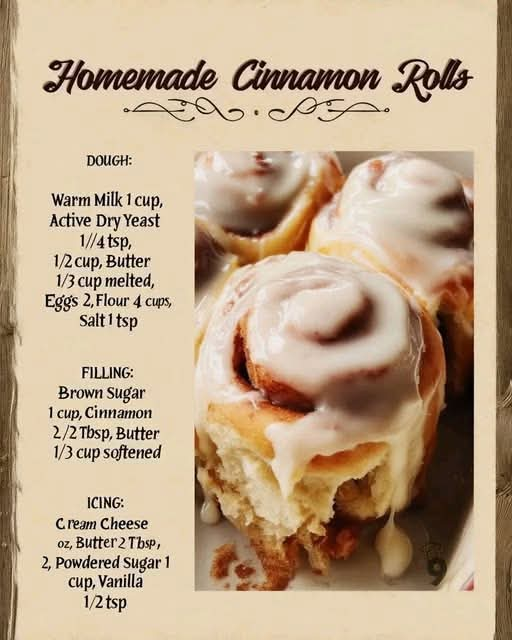
Homemade Cinnamon Rolls – Soft, Fluffy, and Covered in Sweet Vanilla Icing


Introduction
There is something truly special about waking up early in the morning to the comforting smell of homemade cinnamon rolls baking in the oven. The yeast slowly brings the dough to life, cinnamon and brown sugar create a sweet, fragrant filling, and the entire kitchen fills with the warm aroma of freshly baked bread.
Homemade cinnamon rolls are more than just a breakfast treat. They are a reminder of peaceful mornings, family gatherings, cozy weekends, and the simple pleasure of sharing something delicious with the people we love.
These cinnamon rolls are soft, fluffy, buttery, and filled with a generous layer of cinnamon sugar. Once they come out of the oven, a smooth vanilla icing is spread over the warm spirals, melting into every little swirl and creating the perfect sweet finish.
Whether you serve them for Christmas morning, a weekend brunch, a holiday breakfast, or an ordinary day when you want something comforting, these homemade cinnamon rolls are sure to become a family favorite.
Preparation and Cooking Information
- Preparation time: 30 minutes
- Rising time: 1 hour 30 minutes to 2 hours
- Baking time: 20–25 minutes
- Total time: Approximately 2 hours 30 minutes
- Yield: 12 cinnamon rolls
- Difficulty: Moderate
- Serving: Breakfast, brunch, dessert, or an afternoon treat
Ingredients

For the dough
- 4 cups (500 g) all-purpose flour, plus a little extra if needed
- 2 ¼ teaspoons active dry yeast (one standard packet)
- 1 cup (240 ml) warm milk, about 105–110°F (40–43°C)
- ¼ cup (50 g) granulated sugar
- 1 large egg, at room temperature
- ¼ cup (57 g) unsalted butter, melted and slightly cooled
- 1 teaspoon salt
- 1 teaspoon vanilla extract
For the cinnamon sugar filling
- ½ cup (100 g) packed brown sugar
- 2 tablespoons ground cinnamon
- ¼ cup (57 g) unsalted butter, softened
- 1 tablespoon granulated sugar, optional
- A small pinch of salt, optional
For the creamy vanilla icing
- 1 cup (120 g) powdered sugar
- 2 tablespoons unsalted butter, softened
- 2–3 tablespoons milk or heavy cream
- ½ teaspoon vanilla extract
- A small pinch of salt, optional
Instructions
Step 1: Activate the yeast
Pour the warm milk into a large mixing bowl. The milk should feel warm but not hot. Add the yeast and a teaspoon of the measured sugar, then stir gently.
Allow the mixture to stand for 5–10 minutes. If the yeast is active, the surface should begin to look foamy.
If using instant yeast, you can mix it directly with the dry ingredients, although allowing it to bloom can still help you check its activity.
Step 2: Prepare the dough
Add the remaining sugar, egg, melted butter, vanilla extract, and salt to the yeast mixture. Whisk until everything is combined.
Gradually add the flour, mixing with a wooden spoon or dough hook until a soft dough forms.
The dough should be slightly tacky but manageable. If it is excessively sticky, add flour one tablespoon at a time. Avoid adding too much flour, as this can make the finished rolls dry and heavy.
Step 3: Knead until smooth
Transfer the dough to a lightly floured surface and knead for approximately 8–10 minutes by hand, or 5–7 minutes using a stand mixer fitted with a dough hook.
The dough should become smooth, elastic, and soft. When gently pressed with a fingertip, it should slowly spring back.
Place the dough in a lightly greased bowl and turn it once so that the surface is coated with a little oil or butter.
Step 4: Let the dough rise
Cover the bowl with a clean kitchen towel or plastic wrap.
Leave it in a warm, draft-free place for approximately 60–90 minutes, or until it has doubled in size.
This first rise is important because it develops the dough’s light, airy texture. The exact time depends on the temperature of your kitchen.
Step 5: Make the cinnamon filling
In a small bowl, combine the brown sugar, ground cinnamon, optional granulated sugar, and a small pinch of salt.
Keep the softened butter separate so it can be spread evenly over the dough.
The brown sugar provides a rich, caramel-like sweetness, while the cinnamon gives the rolls their familiar warm flavor.
Step 6: Roll out the dough
Once the dough has doubled in size, gently press it down to release excess air.
Transfer it to a lightly floured surface and roll it into a rectangle approximately 16 × 12 inches (40 × 30 cm).
Try to keep the thickness even so that all the rolls bake at approximately the same rate.
Spread the softened butter over the surface, leaving a small border along one long edge. Sprinkle the cinnamon and brown sugar mixture evenly over the butter.
Press the filling lightly into the dough so that it stays in place when you roll it.
Step 7: Shape the cinnamon rolls
Starting from one long edge, roll the dough into a snug log. Do not roll so tightly that the filling squeezes out.
Pinch the seam gently to seal it.
Using a sharp knife or unflavored dental floss, cut the log into 12 equal pieces. Floss often creates cleaner cuts without flattening the dough.
Arrange the rolls cut-side up in a greased 9 × 13-inch (23 × 33 cm) baking dish, leaving a little space between them for expansion.
Step 8: Allow the rolls to rise again
Cover the baking dish and let the rolls rise for another 30–45 minutes.
They should look noticeably puffier and begin to fill the gaps between them.
During this time, preheat the oven to 350°F (175°C).
Step 9: Bake until golden

Place the dish in the preheated oven and bake for 20–25 minutes, or until the rolls are lightly golden and cooked through in the center.
If the tops brown too quickly, loosely cover the dish with aluminum foil for the remaining baking time.
Avoid overbaking. The goal is a tender, fluffy center with lightly golden edges and a soft cinnamon-sugar filling.
Remove the dish from the oven and allow the rolls to rest for approximately 5 minutes before icing.
Step 10: Prepare the vanilla icing
In a medium bowl, beat together the powdered sugar and softened butter.
Add the vanilla extract and 2 tablespoons of milk or cream. Whisk until smooth and creamy.
If the icing is too thick, add the remaining milk a little at a time. If it becomes too thin, add a little more powdered sugar.
For a richer icing, replace some or all of the butter with softened cream cheese, adjusting the milk as needed.
Step 11: Ice the warm cinnamon rolls

Spread the icing over the rolls while they are still warm, but not piping hot.
The icing will soften and melt into the cinnamon spirals, creating a delicious combination of sweet vanilla cream, buttery dough, and warm cinnamon sugar.
For a thicker layer of icing, let the rolls cool for 10–15 minutes before spreading it over the top.
Serve warm for the best texture and flavor.
Methods for Perfect Homemade Cinnamon Rolls
1. The soft dough method
The secret to tender cinnamon rolls is a soft, slightly tacky dough. Too much flour can make the rolls dense, while too little kneading may leave them without enough structure.
Measure the flour carefully and add extra only when necessary.
2. The proper yeast method
Yeast needs warmth, moisture, and time to work. Milk that is too hot can damage the yeast, while cold milk can slow its activity.
Aim for warm milk rather than hot milk, and allow the dough to rise until it has visibly expanded instead of relying only on the clock.
3. The even-filling method
Spread the butter evenly and distribute the cinnamon sugar all the way across the dough, leaving only a small border at the sealing edge.
This helps every roll develop a flavorful spiral rather than leaving some sections mostly plain.
4. The clean-cutting method
Dental floss is a useful trick for cutting cinnamon rolls. Slide a length of floss under the dough log, cross the ends over the top, and pull to slice through the dough.
This keeps the spirals round and helps prevent the filling from being pushed out.
5. The second-rise method
Never rush the second rise. This stage helps the shaped rolls become light and fluffy.
If the kitchen is cool, they may need additional time. Look for rolls that have become puffy and are beginning to touch one another.
6. The icing method
For icing that melts into the rolls, spread it on while they are warm. For a thicker, more defined frosting, wait until they have cooled slightly.
Both methods work beautifully, depending on your preferred texture.
The History of Cinnamon Rolls
Cinnamon rolls have a long history connected to European baking traditions, particularly in Northern Europe.
Sweden is famous for its kanelbullar, or cinnamon buns, which traditionally feature a lightly sweetened, spiced dough. Sweden’s cinnamon buns are often shaped differently from the large, soft, icing-covered rolls popular in North America.
As baking traditions traveled and developed, sweet yeast doughs filled with spices, sugar, and butter became popular in many countries. American-style cinnamon rolls grew into generous bakery treats, often served warm with a sweet glaze or cream cheese frosting.
Today, cinnamon rolls are enjoyed around the world. They appear at breakfast tables, bakeries, coffee shops, family celebrations, and holiday gatherings.
Although recipes vary from one household to another, the basic idea remains the same: soft dough, a fragrant cinnamon filling, and a sweet topping that brings everything together.
The Formation of Homemade Cinnamon Rolls
The formation of a cinnamon roll is what gives this pastry its beautiful spiral and layered texture.
First, yeast produces gas as it ferments sugars in the dough. This helps the dough expand and creates the foundation for a light, fluffy roll.
Next, the dough is rolled into a rectangle and covered with butter, brown sugar, and cinnamon. Rolling it into a log creates many thin layers of filling throughout the dough.
When the log is sliced, each piece reveals the familiar cinnamon spiral. During the second rise, the rolls become puffy as the yeast continues working.
In the oven, the dough sets and turns golden, the sugar melts into the filling, and the cinnamon releases its warm aroma.
Finally, the vanilla icing softens over the warm surface and settles into the spirals. The result is a tender pastry with a sweet, spiced center and a creamy finish.
Tips for the Best Results
- Use room-temperature eggs and softened butter for easier mixing.
- Do not overheat the milk when activating the yeast.
- Avoid adding too much flour during kneading.
- Roll the dough evenly so the rolls bake uniformly.
- Use a sharp knife or dental floss for neat slices.
- Do not overbake, as this can dry out the centers.
- Add icing while the rolls are warm for a soft, melting finish.
- Allow the rolls to cool slightly before serving so the filling is not excessively hot.
Variations to Try

Cream Cheese Cinnamon Rolls
Replace the vanilla icing with a mixture of softened cream cheese, butter, powdered sugar, vanilla, and a little milk. This creates a rich, slightly tangy topping.

Pecan Cinnamon Rolls
Add ½ cup of chopped pecans to the filling for extra crunch and a nutty flavor that pairs beautifully with brown sugar.

Cinnamon Raisin Rolls
Sprinkle ½ cup of raisins over the cinnamon filling before rolling the dough. The raisins become soft and sweet during baking.

Maple Glazed Cinnamon Rolls
Replace the vanilla extract in the icing with maple flavoring or add a tablespoon of pure maple syrup. Adjust the powdered sugar to maintain a spreadable consistency.
Make-Ahead and Storage Methods
Prepare the night before: Shape the rolls and place them in the greased baking dish. Cover tightly and refrigerate overnight before the second rise. In the morning, let them sit at room temperature until puffy, usually 45–90 minutes depending on the room temperature, then bake as directed.
Room-temperature storage: Keep cooled, uniced rolls in an airtight container for up to 2 days. Rolls with dairy-based cream cheese icing should be refrigerated.
Refrigerator storage: Store baked rolls in an airtight container for up to 4 days. Warm individual portions briefly in the microwave before serving.
Freezing: Freeze baked, completely cooled rolls without icing in a freezer-safe container for up to 3 months for best quality. Thaw and warm them before adding freshly prepared icing.
Serving Suggestions
Homemade cinnamon rolls taste wonderful with a cup of coffee, tea, hot chocolate, or a glass of milk.
For a family breakfast, serve them alongside fresh fruit, yogurt, scrambled eggs, or another savory dish to balance the sweetness.
For holidays, arrange the rolls on a serving platter and add the icing just before bringing them to the table. Their warm aroma and beautiful spirals make them a welcoming centerpiece for a relaxed morning meal.
Conclusion
Homemade cinnamon rolls are one of those timeless recipes that turn ordinary mornings into memorable occasions. From the first moment the yeast begins to rise to the final swirl of creamy vanilla icing, every step brings something special to the kitchen.
These rolls are soft, fluffy, buttery, and full of warm cinnamon flavor. They are perfect for sharing with family, serving to guests, or enjoying slowly on a peaceful morning.
The best part is that you do not need a bakery to enjoy them. With simple ingredients, a little patience, and a warm oven, you can create a batch of homemade cinnamon rolls that everyone will look forward to eating again.
For the Lovers of Homemade Cinnamon Rolls
If you love the smell of fresh bread in the morning, the sweetness of brown sugar, and the comforting taste of cinnamon, this recipe belongs in your kitchen.
These are the cinnamon rolls to make on a quiet weekend, during the holidays, or whenever you want to fill your home with the wonderful smell of homemade baking.
Serve them warm, let the icing melt into every spiral, and enjoy them with the people who make your mornings special.
A little cinnamon, a little sugar, soft homemade dough, and warm vanilla icing — sometimes the simplest things make the sweetest memories.