
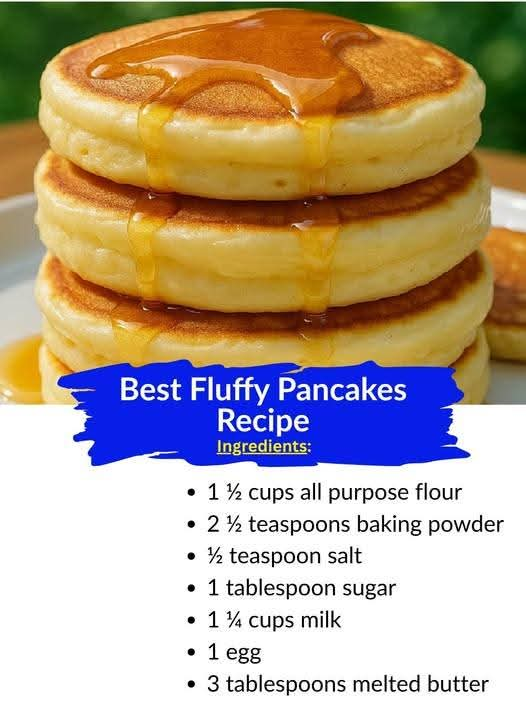
Best Fluffy Pancakes Recipe: Soft, Light, and Delicious Homemade Pancakes
Introduction
There is nothing quite like waking up to a stack of warm, fluffy homemade pancakes. With their golden-brown edges, soft centers, and wonderfully tender texture, these classic pancakes make every breakfast feel special. They are simple to prepare with everyday ingredients and taste even better when served fresh from the pan with butter, maple syrup, fresh fruit, or your favorite toppings.
This Best Fluffy Pancakes Recipe is perfect for lazy weekend mornings, family breakfasts, holiday brunches, or whenever you crave a comforting homemade treat. The secret to making them extra fluffy is using fresh baking powder, measuring the ingredients correctly, and mixing the batter gently without overworking it.
Once you try these easy homemade pancakes, they may quickly become a favorite breakfast tradition in your kitchen.
Ingredients
Preparation time: 10 minutes
Cooking time: 15 minutes
Total time: 25 minutes
Servings: 4 people
Yield: Approximately 8 medium pancakes
Dry Ingredients
- 1 ½ cups all-purpose flour
- 2 ½ teaspoons baking powder
- ½ teaspoon salt
- 1 tablespoon granulated sugar
Wet Ingredients
- 1 ¼ cups milk
- 1 large egg
- 3 tablespoons unsalted butter, melted and slightly cooled
Optional Toppings
- Maple syrup or honey
- A small pat of butter
- Fresh strawberries, blueberries, or banana slices
- Powdered sugar
- Whipped cream
- Chocolate chips
- Cinnamon or vanilla extract
Instructions
Step 1: Prepare the Dry Ingredients
In a large mixing bowl, combine the all-purpose flour, baking powder, salt, and sugar. Whisk everything together until evenly distributed.
This step is important because it helps spread the baking powder throughout the flour, allowing the pancakes to rise evenly and develop a light, fluffy texture.
Step 2: Mix the Wet Ingredients
In a separate bowl, whisk together the milk and egg until well combined. Slowly add the melted butter while whisking.
Make sure the butter has cooled slightly before adding it to the egg mixture. Very hot butter can cook the egg and create unwanted lumps.
Step 3: Combine the Batter
Pour the wet ingredients into the bowl of dry ingredients. Gently stir with a whisk or spatula until the flour is just incorporated.
Do not worry if the batter contains a few small lumps. Overmixing develops gluten in the flour, which can make pancakes tough instead of soft and tender.
The batter should be thick but pourable. If it seems unusually thick, add a small splash of milk.
Step 4: Let the Batter Rest
Allow the batter to rest for 5–10 minutes before cooking.
This brief resting period gives the flour time to absorb the liquid and helps the pancakes cook more evenly. You may notice a few bubbles forming in the batter, which is perfectly normal.
Step 5: Heat the Pan
Place a nonstick skillet or griddle over medium-low to medium heat. Lightly grease the cooking surface with butter or a little oil.
Allow the pan to heat thoroughly before adding the batter. If the pan is too hot, the outside of the pancakes may brown before the centers are fully cooked.
Step 6: Cook the Pancakes
Pour approximately ¼ cup of batter onto the heated skillet for each pancake.
Cook for about 2–3 minutes, or until bubbles appear on the surface and the edges begin to look set. Carefully slide a spatula underneath and flip the pancake.
Cook the second side for another 1–2 minutes, until golden brown and cooked through.
Adjust the heat as necessary, and lightly grease the pan between batches if needed.
Step 7: Keep Them Warm
Transfer the cooked pancakes to a plate. If you are making several batches, keep them warm in a low-temperature oven while finishing the remaining batter.
Avoid stacking them too tightly while they are steaming hot if you want to preserve their lightly golden surfaces.
Step 8: Add Your Favorite Toppings
Serve the pancakes immediately while they are warm and fluffy. Add a little butter and drizzle with maple syrup, or choose fresh fruit, honey, yogurt, or another favorite topping.
For an extra-special breakfast, serve them with scrambled eggs, fresh fruit, or a cup of coffee or tea.
Cooking Methods
Traditional Skillet Method
The skillet method is ideal for achieving beautifully golden pancakes with soft, fluffy centers. Use medium-low to medium heat and cook each pancake until bubbles form before flipping.
Electric Griddle Method
An electric griddle is useful when preparing breakfast for several people. Preheat it according to the manufacturer’s instructions, lightly grease the surface, and cook the pancakes in batches without overcrowding.
Oven Method for Keeping Pancakes Warm
Preheat the oven to approximately 200°F (95°C). Place finished pancakes on an oven-safe plate or baking sheet and keep them warm while preparing the rest.
This method helps you serve everyone warm pancakes at the same time.
The History of Pancakes
Pancakes are among the oldest known prepared foods, with variations appearing in many cultures throughout history. Early versions were made from simple mixtures of ground grains and liquids, cooked on hot stones or over open fires.
Over time, different regions developed their own pancake traditions. French crêpes are famously thin, while American-style pancakes are generally thicker and fluffier. British pancakes, Russian blini, and other regional varieties demonstrate how a simple mixture of flour and liquid can become a beloved dish around the world.
Modern American pancakes often use baking powder to create their characteristic rise. This convenient ingredient helps produce the soft, airy texture that makes fluffy pancakes so popular at breakfast tables today.
Formation: What Makes Pancakes Fluffy?
The perfect pancake depends on a few simple principles.
1. Baking powder creates lift.
Baking powder releases carbon dioxide when it reacts and heats up, forming bubbles that help the batter rise.
2. Gentle mixing keeps the texture tender.
Mixing the batter just until combined prevents excessive gluten development, helping the pancakes remain soft.
3. Resting improves consistency.
A short resting period allows the flour to absorb liquid, making the batter easier to cook evenly.
4. Correct heat prevents burning.
Moderate heat gives the inside enough time to cook before the outside becomes too dark.
5. Flipping at the right time matters.
Wait until bubbles appear and the edges begin to set before turning each pancake. Flip only once whenever possible for an even, attractive finish.
Tips for the Best Homemade Pancakes
- Check that your baking powder is fresh for the best rise.
- Measure the flour accurately rather than packing it tightly into the measuring cup.
- Do not overmix the batter.
- Let the melted butter cool before adding it to the egg.
- Avoid pressing down on the pancakes with your spatula.
- Keep the pan at a steady temperature.
- Make a small test pancake first if you are unsure whether the skillet is hot enough.
- Add chocolate chips or blueberries to individual pancakes after pouring the batter onto the skillet.
- For extra flavor, add 1 teaspoon of vanilla extract to the wet ingredients.
- If the batter becomes too thick while resting, stir in a little additional milk.
Delicious Pancake Variations
Blueberry Pancakes
Gently fold ½ cup of fresh or frozen blueberries into the batter. Cook as directed and serve with maple syrup.
Chocolate Chip Pancakes
Add ¼ cup of chocolate chips to the batter for a sweet breakfast treat.
Cinnamon Pancakes
Add ½ teaspoon of ground cinnamon to the dry ingredients for a warm, comforting flavor.
Banana Pancakes
Add ½ mashed ripe banana to the wet ingredients. The batter may become slightly thicker, so add a splash of milk if necessary.
Buttermilk-Style Pancakes
Replace the regular milk with 1 ¼ cups of buttermilk. The pancakes will have a pleasant tang and a tender texture. Because the recipe already contains baking powder, this substitution should work without other major changes.
Storage and Reheating
Refrigerator: Allow leftover pancakes to cool, then store them in an airtight container for up to 3–4 days.
Freezer: Place cooled pancakes in a single layer until frozen, then transfer them to a freezer-safe bag with parchment between layers. For best quality, use within 2 months.
Microwave: Heat individual pancakes for approximately 20–40 seconds, adjusting the time as needed.
Toaster: Reheat pancakes in a toaster for lightly crisp edges and a warm center.
Oven: Arrange pancakes on a baking sheet and warm at 325°F (165°C) until heated through.
Frequently Asked Questions
Why are my pancakes not fluffy?
Common causes include expired baking powder, overmixing the batter, or using a pan that is too hot. Measure carefully and stir gently.
Can I prepare the batter ahead of time?
For the fluffiest results, cook the pancakes soon after mixing. The baking powder begins working once the wet and dry ingredients are combined, so storing the batter for a long time can reduce its lifting power.
Can I make pancakes without butter?
Yes. You can replace the melted butter with the same amount of neutral vegetable oil. The flavor and texture may be slightly different.
How do I know when to flip a pancake?
Look for bubbles across the surface, edges that appear set, and a bottom that is golden brown. Then flip gently.
Can I make smaller pancakes?
Absolutely. Use 1–2 tablespoons of batter per pancake and reduce the cooking time as needed.
Can I make this recipe dairy-free?
Yes. Use an unsweetened plant-based milk and replace the butter with melted dairy-free butter or neutral oil.
Conclusion
These Best Fluffy Pancakes are proof that a delicious breakfast does not need complicated ingredients or special equipment. With flour, baking powder, milk, an egg, butter, sugar, and salt, you can create a stack of golden, tender pancakes that everyone will enjoy.
The most important secrets are simple: use fresh baking powder, avoid overmixing, let the batter rest briefly, and cook over moderate heat.
Whether you serve them with maple syrup, fresh fruit, melted butter, or chocolate chips, these homemade pancakes are a wonderful way to bring comfort and happiness to the breakfast table.
Prepare a batch for your family, enjoy them fresh from the skillet, and make this easy recipe part of your favorite breakfast traditions.
For Pancake Lovers
If you love soft, fluffy pancakes with golden edges and a tender center, this recipe deserves a place in your breakfast collection. It is easy enough for busy mornings and special enough for a relaxing weekend brunch.
Try a different topping each time, share a warm stack with your loved ones, and enjoy the simple pleasure of homemade pancakes made from scratch.
Recipe reminder: The fluffiest pancakes come from gentle mixing, fresh baking powder, and a properly heated pan. Serve warm for the very best experience.