
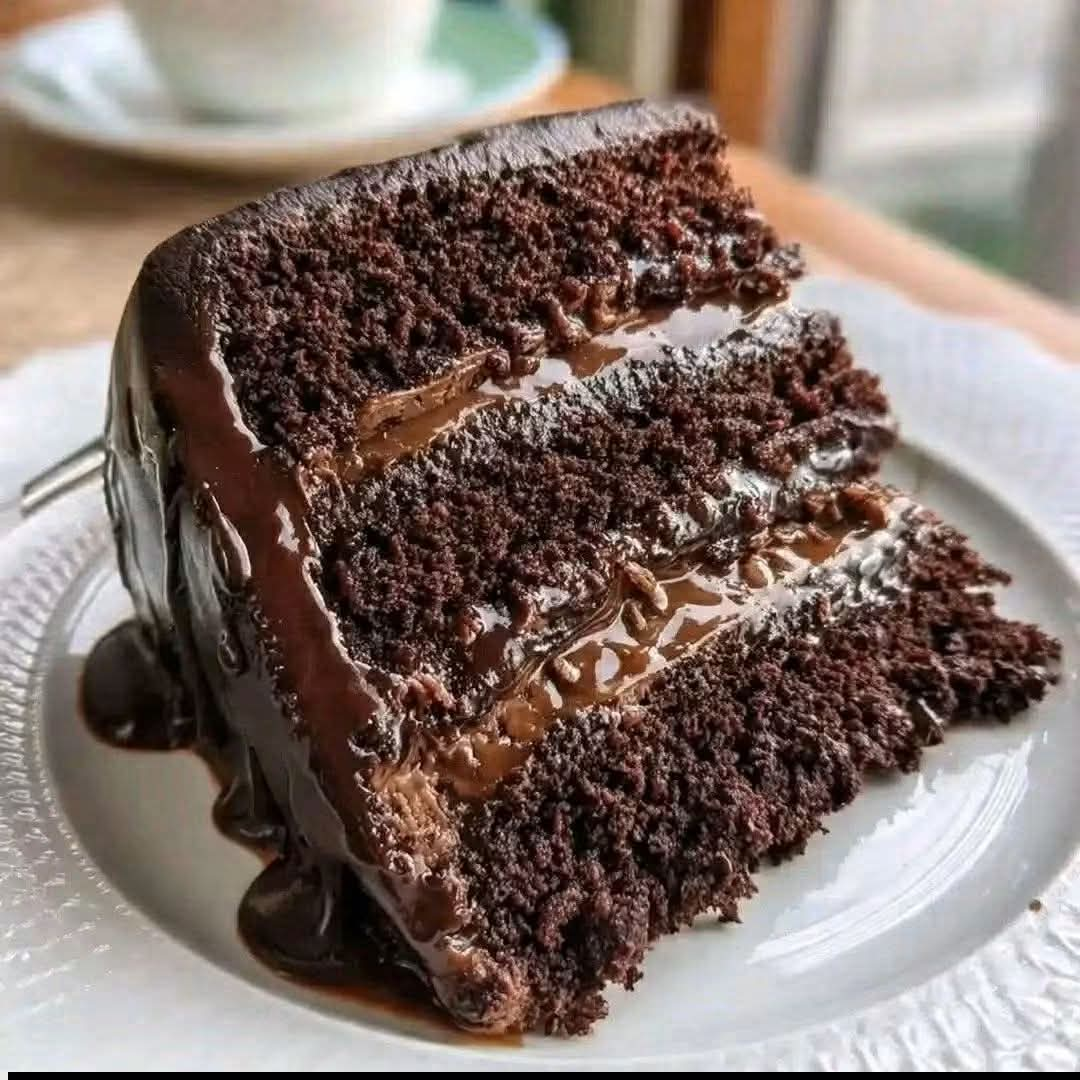
Chocolate Fudge Cake
Introduction
Chocolate Fudge Cake is the kind of dessert made for serious chocolate lovers. It features three tender layers of deeply chocolatey cake, generously filled and covered with a smooth, rich chocolate fudge frosting. The cake has a soft, moist crumb, while the frosting provides a dense and luxurious chocolate finish.
The secret to the cake’s texture is the combination of cocoa powder, vegetable oil, milk or buttermilk, and hot water or coffee. The hot liquid helps the cocoa bloom and produces a thin batter that transforms into an exceptionally moist cake during baking.
This cake is ideal for birthdays, holidays, family celebrations, dinner parties, afternoon desserts, or simply a weekend baking project when you want something truly indulgent.
Ingredients
For the Chocolate Cake
- 3 cups all-purpose flour, approximately 375 g
- 2 1/2 cups granulated sugar, approximately 500 g
- 1 cup unsweetened cocoa powder, approximately 100 g
- 2 1/2 teaspoons baking powder
- 2 teaspoons baking soda
- 1 teaspoon salt
- 1 cup vegetable oil, approximately 240 ml
- 3 large eggs
- 1 1/2 cups milk or buttermilk, approximately 360 ml
- 1 1/2 cups hot water or hot coffee, approximately 360 ml
- 2 teaspoons vanilla extract
For the Chocolate Fudge Frosting
- 2 1/2 cups unsalted butter, softened, approximately 560 g
- 1 1/2 cups unsweetened cocoa powder, approximately 150 g
- 6 cups powdered sugar
- 1/2 cup melted dark chocolate, approximately 120 g
- 1/2 cup milk or cream, approximately 120 ml
- 2 teaspoons vanilla extract
Equipment
- Three 8-inch or 9-inch round cake pans
- Parchment paper
- Two large mixing bowls
- Electric mixer
- Whisk
- Rubber spatula
- Cooling racks
- Cake turntable, optional
- Offset spatula
- Cake scraper, optional
Instructions
Step 1: Prepare the Oven and Pans
Preheat the oven to 170°C, approximately 340°F.
Grease three round cake pans thoroughly and line the bottoms with parchment paper.
For particularly easy removal, lightly grease the parchment as well and dust the sides with a thin layer of cocoa powder.
Try to use pans of the same size so the three layers bake evenly.
Step 2: Combine the Dry Ingredients
In a large mixing bowl, add the flour, granulated sugar, cocoa powder, baking powder, baking soda, and salt.
Whisk everything together thoroughly.
Breaking up any lumps of cocoa powder at this stage will help create a smoother cake batter later.
The combination of baking powder and baking soda provides the leavening necessary to give the cake structure while maintaining a soft crumb.
Step 3: Prepare the Wet Ingredients
In a separate bowl, combine the vegetable oil, eggs, milk or buttermilk, and vanilla extract.
Whisk until the eggs are fully incorporated and the mixture is smooth.
Buttermilk gives the cake a slightly tangy flavor and contributes to a tender crumb. Regular milk can also be used for a milder flavor.
Step 4: Combine the Wet and Dry Mixtures
Slowly add the wet ingredients to the dry ingredients.
Mix gently until the ingredients are just combined.
Do not worry if the batter is not extremely thick at this stage. The final addition of hot liquid will make it considerably thinner.
Avoid excessive mixing because overworking the flour can produce a heavier cake.
Step 5: Add the Hot Water or Coffee
Slowly pour the hot water or hot coffee into the batter while mixing gently.
Continue mixing until the liquid has been incorporated and the batter is smooth.
The batter will be quite thin. This is normal.
If using coffee, it does not necessarily make the cake taste like coffee. Instead, coffee can intensify the flavor of the chocolate and create a deeper chocolate profile.
If you prefer not to use coffee, hot water works perfectly well.
Step 6: Divide the Batter
Pour the batter evenly among the three prepared cake pans.
For perfectly even layers, divide the batter using a kitchen scale.
Gently tap the pans against the counter once or twice to release any large air bubbles.
Do not overdo this, as the batter is quite fluid.
Step 7: Bake the Cakes
Place the pans in the preheated oven.
Bake until a skewer or toothpick inserted into the center comes out clean or with a few moist crumbs attached.
The exact baking time will depend on the size of the pans and your oven, so begin checking toward the end of the expected baking period.
The cakes should look set in the center and should gently spring back when lightly touched.
Avoid overbaking because this can reduce the moisture that makes fudge cake so appealing.
Step 8: Cool the Cake Layers
Remove the cakes from the oven and allow them to cool in their pans for approximately 10 minutes.
Carefully run a thin knife around the edges if necessary.
Turn the cakes onto cooling racks and remove the parchment paper.
Allow the layers to cool completely before frosting.
For easier assembly, you can wrap the cooled layers and refrigerate them for a short time. Chilled cake layers are generally easier to stack and frost.
Preparing the Chocolate Fudge Frosting
Step 9: Beat the Butter
Place the softened butter in a large mixing bowl.
Beat with an electric mixer until it becomes lighter, smoother, and creamy.
Properly softened butter is important because it allows the frosting to become smooth without requiring excessive mixing.
Step 10: Add the Cocoa Powder
Add the cocoa powder to the butter.
Mix on low speed initially to prevent the cocoa from becoming airborne, then increase the speed and beat until thoroughly combined.
Scrape down the sides of the bowl.
Step 11: Add the Melted Chocolate
Make sure the melted dark chocolate has cooled slightly but remains fluid.
Add it to the butter and cocoa mixture.
Beat until the chocolate is evenly incorporated.
The melted chocolate gives the frosting additional richness and a more intense fudge character.
Step 12: Add the Powdered Sugar
Gradually add the powdered sugar.
Add it in several portions rather than all at once.
Mix well after each addition.
As the frosting becomes thicker, gradually add some of the milk or cream to achieve the desired consistency.
Step 13: Add the Vanilla and Adjust the Texture
Add the vanilla extract and continue beating.
Add the remaining milk or cream gradually until the frosting becomes smooth, rich, and spreadable.
The final consistency should be firm enough to hold between the layers but soft enough to spread easily over the cake.
If the frosting is too soft, add a little more powdered sugar.
If it is too thick, add a small amount of milk or cream.
Assembling the Chocolate Fudge Cake
Step 14: Prepare the First Layer
Place the first completely cooled cake layer on a serving board or cake stand.
If the top is noticeably domed, carefully level it with a serrated knife.
Spread a generous layer of chocolate fudge frosting over the top.
Use an offset spatula to create an even layer.
Step 15: Add the Second Layer
Place the second cake layer carefully over the frosting.
Press very gently to secure it.
Spread another generous layer of frosting across the second layer.
Try to keep the filling level so the finished cake remains straight.
Step 16: Add the Final Layer
Place the third cake layer on top.
If necessary, gently adjust the layers so they are centered.
Apply a thin layer of frosting around the entire cake as a crumb coat.
The crumb coat helps trap loose crumbs and creates a cleaner final finish.
Chill the cake briefly to allow the first layer of frosting to firm up.
Step 17: Finish the Cake
Apply the remaining chocolate fudge frosting to the top and sides.
Smooth the frosting with an offset spatula or cake scraper.
You can create a completely smooth finish or leave decorative swirls for a more homemade appearance.
For an especially dramatic chocolate presentation, finish with chocolate shavings, curls, or a light dusting of cocoa powder.
Methods and Techniques
The Cocoa Blooming Method
Adding hot water or coffee to a cocoa-based batter helps release and intensify the flavor compounds in the cocoa powder.
This contributes to the cake’s deep chocolate character.
The Oil-Based Cake Method
Unlike cakes made primarily with butter, this recipe uses vegetable oil as the main fat in the cake batter.
Oil remains liquid at room temperature, helping the cake retain a moist and tender texture.
The Layering Method
Three separate cake layers are assembled with chocolate fudge frosting between them.
This creates multiple layers of cake and frosting, ensuring that every slice contains a generous combination of both.
The Crumb-Coating Method
A thin layer of frosting is applied around the cake before the final decorative layer.
This traps loose crumbs and gives the final frosting a cleaner appearance.
The Fudge Frosting Method
The frosting combines butter, cocoa powder, melted dark chocolate, powdered sugar, and milk or cream.
The cocoa supplies intense chocolate flavor, while melted chocolate provides richness and a smooth fudge-like quality.
History and Inspiration
Chocolate cake has a long history in American and European baking, but the modern chocolate layer cake developed alongside the increasing availability of cocoa powder and commercially produced chocolate.
Fudge itself became popular in American confectionery during the late nineteenth century. Its characteristic combination of sugar, butter, dairy, and chocolate inspired many later cakes, frostings, brownies, and other desserts.
Chocolate fudge cake combines these traditions. Rather than being simply a chocolate sponge covered with a thin frosting, it emphasizes richness and moisture throughout the dessert.
The use of cocoa powder in the cake creates a pronounced chocolate foundation, while the fudge frosting provides a second, more concentrated chocolate component.
Over time, chocolate layer cakes have become associated with birthdays, celebrations, holidays, family gatherings, and special desserts shared around the table.
Formation of the Cake
This dessert is formed from two main components: the chocolate cake and the chocolate fudge frosting.
The cake layers are made with flour, cocoa, sugar, eggs, oil, milk, leavening agents, vanilla, and hot liquid.
The dry ingredients create the structure, while the eggs help bind the mixture. Oil contributes moisture and tenderness, and the baking powder and baking soda help the layers rise.
Once baked and cooled, the three layers are stacked.
Chocolate fudge frosting is placed between each layer and then spread over the outside.
The result is a tall, rich cake with alternating layers of soft chocolate cake and creamy chocolate frosting.
Serving Suggestions
Allow the cake to sit at room temperature for a short period before serving if it has been refrigerated.
Use a sharp knife to cut each slice.
For particularly clean cuts, wipe the knife with a warm, damp cloth between slices.
Serve the cake on its own for an intensely chocolate dessert.
For an extra indulgent presentation, serve it with vanilla ice cream, lightly sweetened whipped cream, fresh berries, or a small drizzle of warm chocolate sauce.
A cup of coffee or tea also pairs beautifully with the rich chocolate flavor.
Storage
Store the finished cake in a covered container.
If the room is cool, it can be kept at room temperature for a short period. For longer storage, refrigeration is recommended.
If refrigerated, allow the cake to sit at room temperature before serving so the frosting can soften.
The cake can also be prepared in advance. The individual cake layers can be wrapped well and kept refrigerated until you are ready to assemble the dessert.
Helpful Tips for Success
Use unsweetened cocoa powder rather than sweetened cocoa drink mix.
Measure flour accurately. Too much flour can make the cake heavier and drier.
Use room-temperature eggs and milk when possible for easier mixing.
Do not be concerned when the finished batter appears very thin.
Make sure the melted chocolate used in the frosting has cooled slightly before adding it to the butter.
Add powdered sugar gradually.
Do not frost the cake while the cake layers are still warm.
For the most even cake, divide the batter equally between the pans.
Do not overbake the cake layers.
Chilling the assembled cake briefly before slicing can make cutting easier and cleaner.
Variations
Chocolate Coffee Fudge Cake
Use hot coffee instead of water and add a small amount of espresso powder to intensify the chocolate flavor.
Dark Chocolate Fudge Cake
Use dark cocoa powder and dark chocolate for a more intense chocolate profile.
Chocolate Peanut Butter Fudge Cake
Add a thin layer of peanut butter frosting between the chocolate layers before adding the fudge frosting.
Chocolate Raspberry Fudge Cake
Spread a thin layer of raspberry preserves between the cake layers along with the chocolate frosting.
Chocolate Caramel Fudge Cake
Add caramel sauce between the layers and drizzle additional caramel over the finished cake.
Nutty Chocolate Fudge Cake
Add finely chopped toasted pecans or walnuts between the layers or sprinkle them over the finished cake.
Conclusion
Chocolate Fudge Cake is a rich, impressive dessert built around one simple idea: more chocolate, more richness, and a beautifully moist texture.
The three layers of tender chocolate cake provide the foundation, while the creamy fudge frosting adds a deep chocolate finish between every layer and around the entire cake.
The use of hot water or coffee helps develop the cocoa flavor, while vegetable oil keeps the cake soft and moist. The result is a dessert that remains tender while carrying the substantial richness expected from a classic fudge cake.
Whether prepared for a birthday, holiday, family gathering, dinner party, or simply because you are craving chocolate, this cake offers a memorable homemade dessert experience.
For Chocolate Lovers
Chocolate Fudge Cake is particularly satisfying for anyone who prefers desserts with a strong chocolate presence rather than a light or delicate flavor.
Every slice combines soft chocolate cake with creamy fudge frosting, creating a rich texture from the first bite to the last.
The three-layer design also makes the cake ideal for celebrations because it creates an impressive centerpiece without requiring complicated decorating techniques.
For chocolate lovers, the combination of cocoa, melted dark chocolate, and chocolate frosting makes this cake a classic choice that can be enjoyed with coffee, tea, ice cream, or simply on its own.
The best part is that the recipe remains adaptable. You can keep the decoration simple, add chocolate curls for elegance, introduce nuts for crunch, or add caramel or berries for another flavor dimension.
This is a cake made to be shared, celebrated, and remembered.