
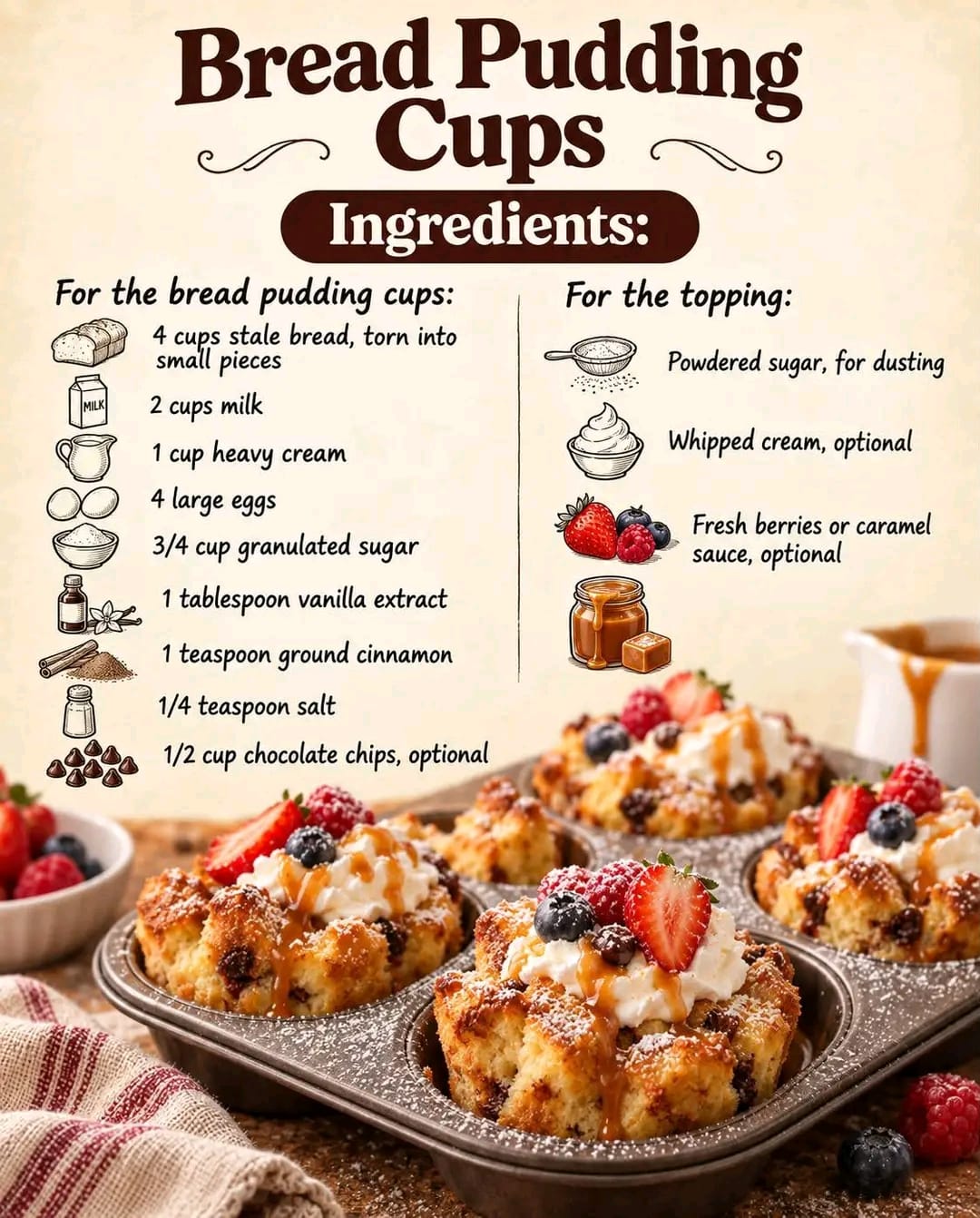
Cinnamon Bread Pudding Cups
Introduction
There is something wonderfully comforting about a warm bread pudding fresh from the oven. This recipe takes that classic homemade dessert and turns it into simple individual cups that are easy to prepare, easy to serve, and filled with the familiar flavors of cinnamon, vanilla, and buttery baked bread.
The method is wonderfully simple. Tear or cube the bread, soak it in a sweet cinnamon custard, spoon the mixture into baking cups, and let the oven transform it into a golden, tender dessert. As it bakes, the kitchen fills with the warm aroma of cinnamon and vanilla, making this recipe feel like something that belongs in a family kitchen on a cozy afternoon.
It is also an excellent way to use bread that is slightly stale. Instead of throwing it away, the bread absorbs the creamy custard and becomes soft in the center while developing lightly browned edges.
Ingredients
For the Bread Pudding Cups
- 4 cups cubed bread, preferably day-old bread
- 2 large eggs
- 1 1/2 cups whole milk
- 1/3 cup granulated sugar
- 2 tablespoons melted butter
- 1 teaspoon vanilla extract
- 1 teaspoon ground cinnamon
- 1/4 teaspoon ground nutmeg
- 1/4 teaspoon salt
- 1/3 cup raisins, optional
- 2 tablespoons chopped pecans or walnuts, optional
For the Cinnamon Topping
- 1 tablespoon brown sugar
- 1/2 teaspoon ground cinnamon
- 1 tablespoon melted butter
Optional Serving Ideas
- Powdered sugar
- Warm caramel sauce
- Vanilla glaze
- Whipped cream
- A scoop of vanilla ice cream
- Fresh berries
Instructions
Step 1: Prepare the Bread
Cut the bread into small cubes. Day-old or slightly stale bread works especially well because it absorbs the custard without becoming completely mushy.
If your bread is very fresh, spread the cubes on a baking sheet and let them sit uncovered for 20 to 30 minutes. You can also place them in a low oven for several minutes to dry them slightly.
Step 2: Make the Cinnamon Custard
In a large mixing bowl, whisk together the eggs, milk, sugar, melted butter, vanilla extract, cinnamon, nutmeg, and salt.
Whisk until the sugar begins to dissolve and the mixture is smooth.
The cinnamon should be evenly distributed throughout the custard so every piece of bread gets plenty of flavor.
Step 3: Soak the Bread
Add the cubed bread to the bowl of custard.
Gently fold everything together until the bread is completely coated. Allow the mixture to rest for about 10 minutes.
During this time, the bread absorbs the cinnamon custard. Stir once or twice so that the liquid is distributed evenly.
If you are adding raisins or chopped nuts, fold them in after the bread has soaked.
Step 4: Prepare the Cups
Preheat the oven to 350°F (175°C).
Lightly grease 6 to 8 oven-safe ramekins or muffin cups with butter or cooking spray.
Divide the soaked bread mixture evenly between the cups. Do not pack the bread down too firmly. Leaving a little space allows the pudding to rise and bake evenly.
Step 5: Add the Cinnamon Topping
Mix the brown sugar and cinnamon together.
Sprinkle a small amount over each bread pudding cup, then drizzle lightly with melted butter.
This simple topping creates a deliciously fragrant and slightly caramelized surface as the puddings bake.
Step 6: Bake
Place the cups on a baking sheet and transfer them to the preheated oven.
Bake for approximately 25 to 35 minutes, depending on the size of the cups.
The tops should be lightly golden and the centers should look set but still tender.
A toothpick inserted near the center should come out mostly clean with a few moist crumbs.
Step 7: Rest and Serve
Remove the cups from the oven and allow them to cool for about 5 to 10 minutes.
They will continue to set slightly as they cool.
Serve warm with powdered sugar, caramel sauce, vanilla glaze, whipped cream, or a scoop of vanilla ice cream.
Method
The secret to this recipe is the soaking process.
Bread pudding works because bread acts like a sponge. The dry structure of the bread absorbs the mixture of eggs, milk, sugar, butter, and spices. Once placed in the oven, the eggs help the custard set while the milk keeps the interior soft and creamy.
Using slightly stale bread is particularly helpful because it has lost some of its moisture and can absorb more of the custard.
The individual-cup method also makes the dessert convenient. Instead of baking one large pudding and cutting it into portions, every serving is prepared separately. This makes the recipe especially useful for family breakfasts, brunches, holiday gatherings, afternoon treats, and casual desserts.
The History of Bread Pudding
Bread pudding has a long tradition in home cooking because it was created around a very practical idea: do not waste bread.
Across different cultures, cooks have found ways to transform leftover bread into comforting dishes by soaking it in milk, eggs, sugar, or other flavorful mixtures before baking it.
Sweet bread puddings became especially popular because inexpensive everyday ingredients could be turned into a satisfying dessert.
Cinnamon, vanilla, raisins, nuts, and butter became familiar additions because they provide warmth and richness without requiring complicated techniques.
This individual version follows the same traditional principle while giving it a modern presentation.
Formation and Texture
The finished bread pudding should have two contrasting textures.
The outside should be lightly golden and slightly firm, while the center should remain soft, moist, and custard-like.
The bread should hold its shape without being dry.
If the pudding seems dry, it may have been baked too long or the bread may have absorbed too little custard. If the center remains extremely wet after the recommended baking time, continue baking for several additional minutes.
The exact baking time can vary depending on the type of bread, the size of the cups, and how much custard the bread absorbs.
Tips for the Best Results
Use day-old bread whenever possible. It absorbs the custard beautifully.
Do not rush the soaking process. Giving the bread several minutes to absorb the custard produces a more evenly textured pudding.
Do not overpack the cups. A loose mixture allows the custard to circulate around the bread.
For a richer result, replace part of the milk with half-and-half or heavy cream.
For extra cinnamon flavor, add another small pinch of cinnamon to the custard.
For a holiday variation, add raisins, chopped pecans, dried cranberries, or a small amount of orange zest.
For a caramel version, drizzle warm caramel sauce over the finished pudding just before serving.
Make-Ahead Method
The bread pudding mixture can be prepared several hours ahead of baking.
Prepare the bread and custard, combine them, cover the bowl, and refrigerate.
When ready to bake, divide the mixture into greased cups and bake until golden and set.
If the mixture is very cold when it goes into the oven, it may require a few additional minutes of baking time.
Storage
Allow leftover bread pudding cups to cool before covering and refrigerating them.
Store them in the refrigerator for up to 3 days.
To reheat, place an individual cup in the microwave for a short period until warmed through, or place the cups in a moderate oven until hot.
A small drizzle of milk, cream, or caramel sauce can help restore moisture when reheating.
Why People Love These Cinnamon Bread Pudding Cups
These little puddings have everything people look for in a comforting homemade dessert.
They are inexpensive, simple to prepare, wonderfully fragrant, and flexible enough to customize.
They are also a perfect solution when you have leftover bread in the kitchen.
The cinnamon and vanilla create a familiar bakery-like aroma, while the baked bread becomes tender and rich from the custard. The lightly caramelized top gives each serving just enough texture to balance the soft center.
Most importantly, this is the kind of recipe that feels homemade without requiring complicated baking skills.
Conclusion
Cinnamon Bread Pudding Cups are proof that a handful of simple ingredients can create something incredibly comforting.
The process starts with ordinary bread, but after soaking it in a sweet cinnamon custard and baking it until golden, it becomes a warm dessert with a soft center, fragrant spices, and a beautiful homemade character.
Whether served after dinner, alongside a cup of coffee, or as part of a weekend breakfast or brunch, these individual bread pudding cups are an easy recipe worth keeping.
The best part is the aroma that fills the kitchen while they bake. It is warm, sweet, familiar, and comforting—the kind of smell that makes everyone wonder when dessert will be ready.