
Cinnamon Sugar Pumpkin Bread
Introduction
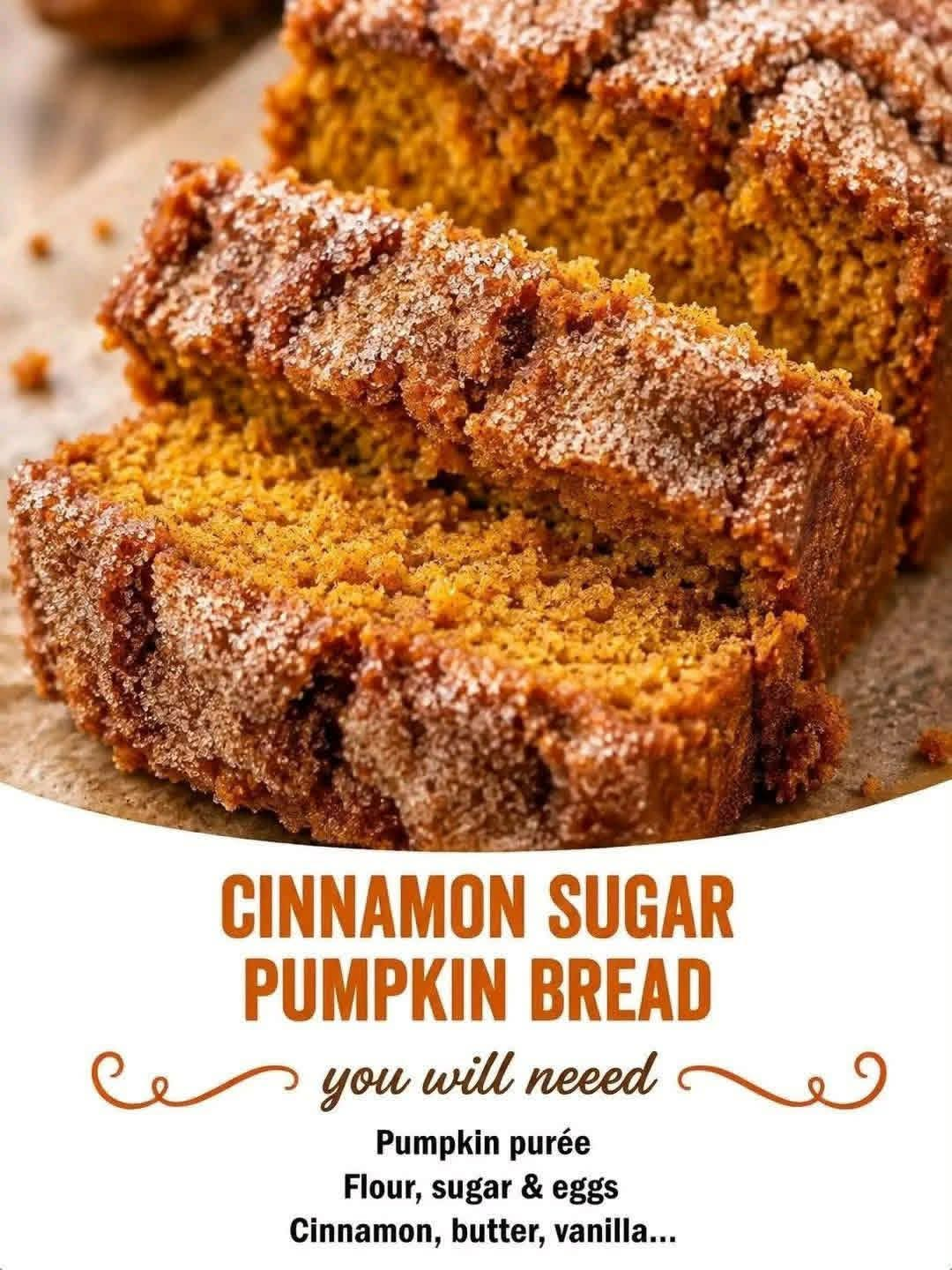
Cinnamon Sugar Pumpkin Bread is a wonderfully moist and fragrant quick bread that brings together the comforting flavors of pumpkin, warm cinnamon, brown sugar, and vanilla. The loaf has a tender pumpkin-rich center, a beautiful cinnamon-sugar swirl running through the middle, and a sweet, lightly crunchy topping that becomes golden as it bakes.
It is the kind of homemade bread that fills the kitchen with the unmistakable aroma of fall. Served warm with coffee, tea, or a glass of milk, it makes a wonderful breakfast, afternoon treat, or simple dessert. The best part is that it requires no yeast and no complicated bread-making techniques. Everything comes together in one bowl with a few simple ingredients.
Ingredients
For the Pumpkin Bread
- 1 3/4 cups all-purpose flour
- 1 teaspoon baking soda
- 1/2 teaspoon baking powder
- 1/2 teaspoon salt
- 2 teaspoons ground cinnamon
- 1/2 teaspoon ground nutmeg
- 1/4 teaspoon ground ginger
- 1/4 teaspoon ground cloves
- 2 large eggs
- 1 cup pumpkin puree
- 3/4 cup granulated sugar
- 1/2 cup packed brown sugar
- 1/2 cup vegetable oil
- 1/4 cup milk
- 2 teaspoons vanilla extract
For the Cinnamon-Sugar Swirl
- 1/4 cup granulated sugar
- 1 tablespoon ground cinnamon
- 1 tablespoon brown sugar
For the Crunchy Cinnamon-Sugar Top
- 2 tablespoons granulated sugar
- 1 teaspoon ground cinnamon
- 1 tablespoon brown sugar
- 1 tablespoon melted butter
Instructions
- Preheat the oven to 350°F (175°C). Grease a 9-by-5-inch loaf pan and line it with parchment paper, leaving some parchment hanging over the sides to make the finished loaf easier to remove.
- In a medium bowl, whisk together the flour, baking soda, baking powder, salt, cinnamon, nutmeg, ginger, and cloves. Mixing the dry ingredients first helps distribute the spices and leavening evenly throughout the bread.
- In a large bowl, whisk the eggs, pumpkin puree, granulated sugar, brown sugar, vegetable oil, milk, and vanilla until smooth and well combined.
- Gradually add the dry ingredients to the pumpkin mixture. Stir gently just until no large streaks of flour remain. Do not overmix the batter, because excessive mixing can make the finished loaf dense rather than tender.
- In a small bowl, combine the sugar, cinnamon, and brown sugar for the swirl.
- Pour approximately half of the pumpkin batter into the prepared loaf pan and spread it into an even layer.
- Sprinkle the cinnamon-sugar mixture evenly over the batter.
- Carefully spoon the remaining pumpkin batter over the cinnamon-sugar layer and gently spread it to cover the surface.
- For the topping, combine the granulated sugar, cinnamon, brown sugar, and melted butter. Mix until the mixture resembles coarse, moist crumbs.
- Sprinkle the cinnamon-sugar topping evenly over the loaf.
- Place the pan in the preheated oven and bake for approximately 55 to 70 minutes, or until a toothpick inserted into the center comes out clean or with only a few moist crumbs attached.
- If the top begins to brown too quickly while the center is still baking, loosely cover the loaf with aluminum foil during the final portion of baking.
- Remove the bread from the oven and allow it to cool in the pan for about 15 minutes.
- Use the parchment paper to carefully lift the loaf from the pan and transfer it to a cooling rack.
- Allow it to cool for at least 30 minutes before slicing. For especially clean slices, allow the loaf to cool completely.
Method
The secret to achieving an ultra-moist pumpkin bread is balancing the pumpkin puree with the oil, eggs, and small amount of milk. Pumpkin contributes natural moisture and a rich texture, while oil keeps the crumb soft even after the loaf has cooled.
The cinnamon-sugar swirl should be distributed between two layers of batter rather than mixed completely into the pumpkin mixture. This creates a distinct ribbon of sweetness through the center of every slice.
The crunchy topping is made separately and sprinkled over the batter just before baking. As the bread bakes, the butter helps the sugar mixture form a lightly crisp, caramelized crust while the pumpkin bread underneath remains soft.
For the best texture, mix the batter only until the ingredients are combined. A few tiny streaks of flour can be incorporated with the final gentle strokes. Overmixing develops gluten and can make quick bread heavier than intended.
History
Pumpkin bread belongs to the long tradition of American quick breads, which became popular because they could be prepared without yeast and without the lengthy rising times associated with traditional breads.
Pumpkin itself has a much older culinary history in North America. Indigenous peoples cultivated and cooked varieties of squash and pumpkin long before the arrival of European settlers. Over time, pumpkin became incorporated into many American dishes, particularly pies, cakes, puddings, breads, and other baked goods.
The modern pumpkin loaf became especially associated with autumn because canned pumpkin made it easy to prepare throughout the year, while cinnamon, nutmeg, ginger, and cloves naturally complemented the flavor of pumpkin. The combination eventually became a familiar seasonal favorite in American home kitchens.
Cinnamon-sugar toppings and swirls add another traditional baking element. Sugar and warm spices have long been used to create sweet pastries and breads with fragrant interiors and crisp, caramelized surfaces.
Formation
The formation of this pumpkin bread happens in several important stages.
First, the dry ingredients are combined so the flour, spices, salt, baking soda, and baking powder are evenly distributed.
Next, the wet ingredients are blended together. The pumpkin puree provides the characteristic orange color and rich moisture, while the eggs provide structure and help bind the ingredients.
When the wet and dry mixtures are combined, the batter should remain thick and soft. It is then divided into layers so the cinnamon-sugar mixture can form a distinct swirl in the center.
During baking, the leavening agents create small pockets of gas that help the loaf rise. The eggs and flour provide structure as the heat sets the crumb, while the pumpkin, oil, and milk keep the interior moist.
Finally, the sugar topping melts and caramelizes slightly, creating a delicate crunchy surface that contrasts beautifully with the tender pumpkin bread underneath.
Serving Suggestions
This bread is delicious when served slightly warm, when the cinnamon aroma is strongest. It can be sliced thickly and served with butter, cream cheese, or a drizzle of honey.
For breakfast, pair a slice with coffee or tea. For dessert, serve it with a spoonful of whipped cream or vanilla ice cream.
It can also be toasted lightly the next day. The edges become slightly crisp while the center remains soft and flavorful.
Storage
Once completely cooled, store the pumpkin bread in an airtight container at room temperature for up to 3 days.
For longer storage, refrigerate it for up to about 1 week. Allow refrigerated slices to come toward room temperature before serving, or warm them gently.
The loaf can also be frozen. Wrap it tightly in plastic wrap followed by aluminum foil, or place individual slices in freezer-safe bags. Freeze for up to 2 to 3 months. Thaw at room temperature before serving.
Tips for Perfect Pumpkin Bread
Use pure pumpkin puree rather than pumpkin pie filling, because pie filling already contains sugar and spices.
Measure the flour carefully. Too much flour is one of the easiest ways to turn a moist pumpkin loaf into a dry one.
Do not overmix the batter after adding the flour.
Use room-temperature eggs when possible so they incorporate smoothly into the batter.
Let the loaf cool before slicing. Cutting it immediately can cause the tender center to crumble.
For a stronger cinnamon flavor, increase the cinnamon in the swirl slightly.
For extra texture, chopped pecans or walnuts can be added to the batter or sprinkled over the topping.
Conclusion
Cinnamon Sugar Pumpkin Bread is the perfect example of how simple ingredients can create an exceptionally comforting homemade treat. The pumpkin keeps the loaf soft and moist, while cinnamon and brown sugar bring warmth and depth. The cinnamon-sugar ribbon provides a sweet surprise in the center, and the crunchy topping gives every slice a satisfying contrast.
It is an easy recipe to make for a quiet breakfast, a family gathering, a weekend baking project, or an autumn table. Once the loaf is baked and the kitchen is filled with its warm cinnamon aroma, it is difficult to wait for it to cool.
For Pumpkin Bread Lovers
Anyone who loves pumpkin desserts, cinnamon rolls, coffee cakes, or traditional homemade quick breads will likely enjoy this loaf. It has the familiar flavors of a classic pumpkin dessert while being simple enough for everyday baking.
For an even richer version, serve each slice with softened butter or cream cheese. For a more dessert-like presentation, warm the bread and add a small scoop of vanilla ice cream.
This is also an excellent recipe to prepare ahead of time. The flavor becomes even more developed after the loaf has rested, making it a convenient choice when you want a homemade treat ready for guests or family.
The combination of tender pumpkin bread, a fragrant cinnamon-sugar center, and a sweet crunchy crust makes this a recipe worth returning to throughout the fall season and beyond.