
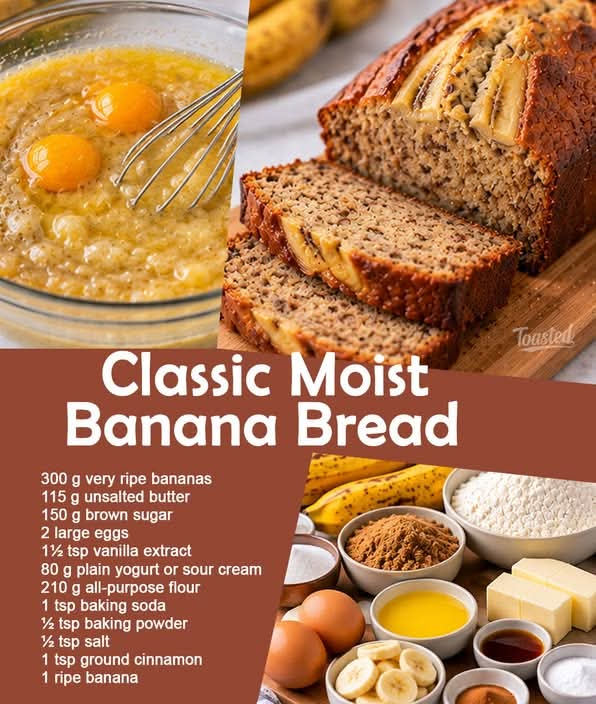
Classic Moist Banana Bread
Introduction
There is something wonderfully comforting about a loaf of homemade banana bread. It is simple, familiar, fragrant, and one of the best ways to transform very ripe bananas into something everyone will want a slice of.
This Classic Moist Banana Bread has a tender crumb, rich banana flavor, a lightly caramelized sweetness from brown sugar, and just enough richness from melted butter. The yogurt or sour cream helps keep the loaf soft and moist, while vanilla adds a gentle warmth that brings all the flavors together.
It is an excellent breakfast, afternoon snack, dessert, or simple homemade treat to enjoy with coffee or tea. The recipe is also wonderfully practical because the bananas are actually better when they are very ripe and naturally sweet.
Ingredients
Wet Ingredients
- 300 g very ripe bananas, mashed
- 115 g unsalted butter, melted and slightly cooled
- 150 g brown sugar
- 2 large eggs, at room temperature
- 1½ teaspoons vanilla extract
- 80 g plain yogurt or sour cream
Dry Ingredients
- 210 g all-purpose flour
- 1 teaspoon baking soda
- ½ teaspoon baking powder
Optional Additions
For a variation, you can also add:
- ½ teaspoon ground cinnamon
- ½ cup chopped walnuts or pecans
- ½ cup chocolate chips
- A small pinch of salt if using unsalted butter without any other seasoning
The basic recipe, however, is delicious without any additions.
Instructions
1. Prepare the Oven
Preheat your oven to 175°C (350°F).
Grease a standard 9 x 5-inch loaf pan and line it with parchment paper, leaving some paper hanging over the sides. This makes removing the finished banana bread much easier.
2. Mash the Bananas
Peel the very ripe bananas and place them in a large mixing bowl.
Mash them with a fork until mostly smooth. A few small pieces of banana are perfectly fine and can add little pockets of banana flavor throughout the loaf.
Very ripe bananas work best because they are softer, sweeter, and more flavorful than firm yellow bananas.
3. Combine the Wet Ingredients
Add the melted butter and brown sugar to the mashed bananas.
Whisk until the mixture is well combined.
Add the eggs one at a time, mixing gently after each addition. Stir in the vanilla extract and yogurt or sour cream.
Mix just until everything is incorporated.
4. Prepare the Dry Ingredients
In a separate bowl, whisk together the flour, baking soda, and baking powder.
This helps distribute the leavening ingredients evenly throughout the flour and prevents concentrated pockets of baking soda or baking powder.
5. Combine Wet and Dry Mixtures
Gradually add the dry ingredients to the banana mixture.
Using a spatula or wooden spoon, gently fold everything together.
Do not overmix the batter. Stop mixing as soon as the flour disappears.
Overmixing can develop too much gluten and make the finished banana bread heavier and tougher instead of soft and tender.
6. Fill the Loaf Pan
Pour the batter into the prepared loaf pan.
Smooth the top gently with a spatula.
If desired, sprinkle a few chopped nuts or chocolate chips over the top before baking.
7. Bake
Place the loaf in the preheated oven and bake for approximately 50 to 60 minutes.
Begin checking around the 50-minute mark. Insert a toothpick or thin skewer into the center of the loaf. It should come out clean or with a few moist crumbs attached.
If the top is becoming too dark before the center is finished, loosely cover the loaf with aluminum foil and continue baking.
8. Cool
Remove the banana bread from the oven and allow it to cool in the pan for approximately 10 to 15 minutes.
Carefully lift it out using the parchment paper and transfer it to a wire rack.
Allow it to cool further before slicing.
Although it can be difficult to wait, allowing the bread to cool helps the crumb finish setting and makes it easier to cut clean slices.
The Method Behind the Moist Texture
The secret to this banana bread is the balance between moisture, fat, sugar, and flour.
The very ripe bananas provide natural sweetness and moisture. Melted butter adds richness without requiring the creaming method used in some traditional cakes. Yogurt or sour cream contributes additional moisture and creates a tender crumb.
Brown sugar is particularly useful because it contains molasses, which gives the loaf a deeper caramel-like flavor while helping maintain a soft texture.
The combination of baking soda and baking powder provides enough lift to produce a nicely risen loaf without making it overly light or cake-like.
Most importantly, the batter should be mixed gently. Once the flour has been added, excessive mixing can make the finished bread dense and chewy.
Formation and Texture
When baked correctly, the loaf should develop a beautifully golden-brown crust while remaining soft and moist inside.
The center should be tender but not wet. The banana flavor should be noticeable in every bite, with the brown sugar and vanilla providing a warm background flavor.
A properly baked banana bread will hold together when sliced but remain soft enough to feel almost cake-like.
The top may naturally develop a crack down the center as the loaf rises. This is completely normal and is one of the classic characteristics of homemade quick bread.
A Brief History of Banana Bread
Banana bread became especially popular in American home kitchens during the 20th century.
The popularity of quick breads grew as baking powder and baking soda became common household ingredients. Unlike yeast breads, quick breads did not require fermentation or lengthy rising times, making them convenient for home bakers.
Banana bread also became a practical way to avoid wasting overripe bananas. Instead of throwing away bananas that had become too soft to eat, home cooks could mash them into cakes, breads, muffins, and other baked goods.
Over time, banana bread became a beloved comfort-food classic. Countless families developed their own versions, adding ingredients such as walnuts, pecans, cinnamon, raisins, coconut, or chocolate chips.
The basic idea remains the same: simple ingredients, very ripe bananas, and a warm oven create something far more delicious than the ingredients might suggest.
Tips for the Best Banana Bread
Use Very Ripe Bananas
The darker and more fragrant the bananas, the better. Very ripe bananas provide more sweetness and a stronger banana flavor.
Do Not Overmix
Once the flour is added, fold gently until just combined. A few tiny streaks of flour are better than an overmixed batter.
Measure the Flour Carefully
Too much flour can make banana bread dry and heavy. For the most consistent results, weighing the flour is recommended.
Do Not Overbake
Banana bread continues to firm up as it cools. Remove it when a toothpick inserted into the center comes out clean or with a few moist crumbs.
Let It Rest
Allowing the bread to cool before slicing gives the interior time to settle and helps preserve its moisture.
Serving Suggestions
Classic banana bread is delicious served slightly warm.
You can enjoy a slice:
- With butter
- With cream cheese
- With peanut butter
- With honey
- With Greek yogurt
- Alongside coffee
- With tea
- As a simple breakfast
- As an afternoon snack
- As a warm dessert
For an especially comforting serving, warm a slice for a few seconds and spread it with a little butter.
Storage
Once completely cooled, store the banana bread tightly wrapped or in an airtight container at room temperature for up to several days.
For longer storage, refrigerate it in a sealed container. Allow refrigerated slices to come closer to room temperature before serving, or warm them gently.
Banana bread can also be frozen. Wrap the cooled loaf tightly in plastic wrap and then place it in a freezer-safe bag or container.
Individual slices can be wrapped separately, making it easy to remove only what you need.
Conclusion
Classic Moist Banana Bread is the kind of recipe that deserves a permanent place in your kitchen.
It is simple enough for an everyday bake but delicious enough to serve to family and guests. The combination of ripe bananas, melted butter, brown sugar, vanilla, and creamy yogurt or sour cream creates a loaf that is tender, flavorful, and wonderfully moist.
It is also a perfect example of how humble ingredients can become something special. Whenever you have bananas sitting on the counter that have become too ripe to enjoy on their own, this is an excellent recipe to remember.
For Banana Bread Lovers
If you love banana bread, this classic version is an ideal starting point. Keep it traditional for a simple homemade loaf, or personalize it with your favorite additions.
Walnuts and pecans bring a pleasant crunch, cinnamon adds warmth, and chocolate chips create a richer dessert-style loaf.
However you serve it, the best part is that unmistakable homemade banana aroma that fills the kitchen while the bread is baking.
A warm slice, a cup of coffee, and a freshly baked loaf of banana bread are all you need for a simple and comforting treat.