
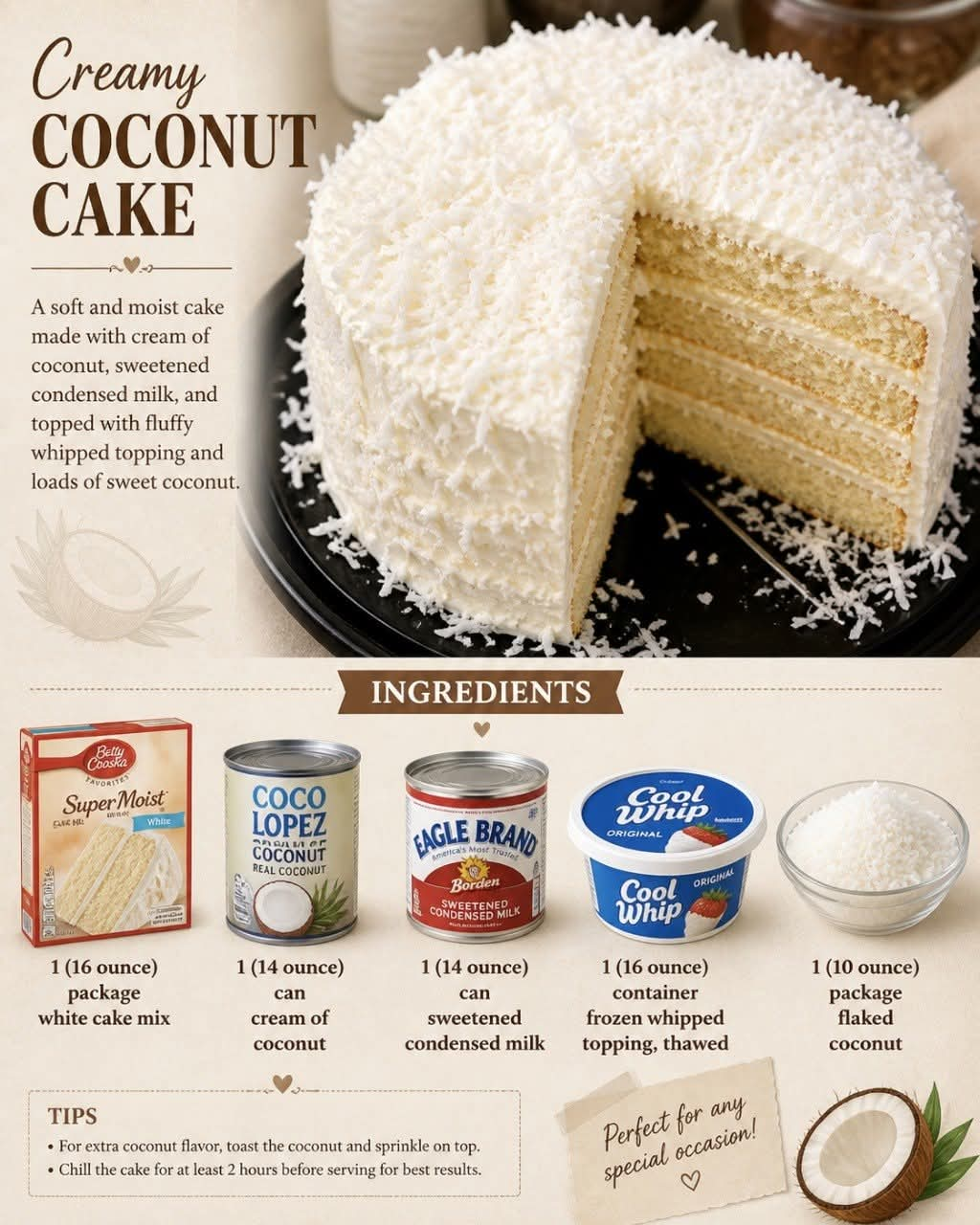
Coconut Cake with Seven-Minute Frosting
Introduction
Coconut Cake with Seven-Minute Frosting is a classic, old-fashioned dessert that combines a tender coconut-flavored cake with a light, glossy, cloud-like frosting. It is the kind of cake that looks elegant enough for birthdays and holidays while still carrying the comforting character of a homemade family dessert.
The coconut milk gives the cake a rich tropical flavor and helps create a soft crumb, while sour cream adds moisture and a gentle tang that balances the sweetness. The signature seven-minute frosting is traditionally prepared over gentle heat while being beaten until thick, fluffy, and beautifully white.
For an especially memorable finish, the frosted cake can be covered generously with shredded coconut, creating a beautiful texture and making every slice taste wonderfully coconut-rich.
Ingredients
For the Coconut Cake
- 1 cup coconut milk
- 3/4 cup granulated sugar
- 1 cup sour cream
- 4 tablespoons milk
- 2 1/2 cups all-purpose flour
- 2 teaspoons baking powder
- 1/2 teaspoon baking soda
- 1/2 teaspoon salt
- 1/2 cup unsalted butter, softened
- 3 large eggs
- 1 teaspoon vanilla extract
- 1 teaspoon coconut extract, optional
- 1 cup sweetened shredded coconut
For the Seven-Minute Frosting
- 3 large egg whites
- 1 1/2 cups granulated sugar
- 1/3 cup cold water
- 1/4 teaspoon cream of tartar
- 1 teaspoon vanilla extract
- 1/2 teaspoon coconut extract, optional
- 1 to 1 1/2 cups shredded coconut for decorating
Instructions
Step 1: Prepare the Oven and Pans
Preheat the oven to 350°F (175°C).
Grease two 8-inch or 9-inch round cake pans. Line the bottoms with parchment paper, then lightly grease the parchment as well. This makes removing the delicate coconut cake much easier.
Step 2: Prepare the Dry Ingredients
In a medium bowl, whisk together the flour, baking powder, baking soda, and salt.
Set the mixture aside while you prepare the wet ingredients.
Step 3: Cream the Butter and Sugar
Place the softened butter and sugar in a large mixing bowl. Beat for several minutes until the mixture becomes lighter, creamy, and fluffy.
This step is important because properly creamed butter helps give the cake a lighter texture.
Step 4: Add the Eggs
Add the eggs one at a time, mixing well after each addition.
Add the vanilla extract and coconut extract if using. Scrape down the sides of the bowl so everything is evenly incorporated.
Step 5: Combine the Coconut Mixture
In another bowl, combine the coconut milk, sour cream, and milk.
The sour cream may make the mixture look slightly thick, which is perfectly fine.
Step 6: Finish the Batter
Add the dry ingredients to the butter mixture in three additions, alternating with the coconut-milk mixture.
Begin and finish with the dry ingredients. Mix only until the batter is combined. Overmixing can make the finished cake heavier.
Fold in the shredded coconut gently.
Step 7: Bake the Cake
Divide the batter evenly between the prepared cake pans.
Smooth the tops with a spatula and place the pans in the preheated oven.
Bake for approximately 25 to 32 minutes, or until a toothpick inserted into the center comes out clean or with only a few moist crumbs.
Do not overbake, because coconut cake is best when the crumb remains soft and moist.
Step 8: Cool Completely
Allow the cakes to cool in their pans for about 10 minutes.
Run a knife gently around the edges, then turn the cakes onto wire racks. Remove the parchment paper and allow the layers to cool completely before frosting.
The cake must be completely cool before applying seven-minute frosting.
Seven-Minute Frosting Method
Step 1: Prepare the Frosting Mixture
Place the egg whites, sugar, cold water, and cream of tartar in a heatproof mixing bowl.
Set the bowl over a saucepan containing gently simmering water. The bottom of the bowl should not touch the water.
Step 2: Beat Continuously
Using an electric hand mixer, beat the mixture continuously while it heats.
Continue beating until the sugar has dissolved and the mixture becomes thick, glossy, and fluffy.
If using a thermometer, the mixture should reach about 160°F (71°C), which is important for a safer meringue preparation.
The exact time can vary depending on the equipment and temperature, so do not rely solely on the name “seven-minute frosting.”
Step 3: Add the Flavor
Remove the bowl from the heat.
Continue beating until the frosting becomes thick enough to hold soft peaks and has cooled somewhat.
Add the vanilla extract and coconut extract, if desired.
Beat briefly until incorporated.
Step 4: Assemble the Cake
Place the first cake layer on a serving plate.
Spread a generous layer of seven-minute frosting over the top.
Place the second cake layer on top and gently press it into position.
Cover the top and sides of the cake with the remaining frosting.
Use a spatula to create soft swirls and peaks across the surface.
Step 5: Add the Coconut
Immediately sprinkle shredded coconut over the frosting.
Press the coconut gently against the sides so that it adheres to the frosting.
For a more decorative presentation, you can cover the entire cake generously with coconut or simply use it around the sides and leave some of the glossy frosting visible on top.
Formation and Presentation
For a beautiful traditional presentation, keep the cake layers even and spread the frosting generously between them.
The finished cake should have three distinct elements: soft coconut cake, fluffy seven-minute frosting, and a generous coating of shredded coconut.
For special occasions, decorate the top with additional coconut flakes or simple coconut curls.
Allow the assembled cake to rest briefly before slicing. Use a sharp knife and wipe it clean between cuts for neat slices.
The History Behind Coconut Cake
Coconut cake has long been associated with American home baking, particularly Southern holiday and celebration tables. Coconut became a popular baking ingredient as improved transportation and food preservation made dried and packaged coconut more readily available.
Traditional coconut cakes were often prepared for Easter, Christmas, birthdays, weddings, church gatherings, and Sunday dinners.
Seven-minute frosting became especially popular in American home kitchens because it could be made from relatively simple ingredients and produced an impressive, fluffy finish without requiring butter or cream cheese.
The combination of coconut cake and white meringue-style frosting became a beloved classic. Many family recipes have been passed down with slightly different proportions, fillings, extracts, and coconut toppings.
Helpful Baking Methods
Use room-temperature eggs and softened butter when possible. They combine more easily and help create a smoother batter.
Do not overmix once the flour is added. Mix just until no obvious streaks of flour remain.
Use full-fat coconut milk for the richest flavor and texture.
Let the cake cool completely before frosting. Warm cake can cause the delicate frosting to soften or slide.
For the frosting, use a clean bowl with no traces of grease. Even a small amount of fat can interfere with the egg whites becoming properly fluffy.
Add the frosting soon after preparing it for the best texture.
Storage
Because seven-minute frosting is a meringue-style frosting, this cake is best enjoyed relatively soon after assembly.
Keep the finished cake covered and store it according to the ingredients and conditions appropriate for your kitchen. If preparing it ahead, the cake layers can be baked, cooled, wrapped well, and stored before frosting.
For the best texture and flavor, bring refrigerated cake to a suitable serving temperature before eating.
For Coconut Cake Lovers
This cake is especially wonderful for anyone who loves classic coconut desserts. The coconut milk provides flavor throughout the cake rather than relying only on the shredded coconut on the outside.
The sour cream creates a tender crumb, while the seven-minute frosting provides a light contrast to the moist cake. The shredded coconut adds a pleasant chewiness and makes the dessert instantly recognizable as a traditional coconut cake.
If you enjoy stronger coconut flavor, add a small amount of coconut extract to the batter and frosting. If you prefer a more delicate flavor, rely primarily on coconut milk and shredded coconut.
Conclusion
Coconut Cake with Seven-Minute Frosting is a beautiful example of traditional homemade baking. Its soft, moist coconut cake, fluffy frosting, and snowy coconut coating make it suitable for birthdays, holidays, family gatherings, and Sunday desserts.
The recipe takes a little patience, particularly when preparing the frosting, but the result is well worth the effort. Each slice brings together creamy coconut flavor, tender cake, fluffy frosting, and delicate shredded coconut.
It is the kind of dessert that feels homemade, nostalgic, and special all at once.
Please leave a kind comment if you make this recipe and tell me how your Coconut Cake turned out. Thank you for supporting and enjoying these recipes.